
In February 2026, India National Green Tribunal (NGT) delivered two sharply contrasting rulings one condemning environmental violations as grave harms to human life, and another upholding environmental clearance for a massive infrastructure project on Great Nicobar Island.
The decision to greenlight the Rs. 81,000–92,000 crore Great Nicobar mega-project has triggered intense criticism from scientists, environmentalists, and tribal rights advocates.
What the project entails
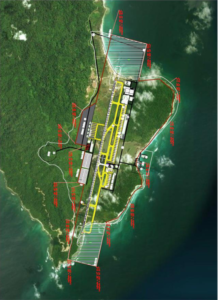
The proposed development spans about 166 sq km and includes:
• An international container transhipment port
• A greenfield airport
• A power plant
• A new township envisioned as an “Indian Singapore or Hong Kong”
To execute this vision, approximately 130 sq km of forest land would be cleared in one of India’s richest biodiversity zones.
On February 16, 2026, a special bench of the NGT chaired by Justice Prakash Shrivastava upheld the environmental clearance, citing the project’s “strategic and national importance” and finding “no good ground to interfere.”
Constitutional and legal concerns
Critics argue the ruling conflicts with constitutional environmental protections:
• Article 48A directs the State to protect and improve the environment.
• Article 51A(g) makes environmental protection a fundamental duty of citizens.
• The Supreme Court has interpreted the Right to Life (Article 21) as including the right to a clean and healthy environment.
Opponents contend that invoking “national importance” does not override these constitutional principles.
Impact on Indigenous communities
Nearly the entire island except seven revenue villages is designated a Tribal Reserve.
The project threatens:
The Shompen, a Particularly Vulnerable Tribal Group numbering just 229 (2011 Census)
The Southern Nicobarese, a Scheduled Tribe population of 200–300
International genocide scholars warned in February 2024 that the destruction of ancestral forests could amount to a “death sentence” for the Shompen, as their culture and survival are inseparable from the forest ecosystem.
Great Nicobar forms part of the Sundaland Biodiversity Hotspot and was included in UNESCO’s Man and Biosphere Programme in 2013.
Key ecological features include:
• Over 650 plant species
• More than 1,800 faunal species, with high endemism
• 202 km of coastline with fringing coral reefs (around 180 coral species)
• Critical nesting habitat for four marine turtle species
• Location along the East Australasian Flyway for migratory birds
Scientists warn that large-scale forest clearing and infrastructure could irreversibly damage these systems.
The seismic danger: building on unstable ground
Beyond ecological risks, geologists emphasize that Great Nicobar lies on one of the most tectonically active subduction zones in the world.
The 2004 Indian Ocean earthquake and tsunami caused dramatic land-level changes across the Andaman and Nicobar Islands. Post-earthquake measurements indicate:
• Coseismic subsidence of 1–1.5 metres at Campbell Bay
• Subsidence between 2 and possibly 4.5 metres at Indira Point
This reflects a predictable tectonic cycle:
• Interseismic phase: land gradually uplifts as strain accumulates
• Coseismic phase: accumulated strain is released during major earthquakes, causing sudden land subsidence
Such repeated uplift subsidence cycles pose fundamental long-term risks to ports, airports, and urban settlements especially when combined with climate-driven sea-level rise.
Unlike relatively stable terrains such as Singapore or Hong Kong, Great Nicobar sits atop an active subduction zone near the epicentral region of the 2004 megathrust event.
A broader institutional concern
The NGT was established in 2010 to provide expert-led, science-informed environmental justice. Critics argue that in this case, it deferred to government assertions of “strategic importance” without rigorous scrutiny of geological and ecological evidence.
Observers draw parallels to the Supreme Court’s approval of the Char Dham road project in Uttarakhand also justified on national security grounds despite expert warnings about ecological fragility.
The concern is that “strategic importance” could become a recurring legal shield for bypassing environmental safeguards.
At stake is not only one infrastructure project but a deeper conflict between:
• Strategic-economic ambition
• Constitutional environmental duties
• Indigenous rights
• Geological reality
As critics argue, the lesson of the 2004 tsunami remains stark: in parts of the Andaman Nicobar arc, the earth itself does not remain still.