Sunday, February 8News That Matters

Month: December 2023

Severe Thunderstorms in Australia Claim Six Lives

Severe Thunderstorms in Australia Claim Six Lives

Breaking News, Disasters, Environment
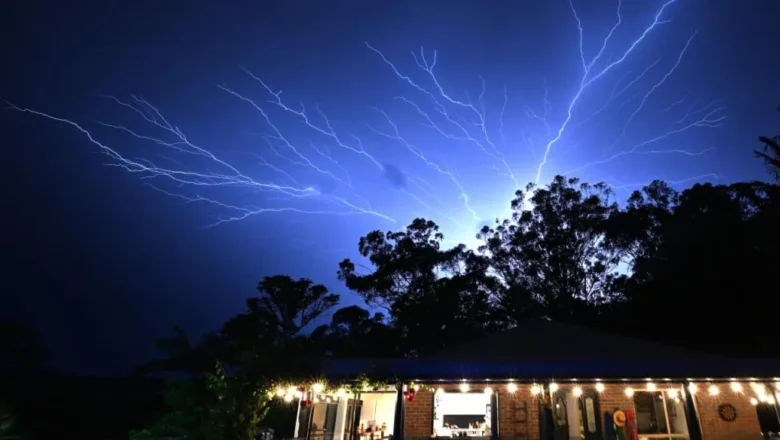
(27.12.2023) Austraila, Severe thunderstorms in Australia’s eastern states over the Christmas holidays have claimed the lives of at least six people, with three others reported missing. Tens of thousands of households in Queensland are without power due to the impact of the storms. Police in Victoria and Queensland have confirmed the deaths, including a nine-year-old girl who was reportedly swept away in a flooded stormwater drain. Two people are missing after their boat capsized south of Green Island near Brisbane, and a 46-year-old woman is also being sought after being caught in floodwaters north of Brisbane in Gumpie. Severe thunderstorms struck on December 25 and 26, bringing large hailstones, high winds, and torrential rains. The adverse weather conditions led to river flooding...

Volcanic Eruptions and Astronomical Cycles Linked to Historical Climate Change, Study Reveals

Volcanic Eruptions and Astronomical Cycles Linked to Historical Climate Change, Study Reveals

Disasters, Environment
A recent analysis published in the journal Earth-Science Reviews sheds light on the connection between large volcanic eruptions, astronomical cycles, and historical climate change. While human-induced greenhouse gas emissions are responsible for modern climate change, the study highlights that climate change in the Earth’s history was influenced by a different set of factors. Key Findings: Volcanic Eruptions in Earth’s History The study reveals that large volcanic eruptions in the Earth’s past released significant amounts of carbon dioxide into the atmosphere. This resulted in extreme greenhouse climate warming, nearly causing mass extinctions and environmental crises. These volcanic events occurred cyclically, with a pattern of every 26 to 33 million years. Notably, the study ...
Polar Bear Populations Decline in Greenland Over 20,000 Years Due to Climate Change

Polar Bear Populations Decline in Greenland Over 20,000 Years Due to Climate Change

Breaking News, Environment
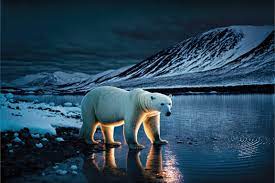
A comprehensive international study, including researchers from the University of Copenhagen, reveals a concerning decline in polar bear numbers in Greenland over the last 20,000 years. The research, combining genetic analysis, food habits, habitat study, and historical climate data, points to rising sea temperatures as the key driver behind this decline. The study, published in Science Advances, emphasizes the impact of global warming, leading to increased sea temperatures and reduced sea ice, consequently affecting the polar bear‘s primary food source – seals. Michael Westbury, lead author and assistant professor at the University of Copenhagen, highlights the non-linear relationship, where even small environmental changes significantly impact polar bear populations. The research ind...
Ice Cores data from Nevado Huascaran Provide Insights into Amazon Basin’s Climate History

Ice Cores data from Nevado Huascaran Provide Insights into Amazon Basin’s Climate History

Breaking News, Climate Actions
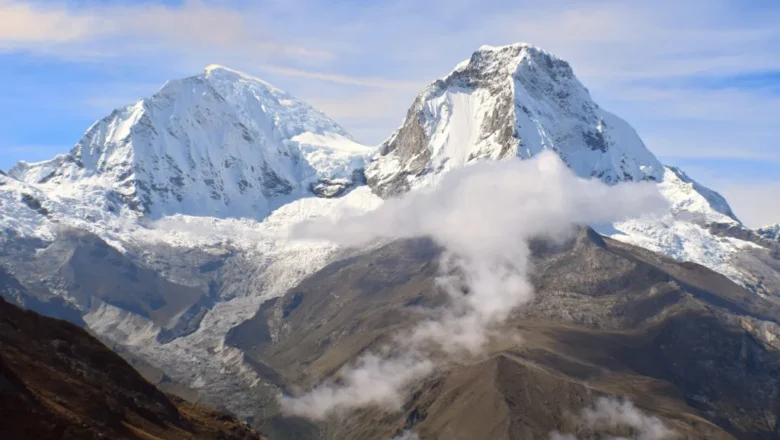
Scientists from Ohio State University (OSU) have studied ice cores from Nevado Huascaran, the world’s highest tropical mountain located in the Peruvian Andes, to gain unprecedented insights into the climate history of the Amazon Basin over the past six decades. Unlike polar regions, samples from tropical areas like Nevado Huascaran can provide valuable information about phenomena such as El Niño and the movement of monsoon winds. The research involved collecting ice core samples from the summit and the mountain col, the lowest point between two ridges. Key Points: •Nevado Huascaran, standing at nearly 7,000 meters above sea level, is the world’s highest tropical mountain. •Ice core samples were collected from the summit and the mountain col to analyze the impact of climate change ...
Asian Development Bank Launches Climate and Disaster Risk Initiative for Himalaya Region

Asian Development Bank Launches Climate and Disaster Risk Initiative for Himalaya Region

Breaking News, Idea & Innovations
The Asian Development Bank (ADB) has initiated a new project to assess and manage climate and disaster risks in the Hindu Kush Himalaya region. Focused on Bhutan and Nepal, the initiative involves a comprehensive analysis of multi-hazard risks, including landslides, earthquakes, and floods, with an emphasis on glacier lake outbursts. The goal is to strengthen the capacities of the two governments in risk assessments for priority river basins, leading to the development of early warning systems and risk management options for future infrastructure projects. The Hindu Kush Himalayas, home to the largest ice reserves outside the polar regions, provide vital water resources to over a billion people across Asia. The region is experiencing faster warming than the global average, and a 3°C ...
NASA’s Fermi Gamma-Ray Space Telescope Captures 14 Years of the Universe’s Gamma Radiation in Stunning Timelapse

NASA’s Fermi Gamma-Ray Space Telescope Captures 14 Years of the Universe’s Gamma Radiation in Stunning Timelapse

Breaking News, Space, Tech
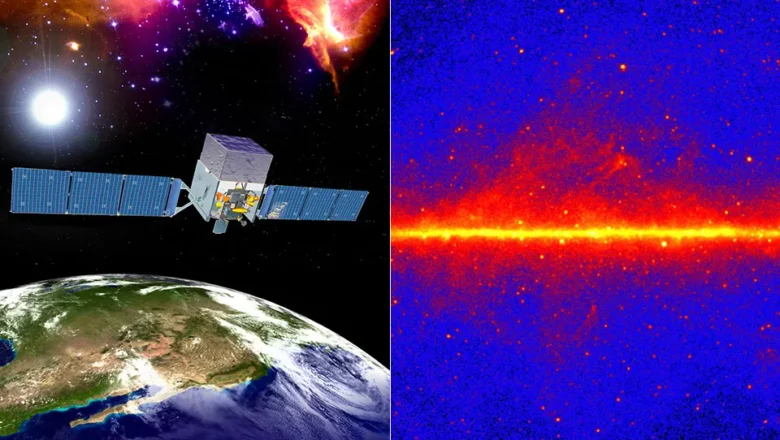
A timelapse compiled from data collected by NASA’s Fermi Gamma-Ray Space Telescope between August 2008 and August 2022 reveals a captivating view of the Universe’s gamma radiation. Fermi, launched in 2008, has been instrumental in studying gamma radiation sources, including those emanating from supernova remnants, pulsar stars, quasar and blazar galaxies, and other energetic celestial phenomena. Gamma radiation, being the most energetic light in the cosmos, is typically blocked by Earth’s atmosphere, necessitating the deployment of telescopes like Fermi in space to capture this elusive light. The recently released timelapse showcases the diverse sources of gamma radiation observed by Fermi over the course of 14 years. Judy Racusin, an astronomer at NASA’s Goddard Space Flight Center,...
World’s Largest Iceberg A23a Begins Drifting After 40 Years Grounded

World’s Largest Iceberg A23a Begins Drifting After 40 Years Grounded

Climate Actions, Disasters
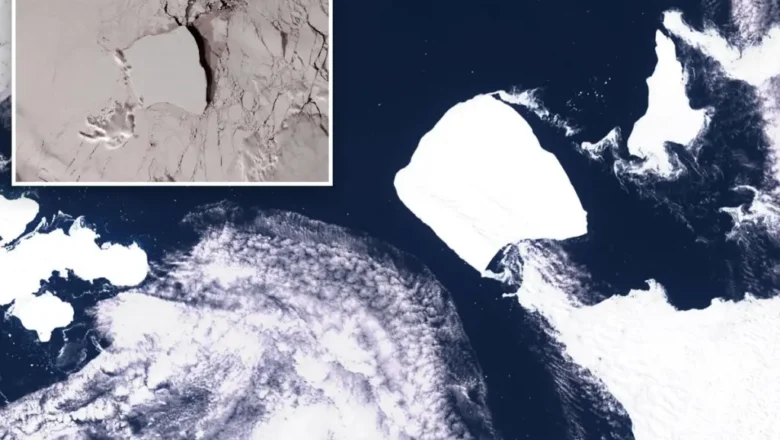
In a significant development, the world’s largest iceberg, A23a, has finally broken free from its grounded position, initiating its drift in the Weddell Sea. Originating from West Antarctica’s Fichner-Ronne ice shelf, A23a measures a staggering 4000 sq km (1,500 square miles) with a thickness of about 400 meters (1,300 feet), making it the largest iceberg globally. After being grounded for an extended period since 1986, recent observations by the Copernicus Sentinel-1 satellite confirm its movement, estimated at approximately 4.8 km (3 miles) per day, propelled by winds and currents. Iceberg A23a Animation The colossal iceberg’s journey was tracked through an animation provided by the European Space Agency (ESA), showcasing its shifts on November 2, November 14, and November 26, 2023...
Unprecedented Greenland Bedrock Core Reveals Past Ice Melt and Sea-Level Rise Secrets

Unprecedented Greenland Bedrock Core Reveals Past Ice Melt and Sea-Level Rise Secrets

Environment
In a historic feat, scientists have successfully extracted the longest-ever core of rock from beneath Greenland’s vast ice sheet. The GreenDrill project, with a budget of $7 million, achieved this breakthrough by drilling through 509 meters of ice at Prudhoe Dome, unearthing 7.4 meters of frozen sediment and rock. This achievement not only provides valuable insights into the island’s historical ice stability but also offers clues about its potential contributions to sea-level rise. The core, exposed to air at some point in the past three million years, presents a unique opportunity to understand Greenland’s complex environmental history. Preliminary analysis reveals high levels of beryllium-10, a radioactive isotope formed when rock is exposed to cosmic rays and air. The extensive prese...
Scientists Achieve Communicative Exchange with Humpback Whale, Drawing Parallels to Alien Communication

Scientists Achieve Communicative Exchange with Humpback Whale, Drawing Parallels to Alien Communication

Learning & Developments, Space
In a groundbreaking experiment, scientists from UC Davis, the Alaska Whale Foundation, and SETI (Search for Extraterrestrial Intelligence) have achieved a 20-minute communicative exchange with a humpback whale named Twain. The study, published in the journal PeerJ, involved playing a “contact call” into the ocean to see if whales would respond. Contact calls are a form of greeting among whales, used for communication and location signaling. Twain, the humpback whale, exhibited intentional responsiveness to the contact calls, matching intervals and engaging in what scientists describe as a communicative exchange. The researchers sailed off the coast of Alaska, emitting the contact call 36 times at varying intervals, and Twain consistently responded to each call, indicating a level of int...
Global Tipping Points Report Warns of Irreversible Threats from Climate Change

Global Tipping Points Report Warns of Irreversible Threats from Climate Change

Climate Actions, Idea & Innovations
The Global Tipping Points Report, compiled by an international team of 200 scientists and coordinated by the University of Exeter, reveals that the world is at risk of triggering at least five tipping points with potentially devastating consequences. Tipping points are critical thresholds beyond which changes in the climate system become self-perpetuating and lead to irreversible impacts. The report, set to be published during the UN Climate Conference (COP28) in Dubai, identifies the Greenland and West Antarctic Ice Sheets, warm-water coral reefs, North Atlantic subpolar gyre circulation, and permafrost regions as already at risk. The report emphasizes the inadequacy of current global governance to address the scale of the challenge and calls for coordinated action to trigger positive tip...