Sunday, February 8News That Matters

Month: January 2025

Rocket Fragment Crashes in Kenyan Village, Sparks Space Debris Concerns

Rocket Fragment Crashes in Kenyan Village, Sparks Space Debris Concerns

Breaking News, Environment, Space
Panic swept through Mukuku village in Kenya’s Makueni County this week when a massive metallic object, described by locals as a "huge, red-hot object," fell from the sky. The Kenya Space Agency (KSA) has identified the debris as part of a rocket, specifically a metallic ring measuring 2.5 meters in diameter and weighing approximately 500 kilograms. The incident occurred on Monday afternoon, prompting immediate action from the KSA and local authorities. Villagers quickly alerted officials, who rushed to the scene to investigate and secure the area. In a statement released on Wednesday, the KSA confirmed that the object was a fragment of a space object, most likely a separation ring from a rocket. They assured the public that the debris poses no safety risk and commended the residents for...
First HMPV Cases Reported in Bengaluru: Health Ministry Gears Up for Monitoring

First HMPV Cases Reported in Bengaluru: Health Ministry Gears Up for Monitoring

Breaking News, Disasters, Environment, Fact Check
India reported its first two cases of Human Metapneumovirus (HMPV) in Bengaluru. The cases involve a 3-month-old infant, who has been discharged after recovery, and an 8-month-old infant, currently recovering in a hospital in the Karnataka capital. Both infants and their families have no recent travel history, ruling out exposure from other regions or countries. The cases were identified as part of routine surveillance for respiratory viral pathogens conducted by the Indian Council of Medical Research (ICMR). “HMPV is already in circulation globally, including in India, and cases of respiratory illnesses associated with HMPV have been reported in various countries,” the Centre stated. The Health Ministry convened a meeting on HMPV preparedness today, emphasizing monitoring and con...
8 Month Old Bengaluru Suspected of HMPV Infection No Symptoms Reported

8 Month Old Bengaluru Suspected of HMPV Infection No Symptoms Reported

Breaking News, Disasters, Fact Check
An eight-month-old in Bengaluru is suspected to have tested positive for Human Metapneumovirus (HMPV), based on a laboratory report dated January 2. The infant’s family had no recent travel history and the child displayed no concerning symptoms, according to sources from the Bruhat Bengaluru Mahanagara Palike (BBMP) health department. Although the Karnataka state health department has not independently verified the results, they have acknowledged the credibility of the private laboratory’s testing procedures. “We trust the accuracy of their findings,” stated a health department official. Human Metapneumovirus (HMPV) identified in 2001 in the Netherlands, is a significant cause of acute respiratory infections, particularly in children. Globally, it accounts for about 0.7% of flu cases...
Winter Storm Hits US Heartland: Record Snowfall, Dangerous Conditions, and Widespread Disruptions

Winter Storm Hits US Heartland: Record Snowfall, Dangerous Conditions, and Widespread Disruptions

Breaking News, Disasters, Environment
A powerful winter storm blanketed parts of the central United States with heavy snow, ice, and freezing temperatures on Sunday, creating hazardous travel conditions and setting records in several areas. The National Weather Service described it as the potential "heaviest snowfall in a decade" for some regions, impacting 63 million people across the central and southern U.S. States Struggle with Record Snowfall and Ice Major roadways in Kansas, western Nebraska, and Indiana were buried under snow, leading to closures and travel chaos. Snowfall north of Interstate 70 in Kansas reached 10 inches, with some areas predicting totals exceeding 14 inches. Indiana: Portions of major interstates were fully covered in snow, prompting officials to activate the state’s National Guard to assist...
India Forest Cover Growth Comes at a Cost: Biodiversity Hotspots Face Decline

India Forest Cover Growth Comes at a Cost: Biodiversity Hotspots Face Decline

Breaking News, Climate Actions, Environment
The India State of Forest Report (ISFR) 2023, released by the Forest Survey of India, paints a picture of paradoxical progress. While India's total forest and tree cover has shown a marginal increase, the ecological cost is hard to ignore. Biodiversity-rich areas, which are critical for sustaining ecosystems, continue to see worrying declines. India's forest and tree cover now stands at 8,27,357 square kilometres, covering 25.17% of the country's geographical area. Forests account for 21.76% (7,15,343 sq km), while tree cover constitutes 3.41% (1,12,014 sq km). Since the last report in 2021, forest and tree cover has grown by 1,446 sq km, with a modest 0.2% rise in forest cover and a 1.16% jump in tree cover. However, deeper analysis reveals a troubling reality: several states with r...
How Developing Nations Can Bridge the Climate Finance Gap

How Developing Nations Can Bridge the Climate Finance Gap

Breaking News, Climate Actions, Idea & Innovations
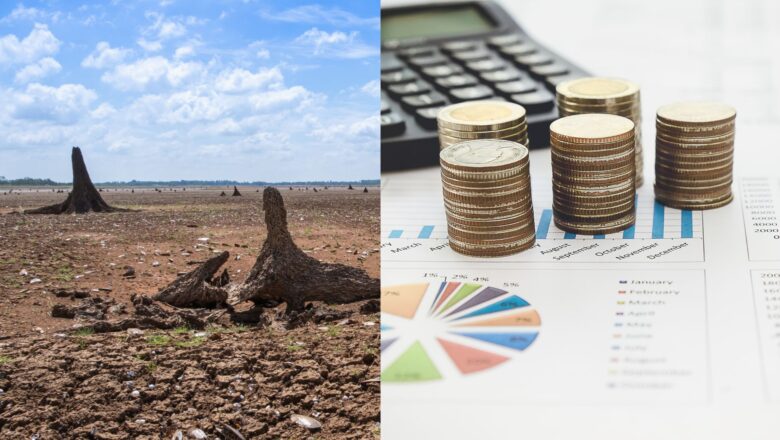
As climate change accelerates, the urgency to address its impacts grows, particularly for the world's most vulnerable nations. Yet, the conclusion of COP29 highlights a stark reality: the gap between climate finance needs and actual funding remains vast. Developing nations face the daunting challenge of mobilizing resources to adapt to and mitigate the climate crisis while grappling with stretched public budgets and limited international support. The Global Finance Dilemma Emerging economies require an estimated $1.3 trillion annually to combat the escalating climate crisis. However, developed nations have pledged only $300 billion per year by 2035—a figure that falls significantly short and is expected to lose real value due to inflation. By 2035, this amount may shrink to an equiva...
The Sea That Vanished: The Tragic Fall of the Aral Sea

The Sea That Vanished: The Tragic Fall of the Aral Sea

Breaking News, Climate Actions, Environment
Once a vast expanse of shimmering blue the Aral Sea was the pride of Central Asia. Straddling Kazakhstan to the north and Uzbekistan to the south, it was the world’s fourth-largest inland water body. It was a lifeline for the region, teeming with fish, bustling ports, and vibrant communities thriving along its shores. But the mid-20th century marked the beginning of its decline. As part of Soviet-era irrigation projects, the waters of the Syr Darya and Amu Darya rivers once the Aral’s lifeblood were diverted to grow cotton and other crops. The Aral began to shrink rapidly, leaving behind parched landscapes and ghostly shipwrecks marooned in desert sands. By the early 21st century, it was a shadow of its former self, its once-abundant ecosystem shattered and its communities struggling to...
Scientists Demonstrate ‘Negative Time’ in Quantum Breakthrough

Scientists Demonstrate ‘Negative Time’ in Quantum Breakthrough

Breaking News, Learning & Developments
Researchers at the University of Toronto have achieved a remarkable milestone, demonstrating "negative time" in a cutting-edge quantum experiment. This phenomenon, where light seems to emerge from a material before entering it, challenges long-held notions about the flow of time and opens new doors to understanding quantum mechanics. The research focused on atomic excitation a process where photons absorbed by atoms elevate electrons to higher energy levels. Typically, when these electrons return to their original states, they release the absorbed energy, causing a time delay in the photons' transit. However, the Toronto team observed an unexpected twist: photons behaved as if atoms spent a "negative amount of time" in their excited states. This startling finding suggests that time, ...