Sunday, February 8News That Matters

Month: March 2025

Study Warns of Unexpectedly Strong Shaking from Moderate Earthquakes in Mexico City

Study Warns of Unexpectedly Strong Shaking from Moderate Earthquakes in Mexico City

Breaking News, Climate Actions, Disasters, Fact Check
A new study has revealed that moderate earthquakes in Mexico City could cause significant damage to buildings, depending on the region’s underlying geology. The findings, published in the Bulletin of the Seismological Society of America by Miguel Jaimes and Gerardo Suárez of Universidad Nacional Autónoma de México, highlight the risks posed by local seismic activity beyond the well-known large subduction earthquakes. Mexico City has recently experienced swarms of small, shallow earthquakes, particularly in 2019 and 2023, which generated unexpectedly strong ground shaking. These events prompted researchers to investigate how shaking from a moderate earthquake with a magnitude up to 5.5 might impact buildings across different parts of the city. Geology MattersDamage Varies by Region ...
Climate Change Alters Rainfall and Flood Patterns Differently Over Time Scales

Climate Change Alters Rainfall and Flood Patterns Differently Over Time Scales

Breaking News, Climate Actions, Environment
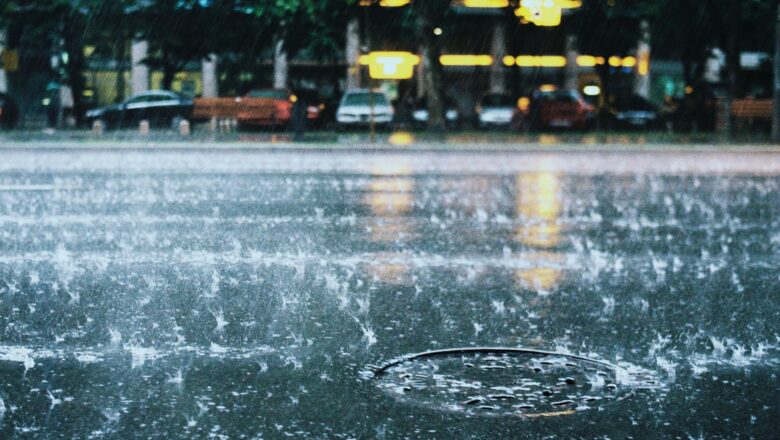
A new study has revealed that climate change influences short-term and long-term rainfall and flooding in different ways, shedding light on how rising temperatures impact local and regional water systems. Researchers from Austria have provided the first comprehensive analysis of this relationship, using over a century of high-quality weather data. Their findings, now published in Nature, have global implications for understanding how floods may intensify in different regions. The study, led by Prof. Günter Blöschl of TU Wien (Vienna), shows that short-duration rainfall events lasting just a few hours have increased by 15% in the last 30-40 years. The main driver behind this increase is rising temperatures caused by climate change. Warmer air holds more moisture, while increased groun...
Rising Groundwater Threatens Inland Flooding in Coastal Cities

Rising Groundwater Threatens Inland Flooding in Coastal Cities

Breaking News, Climate Actions, Environment
Rising sea levels caused by climate change are bringing an often-overlooked threat to coastal communities rising groundwater. While coastal erosion and storm surges have been widely studied, the inland spread of flood hazards due to groundwater rise remains a hidden danger. A recent study by Cox et al. focuses on Dunedin, New Zealand, a city already facing periodic flooding, and presents a method to predict how rising seas will impact groundwater levels, offering crucial insights for flood risk management. The research, based on data from 2019 to 2023 collected from 35 groundwater sensors, shows that as sea levels rise, groundwater levels will also increase, limiting the land’s ability to absorb rainfall and leading to higher risks of surface flooding. Even before reaching the surfac...
Rising seas groundwater loss and urban expansion push Asia megadeltas toward crisis

Rising seas groundwater loss and urban expansion push Asia megadeltas toward crisis

Breaking News, Climate Actions, Environment
Coastal flooding in Asia’s megadeltas is intensifying due to rapid urbanization, land use changes, excessive groundwater extraction, infrastructure development, and widespread sand mining. Since 1990, urban areas below five meters above sea level have expanded by over 70% in the Ganges-Brahmaputra-Meghna and Mekong deltas, and by at least 200% in the Chao Phraya delta. The excessive withdrawal of groundwater has accelerated land subsidence in all five megadeltas, with sinking rates surpassing one centimeter per year. Additionally, intense river sand mining, driven by the high demand for construction materials, has contributed to severe erosion along riverbanks and coastlines. Dams built upstream further disrupt natural river flows by trapping sediments that are essential for maintain...
Unstoppable Heatwaves, Deadly Avalanches, and Global Negligence: How Climate Change is Pushing the World to the Edge

Unstoppable Heatwaves, Deadly Avalanches, and Global Negligence: How Climate Change is Pushing the World to the Edge

Breaking News, Climate Actions, Environment, Fact Check
As temperatures continue to soar across the country, climate experts warn that 2025 could be even hotter than the record-breaking 2024, pushing the world deeper into an environmental crisis. The Indian Meteorological Department (IMD) has already issued heatwave warnings for multiple states, including Odisha, Kerala, and Maharashtra, while Bengaluru is expected to be hotter than Delhi this year. The rising heat is not just an inconvenience—it is claiming lives. In Mana, Uttarakhand, a devastating avalanche buried around 55 soldiers and workers at a border base camp, with many tragically losing their lives. Experts point to climate change as the root cause of these disasters. The western disturbances, which normally bring snowfall around December and January, have shifted to February and ...
Somalia Unites Experts to Confront Drought and Extreme Heat Threats in 2025 Gu Season

Somalia Unites Experts to Confront Drought and Extreme Heat Threats in 2025 Gu Season

Breaking News, Climate Actions, Environment
Somalia has taken a crucial step toward tackling the looming threat of drought and extreme heat by hosting its Sixth National Climate Outlook Forum (NCOF6) in Mogadishu on March 4–5. The gathering brought together climate experts, government officials, and humanitarian agencies to assess the anticipated climate conditions for the Gu season (March-May 2025) and devise urgent mitigation strategies to protect communities from severe environmental challenges. The forum, organized by the Ministry of Environment and Climate Change (MoECC) with technical support from the Food and Agriculture Organization (FAO), the World Meteorological Organization (WMO), and the Intergovernmental Authority on Development Climate Prediction and Applications Centre (ICPAC), delivered a stark warning about the s...
Marine Heatwaves Surge 240% in Two Years, Triggering Global Disruptions

Marine Heatwaves Surge 240% in Two Years, Triggering Global Disruptions

Breaking News, Climate Actions, Disasters, Environment
A new study has revealed a 240% increase in marine heatwave (MHW) days worldwide during the 2023-24 summers, marking an unprecedented rise in ocean temperatures due to climate change, El Niño, and record-low cloud cover. The research, published in Nature Climate Change, shows that 10% of the world's oceans recorded their highest-ever sea surface temperatures (SSTs), reaching levels four times above historical averages. Extreme Weather and Oceanic Disruptions The prolonged marine heatwaves had far-reaching effects, influencing global weather patterns and triggering severe storms, flooding, and cyclones: Heatwaves struck the UK, North America, and Japan Severe flooding hit Ecuador, Libya, Japan, and Australia The Atlantic hurricane season saw near-record storms MHWs in...
Why Hurricanes Never Cross the Equator: The Science Behind the Mystery

Why Hurricanes Never Cross the Equator: The Science Behind the Mystery

Breaking News, Climate Actions, Fact Check
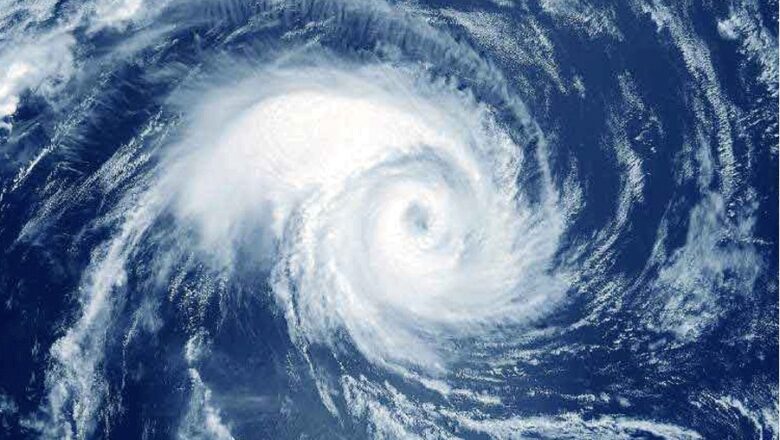
Hurricanes known as typhoons in the Pacific and cyclones in the Indian Ocean are immensely powerful storms, drawing their energy from warm tropical waters. These violent systems unleash destructive winds, torrential rains, and deadly storm surges, yet there’s one place on Earth they never cross: the equator. The reason lies in the Coriolis effect, a force created by Earth's rotation. This effect causes storms in the Northern Hemisphere to spin counterclockwise and in the Southern Hemisphere to spin clockwise. However, at the equator, the Coriolis effect is nearly zero, preventing hurricanes from forming or gaining the necessary spin to sustain themselves. Even storms that form near the equator are steered away before they can cross it. According to Mathew Barlow, a professor at the U...
India Air Pollution Crisis Damaging Despite Slight Improvement

India Air Pollution Crisis Damaging Despite Slight Improvement

Breaking News, Climate Actions, Environment, Fact Check
Despite a 7% drop in PM2.5 levels India remains the world's fifth most polluted country, with six of the ten most polluted cities globally. The 2024 IQAir World Air Quality Report reveals that India’s annual PM2.5 average fell to 50.6 µg/m³ from 54.4 µg/m³ in 2023, yet pollution levels remain alarmingly high. New Delhi, a pollution hotspot, recorded an annual PM2.5 average of 91.6 µg/m³, showing little change from the previous year. Northern states continue to suffer from severe pollution spikes, with Baddi in Himachal Pradesh reporting a shocking PM2.5 level of 165 µg/m³ in January. Stubble burning contributed to 60% of PM2.5 levels in Punjab, Haryana, and surrounding regions, worsening air quality in November. Air pollution remains a major public health crisis, reducing life expect...
Climate Change and Sewage Linked Viruses Growing Health Risks

Climate Change and Sewage Linked Viruses Growing Health Risks

Breaking News, Climate Actions, Environment
Rising temperatures and extreme weather events may be increasing the risk of virus exposure from sewage-contaminated waters, a new study warns. Scientists have found that viruses from raw sewage can persist in rivers, lakes, and seas for days, raising public health concerns. Heavy rainstorms often overload sewer systems, leading to untreated sewage being discharged into natural water bodies. This waste carries viruses such as enterovirus and norovirus, which can remain infectious for days, even after passing through wastewater treatment plants. In seawater, enteric viruses stayed infectious for up to three days at 30°C, while cooler temperatures extended their lifespan to a week. Sunlight reduced their viability to less than 24 hours on sunny days, but they survived for 2.5 days in clou...