Sunday, February 8News That Matters

Month: May 2025

Wealthiest 10% Cause Two-Thirds of Global Warming Since 1990: Study Links Climate Crisis to Income Inequality

Wealthiest 10% Cause Two-Thirds of Global Warming Since 1990: Study Links Climate Crisis to Income Inequality

Breaking News, Climate Actions
Global warming refers to the long-term rise in Earth's average surface temperature due to increased concentrations of greenhouse gases like carbon dioxide (CO₂), methane (CH₄), and nitrous oxide (N₂O) in the atmosphere. These gases trap heat, mainly released from burning fossil fuels such as coal, oil, and gas, along with emissions from deforestation, industrial processes, and high-consumption lifestyles. A new study published in Nature Climate Change sheds light on who is most responsible for this climate disruption and the answer points directly to the world’s wealthiest individuals. According to researchers the richest 10% of people globally are responsible for nearly two-thirds of global warming since 1990, with the top 1% alone causing 26 times more heatwave-related climate extr...
Monsoon 2025 to Bring Bounty and Risk for South Asia, Says SASCOF

Monsoon 2025 to Bring Bounty and Risk for South Asia, Says SASCOF

Breaking News, Climate Actions
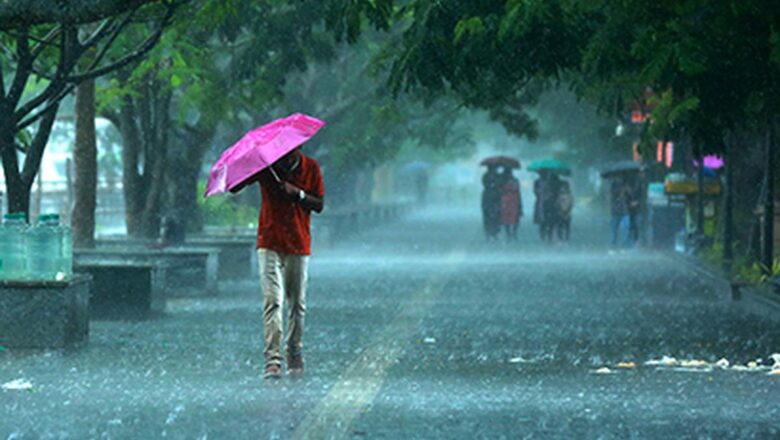
The 2025 Southwest Monsoon forecasted to bring above-normal rainfall across much of South Asia, is being hailed as both a potential blessing and a looming challenge for the region. According to the latest outlook by the South Asian Climate Outlook Forum (SASCOF) the June–September season could witness significantly higher-than-average rainfall in most areas, excluding parts of the north, east, and northeast which may face drier conditions. Monsoon: Lifeline for South Asia The monsoon season is the dominant climatic force shaping the livelihoods, agriculture, and economies of South Asia. Countries like India, Bangladesh, Nepal, and Pakistan depend on it for up to 90% of their annual rainfall. The water it delivers is crucial for irrigating crops, generating hydropower, and repleni...
Mudslide disrupts traffic as heavy rain lashes North India

Mudslide disrupts traffic as heavy rain lashes North India

Breaking News, Climate Actions, Disasters
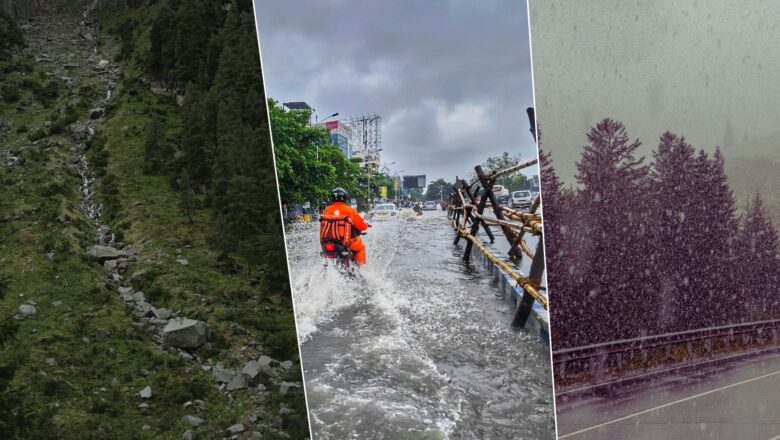
A fresh spell of intense rain has triggered a mudslide in the Chamba Seri region of Ramban, Jammu and Kashmir, forcing the closure of the Jammu-Srinagar National Highway and halting vehicular movement on both sides. The disruption follows the Indian Meteorological Department’s (IMD) yellow alert, issued for several northern and central Indian states, warning of thunderstorms, lightning, and potential travel hazards. Highway closure and travel advisory issued Traffic authorities in Jammu and Kashmir urged people to avoid NH-44 travel on Thursday morning due to the dangerous road conditions caused by the mudslide. The highway, a vital link connecting the Kashmir Valley to the rest of India, remains blocked until further notice. Rain warnings across multiple states The IMD's yello...
April alarming heat signals accelerating global warming

April alarming heat signals accelerating global warming

Breaking News, Climate Actions
April 2025 was the second-hottest April ever recorded, with average global surface air temperatures reaching 14.96°C—0.60°C higher than the 1991–2020 average, and just 0.07°C below the record set in April 2024. The data, released by Europe’s Copernicus Climate Change Service, provides another stark reminder of the intensifying climate crisis. Global temperatures 1.51°C above pre-industrial levels Last month’s global temperatures were 1.51°C warmer than pre-industrial levels (1850–1900), underscoring the continued warming trend driven by greenhouse gas emissions from human activities, especially the burning of fossil fuels. This warming surpasses the 1.5°C threshold set as a critical limit in the Paris Agreement, which aims to avoid the most severe consequences of climate change. H...
India emission trading success: Gujarat scheme cuts air pollution by up to 30%

India emission trading success: Gujarat scheme cuts air pollution by up to 30%

Breaking News, Climate Actions, Environment
India has implemented a pioneering solution to address air pollution the world’s first particulate emission trading scheme (ETS). Initiated in Gujarat, this market-based program has led to a 20–30% reduction in emissions from coal-burning industries since its launch in 2019, while also reducing pollution control costs by over 10%. A new market for cleaner air The pilot scheme was developed through a collaboration between leading economists and the Gujarat Pollution Control Board. It functions on a cap-and-trade model, where industries are assigned pollution limits and can buy or sell emission permits based on their performance. This incentivizes companies to lower their emissions and save costs, creating a dynamic balance between environmental regulation and economic efficiency. S...
Nepal bolsters disaster preparedness with global-standard alert systems and flood resilience initiatives

Nepal bolsters disaster preparedness with global-standard alert systems and flood resilience initiatives

Breaking News, Climate Actions
In a major step toward enhancing its climate resilience, Nepal has advanced its early warning systems through a series of workshops and collaborations under the Climate Risk and Early Warning Systems (CREWS) – Early Warnings for All (EW4All) Accelerator initiative. Partnering with the World Meteorological Organization (WMO), the Department of Hydrology and Meteorology (DHM), and the Center for Applied Research and Development (CARD), Nepal is aligning itself with international standards like the Common Alerting Protocol (CAP) and piloting community-based flood management systems to reduce disaster risk across vulnerable regions. Nepal adopts CAP for smarter, faster alerts Held on April 24–25, the first workshop introduced over 35 stakeholders to the Common Alerting Protocol, a global...
Goa reels under record heat index of 47.8°C, authorities urge precautions amid sweltering humidity

Goa reels under record heat index of 47.8°C, authorities urge precautions amid sweltering humidity

Breaking News, Climate Actions
Goa reels under record heat index of 47.8°C, authorities urge precautions amid sweltering humidity Goa is currently enduring one of its most intense bouts of heat and humidity, with the heat index or ‘feels-like’ temperature touching a staggering 47.8°C, surpassing levels recorded in many parts of North India. The India Meteorological Department (IMD) has sounded alerts, citing that the oppressive heat is being driven not just by rising temperatures but extremely high humidity, making daily life difficult across the coastal state. Goa hotter than Delhi, Bhopal, and even parts of Kerala Traditionally known for its moderate coastal climate, Goa is now witnessing weather conditions comparable to cities like Delhi, Bhopal, and even humid regions of Kerala. However, the difference lies...
Nature Inspired Hybrid Tech Traces landslides faster, sharper – Boosting Rescue Operations

Nature Inspired Hybrid Tech Traces landslides faster, sharper – Boosting Rescue Operations

Breaking News, Climate Actions, Learning & Developments, Tech
When deadly landslides strike in remote, rugged terrain the clock starts ticking. Emergency teams must act fast but knowing where to go can be a frustrating guessing game. Now, a breakthrough seismic technique developed by scientists in Germany is changing that, using the wisdom of the natural world to pinpoint landslide locations within a few kilometres and in just seconds. Old methods too slow, too vague Stefania Ursica from the Helmholtz Centre for Geosciences introduced the innovation last week at the European Geosciences Union meeting in Vienna. Traditional systems often detect landslides by monitoring seismic waves but can only narrow the source down to a range of 10–20 kilometres. In vast or mountainous regions with sparse infrastructure such errors can lead rescuers far from ...
Why India Is Reviving Civil-Defence Drills: Strategic Readiness in a Tense Era

Why India Is Reviving Civil-Defence Drills: Strategic Readiness in a Tense Era

Breaking News, Tech
According to Dhillon P., working on disaster risk reduction, and experience in military and government sectors Featured in LinkedIn Article that In the aftermath of the Pahalgam terror attack on 22 April 2025, which killed 26 tourists, India has swiftly pivoted to a civil-preparedness footing. Blaming Pakistan for the incident and facing retaliatory missile tests from Islamabad the Union Home Ministry has ordered simultaneous civil-defence drills in 244 districts categorized as “A & B” on 7 May 2025. This marks India’s largest civil-defence exercise since 1971, signalling that civilian readiness is now seen as central to national security. What Will Happen on 7 May? The drill will include a series of coordinated emergency actions, designed to simulate real attack scenarios and te...
PNG Boosts Disaster Preparedness with New EU-Funded Resilience Project

PNG Boosts Disaster Preparedness with New EU-Funded Resilience Project

Breaking News, Climate Actions
Papua New Guinea’s most disaster-prone communities are set to benefit from a major new resilience-building initiative aimed at enhancing early warning systems and disaster response. The Building Safety and Resilience in the Pacific Phase II (BSRP II) project was officially launched this week at the Holiday Inn in Port Moresby. Funded by the European Union under the 11th European Development Fund the €14 million regional initiative targets 14 Pacific Island nations and Timor-Leste with a special focus on Papua New Guinea’s high-risk zones, which are prone to volcanic activity, earthquakes, and extreme weather due to their location on tectonic plate boundaries. The project would connect remote communities, including the elderly and people with disabilities, to early warnings that could...