Tuesday, May 5News That Matters

Month: July 2025

Santorini Quakes Tied to Deep Underground Magma, Not Tectonic Faults, Says New Study

Santorini Quakes Tied to Deep Underground Magma, Not Tectonic Faults, Says New Study

Breaking News
Earlier this year, the iconic Greek island of Santorini was rocked by an unusual and persistent series of small earthquakes that left residents and scientists puzzled. The tremors, some occurring every few minutes, lasted over a month, reached magnitudes as high as 5.3, and forced more than 10,000 people to evacuate the area. But new research from a University of Oregon geophysicist suggests the answer lies not in tectonic shifts, but in deep volcanic unrest hidden beneath the island’s surface. Just days before the seismic swarm began, Dr. Emilie Hooft and her team submitted a study offering new insights into the volcanic plumbing system under Santorini. Their findings now appear to shed light on the true cause of the earthquakes: magma shifting 6 to 9 miles beneath the surface — not di...
New 3D Models Reveal How Glaciers React to Climate Change in Real Time

New 3D Models Reveal How Glaciers React to Climate Change in Real Time

Breaking News
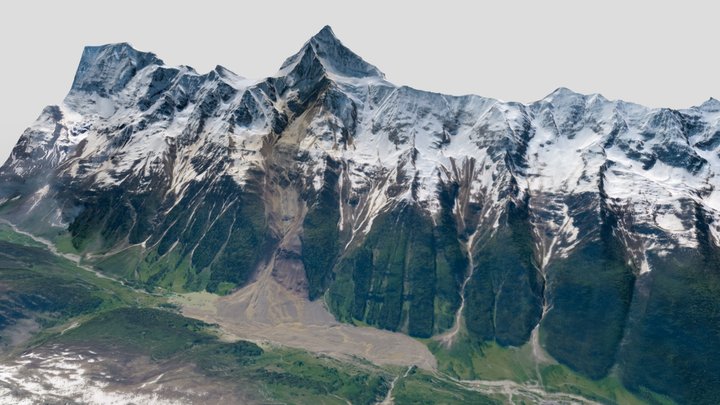
As global temperatures continue to rise, glaciers around the world are retreating at an alarming pace. While glaciers cover only about 10% of Earth’s surface, their influence stretches far beyond icy landscapes. They regulate global temperature, contribute to sea level rise when they melt, and are critical sources of fresh drinking water for millions. Now, a new study suggests that cutting-edge 3D elevation models could drastically improve how we predict and understand glacial response to climate change. Tracking Glacier Change with 3D Precision The study, published in GIScience & Remote Sensing, focused on three glaciers across three continents: La Perouse in Alaska, Viedma in Argentina, and Skamri in Pakistan. Researchers aimed to differentiate between seasonal melting patterns a...
Penn State Researchers Develop AI-Powered Flood Prediction Model with Unmatched Speed and Accuracy

Penn State Researchers Develop AI-Powered Flood Prediction Model with Unmatched Speed and Accuracy

Breaking News
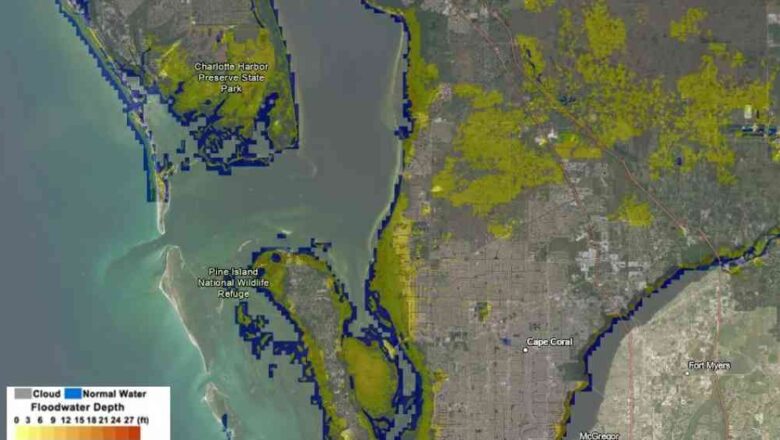
Floods are among the most destructive natural disasters in the U.S., causing billions of dollars in damages every year. In a promising development, researchers at Penn State University have introduced a powerful new computational model that significantly improves flood prediction capabilities across the continental United States. The model, which blends artificial intelligence (AI) with physics-based hydrological data, offers a faster, more accurate, and cost-effective alternative to traditional systems. This high-resolution differentiable hydrologic and routing model is designed to simulate water movement through river systems by incorporating massive datasets including river flow records, weather patterns, and topographical data and then using neural networks to analyze and predict st...
Silent Storms Loud Impact: Thunderstorms Emerge as Major Killer in Tropical Forests

Silent Storms Loud Impact: Thunderstorms Emerge as Major Killer in Tropical Forests

Breaking News
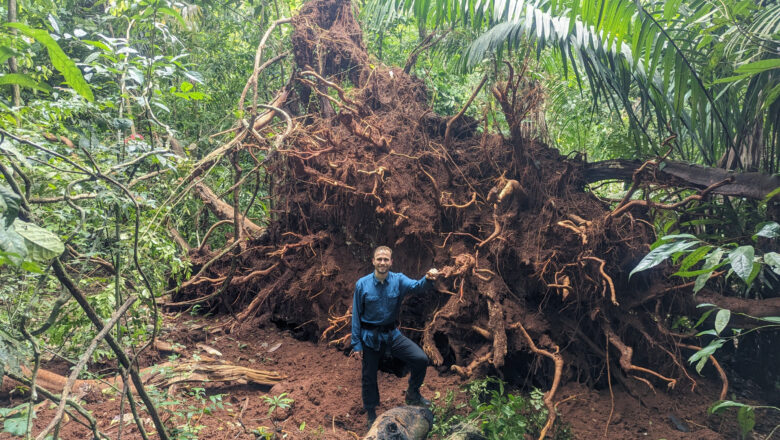
For years, the main threats to tropical forests were seen as drought, heat, rising carbon dioxide, and raging wildfires. But new research reveals that a quieter, often-overlooked culprit may be doing more damage than previously imagined thunderstorms. According to a study published in Ecology Letters on July 1, 2025, these short-lived but intense convective storms could be behind a significant portion of tree deaths across the Amazon. The study found that convective storms may account for up to 50% of the observed rise in biomass mortality in tropical forests. In some scenarios, the impact could be as low as 12%, or as high as a staggering 118%, depending on various assumptions and data interpretations. The sheer scale of this finding has stunned ecologists, as these storms which span j...
Debt Trap Blocks Climate Hope: Developing Nations Demand Fair Finance at Global Meet

Debt Trap Blocks Climate Hope: Developing Nations Demand Fair Finance at Global Meet

Breaking News
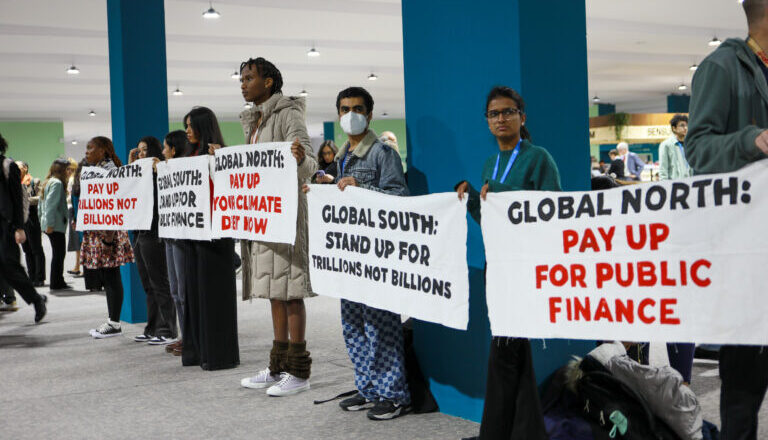
As the world gathered in Seville for the Fourth International Conference on Financing for Development (FfD4), a growing frustration echoed through the voices of leaders from developing nations. For many of them, tackling climate change isn’t just a matter of will it’s a matter of survival being delayed by debt. Across the Global South, countries already facing the brunt of extreme weather events are also struggling with massive debt burdens. In the face of rising costs of climate adaptation, these nations find themselves forced to choose between protecting their people and repaying creditors. The global financial system, they argue, is not only outdated but unfairly stacked against them. At the centre of the crisis is a system that offers no formal structure for countries to resolve ...

Antarctic Research Is Declining Just When the Planet Needs It Most China Takes Lead Amid Global Pullback

Breaking News
As Antarctica faces accelerated ice loss and rising global concern over sea levels, ocean currents, and wildlife disruption, a new report warns that scientific research on the continent is declining and at the worst possible time. Released during the Antarctic Treaty Consultative Meeting in Milan, the report, published by the University of the Arctic, shows that global investment in Antarctic and Southern Ocean science is falling even as the urgency of understanding the region climate role grows. In a notable shift, China has overtaken the United States as the global leader in Antarctic research output. Why Antarctic Science Matters More Than Ever With ice shelves collapsing and sea ice rapidly shrinking, Antarctica’s changes are reshaping ocean systems and threatening species acros...
Seville Summit Reveals Deep Fault Lines in Global Finance as Debt Justice Takes Center Stage

Seville Summit Reveals Deep Fault Lines in Global Finance as Debt Justice Takes Center Stage

Breaking News
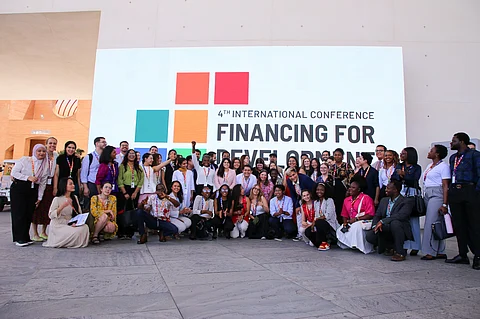
The 4th International Conference on Financing for Development (FfD4), held in Seville, Spain, was billed as a landmark moment to reshape how development is funded across the world. But the meeting ended up exposing the deep divides and imbalances in the global financial architecture particularly around the issue of debt faced by developing nations. Convened by the United Nations, the summit took place against a backdrop of waning support from powerful economies. The United States was notably absent, having already cut back its international aid commitments. Major European powers such as the United Kingdom, France, and Germany also announced reductions in financial support. As a result, the official agenda leaned heavily on private investment, blended finance, and public-private partners...
Monsoon Paradox: Rajasthan Drenched Meghalaya Parched as Rainfall Patterns Flip

Monsoon Paradox: Rajasthan Drenched Meghalaya Parched as Rainfall Patterns Flip

Breaking News
As the Southwest Monsoon swept across India ahead of schedule on June 29, 2025, its early arrival brought more confusion than comfort. While much of northwest and central India was inundated with record-breaking rainfall, the eastern and northeastern states traditionally among the rainiest parts of the country have been grappling with persistent dry conditions. The divergence reveals a troubling monsoon imbalance that has now lasted three consecutive years. By July 3, a third of India's districts had received deficient or severely deficient rainfall, according to data from the India Meteorological Department (IMD). Eight states and Union Territories reported rainfall shortfalls, with the entire eastern and northeastern belt showing a cumulative deficit of 18.6%. At the same time, the...
Delhi Feels Like 49°C as Humidity Intensifies Heat Discomfort, Despite Onset of Monsoon

Delhi Feels Like 49°C as Humidity Intensifies Heat Discomfort, Despite Onset of Monsoon

Breaking News
Delhi sweltered under extreme discomfort on Thursday as a deadly combination of high humidity and moderate heat pushed the "real feel" temperature close to 49°C, even though the actual maximum temperature was recorded at 36.9°C one degree below normal. At 2:30 pm, the "real feel" soared to 48.9°C, while the wet-bulb temperature a crucial measure of heat stress on the human body hit 29.57°C by evening. For context, a wet-bulb reading above 32°C severely hampers the body’s ability to cool itself, and 35°C is considered a critical survival limit. Sweltering Day Despite Monsoon Onset Although the southwest monsoon officially arrived in Delhi on June 29, bringing 14 mm of rain on the first day, it has since fizzled. From July 1 to 3, only 3.8 mm of rainfall was recorded at Safdarjung, co...
Social Media Erupts as Delhi Labels 16-Year-Old Mercedes ‘Vintage Scrap’ Amid Scrappage Policy

Social Media Erupts as Delhi Labels 16-Year-Old Mercedes ‘Vintage Scrap’ Amid Scrappage Policy

Breaking News
A Delhi resident’s frustration over the city’s vehicle scrappage policy has sparked a heated debate online. Rattan Dhillon, a social media user, publicly criticized the government after his father's 16-year-old Mercedes E280 V6 was deemed “vintage scrap” under the new policy. Sharing pictures and praise for the luxury sedan, Dhillon posted on X (formerly Twitter): “This is my dad’s 16-year-old Mercedes E280 V6, still running stronger and cleaner than most so-called modern cars... Zero pollution, zero nonsense.” But, he added bitterly, “I have to label it ‘vintage scrap’ just because we live in a country where politicians have zero love for cars!” The post quickly went viral, drawing both support and criticism. Many users sympathized, calling the rule "outrageous" and questioning t...