Sunday, February 8News That Matters

Month: August 2025

China Launches Global Meteorological Training Centre to Boost Climate Cooperation

China Launches Global Meteorological Training Centre to Boost Climate Cooperation

Breaking News
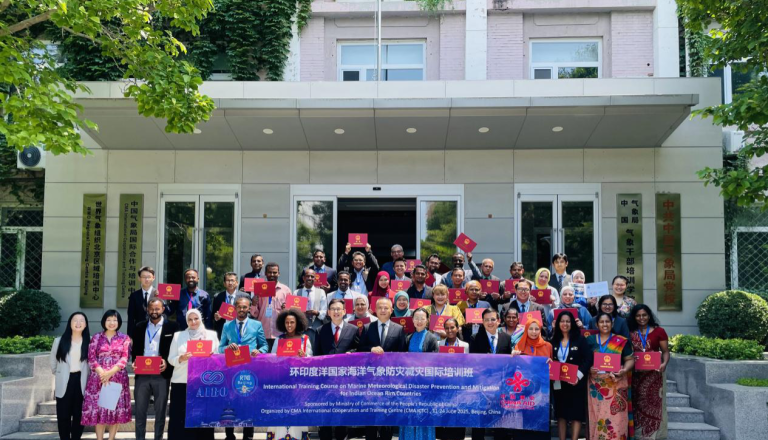
BEIJING – As the World Meteorological Organization (WMO) celebrates its 75th anniversary, China has inaugurated the CMA International Cooperation and Training Centre (CMAICTC) in Beijing. This new center is a significant step toward advancing global collaboration in weather, climate, and disaster services, particularly for developing nations. The CMAICTC is a rehosted and expanded version of the former WMO Regional Training Centre. Empowering a Resilient Global Community The CMAICTC, launched on April 28, 2025, aims to strengthen meteorological capabilities, especially in developing countries. By combining international partnerships, technological innovation, and South-South collaboration, the center provides a platform for knowledge-sharing and skill-building. In its first few month...

Manipur Marks Conservation Milestone with First-Ever Successful Artificial Incubation of Asian Giant Tortoises

Manipur Marks Conservation Milestone with First-Ever Successful Artificial Incubation of Asian Giant Tortoises

Breaking News
IMPHAL, MANIPUR – In a significant boost to wildlife conservation efforts, the Manipur Zoological Garden, in collaboration with the India Turtle Conservation Program (ITCP), has successfully hatched 28 Asian giant tortoise hatchlings through artificial incubation. This marks the first successful experiment of its kind for this critically endangered species in mainland Asia. This achievement has initiated a dedicated conservation breeding program to increase the species' population and eventually reintroduce them into the wild. The Asian giant tortoise (Manouria emys phayrei) is the largest tortoise in mainland Asia and is native to five northeastern states of India: Assam, Manipur, Meghalaya, Mizoram, and Nagaland. A Coordinated Effort for a Rare Reptile The successful incubation ...
Record Rainfall Devastates Jammu, Floods and Landslides Cause Widespread Havoc

Record Rainfall Devastates Jammu, Floods and Landslides Cause Widespread Havoc

Breaking News
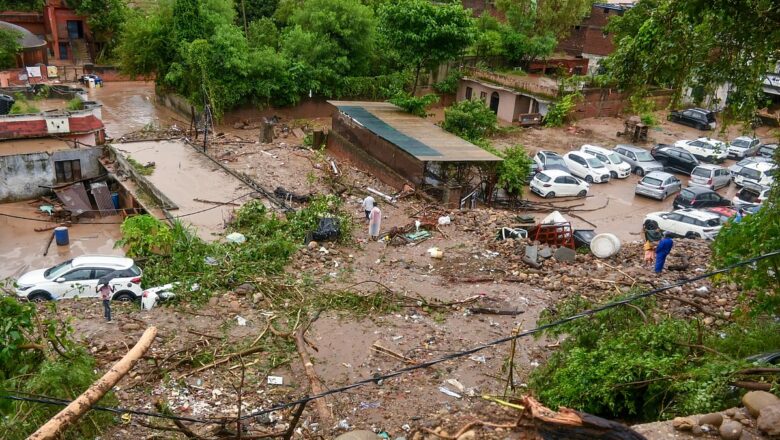
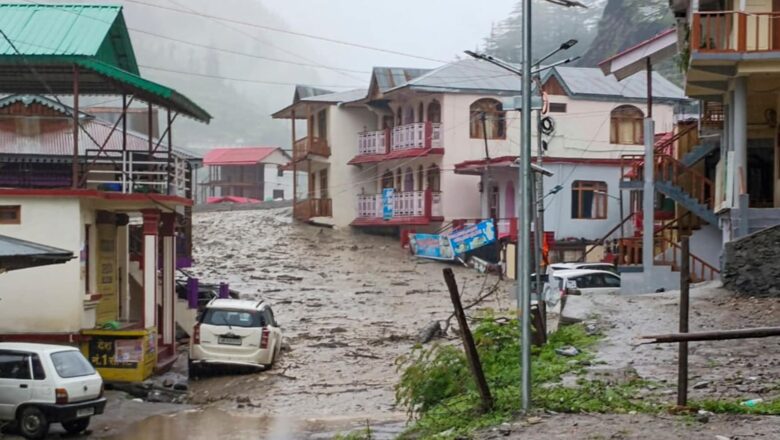
Jammu, India – The city of Jammu has been hit by a catastrophic flood situation after a record-breaking 380mm of rainfall in a single day, the highest since the MeT center began recording data in 1974. This unprecedented downpour, nearly a month's worth of rain in just 24 hours (Jammu's average for August is 403.1mm), has triggered flash floods, landslides, and widespread devastation across the Jammu and Kashmir region. Tragedy at Vaishno Devi and Doda The incessant rain has led to a series of tragedies, with the death toll rising in multiple incidents. A massive landslide on Tuesday near the Vaishno Devi shrine claimed at least 32 lives, with more than 20 people injured. Authorities had already suspended the pilgrimage on one of the routes due to the dangerous weather conditions...
Heavy Rains Cause Severe Flooding at Gurdwara Kartarpur Sahib in Pakistan

Heavy Rains Cause Severe Flooding at Gurdwara Kartarpur Sahib in Pakistan

Breaking News
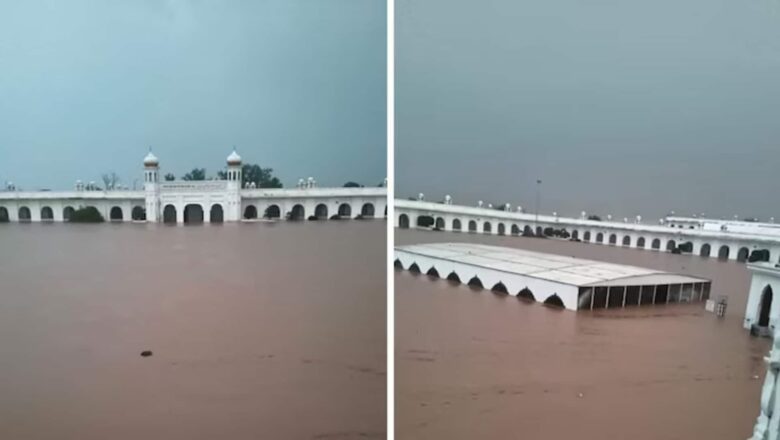
Intense monsoon rains and subsequent flooding have caused significant damage to the historic Gurdwara Sri Kartarpur Sahib in Pakistan Punjab province. The Gurdwara, a key Sikh shrine located near the international border, and the connecting Kartarpur Corridor were seen almost completely submerged in floodwaters. Gurdwara Submerged, Religious Relics Safe Visuals from the site showed the historic Darbar Sahib, the final resting place of Sikhism's founder Guru Nanak Dev, surrounded by floodwater from the overflowing Ravi River. The floodwaters, in some areas reaching up to five to seven feet, inundated the langar hall, parikrama, and sarovars within the complex. Fortunately, sources from the Gurdwara confirmed that the holy saroop of Guru Granth Sahib, which is on the second floo...
From Panic to Preparedness: How Gorakhpur Smart Flood System is a National Model

From Panic to Preparedness: How Gorakhpur Smart Flood System is a National Model

Breaking News
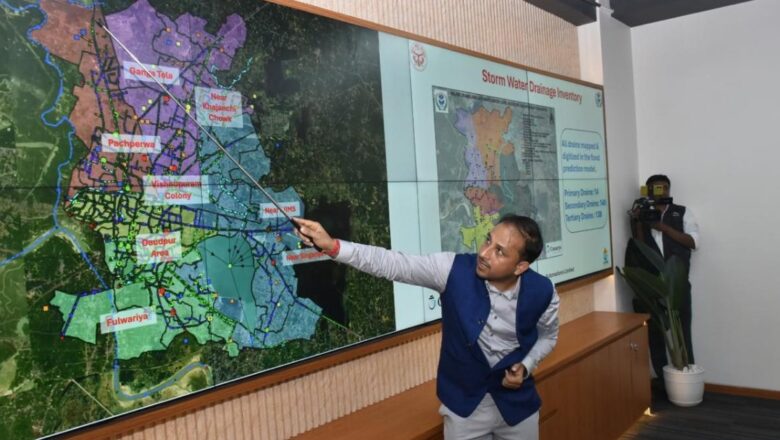
Gorakhpur, Uttar Pradesh — In a major victory for urban resilience, Gorakhpur has successfully transformed its approach to monsoon flooding, dramatically cutting flood response times from 10-12 hours to under two. A new Urban Flood Management System (UFMS), a collaboration between the Gorakhpur Municipal Corporation and tech firm Canarys Automations, is at the heart of this change, serving as a potential blueprint for other flood-prone Indian cities. For years, residents like Ratna Devi from Ashoknagar faced the same "dreadful story" of monsoon waters flooding their homes, causing widespread destruction and disruption. Gorakhpur's saucer-shaped geography and outdated drainage systems made it particularly vulnerable to waterlogging, a problem exacerbated by rapid urbanization. A Syste...
India Blue Carbon Potential Faces Hurdles Amidst Policy Gaps and Lack of Finance

India Blue Carbon Potential Faces Hurdles Amidst Policy Gaps and Lack of Finance

Breaking News
Blue carbon which is organic carbon captured and stored in coastal and marine ecosystems like mangroves, tidal marshes, and seagrasses, holds significant potential for climate mitigation. These ecosystems are highly effective carbon sinks, storing up to four times more carbon per unit area than terrestrial forests. Despite this, blue carbon credits are largely underutilized in voluntary carbon markets (VCMs), including in India, primarily because land-based projects are often easier and cheaper to implement. The Potential of Blue Carbon in India's VCM India possesses vast blue carbon resources, with a coastline of over 7,500 kilometers and some of the world's largest mangrove ecosystems, such as the Sundarbans. This makes the country well-positioned to become a global leader in issui...
New Study Links Human Activity to Changes in Atmospheric Aerosols

New Study Links Human Activity to Changes in Atmospheric Aerosols

Breaking News
New Delhi: A groundbreaking study led by the Indian Institute of Technology Madras has revealed how rapidly and significantly human activities can impact cloud formation, a critical component of the global climate system. The research, which treated the nationwide COVID-19 lockdown in 2020 as a unique "natural experiment," provides new evidence on the direct link between human-caused emissions and aerosol behavior. Published in the ACS ES&T Air Journal, the study focused on the coastal regions of India between March and July 2020. Researchers found that as human emissions were curtailed during the lockdown and then slowly rebounded, the concentration of cloud-forming aerosols, known as "Cloud Condensation Nuclei" (CCN), surged by an astonishing 80% to 250%. The study's lead resea...
Cherrapunji on Track for Driest Monsoon on Record as Other Regions Soar Past

Cherrapunji on Track for Driest Monsoon on Record as Other Regions Soar Past

Breaking News
In a startling reversal of its legendary status, Cherrapunji, historically one of the wettest places on Earth, is on course for its driest monsoon season ever recorded. The iconic town, located at the Sohra weather station, has received a mere 3,500 mm of rainfall between June 1 and August 20 a shocking 50% less than its normal average for the period. This unprecedented deficit is a grim reflection of a larger trend affecting the entire state of Meghalaya which is currently suffering from a rainfall deficit of 43%, the highest in the country. Data from the India Meteorological Department (IMD) shows that six of the state's 11 districts are experiencing deficient rains, while two are facing a "large deficient" classification, with 60% to 99% less rainfall than normal. The worst-affected ...
Snowmelt Accounts for 64% of Gangotri Glacier Water Discharge, Study Finds

Snowmelt Accounts for 64% of Gangotri Glacier Water Discharge, Study Finds

Breaking News
A new study by researchers at the Indian Institute of Technology (IIT) Indore has found that nearly 64% of the water discharged from the Gangotri Glacier system which feeds the Ganga river comes from the melting of fallen snow. The study highlights how climate change is altering the hydrology of one of India’s most crucial glaciers in the Hindu Kush Himalaya region. The analysis conducted with scientists from US universities and Nepal International Centre for Integrated Mountain Development (ICIMOD), shows that glacier melt contributes 21% while rainfall runoff accounts for 11% and baseflow another 4%. Climate Change Shifting Glacier Patterns Researchers observed a marked shift in the timing of peak discharge. Before 1990, the highest flow occurred in August but since then, it has...
Survey to Map Waste Depth at Bandhwari Landfill, Charcoal Plant Planned

Survey to Map Waste Depth at Bandhwari Landfill, Charcoal Plant Planned

Environment
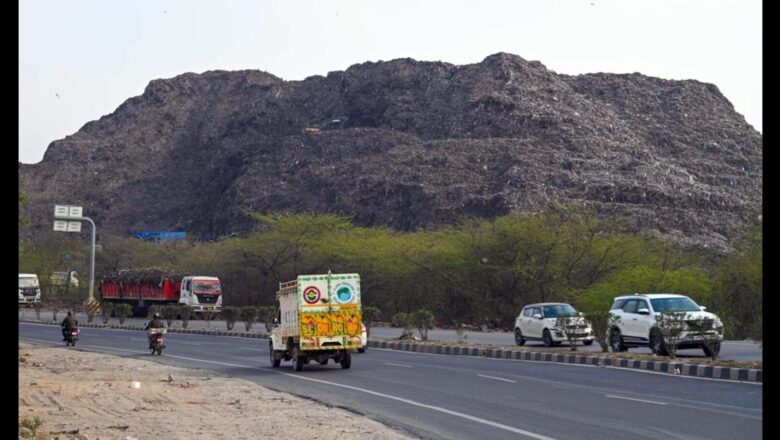
The Municipal Corporation of Gurugram (MCG) is preparing to conduct a scientific survey at the Bandhwari landfill to assess the depth of waste and plan for a waste-to-charcoal plant aimed at reducing pollution and remediating legacy waste. Officials estimate that around 12 lakh metric tonnes of waste have accumulated at the site, creating mounds nearly 20 metres high. To understand how far the waste has penetrated underground, borewell drilling will be carried out at 12 different locations. “The survey will not only provide clarity on the depth of the waste pile but also give us information about the water table beneath the landfill. Based on these findings, corrective action for the new plant can be taken,” said Sandeep Sihag, Executive Engineer, MCG. Waste-to-Charcoal Initiative...