Sunday, February 8News That Matters

Month: November 2025

Lichen, Not Trees: Ancient Organism Confirmed as Key Pioneer That Built Earth First Soils

Lichen, Not Trees: Ancient Organism Confirmed as Key Pioneer That Built Earth First Soils

Breaking News
Life on land didn't begin with great forests; it began with small, stress-tolerant partnerships. A new study, published in the journal Science Advances, provides compelling evidence that lichens were already widespread approximately 410 million years ago during the Devonian Period, long before complex, rooted plants took hold. The research identifies the long-enigmatic Devonian fossil, Spongiophyton, as a true lichen a symbiotic living partnership between a fungus and an alga. This discovery fundamentally repositions lichens as key pioneers in the transformation of Earth's surface from bare rock to a habitable landscape. Chemical Fingerprints Confirm Ancient Partnership The breakthrough came from a detailed analysis of a fossil from southern Brazil. Lead paleobiologist Bruno Becke...
India Solar Trees Cut Carbon and Generate Power, Offering a New Model for Clean Energy

India Solar Trees Cut Carbon and Generate Power, Offering a New Model for Clean Energy

Breaking News
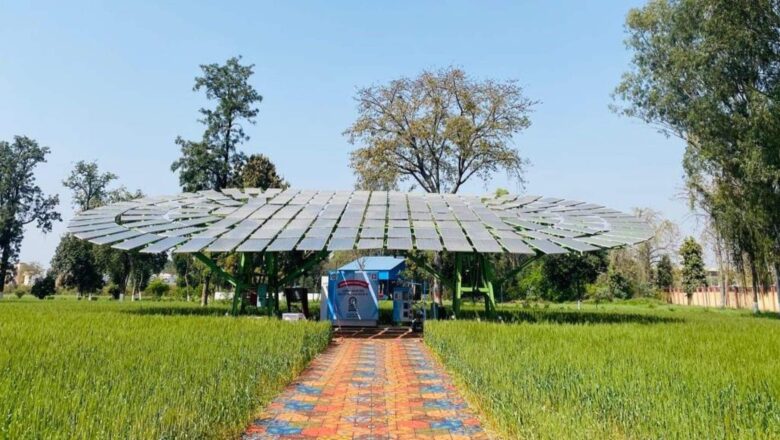
India has begun installing a new generation of “solar trees,” metallic structures designed to resemble the shape of real trees while producing electricity and reducing carbon emissions. Each solar tree generates up to 53.6 kW of power and is estimated to offset around 12 tons of carbon dioxide (CO₂) emissions annually by replacing electricity that would otherwise come from fossil fuels. The technology has been developed by the Council of Scientific and Industrial Research – Central Mechanical Engineering Research Institute (CSIR-CMERI) as part of efforts to expand renewable energy without requiring extensive land area. The compact, vertical design allows the panels to be arranged like branches, taking up significantly less ground space compared to conventional solar farms. A Solution...
Karnataka State Wildlife Board Recommends Forest Land Diversion, Orders CID Probe into Tiger Cub Filming

Karnataka State Wildlife Board Recommends Forest Land Diversion, Orders CID Probe into Tiger Cub Filming

Breaking News
Bengaluru—The Standing Committee of the State Wildlife Board (SBWL), chaired by Environment Minister Eshwar Khandre, convened on Wednesday and recommended a proposal to divert a small parcel of forest land from the Sharavathi Lion-tailed Macaque Wildlife Sanctuary for final approval by the National Board for Wildlife (NBWL). The controversial proposal seeks the diversion of 0.976 hectares of forest land, following its submission to the State government via the Parivesh portal last September. Key Decisions on Wildlife and Development In addition to the Sharavathi Sanctuary land diversion, the committee addressed several infrastructure projects and conservation directives: The committee granted approval for various road construction and widening proposals linked to three key prot...
Seasonal Debate Returns as Cloud Seeding Gains Attention Amid North India’s Winter Smog

Seasonal Debate Returns as Cloud Seeding Gains Attention Amid North India’s Winter Smog

Breaking News
As winter sets in and post-monsoon haze thickens across North India, public attention once again turns to air pollution. The familiar cycle resumes: media focus intensifies, governments announce emergency measures, and residents express frustration. Yet, as soon as winds improve and visibility returns, the urgency fades often stalling long-term reform. This year, cloud seeding has emerged as the prominent proposed solution. The technique involves dispersing chemicals into clouds to induce rainfall, with the expectation that precipitation can temporarily wash pollutants from the air. It joins earlier high-visibility interventions such as smog towers, smog guns, “green crackers,” and wearable air purifiers. However, experts note that cloud seeding has limited effectiveness during North...
World Largest Coral Cryobank Works to Secure Reef Future as Bleaching Threat Grows

World Largest Coral Cryobank Works to Secure Reef Future as Bleaching Threat Grows

Breaking News
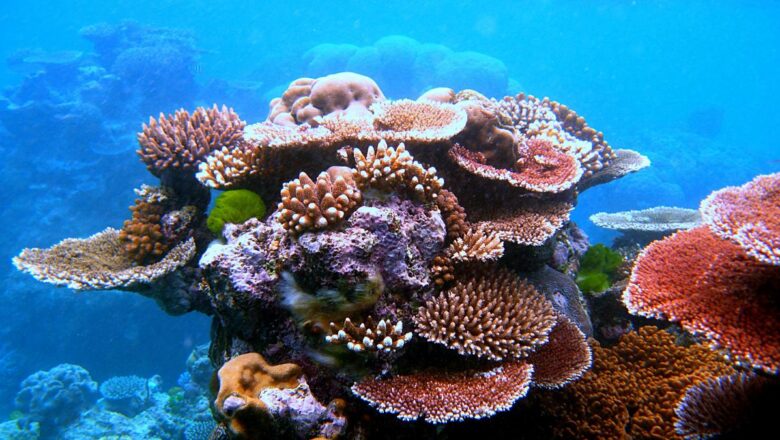
Sydney / Great Barrier Reef— Once a year, usually between spring and summer, the Great Barrier Reef undergoes a rare and spectacular event. In the nights following the full moon, when water temperatures are ideal, millions of coral polyps release eggs and sperm in a synchronised mass spawning. The tiny reproductive bundles drift upward like a glowing cloud, increasing the chances of fertilisation and the birth of new coral colonies. During this brief window, scientists from Sydney’s Taronga Zoo dive into the reef by torchlight to collect coral sperm and larvae. These samples are taken to the Taronga CryoDiversity Bank, where they are stored at extremely low temperatures. Over the past decade, the bank has become the largest coral cryopreservation facility in the world, safeguarding gene...
CityMetrics Dashboard Launched to Help Cities Track Climate and Urban Risks

CityMetrics Dashboard Launched to Help Cities Track Climate and Urban Risks

Breaking News
A new CityMetrics platform has been launched by the WRI Ross Center for Sustainable Cities, offering an interactive dashboard that allows users to explore key urban indicators from more than 60 cities across the world. The tool aims to support city leaders, planners and researchers in understanding environmental risks, development patterns and climate resilience challenges. What the Dashboard Offers The CityMetrics dashboard compiles a wide range of geospatial datasets linked to seven major themes that influence sustainability and resilience. These themes include flooding, heat, air quality, accessibility, land protection, biodiversity and climate change mitigation. Users can compare cities and observe how conditions have changed over time. Key Indicators Flooding indicators sh...
AI-Guided Aerial Robots Developed to Improve Wildfire Smoke Tracking and Air Quality Predictions

AI-Guided Aerial Robots Developed to Improve Wildfire Smoke Tracking and Air Quality Predictions

Breaking News
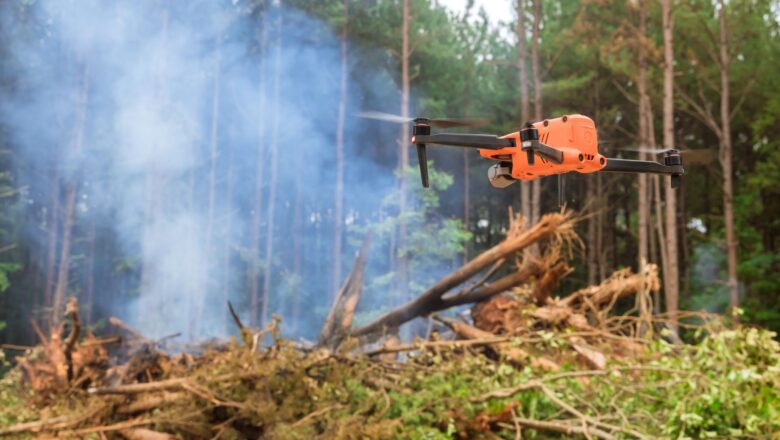
Researchers at the University of Minnesota Twin Cities have developed a new system of aerial robots that use artificial intelligence to detect, track and analyze wildfire smoke plumes. The technology is expected to help create more accurate computer models, which could improve predictions of air pollution levels during wildfires and prescribed burns. The findings were published recently in the journal Science of the Total Environment. The need for better smoke monitoring tools has grown in recent years. Between 2012 and 2021, 43 wildfires resulted from 50,000 prescribed burns, according to an Associated Press report from 2024. Understanding how smoke spreads is critical because smaller smoke particles can travel long distances and remain suspended for longer periods, affecting air quali...
Global Food Production Depends on Forest Moisture Flows Across Borders, Study Finds

Global Food Production Depends on Forest Moisture Flows Across Borders, Study Finds

Breaking News
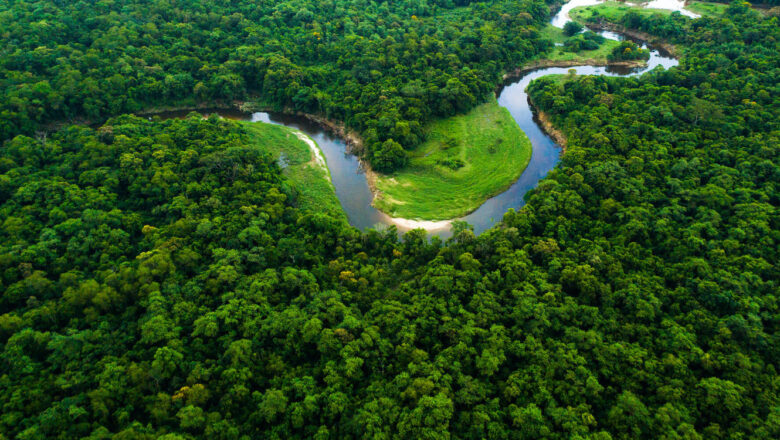
A new study published in Nature Water has revealed that agricultural regions in 155 countries rely on atmospheric moisture generated by forests in other nations for up to 40 per cent of their annual rainfall. The research highlights how interconnected global food systems are, with forest ecosystems playing a crucial role in sustaining crop production far beyond national boundaries. The study found that about 18 per cent of rainfall in 105 countries is recycled from their own forests, while moisture from forests worldwide supports 18 per cent of global crop output and 30 per cent of crop exports. This means countries that grow and export food depend heavily on forest cover in upwind regions, creating a complex system of ecological interdependence. One of the strongest examples of this...
Long-Billed Vultures in Telangana Show Declining Breeding Success Linked to Water Pollution

Long-Billed Vultures in Telangana Show Declining Breeding Success Linked to Water Pollution

Breaking News
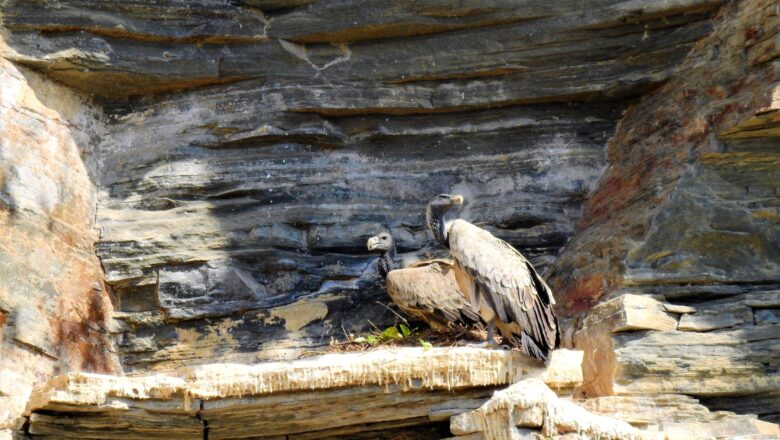
In Telangana’s Kaghaznagar Forest Division, one of the last strongholds of the critically endangered long-billed vulture is showing worrying signs of decline. A 14-year monitoring study has revealed that the species is breeding less successfully, with pollution in a key water source emerging as a major factor. Researchers tracked 23 nests located across sandstone cliffs in the Palarapu and Lakkameda areas between 2010 and 2023. The region forms a vital ecological corridor connecting Kawal, Tadoba-Andhari, and Indravati Tiger Reserves. The long-billed vulture, known to raise only one chick a year, requires stable habitat and clean resources to sustain its slow reproductive cycle. From 161 nesting attempts recorded in the study, 116 eggs were laid and 85 chicks successfully fledged. Ho...
How Pampadum Shola Fight Against Wattle Is Rewriting India’s Ecological Restoration Playbook

How Pampadum Shola Fight Against Wattle Is Rewriting India’s Ecological Restoration Playbook

Breaking News
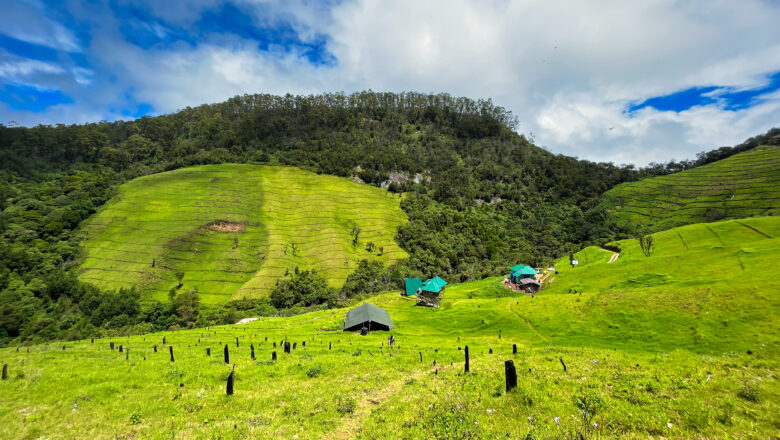
In the upper reaches of Kerala’s Western Ghats, Pampadum Shola National Park is undergoing an ecological revival that is quietly reshaping conservation practices across India. Once dominated by dense stands of invasive Australian black wattle, the park’s native grasslands are returning, bringing back lost water streams, wildlife and ecological balance. Located at elevations between 1,900 and 2,300 metres, Pampadum Shola holds the southernmost stretch of the ancient shola–grassland mosaic. The park, spanning just over 1,300 hectares in Idukki district, is home to species found nowhere else on Earth including the Nilgiri marten, Kerala laughing thrush, and black-and-orange flycatcher. The grasslands here play a crucial hydrological role, feeding headstreams of the Pambar and Vaigai rivers, ...