Sunday, February 8News That Matters

Month: December 2025

Bangladesh Turbulence: Politics, Economy and Climate Pressures Shape a Defining Year

Bangladesh Turbulence: Politics, Economy and Climate Pressures Shape a Defining Year

Breaking News
The year 2025 emerged as a defining and difficult chapter for Bangladesh, as political uncertainty, economic strain and climate-related disruptions converged to test the country’s resilience. From tense domestic politics to persistent cost-of-living pressures and mounting environmental risks, the year underscored the fragility of stability in one of South Asia’s most densely populated nations. Politics remained at the centre of national attention throughout the year. In the wake of the general elections, Bangladesh saw prolonged political tension, with opposition parties raising questions over democratic space and governance. Protests, arrests of political activists and restrictions on dissent kept the political climate charged. Concerns expressed by international rights organisations o...
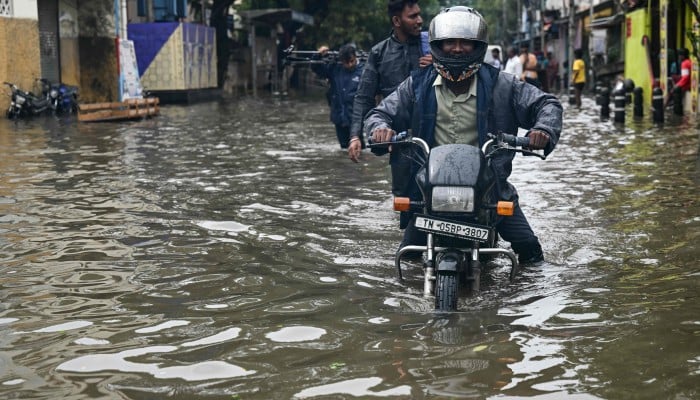
Deadliest Climate Disaster of 2025: South Asian Monsoon Claims Most Lives, Says Christian Aid

Deadliest Climate Disaster of 2025: South Asian Monsoon Claims Most Lives, Says Christian Aid

Breaking News
    The southwest monsoon of 2025 in India and Pakistan has emerged as the deadliest climate disaster of the year, claiming the highest number of lives among all major global climate events, according to a new report by UK-based charity Christian Aid. The monsoon season, which recorded rainfall eight per cent above normal, also ranked as the fifth most expensive climate disaster worldwide in terms of economic losses. Published in London on December 27, the report titled Counting the Cost 2025 highlights how extreme weather events driven by climate change caused more than $120 billion in losses globally this year from just the ten most severe disasters. The South Asian monsoon alone caused estimated financial damages of $5.6 billion, or over ₹50,000 crore, across India an...
NHAI Takes Over Dhaula Kuan Underpass After Delhi Agencies Fail to Resolve Persistent Waterlogging

NHAI Takes Over Dhaula Kuan Underpass After Delhi Agencies Fail to Resolve Persistent Waterlogging

Breaking News
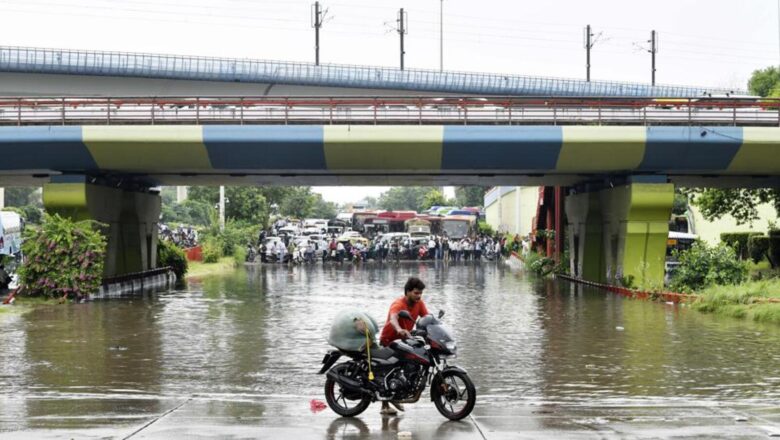
    NEW DELHI: More than a year after recurring waterlogging began at the RR Hospital underpass near Dhaula Kuan, Delhi’s civic agencies have failed to identify the exact cause of the problem despite spending over ₹15 lakh on repairs, prompting the National Highways Authority of India (NHAI) to take charge of the stretch. According to a presentation made during a Delhi government meeting last week, the underpass, located on the Dhaula Kuan–Terminal 1 approach road, was formally handed over to NHAI in November. The move allows the authority to engage expert agencies and seek financial assistance from the Ministry of Road Transport and Highways (MoRTH) to find a permanent solution. Officials said repeated efforts by the Delhi Jal Board (DJB) to trace the source of water...
Celebrate the Festive Season With Instant Cash Up to ₹50 Lakh

Celebrate the Festive Season With Instant Cash Up to ₹50 Lakh

Breaking News
As the festive season gathers momentum, lenders and financial platforms are rolling out attractive financing options to help individuals and families meet their festive expenses with ease. From home renovations and weddings to business expansion and debt consolidation, instant cash loans of up to ₹50 lakh are now available with faster approvals and minimal paperwork. Banks, NBFCs and digital lending platforms are offering customised personal and business loan products designed to match festive needs. These loans typically come with competitive interest rates, flexible repayment tenures and quick disbursal timelines, making them a preferred choice for borrowers looking for immediate liquidity. Industry experts say festive demand traditionally leads to a surge in credit uptake, especia...
World on Track for Peak Glacier Extinction as Thousands Set to Vanish Each Year by 2050

World on Track for Peak Glacier Extinction as Thousands Set to Vanish Each Year by 2050

Breaking News
    Thousands of glaciers across the world are expected to disappear every year in the coming decades, with scientists warning that the planet is approaching a period they describe as “peak glacier extinction.” A new study published in Nature Climate Change shows that unless global warming is sharply reduced, the pace of glacier loss will accelerate dramatically by the mid-21st century. Researchers estimate that today the world loses about 1,000 glaciers annually. By the 2040s, that number could double or even quadruple, depending on how much the planet warms. The study finds that government climate action will largely determine whether the world loses around 2,000 glaciers a year or as many as 4,000 by the 2050s. Led by glaciologist Lander Van Tricht, the research sh...
Is Groundwater India Biggest Invisible Employer? Why Falling Water Tables Are Quietly Hurting Rural Jobs

Is Groundwater India Biggest Invisible Employer? Why Falling Water Tables Are Quietly Hurting Rural Jobs

Breaking News
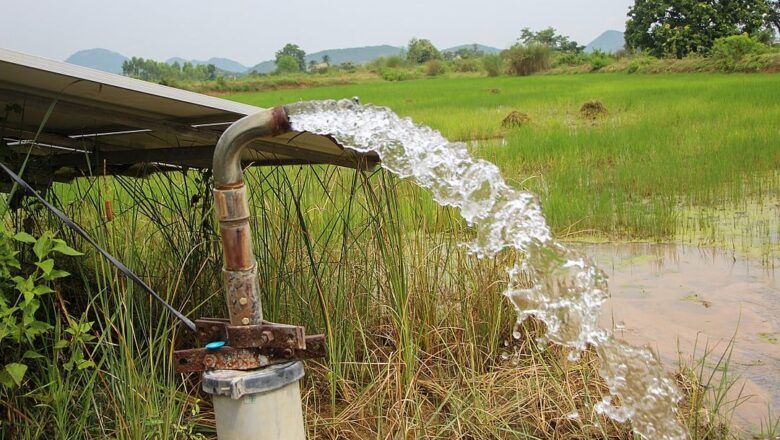
    Groundwater rarely features in employment debates, yet it has silently powered rural livelihoods across India for decades. Beneath fields and villages, this unseen resource has sustained irrigation, extended cropping seasons, and generated millions of days of casual farm work. Now, as water tables fall in large parts of the country, that invisible employer is slowly disappearing with serious consequences for rural workers. India’s groundwater picture looks stable at the national level, but the reality on the ground is far more troubling. According to official assessments, while overall recharge still appears sufficient, hundreds of blocks are already extracting more water than nature can replenish. In these over-exploited and critical areas, wells are running dry, pu...
Surprisingly Simple Way to Remove Microplastics From Your Drinking Water

Surprisingly Simple Way to Remove Microplastics From Your Drinking Water

Breaking News
    Tiny pieces of plastic are quietly entering the human body every day, mainly through food and drinking water. Scientists have been warning about microplastics and nanoplastics for years, but a new study suggests there may be an easy, household-level solution to reduce their presence in drinking water. Researchers in China have found that simply boiling tap water and then filtering it can remove a significant amount of microplastics and nanoplastics. The method works with both soft and hard water, although the results are especially striking in water that contains higher mineral content. The study, published in Environmental Science & Technology Letters tested tap water samples by adding known quantities of microplastics and nanoplastics. When the water was boi...
From Migration to Regeneration: How Betul’s Farmers Are Reviving Agriculture Through Natural Farming

From Migration to Regeneration: How Betul’s Farmers Are Reviving Agriculture Through Natural Farming

Breaking News
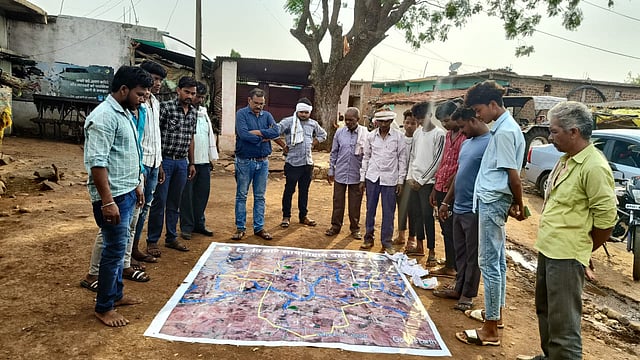
    In the forest-fringed hills of Madhya Pradesh’s Betul district, villages once marked by crop failures, soil exhaustion and distress migration are quietly reclaiming their agricultural future. In the Saigohan watershed, farmer-led natural farming has begun to reverse years of ecological decline, turning a struggling landscape into a living example of agroecological resilience. For decades, small tribal farmers in villages like Saigohan, Naktidhana and Jhirnadhana battled erratic rainfall, falling groundwater levels and rising input costs. Repeated crop losses pushed many families to migrate in search of work. Today, that cycle is weakening as farmers themselves take charge of rebuilding soil health, restoring water systems and reshaping local livelihoods. The trans...
Aravalli on the Brink: World Oldest Mountain Range May Lose Vast Forests by 2059

Aravalli on the Brink: World Oldest Mountain Range May Lose Vast Forests by 2059

Breaking News
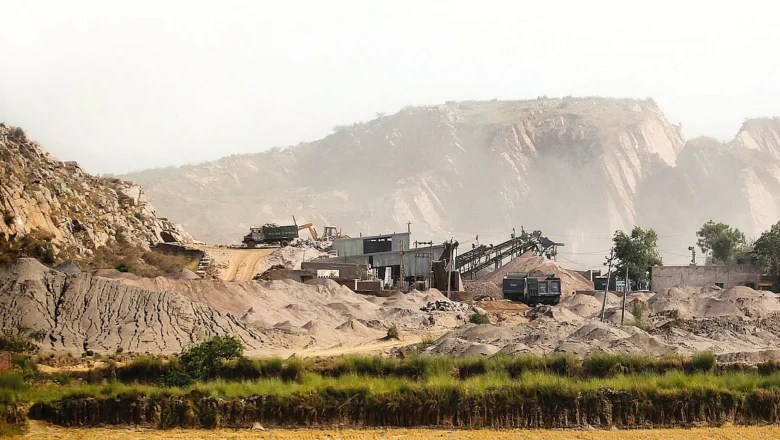
    One of the world’s oldest mountain systems, the Aravalli range, formed more than 2.5 billion years ago, is now facing a future where large parts of it could disappear within a single human lifetime. New scientific projections warn that if current trends continue, over 16,000 square kilometres of forest in the Aravallis could be lost to human settlements by 2059, pushing the ancient range closer to ecological collapse. The warning comes amid growing national attention on the Aravallis, following the Supreme Court’s recent decision to put on hold its November 20 order related to the definition of the hill range. The court has taken suo motu cognisance of concerns that a revised definition could open the door to increased mining and construction in the fragile foothills...
650 Foot Mega Tsunami Shook the Planet for Nine Days and Satellites Finally Explained Why

650 Foot Mega Tsunami Shook the Planet for Nine Days and Satellites Finally Explained Why

Breaking News
    In one of the most extraordinary geophysical events ever recorded, a colossal tsunami in East Greenland sent seismic vibrations rippling through Earth’s crust for nine continuous days. The slow, rhythmic signal puzzled scientists worldwide until satellite imagery revealed the source: a massive mountainside collapse into a remote Arctic fjord. The event unfolded without warning in September 2023. Seismic stations from Alaska to Australia began recording an unusual, steady pulse repeating every 92 seconds. Unlike earthquakes, which produce sharp, short-lived tremors, this signal was smooth, persistent, and globally synchronized. No one felt it but the planet did. Researchers soon traced the disturbance to Dickson Fjord, a narrow inlet along Greenland’s eastern coast...