Wednesday, May 6News That Matters

Month: January 2026

The Himalayas Snow Decline: How Vanishing Snow and Ice Are Reshaping Asia Water Tower

The Himalayas Snow Decline: How Vanishing Snow and Ice Are Reshaping Asia Water Tower

Breaking News
    High above the plains of South Asia, the Himalayas, long revered as the “abode of snow” and the source of some of the world’s greatest rivers, are undergoing a profound transformation. Satellite imagery and ground-based observations show vast stretches of the Himalayan range lying bare and rocky during winter, a season that once reliably blanketed these mountains in snow. Scientists say this change is not a temporary fluctuation but a clear signal of systemic climate-driven disruption, with far-reaching consequences for ecosystems, water security and human livelihoods across Asia. For thousands of years, the Himalayan cryosphere the interconnected system of snow, glaciers and ice has functioned as a vast natural reservoir. Winter snowfall accumulated at high elevatio...

India’s 60 Million Street Dogs Are Shifting From Village Scavengers to Urban Territory Defenders

India’s 60 Million Street Dogs Are Shifting From Village Scavengers to Urban Territory Defenders

Breaking News
    For generations, street dogs in India lived quietly alongside humans, surviving on leftovers and tolerated as part of everyday life. In villages, a dog might receive a piece of chapati or a bowl of milk and spend the rest of the day scavenging near homes. This informal coexistence worked for centuries. But in modern Indian cities, this relationship is changing rapidly, and the consequences are becoming increasingly visible. India today has an estimated 60 million free-ranging street dogs, a figure that may be higher given rapid urban expansion. Delhi alone is believed to host nearly one million street dogs. At the same time, India accounts for more than one-third of global rabies deaths, making dog bites a serious public health concern. As cities grow denser and more...
2025 Among Three Warmest Years Ever Recorded as WMO Warns of Intensifying Climate Extremes

2025 Among Three Warmest Years Ever Recorded as WMO Warns of Intensifying Climate Extremes

Breaking News
    The World Meteorological Organization (WMO) has confirmed that 2025 was one of the three warmest years ever recorded, reinforcing scientific warnings that human-driven climate change continues to dominate the global climate system, even when natural cooling influences are present. In a press release issued by the UN’s specialised weather agency, the WMO reported that global average surface temperatures in 2025 were approximately 1.44°C above the pre-industrial baseline of 1850–1900. The estimate, based on a consolidated analysis of eight leading international datasets from institutions including NASA, NOAA, the UK Met Office and the European Centre for Medium-Range Weather Forecasts, places 2025 firmly among the hottest years in the 176-year instrumental record. T...
India Records Its First Scientifically Confirmed Case of Pufferfish Poisoning, Exposing a Hidden Health Threat

India Records Its First Scientifically Confirmed Case of Pufferfish Poisoning, Exposing a Hidden Health Threat

Breaking News
    India has confirmed its first scientifically verified case of pufferfish poisoning, bringing national attention to a long-overlooked public health risk linked to freshwater ecosystems. The case highlights how toxic wildlife, microbial dynamics and gaps in food safety awareness intersect in India’s riverine regions, placing unsuspecting communities at risk. The incident involved a 23-year-old man from Veraval in Gujarat, who developed sudden numbness, vomiting and rapidly worsening paralysis shortly after consuming a low-cost freshwater fish purchased from a local village market. Medical examination and scientific evaluation later confirmed that the symptoms were caused by tetrodotoxin, a powerful neurotoxin associated with certain species of pufferfish. This confirma...
Lake Natron in Tanzania: The Red Alkaline Lake That Preserves Animals Like Stone While Sustaining Flamingo Life

Lake Natron in Tanzania: The Red Alkaline Lake That Preserves Animals Like Stone While Sustaining Flamingo Life

Breaking News
    Lake Natron, located in northern Tanzania near the Kenyan border, is one of the most visually striking and scientifically fascinating water bodies in the world. Known for its deep red colour and highly alkaline waters, the lake has earned global attention for its ability to preserve dead animals in a stone-like state while simultaneously supporting one of the largest breeding grounds for lesser flamingos. The lake’s dramatic red hue is caused by high concentrations of salt, minerals, and salt-loving microorganisms, particularly haloarchaea and cyanobacteria. These organisms thrive in extreme environments and produce red pigments that intensify as water levels drop and temperatures rise. During dry seasons, the lake can appear almost blood-red from aerial views. La...
Why the Spread of Steel Roofs in Ladakh Reflects Climate Change, Social Disruption and Political Anxiety

Why the Spread of Steel Roofs in Ladakh Reflects Climate Change, Social Disruption and Political Anxiety

Breaking News
    In villages across Ladakh, a quiet but telling transformation is underway. Traditional mud roofs, long designed to endure one of the harshest winters on the planet, are being replaced by steel sheets. At first glance, this appears to be a practical response to changing weather. In reality, the rise of steel roofing reveals a deeper crisis shaped by climate change, development pressures and a profound shift in Ladakh’s social world. When residents returned to their villages after the unprecedented rainfall of August, the damage was unmistakable. Leh alone recorded nearly 80 millimetres of rain, an almost tenfold increase over its historical average. For generations, flat mud roofs had been perfectly suited to Ladakh’s climate, which received most of its precipitation ...
India’s Experience Shows Urban Forests Can Cool Cities Only When Planning Respects Ecology

India’s Experience Shows Urban Forests Can Cool Cities Only When Planning Respects Ecology

Breaking News
    As Indian cities grow denser and hotter, urban forests are increasingly being promoted as a solution to rising temperatures. But evidence from cities such as Chennai suggests that trees alone are not a universal fix. Urban forests can help cool cities and improve quality of life, but only when planners understand local climate conditions, ecological systems and how people use urban land. Chennai, a coastal city of 4.5 million people, routinely experiences summer temperatures touching 44 degrees Celsius. Despite its cultural richness, with hundreds of temples and a national park embedded within the city, Chennai has limited shaded public spaces. Trees line some roads, but large green parks are scarce, leaving much of the city exposed to extreme heat. As urbanisatio...
Central and South India as Meteorologists Track Possibility of an Extreme Arctic-Origin Cold Wave

Central and South India as Meteorologists Track Possibility of an Extreme Arctic-Origin Cold Wave

Breaking News
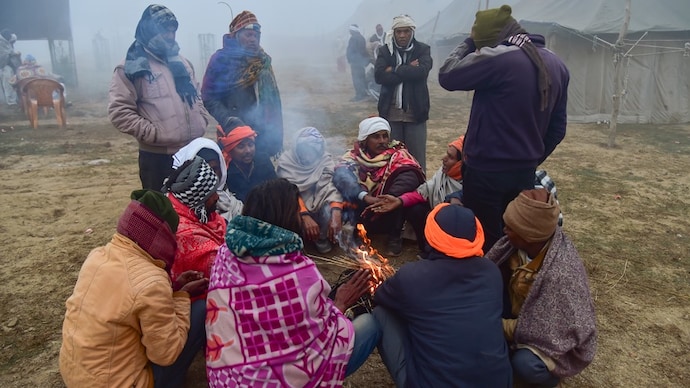
    Large parts of India are experiencing unusually cold conditions in the opening weeks of 2026, with temperatures dipping well below seasonal norms across east, central and southern regions. Meteorologists are now closely monitoring the possibility of a rare and intense cold blast affecting north India later this month, potentially driven by an Arctic-origin weather system. The cold spell, which began in December 2025 in several regions, has intensified in early January. On January 12, multiple locations across the plains of northwest India recorded sub-zero or near-zero minimum temperatures. The outskirts of Gurgaon reported temperatures close to minus one degree Celsius, while Fatehpur Shekawati in Rajasthan recorded a low of minus 3.5 degrees Celsius on January 11. ...
Tiny Ancient Creatures Living Everywhere on Earth That Quietly Sustain Global Ecosystems

Tiny Ancient Creatures Living Everywhere on Earth That Quietly Sustain Global Ecosystems

Breaking News
    Hidden beneath forest floors, inside rotting wood, across deserts, caves and even near the summit of Mount Everest, lives one of Earth’s most ancient and important groups of animals springtails. These tiny invertebrates, largely unknown outside scientific circles, have been quietly shaping the health of the planet’s ecosystems for more than 400 million years. Springtails, scientifically known as Collembola, evolved alongside mosses and lichens long before dinosaurs roamed the Earth. Today, they are found on every continent, including Antarctica, thriving in environments ranging from humid rainforests and mangroves to frozen polar soils and underground caves nearly 2,000 metres deep. Despite their insect-like appearance, springtails are not insects. They lack wings...
Why India Cities Struggle to Keep Tap Water Safe and How Odisha Continuous Supply Model Offers a Different Path

Why India Cities Struggle to Keep Tap Water Safe and How Odisha Continuous Supply Model Offers a Different Path

Breaking News
    The recent deaths of at least 21 people in Indore after consuming contaminated tap water have once again highlighted the deep-rooted weaknesses in India’s urban water supply systems. Preliminary investigations indicate that leakages in the city’s drinking water pipeline allowed sewage to enter the supply, a problem that officials say is linked to ageing infrastructure and the close proximity of water and sewerage lines underground. Such incidents are not isolated. Cities like Bengaluru have also reported repeated contamination scares, despite years of investment in urban water infrastructure. Experts argue that the core issue lies in India’s dependence on intermittent water supply systems, where water flows for only a few hours a day. These systems, they say, are str...