Wednesday, May 6News That Matters

Month: February 2026

Lab-Built Virus Offers New Weapon Against Antibiotic Resistance, Raises Fresh Questions

Lab-Built Virus Offers New Weapon Against Antibiotic Resistance, Raises Fresh Questions

Breaking News
    Scientists have taken a major step toward tackling antibiotic-resistant infections by designing bacteria-killing viruses entirely in the laboratory. The breakthrough could speed up the development of precision treatments against deadly superbugs, at a time when conventional antibiotics are steadily losing their power. Bacteriophages, viruses that infect and kill bacteria, have been known for more than a century. Their medical use, however, has remained limited because engineering them is slow, complex, and heavily dependent on naturally occurring viruses. As drug-resistant infections rise worldwide, researchers have been searching for faster and safer ways to create tailor-made phages. Synthetic DNA Turns Phage Engineering on Its Head In a study published in th...
20,000 Octopuses Found Living Together Near Underwater Volcano, Stunning Scientists

20,000 Octopuses Found Living Together Near Underwater Volcano, Stunning Scientists

Breaking News
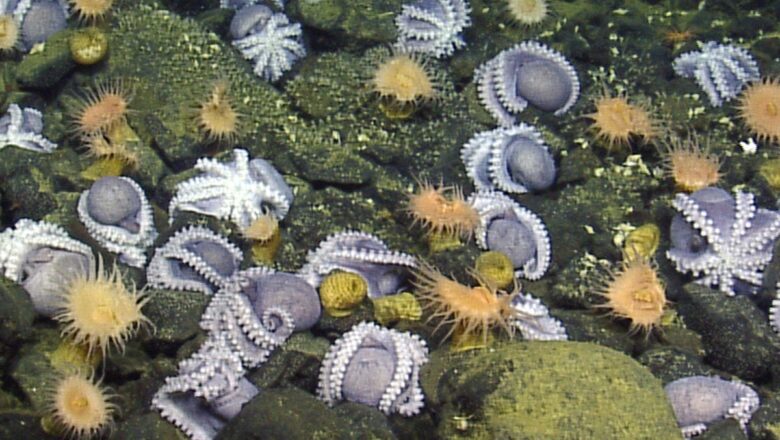
    Octopuses are known as some of the most intelligent creatures in the ocean, but they are also famous for one more trait they prefer to live alone. That belief is now being challenged after scientists uncovered the world’s largest known gathering of octopuses deep beneath the Pacific Ocean. The discovery was made nearly two miles below the surface, close to an underwater volcano off the coast of Monterey, California. The site, now called the Octopus Garden, is spread across an area comparable to 233 soccer fields and is believed to host up to 20,000 octopuses. From solitary hunters to unexpected neighbours The idea that octopuses could live close to one another first surprised scientists more than a decade ago. In 2012, researchers diving near Jervis Bay in Aust...
Satellite Study Warns of Massive Groundwater Loss in Asia’s Water Tower

Satellite Study Warns of Massive Groundwater Loss in Asia’s Water Tower

Breaking News
    A new satellite-based study has revealed a worrying decline in groundwater reserves across High Mountain Asia, a vast region often called the “Asian Water Tower” because it supplies water to hundreds of millions of people downstream. Researchers estimate that the region is losing groundwater at an alarming rate of nearly 24.2 billion tonnes every year, raising concerns about long-term water security. High Mountain Asia stretches across the Himalayas, Karakoram, Hindu Kush and Tibetan Plateau, feeding major rivers such as the Ganges, Indus, Brahmaputra and Amu Darya. These rivers support agriculture, cities and ecosystems across more than a dozen countries in South and Central Asia. Two decades of data show widespread decline The study, led by Professor Wang Shu...
Melting Antarctic Ice Delivered Iron but Failed to Boost Ocean Carbon Absorption

Melting Antarctic Ice Delivered Iron but Failed to Boost Ocean Carbon Absorption

Breaking News
    Scientists studying ancient ocean sediments have uncovered an unexpected climate feedback involving the melting of Antarctica’s ice and the Southern Ocean’s role in absorbing carbon dioxide. Contrary to long-standing assumptions, the loss of ice from West Antarctica during warmer periods did not stimulate marine algae growth, despite delivering large amounts of iron into the ocean. The findings come from a new study published on February 2 in Nature Geoscience, led by researchers from the Columbia Climate School and international collaborators. The research focuses on how changes in the West Antarctic Ice Sheet, or WAIS, influenced biological activity in the Southern Ocean during past ice ages. Ancient Sediments Reveal a Climate Surprise To understand how Antar...
Budget 2026-27 puts Ganga on engineering path, ecological revival takes back seat

Budget 2026-27 puts Ganga on engineering path, ecological revival takes back seat

Breaking News
    The Union Budget 2026-27 has once again underlined the government’s intent to clean and rejuvenate the Ganga, but a closer look at allocations shows that the approach remains firmly infrastructure-driven, with limited attention to restoring the river as a living ecological system. Despite repeated political commitments to revive the Ganga in its entirety, spending priorities continue to favour sewage treatment plants, wastewater networks and externally funded engineering projects over measures that address river flow, floodplains, biodiversity and livelihoods. The budget, presented by Finance Minister Nirmala Sitharaman on February 1, 2026, allocates Rs 3,100 crore to the National Ganga Plan under Namami Gange Mission-2 for the coming financial year. While this marks...
Global Study Warns Forest Resilience Weakening as key Tree Species Vanish

Global Study Warns Forest Resilience Weakening as key Tree Species Vanish

Environment
    Forests across the world are undergoing a subtle but profound transformation, one that scientists warn could permanently weaken their ability to support life on Earth. A large international study has found that many forests are losing their most ecologically valuable trees and becoming increasingly dominated by fast-growing, generalist species. While these changes may appear gradual, researchers say the long-term consequences for biodiversity, climate regulation and ecosystem stability could be severe. Trees play a foundational role in sustaining life. They absorb and store carbon dioxide, stabilize soils, regulate water cycles and provide habitat for countless species of animals, fungi and insects. Forests also support human societies by supplying timber, food, shad...
Illegal Electric Fences Spark New Danger for Tigers in Bihar

Illegal Electric Fences Spark New Danger for Tigers in Bihar

Breaking News
On a cold winter morning in late January 2026, a young male tiger met a tragic end near Bihar’s Valmiki Tiger Reserve, raising serious concerns about a growing and largely unchecked threat to big cats in human-dominated landscapes. The two-and-a-half-year-old tiger was electrocuted after coming into contact with illegal electric fencing installed by farmers along the forest boundary in West Champaran district. This incident marks the first recorded case of a tiger dying due to electrocution inside Bihar’s only tiger reserve. Forest officials confirmed that the animal’s body was discovered in a sugarcane field close to Purainia village under the Manguraha forest range during a routine patrol on January 27. The fencing had been illegally connected to grid electricity to protect crops from...
Engineered Algae Emerge as Powerful Tool to Remove Microplastics from Water

Engineered Algae Emerge as Powerful Tool to Remove Microplastics from Water

Breaking News, Climate Actions
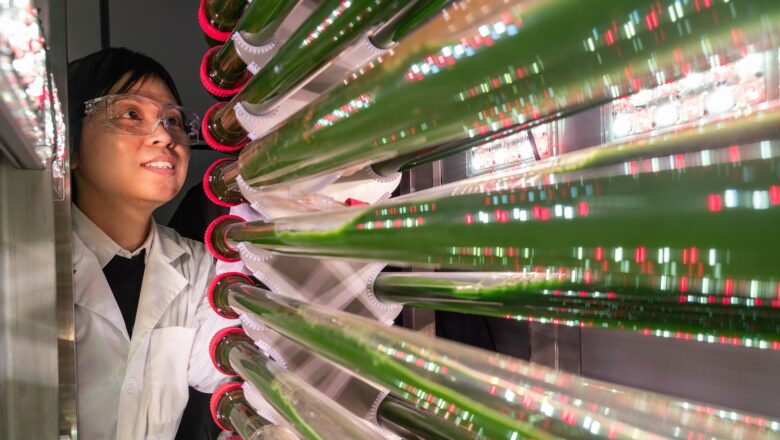
Scientists at the University of Missouri have developed a novel algae-based solution that could help tackle one of the most stubborn forms of pollution microplastics in water. By using genetically engineered algae, researchers have demonstrated a way to capture tiny plastic particles that routinely escape conventional wastewater treatment systems and end up in rivers, lakes and even drinking water. The breakthrough, led by Susie Dai, professor in the College of Engineering and principal investigator at the Bond Life Sciences Center, has been published in the journal Nature Communications. The approach not only removes microplastics from polluted water but also opens the door to reusing the collected plastic waste in safer, value-added products. Why microplastics remain a hidden threa...
Bhuj Earthquake: The Disaster That Redefined India’s Seismic Safety

Bhuj Earthquake: The Disaster That Redefined India’s Seismic Safety

Disasters, Environment
    The Bhuj earthquake of January 2001 remains etched in India’s disaster history as one of the deadliest calamities since Independence. More than 13,000 people lost their lives, over 1.5 lakh were injured, and nearly a million were rendered homeless as entire towns in Gujarat collapsed within minutes. The scale of destruction exposed how unprepared modern India was for a major seismic event. Beyond the tragic human toll, Bhuj tested the entire system responsible for public safety. From urban planning and structural design to construction practices, supervision, and emergency response, every link was stressed simultaneously. What failed was not just brick, concrete, and steel, but also governance, enforcement, and the flow of technical knowledge from codes to constructi...
Budget 2026–27 earmarks Rs 20,000 crore to scale up carbon capture in India’s heavy industries

Budget 2026–27 earmarks Rs 20,000 crore to scale up carbon capture in India’s heavy industries

Idea & Innovations
    The Union Budget 2026–27 has set aside Rs 20,000 crore over the next five years to accelerate Carbon Capture, Utilisation and Storage (CCUS) technologies, marking one of India’s most significant policy pushes yet toward decarbonising its most emission-intensive industries. Announced by Finance Minister Nirmala Sitharaman in Parliament on February 1, the allocation positions CCUS as a central pillar of India’s long-term climate strategy and aligns with the country’s commitment to achieve Net Zero emissions by 2070. Bridging the gap between pilots and large-scale deployment The funding is aimed at moving CCUS technologies beyond pilot and demonstration stages into commercially viable, large-scale systems. Power generation, steel, cement, refineries and chemicals ...