Wednesday, May 6News That Matters

Month: February 2026

India to Block Surplus Ravi River Water to Pakistan as Shahpur Kandi Barrage Nears Completion

India to Block Surplus Ravi River Water to Pakistan as Shahpur Kandi Barrage Nears Completion

Breaking News
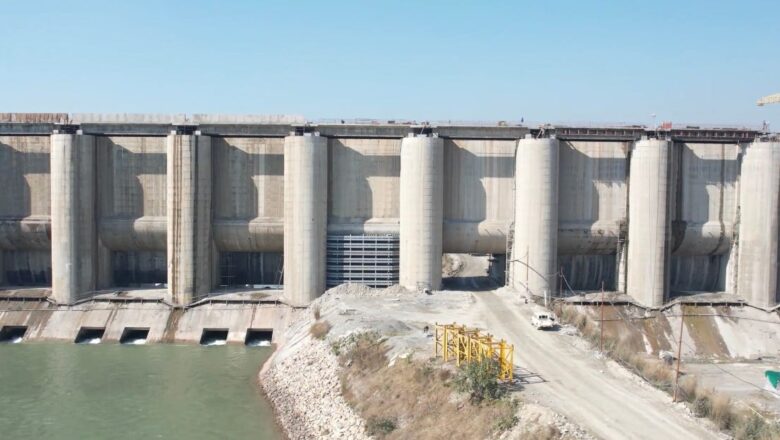
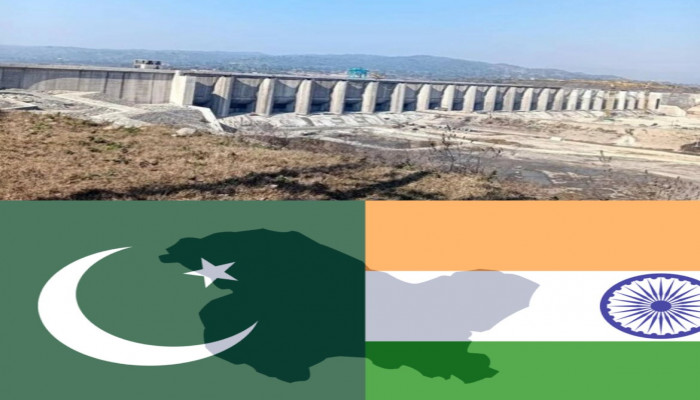
    India is set to stop the flow of surplus water from the Ravi River to Pakistan with the completion of the Shahpur Kandi barrage by March 31, marking a significant shift in water management ahead of the summer season. The move comes at a time when ties between the two countries remain strained and the Indus Waters Treaty remains suspended. For years, excess water from the Ravi flowed into Pakistan due to inadequate storage infrastructure on the Indian side. With the Shahpur Kandi barrage now nearing completion, Indian authorities say that “wastage” of water will end and the flow downstream into Pakistan will be curtailed from April onwards. Project Aims to Boost Irrigation in Jammu and Punjab The announcement was made by Jammu and Kashmir minister Javed Ahmed Ra...

Study Challenges Claim That Indonesia Legal Turtle Trade Supports Livelihoods

Study Challenges Claim That Indonesia Legal Turtle Trade Supports Livelihoods

Breaking News
    A new study has cast doubt on claims that Indonesia’s legal freshwater turtle trade meaningfully supports local livelihoods, arguing instead that the trade benefits only a few hundred people while pushing several species closer to extinction. Indonesia legally harvests nearly 50,000 freshwater turtles and tortoises each year, exporting most of them to China for meat. Four species dominate this trade: the vulnerable Asiatic softshell turtle, the endangered Southeast Asian box turtle, the Asian leaf turtle, and the Malayan softshell turtle. All four are regulated under CITES, meaning international trade requires permits, and collectors must be licensed within Indonesia. However, researchers say the legal trade contributes only marginally to incomes. Only a Few Hu...
From Coral Reefs to Songbirds, the Natural World Is Losing Its Colour  Scientists Warning We Cannot Ignore

From Coral Reefs to Songbirds, the Natural World Is Losing Its Colour Scientists Warning We Cannot Ignore

Breaking News
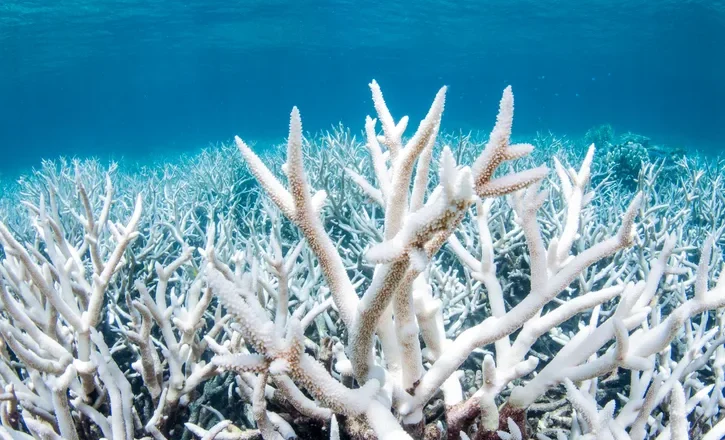
Across the planet, scientists are documenting a subtle but striking transformation: the natural world is losing its colour. Coral reefs that once shimmered in electric pinks, neon greens and deep violets are turning ghost-white during marine heatwaves. Forests that should glow with lush viridescence are fading into dusty yellow-browns under prolonged drought. Even the bright plumage of certain birds appears less vibrant than in decades past. These changes may look aesthetic at first glance. But researchers warn they are anything but superficial. Colour Is More Than Beauty It Is a Measure of Ecosystem Health In a growing scientific field known as chromatic ecology, colour is understood as a biological signal a visible marker of energy flow, stress and ecological stability. Few e...
India to Block Surplus Ravi River Water to Pakistan as Shahpur Kandi Barrage Nears Completion

India to Block Surplus Ravi River Water to Pakistan as Shahpur Kandi Barrage Nears Completion

Breaking News
    India is set to stop the flow of surplus water from the Ravi River to Pakistan with the completion of the Shahpur Kandi barrage by March 31, marking a significant shift in water management ahead of the summer season. The move comes at a time when ties between the two countries remain strained and the Indus Waters Treaty remains suspended. For years, excess water from the Ravi flowed into Pakistan due to inadequate storage infrastructure on the Indian side. With the Shahpur Kandi barrage now nearing completion, Indian authorities say that “wastage” of water will end and the flow downstream into Pakistan will be curtailed from April onwards. Project Aims to Boost Irrigation in Jammu and Punjab The announcement was made by Jammu and Kashmir minister Javed Ahmed Ra...
Western Disturbance to Trigger Early Rain in North India, Light Snowfall Likely in Himalayan States

Western Disturbance to Trigger Early Rain in North India, Light Snowfall Likely in Himalayan States

Breaking News
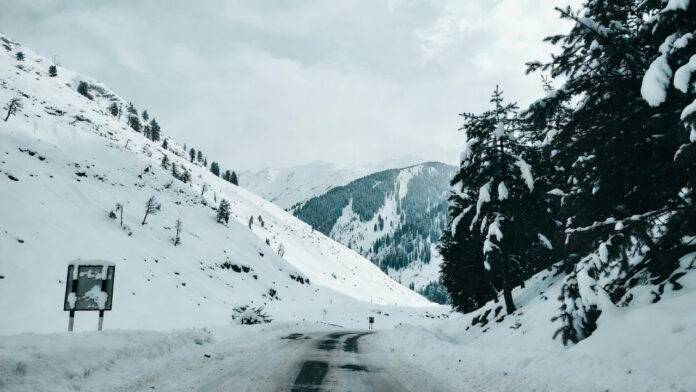
    Parts of North India are set to witness rainfall late Tuesday night and early Wednesday as a fresh western disturbance moves across the region, bringing light showers to the plains and snowfall in the hills. According to weather updates shared by Devendra Tripathi, founder of Mausam Tak, parts of Himachal Pradesh and Uttarakhand may receive light snowfall, while several areas in the northwestern plains could experience light rain and isolated thunderstorms. In the plains, southeastern Punjab including Ludhiana and Patiala may see rainfall. Multiple districts across Haryana such as Hisar, Sirsa, Fatehabad, Sonipat, Rohtak, Panipat, Karnal, Gurugram, Faridabad and Palwal are also expected to receive light showers. The national capital New Delhi and the surroundin...
Desert Winds Could Help Predict Monsoon Breaks, Offering Crucial Early Warning for Farmers: Study

Desert Winds Could Help Predict Monsoon Breaks, Offering Crucial Early Warning for Farmers: Study

Breaking News
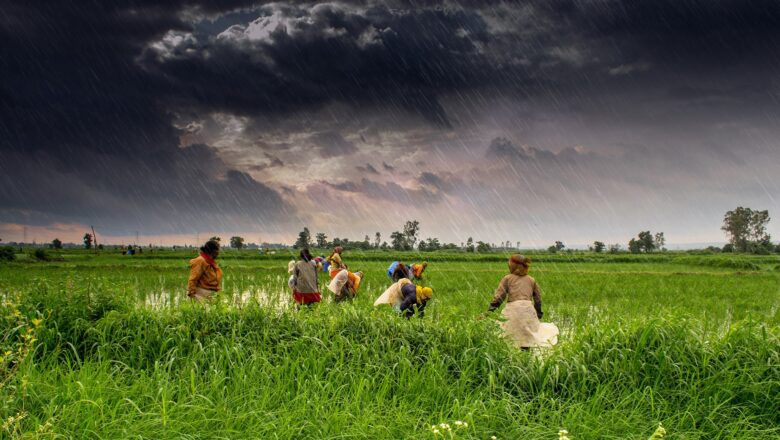
    Dry desert winds flowing from the west and northwest of India may hold the key to predicting monsoon break periods, potentially giving farmers valuable time to prepare for rainfall deficits, according to a new study. Published on February 10, 2026, in the Journal of Climate, the research analysed data spanning more than eight decades and found a strong link between dry air intrusions and pauses in the Southwest Monsoon. The Southwest Monsoon accounts for more than 75% of India’s annual rainfall between June and September. However, it is marked by intermittent “break” periods days or weeks when rainfall significantly decreases across much of the country, while increasing in the Himalayan foothills and parts of the Northeast. These breaks can severely affect agricul...
Eastern Himalayan Hydropower at Risk of Becoming ‘Climate Maladaptation’ Experts Warn After Teesta Disaster

Eastern Himalayan Hydropower at Risk of Becoming ‘Climate Maladaptation’ Experts Warn After Teesta Disaster

Breaking News
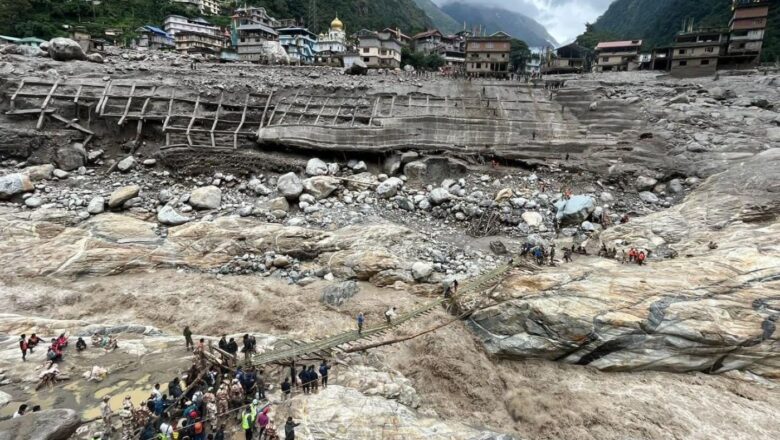
    As climate risks intensify across the Eastern Himalayas, large hydropower projects once championed as clean energy solutions are increasingly being questioned for amplifying environmental and social vulnerabilities. A recent commentary by Sharon Sarah Thawaney argues that the rapid expansion of hydropower in the region may be locking fragile mountain systems into long-term maladaptation a term used to describe climate responses that ultimately increase risk rather than reduce it. Teesta Flood Exposed Structural Vulnerabilities The debate gained urgency following the devastating 2023 glacial lake outburst flood (GLOF) from South Lhonak Lake in North Sikkim. The flood unleashed an estimated 50 million cubic metres of water, striking the Teesta Stage III dam at Ch...
High Rainfall, Low Retention: Why a Village in Maharashtra Western Ghats Is Racing to Save Every Drop

High Rainfall, Low Retention: Why a Village in Maharashtra Western Ghats Is Racing to Save Every Drop

Breaking News
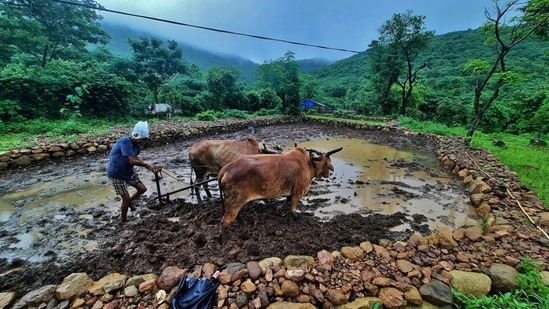
    Despite receiving some of the highest rainfall in Maharashtra’s Pune district, Gunjavne village in the Western Ghats has long struggled with water scarcity. The paradox abundance during monsoon and tanker dependence by summer has pushed residents to rethink how they manage rainwater runoff in the hilly terrain. Located in Velhe taluka, officially renamed Rajgad, the region records over 2,500 mm of annual rainfall. Yet by February, many of its 129 villages historically relied on private water tankers. The problem is not inadequate rain, but the region’s steep, undulating landscape and hard basalt geology, which allow water to rapidly run off slopes before it can percolate into the ground. At the foothills of Rajgad Fort in the Sahyadri range, Gunjavne’s sarpanch La...
Oceans Absorb More Carbon Than Forests, Scientists Say but Both Remain Vital in Climate Fight

Oceans Absorb More Carbon Than Forests, Scientists Say but Both Remain Vital in Climate Fight

Breaking News
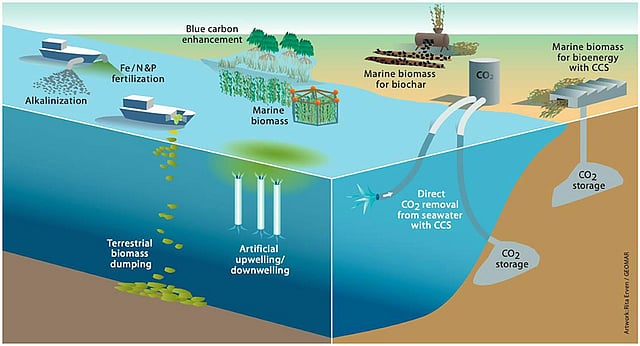
    Forests are widely praised for their ability to capture carbon dioxide, absorbing an estimated 7.6 billion tonnes of CO₂ each year. However, scientists say the world’s oceans surpass forests as the planet’s largest carbon sink, taking in roughly 30% of global carbon emissions annually. While forests store carbon in trees, plants and soils through photosynthesis, the ocean operates on a far larger scale. Marine plants such as phytoplankton absorb carbon dioxide from the atmosphere, while tiny crustaceans like krill help transport it deeper into the ocean. When marine organisms die, their bodies sink to the seabed, effectively locking carbon away for centuries. Coastal ecosystems including mangroves, seagrass meadows and salt marshes are often referred to as “blue c...
High in the Himalayas, Predators Are Rewriting the Rules of Survival to Coexist in a Human-Altered Landscape

High in the Himalayas, Predators Are Rewriting the Rules of Survival to Coexist in a Human-Altered Landscape

Breaking News
    In the stark, wind-scoured expanse of Spiti Valley in Himachal Pradesh, survival has always depended on adaptation. At elevations ranging from 3,600 to over 6,700 metres, winters plunge to minus 40 degrees Celsius, prey is scarce, and oxygen levels are thin. Yet even in one of the harshest environments on Earth, change is accelerating not from climate alone, but from growing human presence. A new study in Spiti’s Trans-Himalayan ecosystem reveals how snow leopards, Himalayan wolves, red foxes, and free-ranging dogs are adjusting their behaviour to share space. Rather than dividing territory neatly, these carnivores are constantly shifting where and when they move, hunt, and rest to avoid confrontation. But scientists warn this delicate balance may not hold if human p...