Wednesday, May 6News That Matters

Month: March 2026

Scientists Warn Parts of Antarctica’s Ice Sheets Are Retreating Faster Than Expected

Scientists Warn Parts of Antarctica’s Ice Sheets Are Retreating Faster Than Expected

Climate Actions, Environment
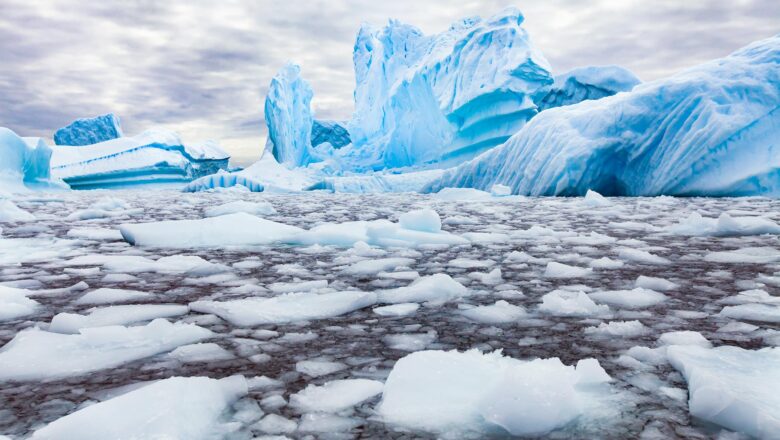
    A new scientific study has revealed that some parts of Antarctica are losing grounded ice much faster than researchers had previously anticipated. While large sections of the continent’s coastline remain stable, several vulnerable regions are showing rapid retreat that could influence global sea-level rise in the future. The study analyzed satellite data collected between 1992 and 2025 to track changes in the “grounding line,” the critical boundary where glaciers stop resting on land and begin floating over the ocean. Scientists say this boundary is crucial because once glaciers lose their grip on bedrock, they can slide into the ocean much faster. Researchers found that about 77 percent of Antarctica’s coastline remained largely stable over the past three decades...
Satellites Are Detecting Groundwater Loss Before Wells Run Dry, Transforming Global Water Monitoring

Satellites Are Detecting Groundwater Loss Before Wells Run Dry, Transforming Global Water Monitoring

Breaking News
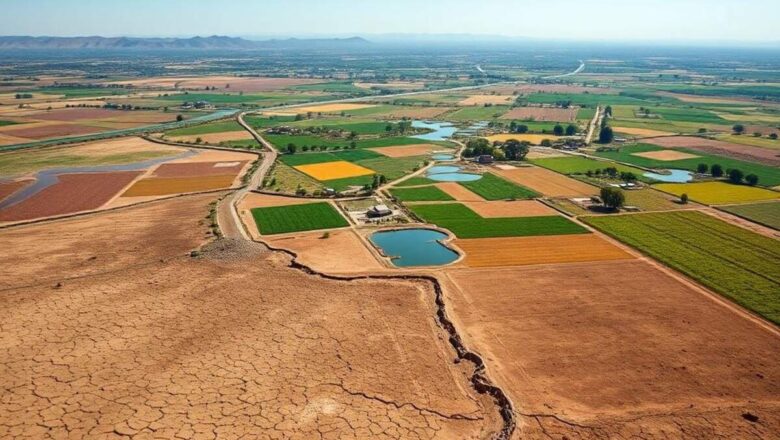
    Groundwater supports millions of people around the world, quietly supplying drinking water, irrigation, and household needs. Yet because it lies hidden beneath the earth’s surface, changes in underground water reserves often go unnoticed until wells begin to run dry. Scientists are now using satellites to detect these losses much earlier, providing a powerful new tool for water management. A major breakthrough in monitoring groundwater came with the launch of the Gravity Recovery and Climate Experiment, commonly known as GRACE. Rather than directly observing water, the satellites measure tiny variations in the Earth’s gravitational field. Because water has mass, changes in underground water storage slightly alter local gravity. By tracking these changes, scientists c...
Nature Loss Is Emerging as a Global Security Threat, Governments Warn

Nature Loss Is Emerging as a Global Security Threat, Governments Warn

Breaking News
    The destruction of forests, coral reefs and other critical ecosystems is no longer viewed only as an environmental issue. Governments and researchers are increasingly warning that biodiversity loss could destabilize societies, trigger migration crises and intensify global conflicts over food, water and natural resources. A recent assessment by the United Kingdom’s Department for Environment, Food and Rural Affairs highlights how environmental degradation can directly threaten national security. According to the report, ecosystems form the foundation of human survival by supporting clean air, freshwater supplies, food production and climate stability. When these natural systems weaken or collapse, the consequences can ripple across economies and political systems far ...
Scientists Discover World’s Largest Turtle Nesting Site With Over 41,000 Giant River Turtles in the Amazon

Scientists Discover World’s Largest Turtle Nesting Site With Over 41,000 Giant River Turtles in the Amazon

Breaking News
    Researchers have discovered what may be the largest reptile nesting site ever recorded, after documenting more than 41,000 giant river turtles gathering to lay eggs along a remote stretch of the Guaporé River in the Amazon basin. The remarkable discovery was made using drone technology, offering scientists a new way to accurately monitor large wildlife populations. The study, conducted by researchers from the University of Florida and the Wildlife Conservation Society, focused on the endangered Giant South American river turtle, one of the largest freshwater turtles in the world. The findings were published in the Journal of Applied Ecology. Drone technology reveals massive turtle gathering Each year, female giant river turtles gather in huge numbers on sandy r...
Budget Cuts to Environment Canada Raise Concerns Over Future of Arctic Research

Budget Cuts to Environment Canada Raise Concerns Over Future of Arctic Research

Breaking News
    Proposed budget cuts at Environment and Climate Change Canada are raising serious concerns among scientists and policy experts about the future of Arctic research and environmental protection. Researchers warn that reducing scientific staff could weaken Canada’s ability to monitor pollution, protect wildlife, and respond to emerging environmental threats in the Arctic region. The federal government plans to reduce the public service workforce by about 15 percent over the next three years. As part of this plan, more than 800 positions at Environment and Climate Change Canada are expected to be cut. Experts say the move could significantly affect scientific teams that play a key role in global environmental monitoring. For decades, Canadian scientists working at the...
After 25 Years of Reforestation Once Barren Land Now Absorbing Millions of Tons of Carbon Dioxide

After 25 Years of Reforestation Once Barren Land Now Absorbing Millions of Tons of Carbon Dioxide

Breaking News
    Twenty-five years ago, the hills looked lifeless. The ground was dry and cracked, the air filled with dust, and the land seemed to have forgotten what it meant to breathe. Today, the same landscape tells a completely different story. Thick green forests now cover slopes that were once bare, birds call from tree canopies that did not exist before, and the soil smells rich and alive. What was once written off as a lost landscape has quietly become a powerful natural tool in the fight against climate change. Back then, local people had a name for the place: the “dead side.” The hills were stripped of trees after decades of overgrazing and firewood collection. Without roots to hold the soil together, rainwater rushed down the slopes, carrying away fertile earth and leavi...
Africa Growing Rift Could One Day Create Mountains Taller Than the Himalayas, Scientists Say

Africa Growing Rift Could One Day Create Mountains Taller Than the Himalayas, Scientists Say

Breaking News
    A massive geological transformation is quietly unfolding beneath East Africa, where a deep fracture in the Earth’s crust could eventually lead to the formation of mountain ranges even taller than the Himalayas. According to new research, the widening rift currently splitting parts of the African continent may mark the beginning of a tectonic process that could dramatically reshape global geography over the next 200 million years. The fracture, part of the Great Rift Valley, is a visible sign that the African continent is slowly pulling apart. Scientists say this separation represents the first stage of a long tectonic cycle that could eventually lead to a powerful continental collision capable of building enormous mountain systems. Rift in East Africa signals earl...
Mango Stem Borer Beetle Found Killing Baobab Trees in Oman, Raising New Conservation Concerns

Mango Stem Borer Beetle Found Killing Baobab Trees in Oman, Raising New Conservation Concerns

Breaking News
    Baobab trees, long considered symbols of resilience across Africa and beyond, are now facing a potential new threat from a destructive beetle species known for damaging fruit trees. Researchers have discovered that the mango stem borer is attacking and killing baobab trees in Oman, sparking concern among scientists about the possibility of wider impacts on these iconic trees. The warning comes from a recent study examining a small population of baobabs in Wadi Hinna, a semi-arid valley in Oman. Scientists found that six trees had already died, while at least twelve others were severely infested by the larvae of the mango stem borer, a beetle species known scientifically as Batocera rufomaculata. Researchers discover unexpected pest attack on baobabs The researc...
Winter Snow Cover Shrinking Across the Northern Hemisphere as Climate Patterns Shift

Winter Snow Cover Shrinking Across the Northern Hemisphere as Climate Patterns Shift

Breaking News
    A new scientific analysis has revealed that winter snow is steadily disappearing across many parts of the Northern Hemisphere, raising concerns about future water supplies and changing seasonal weather patterns. Researchers say that winters are now starting later, ending earlier, and in some regions producing far less snow than in previous decades. The study, led by Jonathan Woody from Mississippi State University, examined decades of snow-cover data to understand how winter patterns have changed across the hemisphere. The findings, published in the Journal of Hydrometeorology, show that about 24 percent of regions have experienced a decline in snow-covered areas, while only about 9 percent have seen an increase. Snow season becoming shorter in many regions Res...
Global Study Warns Large-Scale Tree Planting Could Threaten Biodiversity in Some Regions

Global Study Warns Large-Scale Tree Planting Could Threaten Biodiversity in Some Regions

Breaking News
    A new international study has highlighted a growing dilemma in climate policy: efforts to remove carbon dioxide from the atmosphere by planting forests or bioenergy crops could unintentionally harm biodiversity if they are placed in ecologically sensitive areas. The research suggests that while forestation remains an important tool to combat climate change, poorly planned projects may damage habitats that support thousands of species. The study, published in the journal Nature Climate Change, analyzed areas across the world that are being considered for large-scale carbon dioxide removal (CDR) projects. Researchers found that nearly 13% of globally important biodiversity-rich land overlaps with regions proposed for such climate initiatives. Climate solutions may c...