Sunday, November 8News That Matters

Month: October 2026

Dredged Sediment Help Create 35 Hectares Island in Louisiana river

Dredged Sediment Help Create 35 Hectares Island in Louisiana river

Breaking News
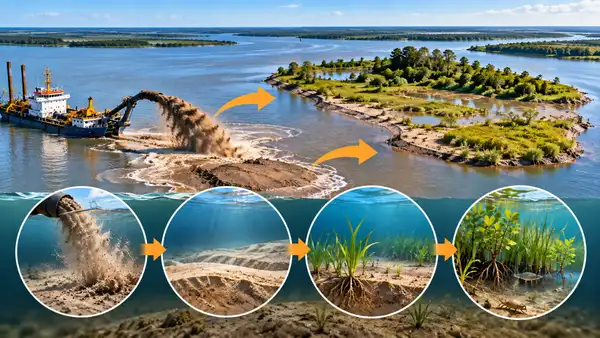
Strategic placement of dredged sediment in Louisiana’s Atchafalaya River has helped create an island spanning about 35 hectares, turning material removed from the river into a growing landform. The project began in 2002 near Horseshoe Bend, where engineers placed between 0.5 million and 1.8 million cubic yards of dredged sediment at a mid river site every one to three years. Over time the deposited material was reshaped by natural river processes contributing to the formation and expansion of Horseshoe Island. The project was part of an Engineering With Nature approach that sought to combine river management with environmental benefits. As the island grew it reduced the river’s cross sectional area and increased water flow through the navigation channel helping reduce sediment buildu...
Drought Can Turn Forests From Carbon Sinks into Carbon Sources

Drought Can Turn Forests From Carbon Sinks into Carbon Sources

Breaking News
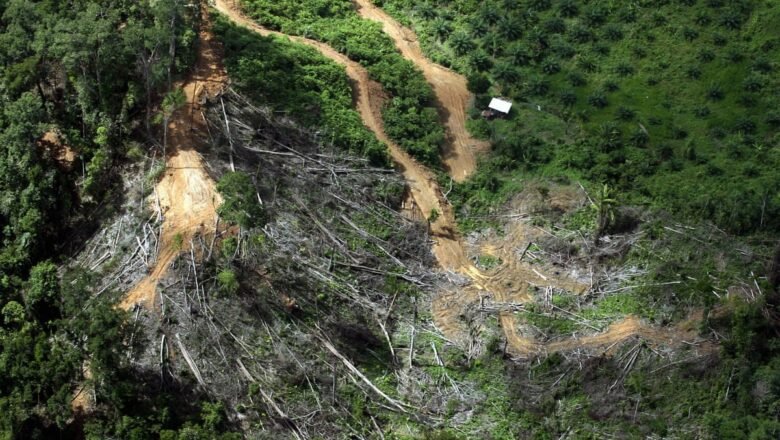
  Forests may lose their ability to absorb carbon dioxide during severe droughts as trees close their leaf pores to conserve water according to researchers. Trees absorb CO₂ through tiny openings called stomata while releasing water through the same pores. On average, around 400 water molecules are released for every molecule of CO₂ absorbed during this process. During drought declining soil moisture and rising atmospheric dryness force trees to close their stomata. This reduces photosynthesis and limits the amount of CO₂ forests can absorb. Severe water stress can also damage trees’ internal water transport systems. Air bubbles can form inside the vessels that carry water from roots to leaves, blocking the flow and potentially causing irreversible damage and tree death. ...
Maharashtra Village Puts up ‘For Sale’ Board Over Water Crisis

Maharashtra Village Puts up ‘For Sale’ Board Over Water Crisis

Breaking News
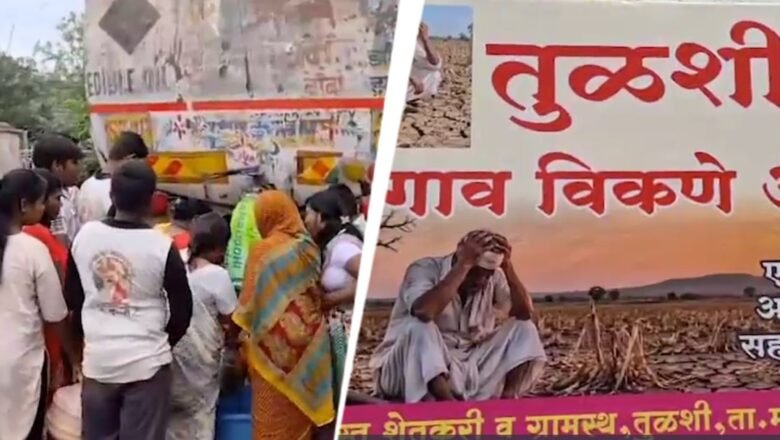
Residents of Tulshi village in Maharashtra’s Solapur district have put up a symbolic ‘Village for Sale, Price: Water’ board to protest a years long water shortage. The village home to around 7,000 people, is facing severe water scarcity, with farms wells and 14 ponds reported to have dried up. Residents said they are dependent on water tankers for their needs. Villagers have blamed delays in excavation work under the Sina Madha Lift Irrigation Scheme. According to the village sarpanch, around 800 metres of excavation near the seventh and eighth outlets has remained incomplete for 26 years, despite the canals passing close to the village. Residents began a hunger strike on September 14 and later staged a ‘thali-naad’ protest outside the Madha tehsil office. They have warned of inte...
Rising Air Injection Rates Improve Compressed Air Energy Storage Efficiency

Rising Air Injection Rates Improve Compressed Air Energy Storage Efficiency

Breaking News
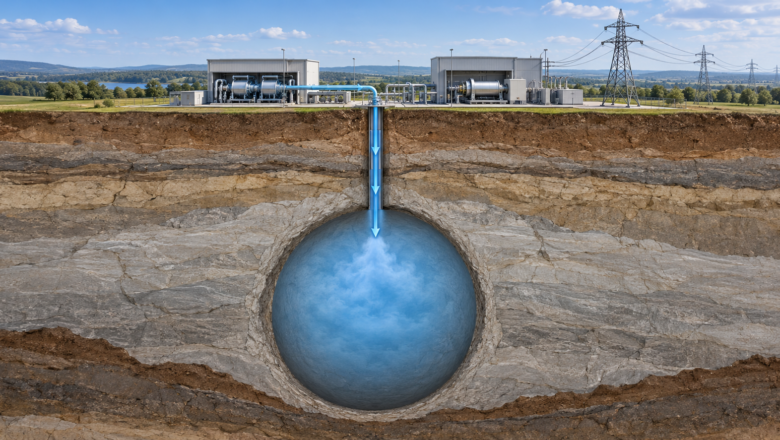
Researchers at Hunan University of Technology in China have found that changing the way air is injected into underground compressed air energy storage (CAES) caverns can improve storage performance. The team developed a numerical model to study how airflow patterns wellbore size and surrounding rock properties affect temperature, pressure and heat loss inside storage caverns. The model was also validated using operating data from Germany’s Huntorf CAES facility. Researchers compared four injection strategies while storing the same amount of air over eight hours. The approach that gradually increased the airflow from 10 kg/s to 150 kg/s delivered an energy storage rate of 87.5%, compared with 85.5% for a constant 80 kg/s flow. The increasing flow method also raised the average cave...
CUREE Robot Detects Coral Reef Hotspot with nearly 25 Times More Fish

CUREE Robot Detects Coral Reef Hotspot with nearly 25 Times More Fish

Breaking News
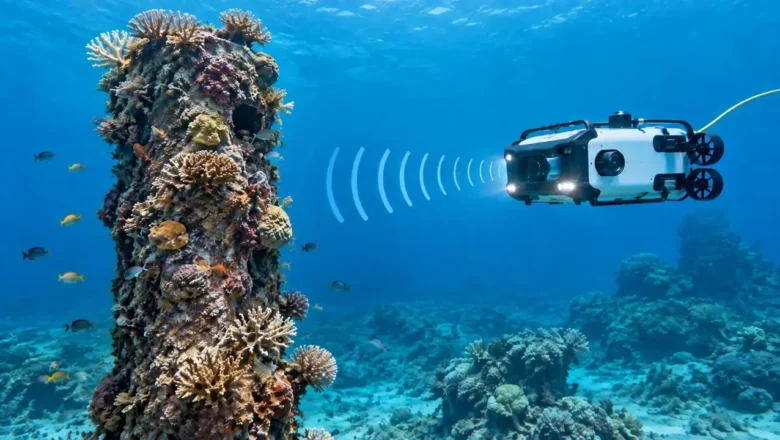
A small autonomous underwater robot developed by the Woods Hole Oceanographic Institution has helped scientists identify areas of unusually high biological activity on coral reefs. The robot called CUREE (Curious Underwater Robot for Ecosystem Exploration), combines cameras with hydrophones to detect and locate marine life through both visual observations and underwater sounds. During field trials at Joel’s Shoal in the US Virgin Islands between 2022 and 2024, CUREE repeatedly identified a biological hotspot around a large pillar coral structure. Visual surveys found that fish densities near the structure were nearly 25 times higher than elsewhere on the reef. The robot was also able to track biological sounds from distances of up to 80 metres in controlled experiments. Researcher...
New Low Temperature Method could make Plexiglass Recycling easier

New Low Temperature Method could make Plexiglass Recycling easier

Breaking News
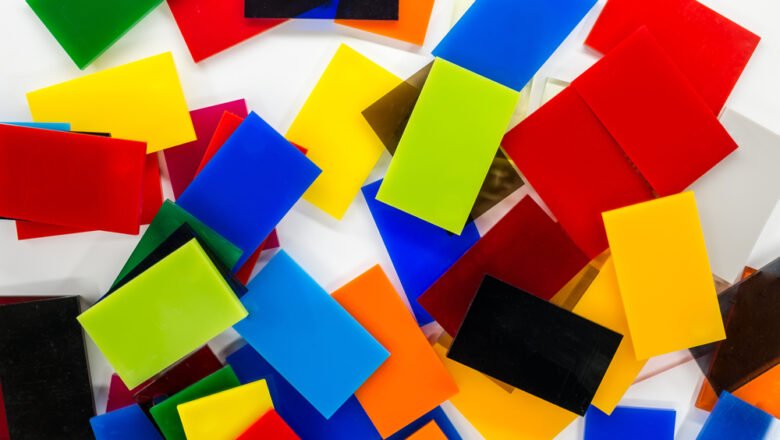
Scientists at ETH Zurich in Switzerland have developed a chemical recycling method that can break down acrylic glass or PMMA, into its original monomer at temperatures below 200°C. PMMA is widely used in products such as plexiglass and Perspex because it is lightweight and resistant to shattering. However, conventional recycling methods generally require temperatures above 400°C and may use solvents, making the process more energy-intensive and potentially affecting the quality of the recovered material. The new technique uses a chemical reaction involving an N-hydroxyimide reagent to split the PMMA polymer chain. One of the resulting fragments can then rapidly break down into its monomer which can be used to produce new acrylic material. In laboratory experiments, the process ach...
Swedish City Turns Wastewater into a Source of Water, Energy and Fertiliser

Swedish City Turns Wastewater into a Source of Water, Energy and Fertiliser

Breaking News
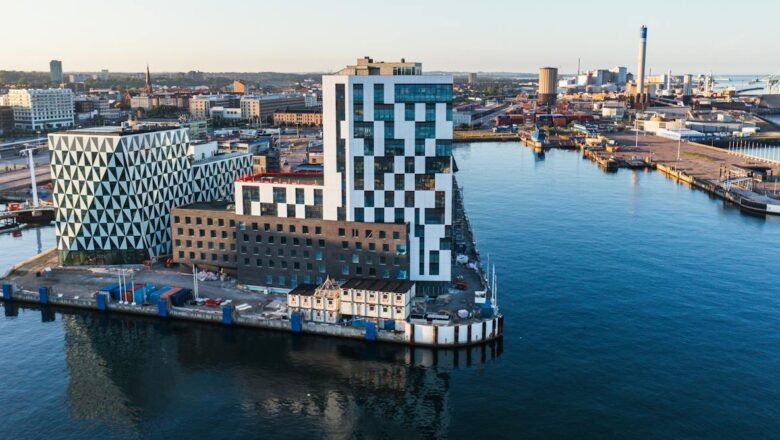
  A district in the Swedish city of Helsingborg is using a wastewater separation system to recover water, energy and nutrients offering a model for improving water security amid rising climate pressures. In the Oceanhamnen district, wastewater is divided into three separate streams. Toilet waste, or blackwater is collected through one pipeline while greywater from showers, sinks, laundry and dishwashers travels through another. Food waste from kitchen sinks is sent separately for biogas production. The source separation system allows different waste streams to be treated according to their properties. Greywater contains fewer contaminants than blackwater and can be treated for uses such as toilet flushing and irrigation. Helsingborg is also considering using recycled greywate...