Thursday, February 26News That Matters

Breaking News

El Nino Looms Over Monsoon Months, Raising Drought Concerns Across India

El Nino Looms Over Monsoon Months, Raising Drought Concerns Across India

Breaking News
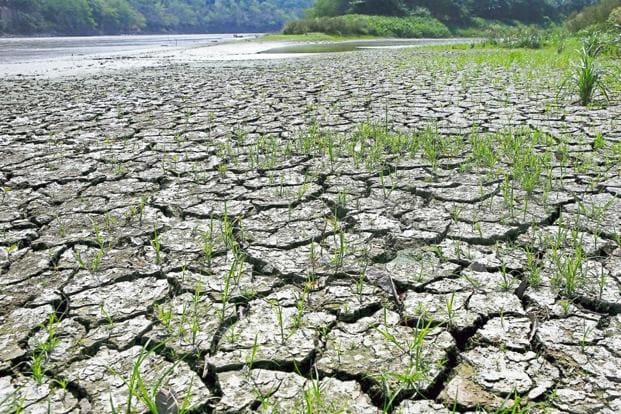
    India could be heading towards another challenging monsoon season as early climate signals point to the possible development of an El Nino later this year. While meteorological agencies say certainty will emerge only by April, the likelihood of weaker rainfall during the crucial monsoon months has already raised concerns among policymakers, farmers and climate experts. An El Nino refers to the warming of the central equatorial Pacific Ocean by at least 0.5 degrees Celsius for five consecutive overlapping three-month periods. Historically, such warming events have often coincided with subdued monsoon rainfall over the Indian subcontinent, making them a key factor in seasonal climate forecasting. El Nino Probability May Rise After July According to M. Mohapatra, ...

World Bank Plans $50 Billion Investment to Boost Job Creation in India Over Five Years

World Bank Plans $50 Billion Investment to Boost Job Creation in India Over Five Years

Breaking News
    The World Bank Group has announced a new partnership with the Government of India aimed at accelerating job creation across urban and rural regions, with funding that could reach up to $50 billion over the next five years. The new country partnership framework came into effect at the beginning of 2026 and marks a significant expansion over the previous funding cycle. Under the new plan, the World Bank will provide annual financing of $8–10 billion, compared to $6–7 billion a year under the earlier framework that ran from FY18 and was extended till December 2025 due to the Covid-19 pandemic. The initiative is expected to play a key role in supporting India’s long-term development and employment goals. Focus on Job-Intensive Growth Sectors The World Bank said the...
Low Cost Solar Dryers Help 500 Farmers Cut Crop Losses, Raise Incomes by Up to 40%

Low Cost Solar Dryers Help 500 Farmers Cut Crop Losses, Raise Incomes by Up to 40%

Breaking News
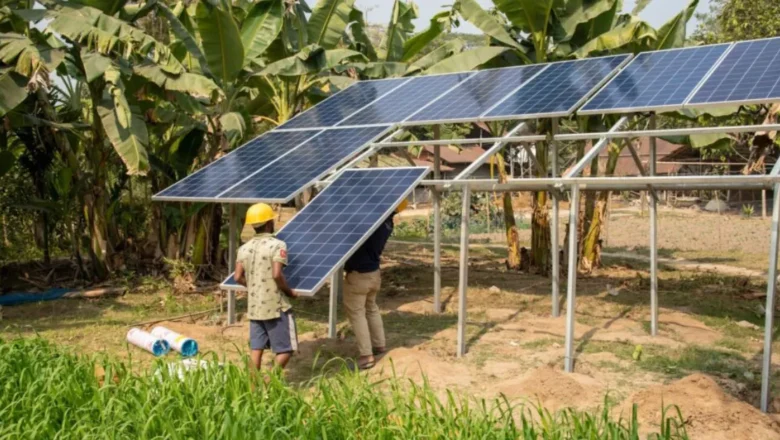
    A budget-friendly solar drying technique developed using locally available materials has helped around 500 farmers in Nagaland reduce post-harvest losses and increase their incomes by 30–40 per cent, highlighting the growing role of frugal solar innovation in rural agriculture. India loses agricultural produce worth nearly ₹1.53 trillion every year due to poor storage, handling and lack of cold-chain infrastructure. Fruits and vegetables account for a major share of this loss, with nearly 40 per cent of food produced in the country wasted annually. Limited electricity access and unpredictable weather further compound the problem for small farmers, particularly in hilly and remote regions. Solar Innovation Designed for Local Conditions The solution emerged in Na...
Economic Survey 2026: Development is in itself a form of adaptation

Economic Survey 2026: Development is in itself a form of adaptation

Breaking News
    The Economic Survey 2025–26 has placed climate change adaptation at the centre of India’s development strategy, arguing that growth and resilience must move together. Released on January 29, the survey underlined that strengthening infrastructure, agriculture, energy access and health systems is as crucial to climate action as emission cuts. In a chapter titled Environment and Climate Change: Building a Resilient, Competitive and Development-Driven India, the survey stated that “development is, in itself, a form of adaptation,” stressing that economic progress helps societies absorb and recover from climate shocks. Growth, resilience and climate action must move together According to the survey, effective climate action depends on improving the capacity of peop...
Lower GST on Recyclables Can Accelerate Green Economy, CSE Tells Finance Ministry Ahead of Budget 2026

Lower GST on Recyclables Can Accelerate Green Economy, CSE Tells Finance Ministry Ahead of Budget 2026

Breaking News
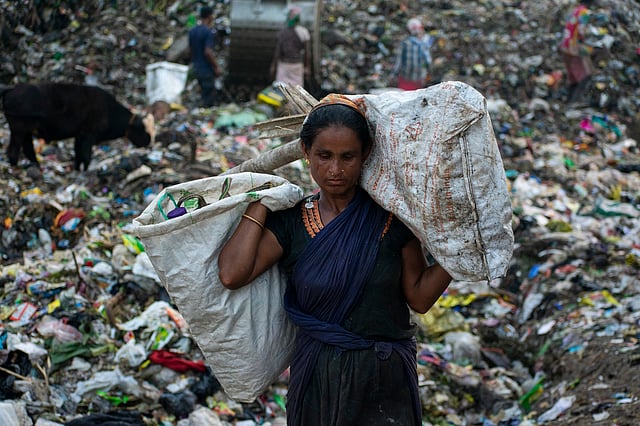
    The Centre for Science and Environment (CSE) has urged the Union government to rationalise the goods and services tax on recycled materials, arguing that lower GST rates could significantly strengthen India’s green economy, support small businesses and bring millions of informal waste workers into the formal system. The recommendations were submitted to Finance Minister Nirmala Sitharaman ahead of the Union Budget 2026. According to the Delhi-based think tank, tax reform in the waste sector is critical if India is to maintain momentum on green growth and move closer to its Net Zero by 2070 goal. While recent budgets have prioritised clean energy and industrial decarbonisation, CSE says the recycling economy remains constrained by a tax structure that treats recycled ...
Designed Around Trees, This Western Ghats Retreat Shows How Tourism Can Heal Not Harm

Designed Around Trees, This Western Ghats Retreat Shows How Tourism Can Heal Not Harm

Breaking News
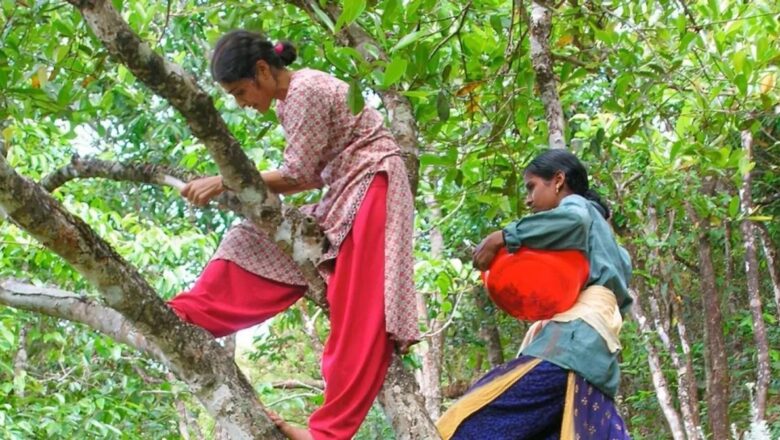
    Tucked deep within the forested slopes of the Western Ghats in Kerala’s Thekkady, a quiet experiment in sustainable tourism is taking shape. At a time when unchecked construction is placing mounting pressure on fragile hill ecosystems, Niraamaya Retreats’ Cardamom Club offers a different vision one where hospitality adapts to the land instead of reshaping it. Spread across nearly eight acres in the Cardamom Hills of Idukki, the retreat has been designed to minimise ecological disturbance, conserve water and energy, and strengthen local livelihoods. In doing so, it presents a working model of how tourism can coexist with one of India’s most sensitive biodiversity hotspots. Letting the Landscape Decide the Design Unlike conventional hill resorts that level slopes...
High Returns, Low Adoption: Why Climate-Resilient Rice Struggles to Reach India’s Fields

High Returns, Low Adoption: Why Climate-Resilient Rice Struggles to Reach India’s Fields

Breaking News
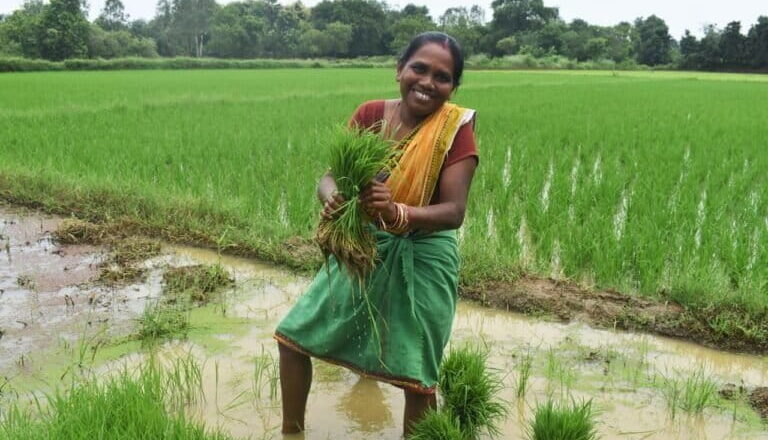
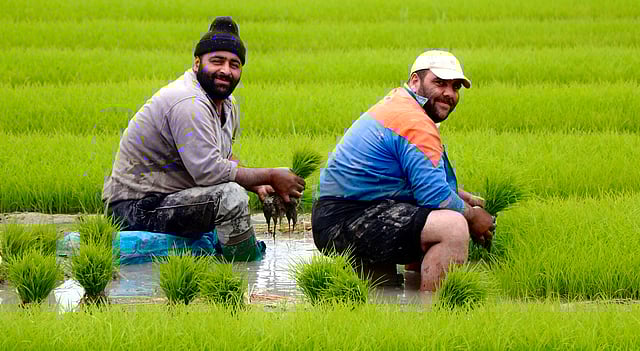
    Despite offering higher yields and protection against climate shocks, climate-resilient rice varieties continue to see limited adoption across India. A recent analysis by the Indian Council of Agricultural Research (ICAR) shows that while farmers could earn significantly higher returns by switching to these varieties, structural gaps in seed systems and cautious farmer behaviour are slowing their spread. Rice remains central to India’s food security and rural economy, covering nearly a quarter of the country’s cropped area and forming the backbone of public procurement and household consumption. Yet rice cultivation is increasingly vulnerable to rising temperatures, erratic rainfall, droughts and floods. In this context, climate-resilient rice varieties were develope...
Food Trade Is Becoming a Geopolitical Pressure Point, Not a Neutral Market, Global Study Warns

Food Trade Is Becoming a Geopolitical Pressure Point, Not a Neutral Market, Global Study Warns

Breaking News
    Food trade is increasingly being shaped by geopolitical rivalries rather than market fundamentals, with serious consequences for food prices, availability and long-term food security, especially in import-dependent countries, new research has warned. As global food systems grow more interconnected, sanctions, tariffs and trade disruptions are no longer just diplomatic tools. They are directly influencing what people can afford to eat, how much they eat, and how vulnerable countries absorb economic shocks. Unlike industrial goods, food cannot be easily substituted or postponed, making disruptions uniquely destabilising for consumers and low-income populations. Global Conflicts Have Exposed Fragile Food Trade Links Recent geopolitical crises have highlighted how ...
Japan Tests Home Water Recycling Machines as Aging Pipelines Become Unsustainable

Japan Tests Home Water Recycling Machines as Aging Pipelines Become Unsustainable

Breaking News
    Japan is piloting a new kind of household water system that could fundamentally change how homes access and reuse water. In several rural and depopulated regions, residents are beginning to rely on compact machines that purify and recycle water inside the home, removing the need for connection to public pipelines. The shift comes as Japan faces mounting challenges in maintaining its aging water infrastructure. With fewer people living in remote areas, local governments are struggling to justify the rising cost of maintaining long stretches of pipelines. National authorities have increasingly described the current system as financially and logistically unsustainable, particularly outside major cities. Compact Systems Allow Homes to Operate Without Water Networks ...
Desert Dust from Western India Carries Disease-Causing Pathogens to Eastern Himalayas: Study

Desert Dust from Western India Carries Disease-Causing Pathogens to Eastern Himalayas: Study

Breaking News
    A new scientific study has found that airborne pathogens attached to desert dust plumes originating in western India are reaching the high-altitude regions of the Eastern Himalayas, potentially increasing the risk of respiratory, skin and gastrointestinal diseases in mountain populations. The research challenges the long-held perception that Himalayan hill-top air is inherently protective of human health. While cold temperatures and low oxygen levels already heighten health vulnerability in these regions, the study shows that long-range transport of microbial pollutants adds a previously underexplored layer of risk. Dust Storms Travel Hundreds of Kilometres to Himalayan Peaks Researchers from the Bose Institute, an autonomous institute under the Department of S...