Sunday, May 10News That Matters

Breaking News

Quantum Teleportation Achieved Over Real Internet for the First Time — A Leap Toward the Quantum Web

Quantum Teleportation Achieved Over Real Internet for the First Time — A Leap Toward the Quantum Web

Breaking News
In a historic breakthrough that brings science fiction closer to scientific reality, researchers in the United States have achieved quantum teleportation of light over more than 30 kilometers of live fiber optic internet cable. This marks the first time quantum information has been successfully transmitted through infrastructure carrying actual internet traffic a feat once considered impossible. Led by computing engineer Prem Kumar of Northwestern University, the study demonstrated how a quantum state the delicate, ghost-like condition in which particles exist in multiple states at once could be safely transported amid the digital chaos of everyday internet use. The achievement is expected to revolutionize quantum computing, encryption, and communication. Prem Kumar said “This is inc...
China Brahmaputra Megadam Sparks Strategic and Environmental Concerns in India

China Brahmaputra Megadam Sparks Strategic and Environmental Concerns in India

Breaking News
China ambitious hydropower project on the Yarlung Tsangpo, the upper stream of India Brahmaputra River, has raised alarm bells in New Delhi, with strategic, environmental, and geopolitical implications mounting amid worsening bilateral ties. The $167-billion mega dam slated to be the world largest has entered its construction phase in Tibet’s Medog County close to the Arunachal Pradesh border. Once completed, the dam is expected to surpass the output of China’s iconic Three Gorges Dam and is part of Beijing long-term plan to harness the vast energy potential of the Himalayas. While China claims the project will bolster clean energy capacity and help achieve its carbon neutrality goals, Indian experts and officials are worried about its downstream impact. Concerns include potential di...
As World Prepares for Ramsar COP15, Delhi Jharoda Wetland Lies in Ruins

As World Prepares for Ramsar COP15, Delhi Jharoda Wetland Lies in Ruins

Breaking News
  As global delegates gear up for the Ramsar Convention 15th Conference of the Parties (COP15) in Zimbabwe a forgotten wetland in India capital stands as a grim symbol of environmental neglect. The Jharoda wetland in North Delhi once a thriving aquatic ecosystem, has all but vanished quietly filled with soil, rubble, and inert waste over the past two years. Located just a kilometre from the Yamuna Biodiversity Park near Jharoda Majra Metro Station, the site now shows little evidence of its ecological past. Patches of grass remain, but the wetland itself is largely unrecognizable. Despite the enactment of Wetland (Conservation and Management) Rules in 2020, not a single wetland in Delhi has been officially notified under the law. The lack of legal recognition has left places l...
Over 3.6 Lakh Trees To Be Lost For Mining In Chhattisgarh Hasdeo Arand, Govt Confirms

Over 3.6 Lakh Trees To Be Lost For Mining In Chhattisgarh Hasdeo Arand, Govt Confirms

Breaking News
In a major blow to India vanishing green cover, over 3.68 lakh trees are set to be “affected” due to the controversial Parsa East Kente Basan (PEKB) coal mining project in the Hasdeo Arand forest of Chhattisgarh. The disclosure was made by Minister of State for Environment Kirti Vardhan Singh in a written reply to the Lok Sabha, as concerns mount over the ecological cost of expanding mining in one of India last remaining old-growth forests. Hasdeo Arand, a vast stretch of dense forest spanning 1.7 lakh hectares, is home to rich biodiversity and is considered a vital carbon sink in central India. Despite its ecological sensitivity and opposition from tribal communities and environmentalists, permissions for mining expansion have been granted twice, the minister confirmed. Responding t...
How Surface Design Can Cool Cities Facing Record Heat

How Surface Design Can Cool Cities Facing Record Heat

Breaking News
Cities are heating up faster than the rest of the planet some even at double the global rate. The familiar surfaces of our cities roads, rooftops, parks, even painted walls play a far greater role in this warming than we often recognize. But urban infrastructure isn’t just the source of rising heat; it’s also key to the solution. The design and materials of surface infrastructure where cities meet the sun dictate how heat is absorbed, stored, and released. Asphalt, concrete, and other dark, impervious surfaces trap heat, intensifying the urban heat island effect. Meanwhile, reflective rooftops, shaded walkways, and green spaces have been proven to dramatically cool both air and surface temperatures. As cities grapple with record-breaking temperatures, rising energy demands, and incre...
Jamaica Storm Shield: How Years of Resilience Planning Helped Nation Withstand Hurricane Beryl

Jamaica Storm Shield: How Years of Resilience Planning Helped Nation Withstand Hurricane Beryl

Breaking News
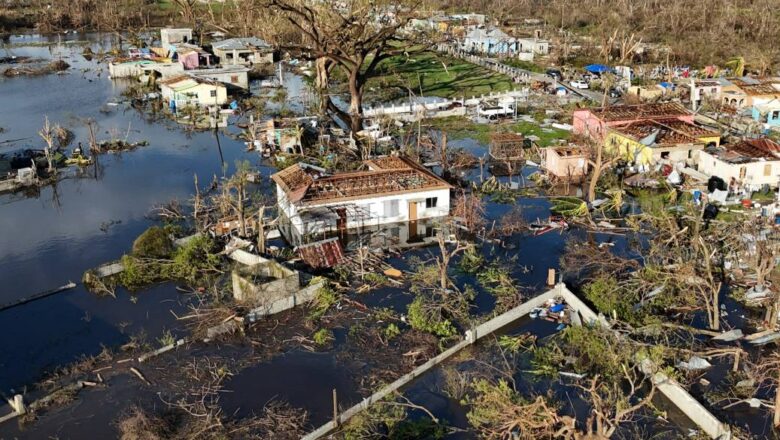
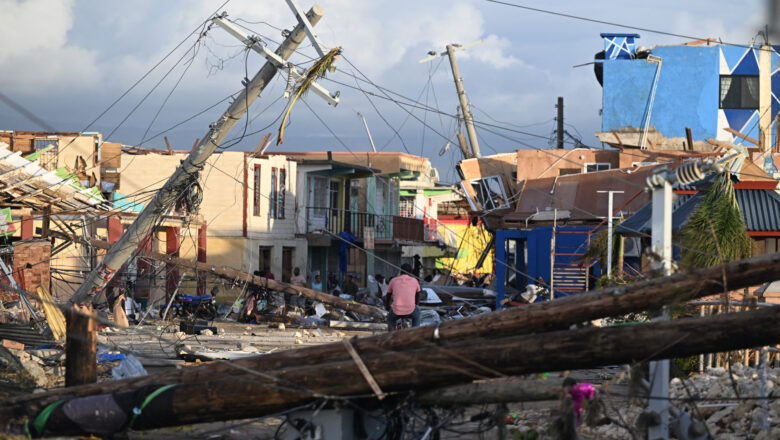
As Hurricane Beryl approached Jamaica with howling Category 4 winds and sheets of torrential rain on the morning of July 3, 2024, fears of widespread destruction loomed. But unlike Tropical Storm Michelle over two decades ago which devastated Annotto Bay and left hundreds homeless this time the story was different. Jamaica's preparedness paid off. Thanks to the long-term efforts under the Jamaica Disaster Vulnerability Reduction Project, backed by the Government and the World Bank, the island nation displayed a stronger, smarter response to disaster. From shored-up coastlines and floodproof neighborhoods to faster emergency services and seismic-ready infrastructure, the country reaped the benefits of years of risk-informed planning. In Annotto Bay, once a hotspot for coastal erosion,...
Plastic-Free Pilgrimage: Devotees at Maruthamalai Temple Urged to Ditch Single Use Plastic

Plastic-Free Pilgrimage: Devotees at Maruthamalai Temple Urged to Ditch Single Use Plastic

Breaking News
In a major eco-awareness campaign the Forest Department, along with the Coimbatore Wildlife Conservation Trust and Rotaract Club of Tamil Nadu Agricultural University, conducted a drive at the Maruthamalai Subramaniaswamy temple on Sunday urging devotees to avoid single-use plastics. Timed with the Aadi Krithigai festival, which drew heavy footfall, the initiative aimed to protect the hill temple nestled within a reserve forest. Volunteers formed a human slogan saying “avoid plastic” on the ghat road and placed checkpoints where devotees exchanged plastic bags for newspapers to carry offerings like coconuts and garlands. Those bringing cloth bags were encouraged and appreciated for their eco-friendly effort. The volunteers also cleaned the 800 temple steps and the 2.5 km ghat road, c...
Eco Breakthrough: Scientists Create Biodegradable Plastics That Vanish in Soil or Sea

Eco Breakthrough: Scientists Create Biodegradable Plastics That Vanish in Soil or Sea

Breaking News
In a significant leap toward solving the global plastic pollution crisis, scientists from Murdoch University in Western Australia have developed biodegradable plastics that dissolve naturally in seawater or soil leaving behind no harmful microplastics. Unlike conventional plastics, which degrade into microplastic pollutants, these eco-friendly alternatives are created using native microbes found in local environments. These microbes produce a natural polymer known as PHB (polyhydroxybutyrate), which safely breaks down without contaminating land, air, or oceans. Professor Daniel Murphy, leading the research, emphasized the urgency of eliminating plastic waste from ecosystems, especially for the sake of future generations. “We’re looking at plastics that are biodegradable and environme...
Invisible threat: Scientists warn of silent ecosystem collapse from hidden chemical pollution

Invisible threat: Scientists warn of silent ecosystem collapse from hidden chemical pollution

Breaking News
New Delhi: The world is quietly moving toward ecological disaster, not just through deforestation or climate change, but via a more insidious threat chemical pollution. A new international study reveals that low-level exposure to synthetic chemicals is now a leading cause of decline for nearly one in five endangered species, making pollution a stealthy but powerful driver of extinction. Since 1950, chemical production has skyrocketed fiftyfold, with over 350,000 synthetic chemicals now registered globally. That number is expected to triple by 2050, raising alarms among researchers who say that the ecological impact of these chemicals ranging from pesticides and pharmaceutical residues to plastic additives and industrial waste is being grossly underestimated. The study, published in t...
Humans Built So Many Dams, Earth Poles Shifted Nearly a Metre: Shocking Study Reveals

Humans Built So Many Dams, Earth Poles Shifted Nearly a Metre: Shocking Study Reveals

Breaking News
In a startling revelation, scientists have found that the construction of nearly 7,000 dams worldwide has caused Earth’s geographic poles to shift by almost one metre. This massive redistribution of water once stored in oceans, now trapped behind concrete has led to what scientists call a “true polar wander,” subtly altering the planet orientation. Published in the Geophysical Research Letters, the study analysed the impact of 6,862 dams built between 1835 and 2011. Researchers noted that as water was stored on land, particularly in large reservoirs, it changed the distribution of mass on Earth surface enough to influence the planet’s spin axis. Between 1835 and 1954, the North Pole moved 20 cm east towards Russia due to dam construction in Europe and North America. Then between 1954 an...