Monday, May 4News That Matters

Breaking News

Extreme Heat Turning India Garment Factories Into Health Hazards, New Report Warns

Extreme Heat Turning India Garment Factories Into Health Hazards, New Report Warns

Breaking News
    Rising temperatures linked to Climate Change are creating dangerous working conditions inside India’s garment factories, with a new report revealing that extreme heat is making workers sick and threatening their livelihoods. The report, Breaking Point Heat and the Garment Floor, published by HeatWatch and Tata Institute of Social Sciences, highlights how indoor heat exposure has become a growing labour and health crisis for millions of workers, most of whom are women. According to the study, nearly 87% of garment workers reported experiencing symptoms such as headaches, dizziness and muscle cramps during the summer months. Around 78% said the heat around their workstations felt like “working in a furnace.” Researchers surveyed 115 workers and conducted 47 in-de...
Scientists Discover Plant Compound That Forces Aggressive Breast Cancer Cells to Self-Destruct

Scientists Discover Plant Compound That Forces Aggressive Breast Cancer Cells to Self-Destruct

Breaking News
    Scientists have discovered a powerful plant-derived compound that can force aggressive breast cancer cells to destroy themselves, offering hope for new treatment strategies against one of the most difficult forms of the disease. The discovery centres on a molecule extracted from the plant Munronia henryi, which produces natural chemicals known as limonoids used by plants for defense. Researchers identified two previously unknown limonoids from the plant, but one compound, named DHL-11, showed particularly strong anti-cancer activity. The findings, published in the scientific journal Acta Pharmaceutica Sinica B, suggest the compound may be effective against Triple‑Negative Breast Cancer (TNBC), one of the most aggressive forms of breast cancer with limited targeted...
WMO Warns of High Chances of El Niño Developing After July 2026, Raising Concerns for India’s Monsoon

WMO Warns of High Chances of El Niño Developing After July 2026, Raising Concerns for India’s Monsoon

Breaking News
    The World Meteorological Organization (WMO) has warned that there is a strong possibility of the development of El Niño during the second half of 2026, a shift that could significantly influence global weather patterns and potentially affect India’s crucial monsoon season. El Niño is the warm phase of the El Niño–Southern Oscillation (ENSO), a climate phenomenon that occurs across the equatorial Pacific Ocean and has a far-reaching impact on weather conditions around the world. At present, the cooler ENSO phase known as La Niña is gradually weakening, and climate systems are expected to transition toward neutral conditions in the coming months. Climate Models Indicate Possible Shift Later This Year According to the WMO, the recent weak La Niña event is likely t...
Assam Startup Turns Invasive Water Hyacinth Into Eco-Friendly Paper, Creating Livelihoods and Protecting Wetlands

Assam Startup Turns Invasive Water Hyacinth Into Eco-Friendly Paper, Creating Livelihoods and Protecting Wetlands

Breaking News
    An innovative startup in Assam is transforming an environmental challenge into a sustainable opportunity by producing paper from the invasive aquatic plant water hyacinth. The initiative, known as Kumbhi Kagaz, was founded by wildlife enthusiasts Aniket Dhar and Rupankar Bhattacharjee, who saw potential in a plant widely blamed for damaging freshwater ecosystems. The idea for the venture emerged during a wildlife rescue when Rupankar released a rescued snake into a lake only to see it disappear beneath thick layers of water hyacinth. The moment highlighted the growing ecological problem posed by the plant, which spreads rapidly across lakes and wetlands, blocking sunlight and reducing oxygen levels in the water. Instead of treating it purely as waste, the duo decided...
Eight Years On Global Restoration Initiative Spurs Resilience in Kenya and Beyond

Eight Years On Global Restoration Initiative Spurs Resilience in Kenya and Beyond

Breaking News
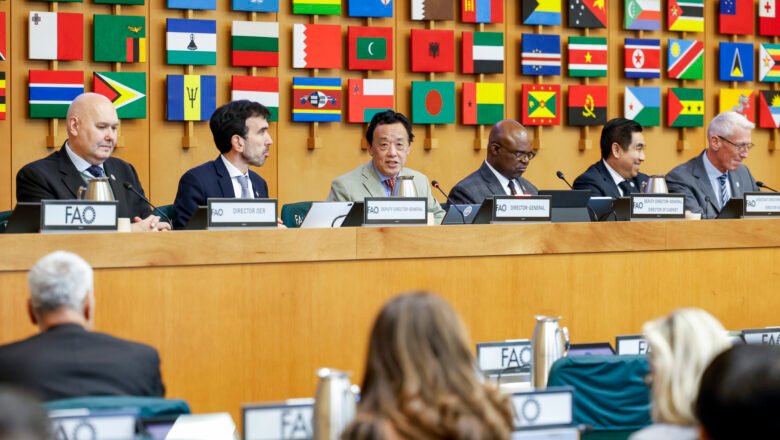
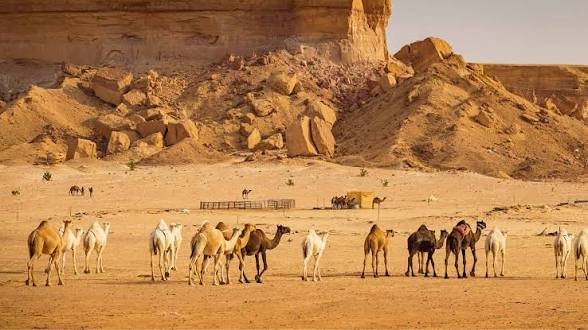
    Eight years after its launch, The Restoration Initiative is transforming degraded landscapes across Africa and Asia, helping communities shift from environmental scarcity to climate resilience. Led by the United Nations Environment Programme in partnership with the Food and Agriculture Organization of the United Nations and the International Union for Conservation of Nature, the initiative has restored or improved management on more than 960,000 hectares of land since 2018. The effort has also helped capture or prevent greenhouse gas emissions equivalent to 22 million tonnes of carbon dioxide, with more than 810,000 people expected to benefit. In northern Kenya, near the Mukogodo Forest, the impact is tangible. Communities living in the semi-arid rangelands stretc...
21 Killed in Kakinada Cracker Unit Explosion Overcrowding Cited as Key Safety Lapse

21 Killed in Kakinada Cracker Unit Explosion Overcrowding Cited as Key Safety Lapse

Breaking News
    LA devastating explosion at a licensed firecracker manufacturing unit in Andhra Pradesh’s Kakinada district has left 21 people dead, including nine women, and nine others critically injured, in one of the region’s deadliest industrial accidents in recent years. The blast occurred late Saturday at a cracker unit operated by Surya Sri Fire Works in Vetlapalem village of Samarlakota mandal. Among those killed was the unit’s owner, Adabala Srinivas, officials confirmed. Deputy Chief Minister Pawan Kalyan visited the injured at the Kakinada Government General Hospital on Sunday and pointed to serious safety violations as a primary cause of the tragedy. According to Kalyan, the unit had permission to employ only eight workers. However, at the time of the explosion, 3...
Antarctic Glacier Melt Delivers Far Less Climate Cooling Iron Than Expected, Study Finds

Antarctic Glacier Melt Delivers Far Less Climate Cooling Iron Than Expected, Study Finds

Breaking News
    New research led by scientists at Rutgers University suggests that meltwater flowing from West Antarctica’s ice shelves delivers far less iron to the Southern Ocean than previously believed undermining the idea that glacier melt could naturally boost the ocean’s ability to absorb carbon dioxide. The study, published in Communications Earth & Environment, challenges the popular “iron fertilization” hypothesis. That theory proposed that as Antarctica warms and glaciers melt, iron trapped in the ice would be released into surrounding waters, fueling blooms of phytoplankton microscopic marine plants that absorb heat-trapping carbon dioxide through photosynthesis. But direct field measurements tell a different story. Testing a Climate Assumption in the Field ...
Super-Simulations Suggest Climate Models May Be Spotting Monsoon Shifts Too Early

Super-Simulations Suggest Climate Models May Be Spotting Monsoon Shifts Too Early

Breaking News
    A new study indicates that climate models may be detecting human-driven changes in global monsoon rainfall nearly a decade earlier than those changes are likely to clearly emerge. The research, published in Advances in Atmospheric Sciences, uses an unprecedented set of 550 simulations from eight climate models to reassess when the influence of global warming on monsoon systems will become unmistakable. Led by scientists from the Institute of Atmospheric Physics, Chinese Academy of Sciences and Nanjing University of Information Science and Technology, the team employed what they describe as a “super-simulation” approach. By analyzing large ensembles of model runs rather than relying on a limited number of projections, the researchers were able to better separate th...
The World Largest Desert Isn’t Hot It’s Antarctica

The World Largest Desert Isn’t Hot It’s Antarctica

Breaking News
    When we imagine a desert, most of us picture endless dunes, blazing heat and a cloudless sky stretching toward the horizon. The Sahara Desert vast, sandy and sun-scorched seems to define the very word. But scientifically, a desert is not defined by temperature. It is defined by dryness. A region qualifies as a desert if it receives less than 250 millimetres of precipitation per year. By that measure, the largest desert on Earth is not in Africa or the Middle East. It is the frozen expanse of Antarctica. Antarctica receives an average of just 166 millimetres of precipitation annually, most of it falling as snow. Despite being covered in ice, it is technically drier than many hot deserts. Its interior is so arid that it is classified as a polar desert. Spannin...
Asia-Pacific Faces Rising Climate Cyber Polycrisis as Disasters and Digital Threats Collide

Asia-Pacific Faces Rising Climate Cyber Polycrisis as Disasters and Digital Threats Collide

Breaking News
    The Asia-Pacific region is standing at the epicentre of a growing global “polycrisis” where climate disasters and cyber threats no longer occur separately, but collide in ways that magnify risks and overwhelm response systems. Experts warn that extreme weather events and digital attacks are increasingly unfolding at the same time, straining governments, businesses and communities. The latest Global Risks Report by the World Economic Forum ranks extreme weather and natural disasters among the most pressing global threats, while cybersecurity and artificial intelligence-related risks have surged in parallel. Asia and the Pacific is already the world’s most disaster-prone region. In 2023 alone, 66 million people were affected by disasters, with annual losses estimate...