Saturday, May 9News That Matters

Breaking News

AI Predicts Atlantic & Benguela Niño Events Months in Advance: A Breakthrough for Ocean Ecosystems

AI Predicts Atlantic & Benguela Niño Events Months in Advance: A Breakthrough for Ocean Ecosystems

Breaking News, Climate Actions, Tech
In a game-changing climate study, researchers have harnessed artificial intelligence (AI) to predict extreme Atlantic Niño and Benguela Niño events up to 3–4 months in advance, offering new hope for protecting marine ecosystems and coastal communities that rely on them. Led by Marie-Lou Bachèlery at the CMCC (Euro-Mediterranean Center on Climate Change), this research marks a major leap in our ability to forecast complex oceanic phenomena that were once considered nearly impossible to predict. Published in Science Advances, the study introduces a deep learning model trained on 90 years of ocean temperature data, delivering unmatched accuracy and early warnings for climate anomalies in the tropical Atlantic. Why It Matters The Tropical Atlantic, particularly the Angola-Benguela Upw...
2 Earthquakes Shakes Western Nepal Jajarkot district to Kathmandu

2 Earthquakes Shakes Western Nepal Jajarkot district to Kathmandu

Breaking News, Climate Actions, Disasters
Two moderate earthquakes struck western Nepal’s Jajarkot district on Friday evening sending tremors across several nearby regions. The first quake measuring 5.2 in magnitude, hit at 8:07 PM, followed just three minutes later by a stronger 5.5-magnitude tremor at 8:10 PM, according to the National Earthquake Monitoring Centre. Both quakes were centered in the Panik area of Jajarkot, approximately 525 kilometers west of Kathmandu. While the tremors were widely felt in surrounding districts including Surkhet, Dailekh, and Kalikot, no immediate casualties or major damage were reported. Authorities have placed the region on high alert as aftershocks remain a possibility. Nepal, located in a highly seismic zone, frequently experiences such events, prompting continued vigilance and structur...
Fungi Face Extinction Threat Climate Action Boosts Economies Weekly Nature & Climate Roundup

Fungi Face Extinction Threat Climate Action Boosts Economies Weekly Nature & Climate Roundup

Breaking News, Climate Actions
A third of the world’s most threatened fungi species are on the brink of extinction, climate action is set to boost global GDP, and extreme weather events continue to make headlines. Here’s your quick catch-up on the top climate and nature stories this week. The International Union for Conservation of Nature (IUCN) has warned that 411 of 1,300 threatened fungi species are at risk of extinction. These "unsung heroes of life on Earth" play a crucial role in ecosystems by nourishing plants, recycling nutrients, and supporting biodiversity. However, climate change, deforestation, illegal logging, and land conversion for agriculture are wiping them out. In the U.S. alone, more than 50 fungi species are endangered due to changing fire patterns. The IUCN is calling for better forest managem...
Wall St Bets on Hotter Future: US Banks Doubt Climate Goals, See Boon for AC Firms

Wall St Bets on Hotter Future: US Banks Doubt Climate Goals, See Boon for AC Firms

Breaking News, Climate Actions
Leading US financial giants now predict that global climate goals will fail but they’re eyeing big profits as the planet heats up. In a wave of new forecasts, Wall Street banks including Morgan Stanley and JPMorgan Chase admit that the Paris Agreement’s aim to limit global heating is effectively out of reach. Instead, investors are being advised to prepare for a 3°C warmer world, well beyond the internationally agreed threshold of 2°C. The consequences? More deadly heatwaves, extreme weather, economic chaos and a massive surge in demand for air conditioning. Morgan Stanley’s March analysis predicts that the global AC market could jump 41% by 2030, reaching $331 billion, driven by the intensifying need for cooling in a hotter world. The report identifies dozens of air conditioning fir...
L.A Wildfires Leave 700,000 Children Displaced from Schools Experts Urge Urgent Focus on Mental Health

L.A Wildfires Leave 700,000 Children Displaced from Schools Experts Urge Urgent Focus on Mental Health

Breaking News, Climate Actions, Fact Check
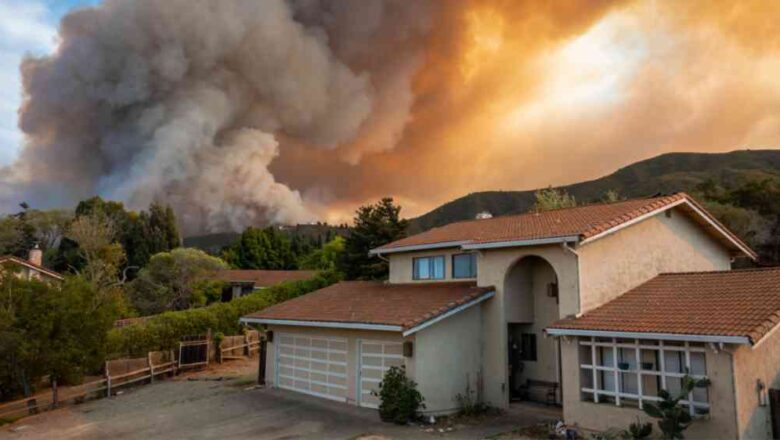
The devastating wildfires that swept through Los Angeles in January 2025 destroyed more than 15,000 buildings in just a few days. Among them were 11 schools and 30 child care centers. As a result, over 700,000 children had their education and daily routines suddenly disrupted. The fires started on January 7 in Pacific Palisades and Eaton Canyon, near Altadena. Strong winds pushed the flames through neighborhoods, making it one of California’s five worst wildfires ever. While much of the news focused on property damage and loss of life, the challenges faced by children after the disaster received very little attention. Two experts from the University of Southern California one a disaster epidemiologist, the other a disaster planner say that when a disaster hits your own community, it ...
Four Hurricane Names Retired After Storm Destruction Across Americas WMO Replaces

Four Hurricane Names Retired After Storm Destruction Across Americas WMO Replaces

Breaking News, Climate Actions
The World Meteorological Organization (WMO) has officially retired four hurricane names from the 2024 season Beryl, Helene, Milton, and John after these powerful storms caused major destruction and loss of life across the Americas. These names will never be used again due to the severe damage they brought to countries like the U.S., Mexico, and Caribbean nations. In their place, new names have been chosen: Brianna, Holly, and Miguel for the Atlantic region, and Jake for the eastern Pacific. Hurricane names are retired when a storm is so deadly or expensive that using the same name again in the future would be disrespectful to victims or confusing to the public. This is part of a global effort to improve public safety and disaster communication. Michael Brennan, Chair of the WMO Hu...
Women Bear the Brunt of Climate Disasters: Experts Call for Gender-Disaggregated Data to Shape Better Disaster Response

Women Bear the Brunt of Climate Disasters: Experts Call for Gender-Disaggregated Data to Shape Better Disaster Response

Breaking News, Climate Actions
Experts have said that women are more affected by climate disasters like floods, droughts, and heatwaves but there is not enough data to show exactly how. Without proper gender-wise data, it’s hard to make good plans and policies to help women during such disasters. At a recent workshop in Delhi, experts from the National Disaster Management Authority (NDMA) and UN Women said that collecting data on how disasters affect women differently is very important. For example, during a flood or cyclone, we often don’t know how many women got hurt, lost their income, or were displaced. Susan Ferguson from UN Women said that most rural women work in farming or informal jobs and suffer more when disasters hit. “We need clear data about women so that governments can make better plans and provide...
Severe Storms Tornadoes Trigger Generational Floods Across U.S. Heartland

Severe Storms Tornadoes Trigger Generational Floods Across U.S. Heartland

Breaking News, Climate Actions, Disasters
Powerful storms have unleashed chaos across the southern and Midwestern United States, with the National Weather Service warning of “generational” floods. From Texas to Michigan, violent weather has spawned 19 tornadoes, leaving widespread destruction, injuries, and massive power outages. Arkansas, Missouri, Tennessee, and Mississippi face a dire threat, with forecasts predicting up to 15 inches of rainfall by the weekend. Emergency officials have reported injuries but no fatalities so far. In Bay, Arkansas, a freight train derailment was linked to the extreme weather. Governors in Arkansas, Kentucky, and Tennessee have declared states of emergency as emergency response teams work to assess the damage. Missouri officials reported train cars flipped by the storm’s powerful winds, addi...
Tanzania Launches Landmark Early Warning System to Tackle Climate Threats

Tanzania Launches Landmark Early Warning System to Tackle Climate Threats

Breaking News, Climate Actions, Fact Check
Tanzania has taken a major step in disaster preparedness by launching the Early Warnings for All (EW4All) Initiative, aiming to safeguard lives from worsening climate hazards like floods, droughts, and extreme storms. Strengthening Climate Resilience The initiative aligns Tanzania with East African nations such as Burundi, Rwanda, South Sudan, and Uganda, pushing for universal early warning coverage by 2027, in line with a UN call to action. A high-level consultative workshop held in Dodoma from March 19–20, 2025, brought together government officials, international agencies, scientists, and community leaders. Organized by the Tanzania Meteorological Authority (TMA) with support from Denmark, the event focused on integrating global best practices into national strategies. Urgen...
Kochi’s Bioluminescent Backwaters Hide an Ecological Crisis

Kochi’s Bioluminescent Backwaters Hide an Ecological Crisis

Breaking News, Climate Actions
The shimmering blue glow lighting up Kochi’s backwaters has captivated visitors and flooded social media with breathtaking visuals. But beneath this dazzling display lies an ecological crisis that threatens marine life, disrupts local fisheries, and raises concerns about worsening environmental imbalances. Bioluminescence, locally known as kavaru, is caused by Noctiluca scintillans, a microscopic plankton that produces light when disturbed. While this natural phenomenon has become a seasonal spectacle in Kerala’s waters, scientists warn that its increasing frequency signals nutrient pollution, rising sea temperatures, and declining water quality. The same conditions fueling the glow high nitrate and phosphate levels from industrial runoff, rising salinity, and reduced rainfall are al...