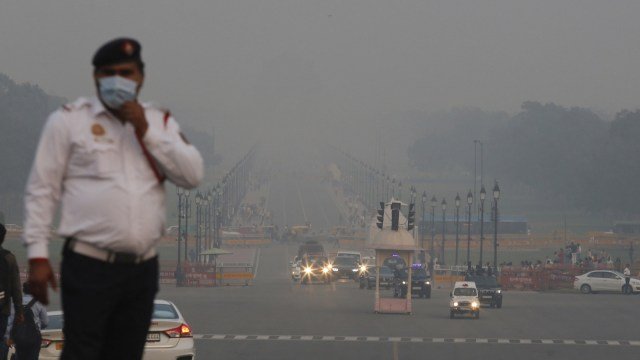
Delhi Air Pollution Accelerating Decay of Humayun’s Tomb IIT Study Warns
Air pollution is accelerating the deterioration of Delhi UNESCO World Heritage Site Humayun's Tomb by causing the formation of pollutant rich black crusts on its sandstone surfaces according to a joint study by IIT Kanpur and IIT Roorkee.
Published in the International Journal of Architectural Heritage, the study found that these black crusts are mainly composed of gypsum a sulphate mineral formed when calcium from road dust reacts with sulphur compounds present in polluted air. The deposits also contain carbon rich particles and trace heavy metals linked to urban pollution.
Researchers collected five black crust samples from rain sheltered rooftop sections of the monument under the supervision of the Archaeological Survey of India. To protect the heritage structure, only t...