Thursday, January 29News That Matters

Breaking News

Why Does Delhi Flood? The Answer Lies in Our Urban Stormwater Management

Why Does Delhi Flood? The Answer Lies in Our Urban Stormwater Management

Breaking News, Disasters, Idea & Innovations
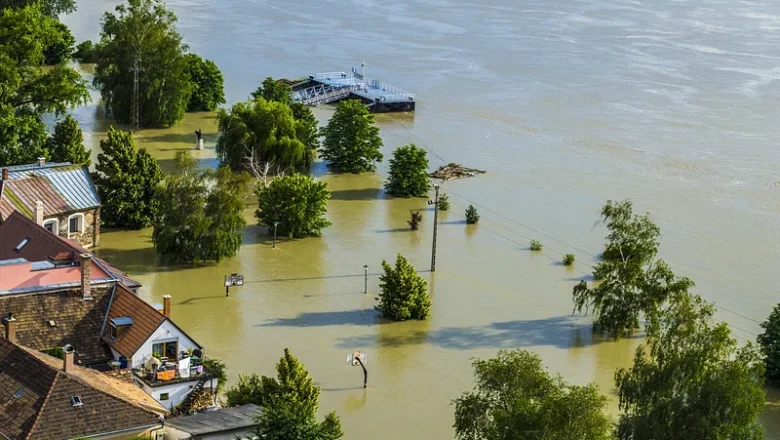
Every year, we witness flooding in our large metropolises and most state capitals. Normally, Delhi is in the news for flooding due to the overflowing of the Yamuna River when large volumes of water are released from the Tajewala dam upstream. However, on June 28, 2024, we witnessed flooding from a high rainfall episode in south Delhi. What explains the frequent in-situ urban flooding in Delhi? This happened in Bengaluru and Lucknow in 2023 as well. High rainfall and climate change are undoubtedly a reality. But is it just that, or something more? To understand the recent flooding in Delhi, let us first understand why 15 minutes of rainfall causes flooding on the Mehrauli-Badarpur road (MB Road) in south Delhi. What does this have to do with understanding Delhi’s urban stormwater managem...
Alarming Erosion Threatens Gujarat’s Coastline Impacting Over a Million People

Alarming Erosion Threatens Gujarat’s Coastline Impacting Over a Million People

Breaking News, Climate Actions
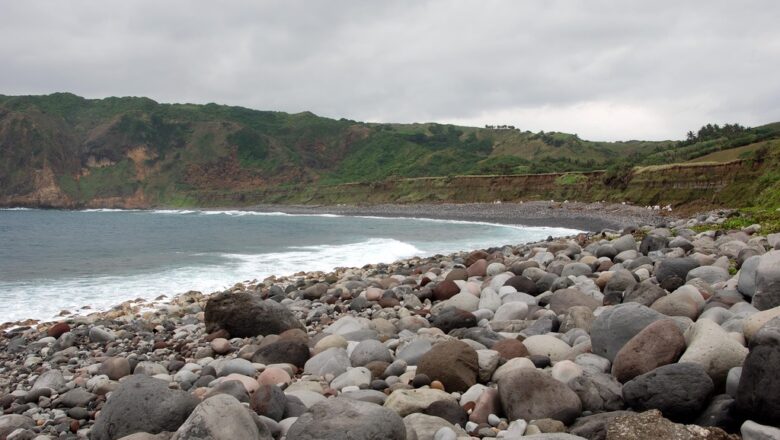
A comprehensive 40-year study has revealed a distressing trend of rapid coastal erosion along Gujarat's once stable shores. From the Gulf of Khambhat to the Gulf of Kutch and from the Saurashtra coast to the South Gujarat coast, the state's coastline is vanishing at an alarming rate. The study, conducted by researchers at the Bhaskaracharya National Institute for Space Applications and Geoinformatics (BISAG-N), highlights significant erosion in 10 out of the 16 coastal districts, affecting nearly 45.8% of Gujarat's coastline and impacting around 549 villages, home to over a million people. Erosion Rates and Affected Areas The study found that districts like Ahmedabad, Surat, and Bharuch are witnessing erosion encroaching within 30 meters of the coast. A striking example is the Khambh...
Climate Crisis and the Lengthening of Days: The Impact of Melting Polar Ice Caps

Climate Crisis and the Lengthening of Days: The Impact of Melting Polar Ice Caps

Breaking News, Environment
A recent study highlights a lesser-known consequence of the climate crisis: the melting of polar ice caps is causing Earth to spin more slowly, increasing the length of days at an unprecedented rate. Published in the Proceedings of the National Academy of Sciences, the paper reveals how water flowing from Greenland and Antarctica is resulting in more mass around the equator, a phenomenon co-author Surendra Adhikari of NASA's Jet Propulsion Laboratory likens to a figure skater extending their arms during a spin, slowing down their rotation. While Earth is often thought of as a sphere, it is more accurately described as an "oblate spheroid," bulging around the equator much like a satsuma. This shape is constantly changing due to various factors such as daily tides, tectonic plate movement...
Shenzhen’s Mangroves: A Beacon of Conservation Amidst Rapid Urbanization

Shenzhen’s Mangroves: A Beacon of Conservation Amidst Rapid Urbanization

Breaking News, Climate Actions, Environment
Each spring, as Shenzhen's mangroves burst into life, the region becomes a prime spot for birdwatchers observing the endangered black-faced spoonbill. Known as the "giant panda of birds," this species winters in Shenzhen Bay from October to April, preparing for its northbound migration. Shenzhen Bay, located in southern China and part of the Pearl River Delta expanding into Hong Kong, is a crucial stop-off point for migratory birds using the East Asian-Australasian flyway. The mangroves support over 200 species of birds and host 100,000 migratory birds each winter, drawing enthusiasts and scientists alike to witness these natural spectacles against the backdrop of one of China's most bustling urban settings. Amid the rapid urbanization that defines modern China, Shenzhen stands out n...
Climate Change Puts More Children at Risk by Excessive Heat Stress: Report

Climate Change Puts More Children at Risk by Excessive Heat Stress: Report

Breaking News, Climate Actions
Rising global temperatures and increasing frequency of historic heat waves are putting more children at risk of heat stress each year. According to recent studies, heat stress caused by extreme temperatures can significantly affect the health and well-being of infants and young children. As climate change continues to drive up temperatures, more countries are facing hotter days more frequently, with greater intensity and for longer periods. Currently, a third of the world's children experience 4-5 heat waves annually. This exposure involves enduring temperatures over 35°C for 83.54 or more days per year, enduring heat waves lasting at least 4.7 days, or facing temperatures 2°C or more above the local 15-day average. By 2050, nearly every child in the world, around 2.2 billion children, ...
New Study Reveals Ancient Origins of LUCA Early Life on Earth

New Study Reveals Ancient Origins of LUCA Early Life on Earth

Breaking News, Climate Actions, Idea & Innovations
Once upon a time, Earth was a barren planet. That changed dramatically when, out of the chemistry present during its early history, something began to squirm processing matter to survive, reproduce, and thrive. The nature of that something, and when it first appeared, have puzzled humanity for as long as we have been able to ask, "What am I?" Now, a groundbreaking study has provided some answers, revealing that life emerged surprisingly early in Earth's history. By analyzing the genomes of organisms alive today, scientists have determined that the last universal common ancestor (LUCA) the first organism that spawned all current life on Earth emerged as early as 4.2 billion years ago. Given that Earth is around 4.5 billion years old, this suggests that life began when the planet was s...
FEMA Adopts New Rule to Improve Flood Resilience by Redefining Floodplain Standards Amid Rising Climate Change Risks

FEMA Adopts New Rule to Improve Flood Resilience by Redefining Floodplain Standards Amid Rising Climate Change Risks

Breaking News, Climate Actions, Disasters
Washington, D.C. – The Federal Emergency Management Agency (FEMA) has announced a significant policy change aimed at enhancing community resilience to flooding by redefining the floodplain standards it uses to determine safe building locations. This move follows an executive order from President Joe Biden, compelling government agencies to incorporate climate change impacts into their flood risk assessments. Historically, FEMA and other federal agencies have defined a floodplain based on an area having a 1 percent chance of flooding in any given year, known as the 100-year floodplain standard. However, this standard has proved insufficient, as floods frequently submerge buildings outside these designated zones. The new rule requires FEMA to factor in the effects of climate change, such ...
Rising Temperatures Threaten Global Groundwater Safety: Millions at Risk by 2100

Rising Temperatures Threaten Global Groundwater Safety: Millions at Risk by 2100

Breaking News, Disasters
In a stark warning, scientists highlight that without access to lakes or streams, one in four humans relies on underground reservoirs. However, as temperatures soar, these vital water sources face contamination risks. An international study using a global heat transport model reveals that by 2100, up to 590 million people could depend on groundwater that fails to meet safe drinking standards due to warming. This underlines a critical yet often overlooked consequence of climate change on Earth's land. Hydrologist Dylan Irvine from Charles Darwin University emphasizes the need to broaden focus beyond weather events and water availability. The study underscores that warming groundwater can alter its chemical composition, potentially making it unsafe for consumption due to dissolved mine...
Less than a Month into Summer 2024 Vast Majority of U.S. Population Experiences Extreme Heat Wave

Less than a Month into Summer 2024 Vast Majority of U.S. Population Experiences Extreme Heat Wave

Breaking News, Environment
Less than a month into summer 2024, an extreme heat wave has already gripped the vast majority of the U.S. population. Millions found themselves under heat warnings across the western U.S. in early July, while the eastern regions suffered through oppressive, humid conditions. On July 7, Death Valley hit a perilous 129 degrees Fahrenheit (53.9 C), a day after a motorcyclist succumbed to heat exposure there. Las Vegas shattered its all-time heat record with a scorching 120 F (48.9 C). In California, a series of over-100-degree days parched the landscape, igniting wildfires, while Oregon reported multiple suspected heat-related deaths. Heat Waves Sweeping the Globe Extreme heat is not confined to the U.S. In 2024, countries around the world have experienced unprecedented temperatures...
NASA’s Habitable Worlds Observatory Aiming to Detect Alien Life on Earth Like Planets by 2050

NASA’s Habitable Worlds Observatory Aiming to Detect Alien Life on Earth Like Planets by 2050

Breaking News, Idea & Innovations, Space
NASA is gearing up to launch the Habitable Worlds Observatory (HWO), a state-of-the-art telescope designed specifically to search for signs of extraterrestrial life on Earth-like planets. Scheduled to launch by 2040, HWO represents a monumental step in the quest to find habitable planets by 2050. Dr. Jessie Christiansen, NASA’s chief scientist for the search for extraterrestrial life, has expressed optimism that HWO will detect signals from planets within the habitable zones of sun-like stars during our lifetime. The primary objective of the observatory is to identify biosignatures, which are indicators of life, such as biogenic gases, aerosols, surface biosignatures, and even technosignatures from advanced civilizations. To date, NASA has pinpointed twenty-five Earth-like planets or...