Tuesday, May 5News That Matters

Breaking News

Microbe With the Smallest Genome Ever Discovered Blurs the Line Between Bacteria and Organelles

Microbe With the Smallest Genome Ever Discovered Blurs the Line Between Bacteria and Organelles

Breaking News
    Scientists have identified a symbiotic bacterium with the smallest genome ever recorded, raising fresh questions about where a microbe ends and a cellular organelle begins. The newly studied bacteria live inside specialized insect organs known as bacteriomes and have shed vast portions of their DNA over hundreds of millions of years. Their extreme genetic reduction mirrors the evolutionary path of ancient microbes that eventually became mitochondria the energy-producing organelles found in nearly all complex cells. The research, led by Piotr Lukasik of Jagiellonian University, focuses on symbiotic bacteria inhabiting planthopper insects, including Callodictya krueperi. Fluorescent imaging revealed two key microbial partners Vidania and Sodalis living within the in...
Delhi Among 17 States Without E-Waste Recycling Facility, CPCB Tells National Green Tribunal

Delhi Among 17 States Without E-Waste Recycling Facility, CPCB Tells National Green Tribunal

Breaking News
    Delhi is among 17 States and Union Territories that do not have a dedicated electronic waste recycling facility, the Central Pollution Control Board (CPCB) informed the National Green Tribunal (NGT), raising fresh concerns about the capital’s capacity to manage mounting e-waste. In a status report submitted to the tribunal, the CPCB stated that Delhi currently relies on agreements between bulk waste generators and registered recyclers located outside the city, primarily within the National Capital Region (NCR), to process its electronic waste. No In-City Recycling, No Interstate Tracking The matter was heard by a Bench led by NGT Chairperson Justice Prakash Shrivastava and expert member A. Senthil Vel, which had earlier sought an action-taken report on e-waste ...
Global Warming Speeds Up But Nature Rhythm Slows, Major International Study Finds

Global Warming Speeds Up But Nature Rhythm Slows, Major International Study Finds

Breaking News
    Even as global temperatures continue to climb, the natural world appears to be changing more slowly not faster according to a major new study by researchers at Queen Mary University of London. The research, published in Nature Communications, challenges a long-held assumption among ecologists that accelerating climate change would trigger equally rapid ecological reshuffling. Instead, scientists found that the rate at which species replace one another in local ecosystems known as species “turnover” has declined by roughly one-third since the 1970s. Biodiversity’s Engine Is Losing Momentum For decades, researchers believed that rising temperatures and shifting climate zones would push species out of old habitats and into new ones at increasing speed. The expect...
Global Study Finds Forest Loss Makes Watersheds ‘Leakier’ Threatening Long-Term Water Security

Global Study Finds Forest Loss Makes Watersheds ‘Leakier’ Threatening Long-Term Water Security

Breaking News
    A sweeping international study led by researchers at the University of British Columbia suggests that deforestation does more than shrink tree cover it fundamentally alters how watersheds store and release water, potentially undermining long-term water security. The research, published in the Proceedings of the National Academy of Sciences (PNAS), analyzed hydrological data from 657 watersheds across six continents. The findings show that forest loss along with changes in how forests are spatially arranged increases the proportion of “young water” flowing out of watersheds. Forest Loss Speeds Up Water Movement “Young water” refers to rain and snowmelt that moves through a watershed within roughly two to three months of falling. A higher proportion of young wate...
Across Africa Vast Landscapes, Vulture Safe Zones Face Their Toughest Test Yet

Across Africa Vast Landscapes, Vulture Safe Zones Face Their Toughest Test Yet

Breaking News
    Southern Africa: As Africa’s vulture populations continue to decline under mounting threats, conservationists are expanding “vulture safe zones” across the continent. Yet experts warn that protecting these wide-ranging scavengers across millions of hectares remains one of the most complex conservation challenges in the region. The concept of vulture safe zones was first developed in Asia after catastrophic declines linked to the veterinary drug diclofenac, which proved lethal to vultures feeding on treated livestock carcasses. In Africa, however, the threats are broader and often more difficult to control from accidental and deliberate poisoning to habitat loss, power line collisions and the use of lead ammunition. South Africa’s oldest vulture safe zone was estab...
Amid Global Coral Bleaching Crisis Discover Thriving 1.8-Km Reef Near Lakshadweep’s Kalpeni Island

Amid Global Coral Bleaching Crisis Discover Thriving 1.8-Km Reef Near Lakshadweep’s Kalpeni Island

Breaking News
    Lakshadweep: At a time when coral reefs across the world are reeling under the impact of rising sea temperatures and mass bleaching, scientists have discovered a vibrant and healthy coral reef stretching nearly 1.8 kilometres off the northeast coast of Kalpeni island in the Lakshadweep archipelago. The discovery comes amid the ongoing fourth global mass coral bleaching event, which has severely affected reefs worldwide. Between January 2023 and September 2025, bleaching-level heat stress impacted nearly 84.4 per cent of the world’s coral reef areas, with mass bleaching recorded in at least 83 countries and territories. Scientists have warned that with the Earth already at 1.4 degrees Celsius of long-term warming, warm-water coral reefs are approaching their thermal t...
Just 3 Per Cent of Vehicles, But India Trucks Are Driving Over Half the Nation’s Road Pollution

Just 3 Per Cent of Vehicles, But India Trucks Are Driving Over Half the Nation’s Road Pollution

Breaking News
New Delhi: India’s highways are powered by millions of trucks that move food, fuel, cement, steel and consumer goods across the country every day. But a new report has revealed a troubling reality although trucks account for only 3 per cent of vehicles on Indian roads, they are responsible for more than 50 per cent of the country’s road transport pollution. The findings, published by the Smart Freight Centre India, The Energy and Resources Institute and Indian Institute of Management Bangalore, show that heavy-duty trucks contribute nearly 53 per cent of particulate matter emissions. They also account for over 60 per cent of black carbon and more than 70 per cent of nitrogen oxide (NOx) emissions from the road transport sector. India transports billions of tonnes of freight annually,...
Circular Economy in Agriculture Promises $2 Trillion Future, But Gaps Persist Between Policy and Practice

Circular Economy in Agriculture Promises $2 Trillion Future, But Gaps Persist Between Policy and Practice

Breaking News
    India’s vision of turning agricultural waste into economic wealth is bold, ambitious and long overdue. A recent government note titled Circular Economy in Agriculture: Waste to Wealth projected that the sector could generate a $2 trillion market by 2050 and create up to 10 million jobs. The message was clear: crop residue, livestock waste and post-harvest losses should no longer be treated as disposal challenges but as engines of rural growth, climate mitigation and energy security. Yet beyond headline projections and sanctioned funds, the real test lies in implementation. While investments have been substantial and policy frameworks wide-ranging, ground-level outcomes particularly in biomass co-firing and crop residue management reveal uneven progress. 350 Millio...
Scientists Turn to River Sewage to Track Antibiotic Resistance as Global Health Threat Grows

Scientists Turn to River Sewage to Track Antibiotic Resistance as Global Health Threat Grows

Breaking News
    The discovery of antibiotic-resistant bacteria in river systems around Oxford has renewed calls for routine, year-round monitoring of waterways, as scientists warn that antimicrobial resistance (AMR) remains one of the world’s most pressing public health threats. A recent study found widespread traces of drug-resistant bacteria in Oxford’s rivers, adding to earlier evidence from 2015 that detected similar contamination in the River Thames, particularly near sewage treatment outfalls. While researchers say the presence of such bacteria is not unexpected, the level of risk posed to people using rivers for recreation remains unclear a concern for anti-pollution campaigners. Antimicrobial resistance occurs when bacteria, viruses, fungi and parasites evolve over time a...
Amazon Turned Carbon Source During Drought Released Up to 170 Million Tonnes of CO₂

Amazon Turned Carbon Source During Drought Released Up to 170 Million Tonnes of CO₂

Breaking News
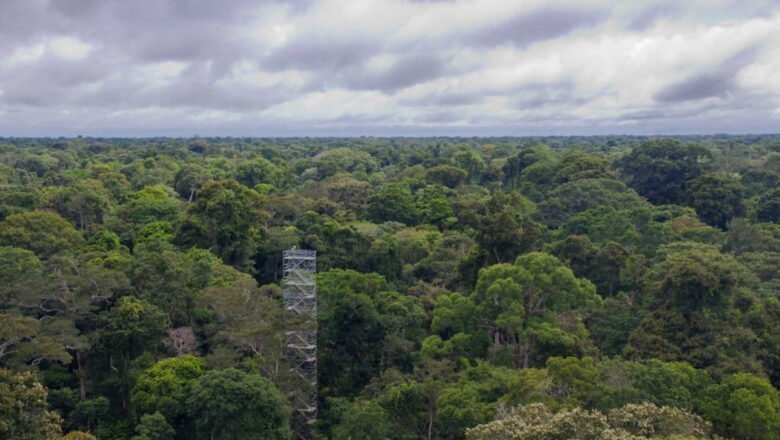
    An extreme drought and prolonged heatwave in 2023 pushed parts of the Amazon rainforest from being a crucial carbon sink to becoming a temporary carbon source, releasing between 10 and 170 million tonnes of carbon dioxide into the atmosphere over three months, according to a new study. The research, published in American Geophysical Union’s journal AGU Advances, warns that ocean-driven warming and persistent dryness may be undermining the Amazon’s ability to absorb carbon faster than previously expected a shift with serious implications for global climate stability. Between September and November 2023, the rainforest emitted more carbon than it absorbed, contributing up to 30 per cent of the total net carbon loss across tropical land that year. Scientists say unus...