Wednesday, January 28News That Matters

Breaking News

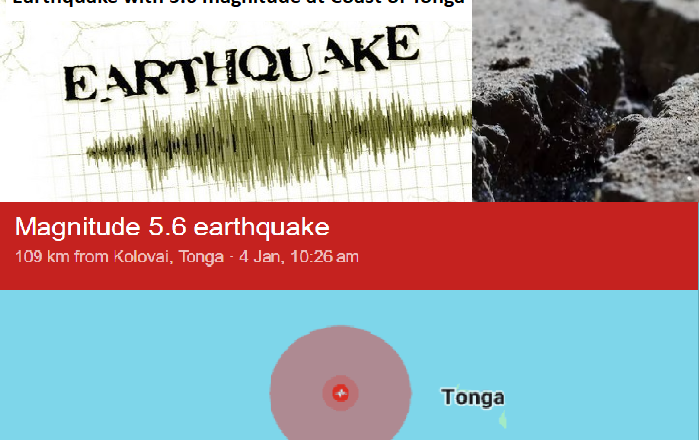
Undersea Earthquake slackened up Coast of Tonga with 5.6 mag without damage

Undersea Earthquake slackened up Coast of Tonga with 5.6 mag without damage

Breaking News, Disasters
On January 9, 2024, at 10:41 AM (Tongatapu Time), an earthquake with a magnitude of 5.6 struck under the South Pacific Ocean, approximately 175 kilometers off the coast of Tonga. The earthquake occurred at a very shallow depth of 10 kilometers, making it potentially impactful, as shallow earthquakes tend to have a larger effect. Key Details: Location: 242 km ENE of Nuku‘alofa, Tongatapu, Tonga. Coordinates: 20°2'15"S 173°11'29"W. Depth: 10 km (6 mi), classified as a very shallow depth. Magnitude: 5.3, detected by 49 stations. Maximum Error Range: ±0.085. Low tsunami risk, as earthquakes under magnitude 6.5 usually do not cause tsunamis. The earthquake may have been felt in Tonga, with Nuku‘alofa being the nearest significant population center, located 242 kilometers...

Tokyo Runway Collision: A Tragedy and Lession Learned

Tokyo Runway Collision: A Tragedy and Lession Learned

Breaking News, Disasters, Thoughts & Talks
On January 2nd, 2024, a Japan Airlines Airbus A350 carrying 379 people collided with a Japanese Coast Guard aircraft at Tokyo's Haneda Airport. While miraculously all passengers and crew on the JAL flight survived, five of the six crew members on the Coast Guard plane tragically perished. The accident sent shockwaves through Japan and the aviation industry, prompting a thorough investigation and renewed focus on runway safety. The Incident: The JAL flight was approaching Haneda for landing when it collided with the Coast Guard turboprop aircraft on the runway. The smaller plane burst into flames, while the JAL aircraft skidded down the tarmac, sustaining significant damage. Thankfully, a swift and coordinated emergency response ensured the safe evacuation of all passengers and crew fr...
Unlocking the Lifesaving Potential of Location-Based Technology with Cutting-Edge Solutions to improve Emergency Response

Unlocking the Lifesaving Potential of Location-Based Technology with Cutting-Edge Solutions to improve Emergency Response

Breaking News, Disasters, Tech, Thoughts & Talks
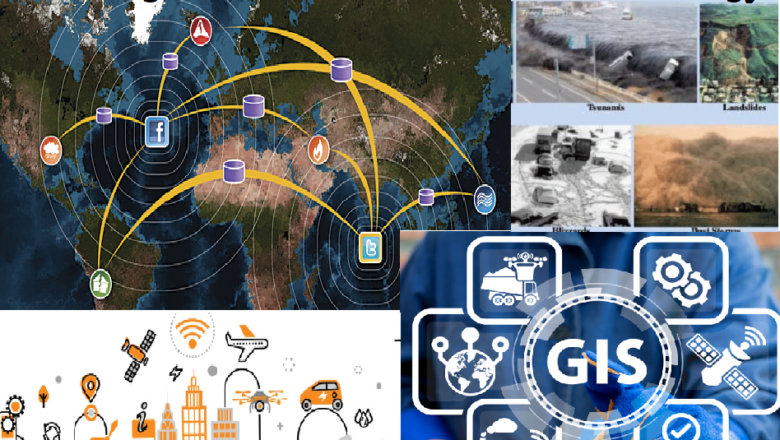
In the recent age of technological advancement, location-based technology stands out for its versatility and wide-ranging applications. While commonly recognized for mapping, navigation, and analytics, one of its most impactful yet often overlooked use cases is its potential to save lives and expedite emergency/disaster response efforts. This article explores the views and insights of the transformative role of location-based technology in emergency situations, shedding light on its capabilities, applications, and the potential it holds for improving overall emergency preparedness. The Power of Location-Based Technology in Emergencies There are views and pictorial representation of a scenarios where chaos erupts due to an emergency, and it counts every second by the humanity. The traditi...
New York City’s Record Snow Drought Persists Despite Winter Storm: 692-Day Streak Continues

New York City’s Record Snow Drought Persists Despite Winter Storm: 692-Day Streak Continues

Breaking News, Disasters, Environment
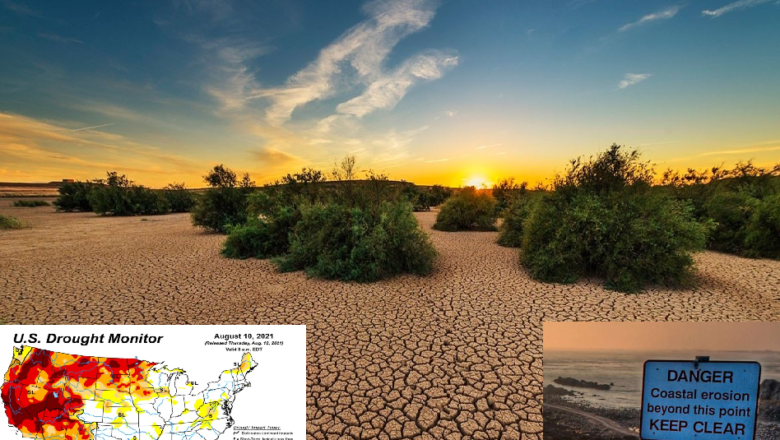
New York City's historic two-year snow drought may not end with the current winter storm system. Despite the arrival of the storm passing through the East Coast, as of 7 p.m. Saturday, only 0.2 inches had been recorded in Central Park. The National Weather Service forecasted only 0.8 inches of accumulation before the storm moves out to sea late on Sunday night. The city's 8.5 million residents have not seen more than 1 inch of snowfall in Manhattan's Central Park since February 13, 2022, marking a record-long streak of 692 days. The lack of snow in New York City is considered another sign of how climate change is affecting global weather patterns.
Assessing Coastal Vulnerability to climate and non-climate drivers: Major Concerns for Coastal residing mega cities

Assessing Coastal Vulnerability to climate and non-climate drivers: Major Concerns for Coastal residing mega cities

Breaking News, Climate Actions, Thoughts & Talks
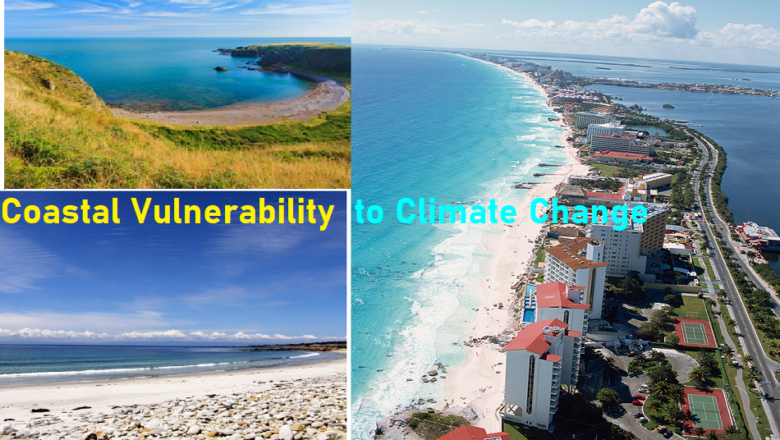
Climate change is global phenomena, which impacting humanity form multi-dimensional way. The sea level rise is currently one of the most important climate change pressures along the coastal belt across the globe before the humanity. Recent reports and analysis says that, it is expected to continue rising and possibly accelerate during this century due to the increase in the average global surface temperature, and contributions from changes in ice sheet dynamics. The data analyzed by Intergovernmental Panel on Climate Change Fourth Assessment Report (IPCC AR4) that the sea level is projected to rise between the present (1980 to 1999) and the end of the 21st century (2090 to 2099) under the six SRES scenarios1 by between 18 and 59 centimeters. The global mean sea-level rise scenarios or p...
Green signal given to PRITHvi VIgyan scheme to fight Natural Disasters

Green signal given to PRITHvi VIgyan scheme to fight Natural Disasters

Breaking News, Climate Actions, Environment, Learning & Developments
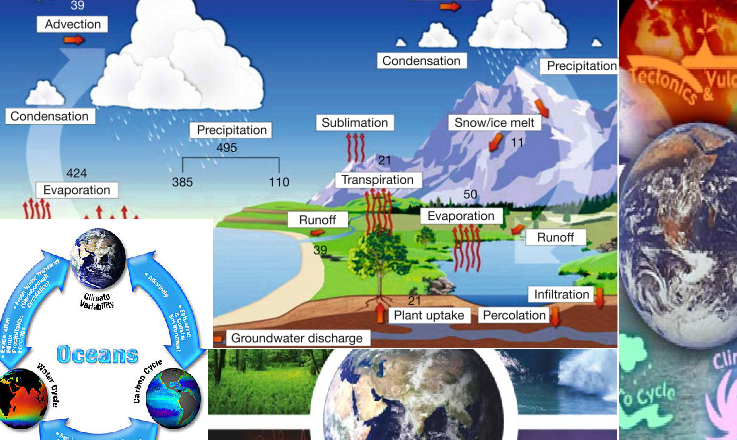
The Union Cabinet Chaired by the Prime Minister, Shri Narendra Modi has approved the overarching scheme “PRITHvi VIgyan (PRITHVI)” of Ministry of Earth Sciences, for implementation during the period from 2021-26 at an overall cost of Rs. 4,797 crore. The scheme encompasses five ongoing sub-schemes namely “Atmosphere & Climate Research-Modelling Observing Systems & Services (ACROSS)”, “Ocean Services, Modelling Application, Resources and Technology (O-SMART)”, “Polar Science and Cryosphere Research (PACER)”, “Seismology and Geosciences (SAGE)” and “Research, Education, Training and Outreach (REACHOUT)”. The major Objectives of the overarching Prithvi Scheme are: Augmentation and sustainance of long-term observations of the atmosphere, ocean, geosphere, cryosphere and solid e...
Groundbreaking Effort: IIT Delhi Researchers Develop India’s First High Resolution Landslide Risk Map

Groundbreaking Effort: IIT Delhi Researchers Develop India’s First High Resolution Landslide Risk Map

Breaking News, Disasters, Idea & Innovations
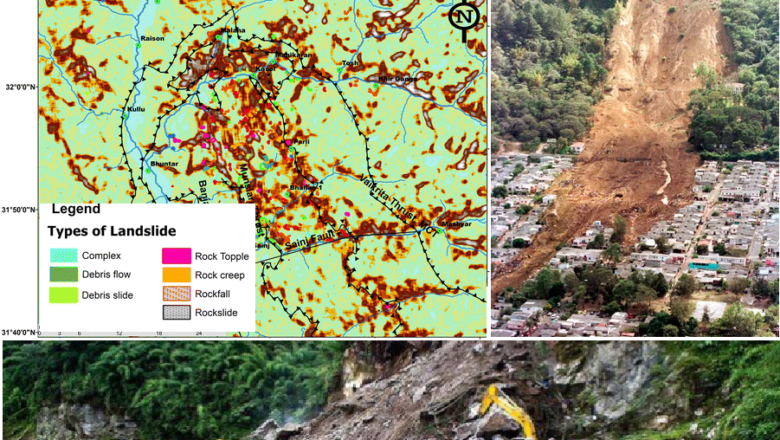
In a pioneering effort, researchers from the Indian Institute of Technology (IIT) Delhi have successfully developed the first-of-its-kind national landslide risk map. The lack of a comprehensive map has been a significant challenge, particularly in the aftermath of natural disasters. The map, which is set to be published in the February 2024 issue of the journal Catena, aims to revolutionize disaster preparedness and mitigation strategies across the country. Unique Challenge: Landslides in India Landslides pose a unique and deadly challenge in India, affecting localized areas and making them harder to track and study with traditional methods such as satellite imaging. Unlike floods, landslides occur in approximately 1-2% of the country, making data collection more challenging due to thei...
Earthquake of magnitude 3.5 hits Lunglei in Mizoram no casualties reported

Earthquake of magnitude 3.5 hits Lunglei in Mizoram no casualties reported

Breaking News, Disasters
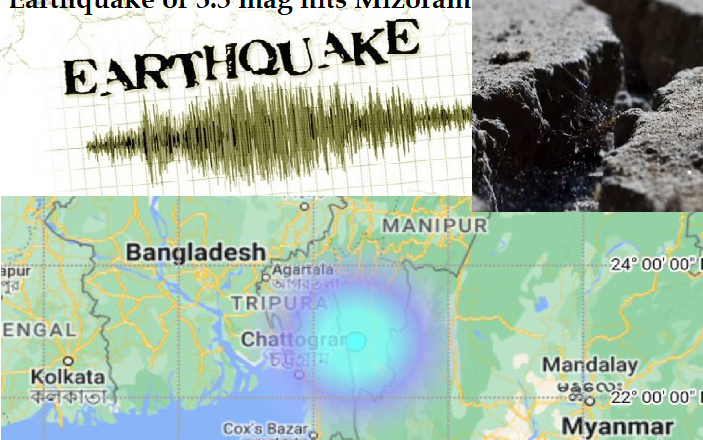
A 3.5 magnitude earthquake has struck Lunglei, Mizoram. There have been no reported casualties. Mizoram experienced an earthquake on January 5 with a magnitude of 3.5 on the Richter Scale at 7:18 am in Lunglei, according to the National Center for Seismology. The tremor, which occurred at a depth of 10 kilometers. The earthquake's epicenter was pinpointed at latitude 22.86 and longitude 92.63, with the National Center for Seismology closely monitoring the situation. One day before, on January 4, 2024, another earthquake occurred in J&K, with a magnitude of 3.9, shaken Jammu & Kashmir at 00:38:15 IST. This earlier quake had a shallower depth of 5 kilometers, with its epicenter located at latitude 33.34 and longitude 76.67.
Satellite Technology Emerges as a Lifesaver for Utilities and Disasters Impacts Assessments

Satellite Technology Emerges as a Lifesaver for Utilities and Disasters Impacts Assessments

Breaking News, Climate Actions, Space, Thoughts & Talks
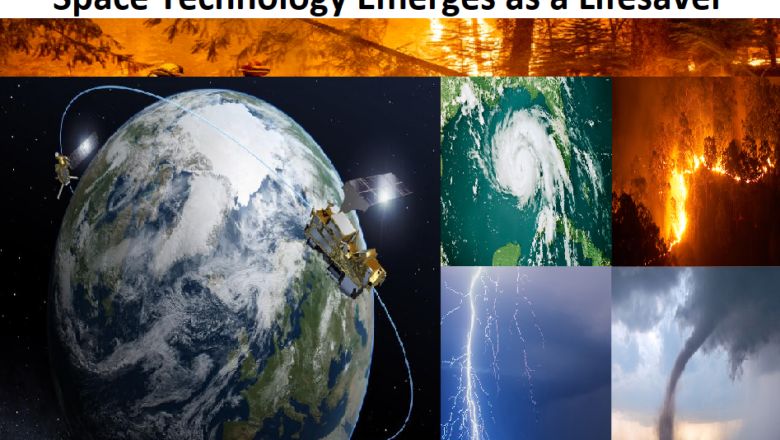
Amidst these challenges, satellite technology has emerged as a beacon of hope for utilities. Leveraging high-resolution, multispectral imaging techniques, satellites contribute significantly to disaster management, offering real-time data, continuous monitoring, and risk assessment. The advantages of satellite technology for utilities in disaster management are manifold. Accuracy and Availability of Near Real-Time Data: In times of storms and disasters, rapid response is crucial for saving lives and minimizing risks. Satellites provide accurate, continuous, and near real-time data, transcending geographical, weather, and terrain limitations. With thousands of earth observation satellites capturing data through optical, LiDAR, radar, and Synthetic Aperture Radar (SAR) imagery, utilitie...
Germany Achieves Lowest CO2 Emissions Since 1950s to sustaining decline requires the major Policy Shifts

Germany Achieves Lowest CO2 Emissions Since 1950s to sustaining decline requires the major Policy Shifts

Breaking News, Climate Actions, Idea & Innovations
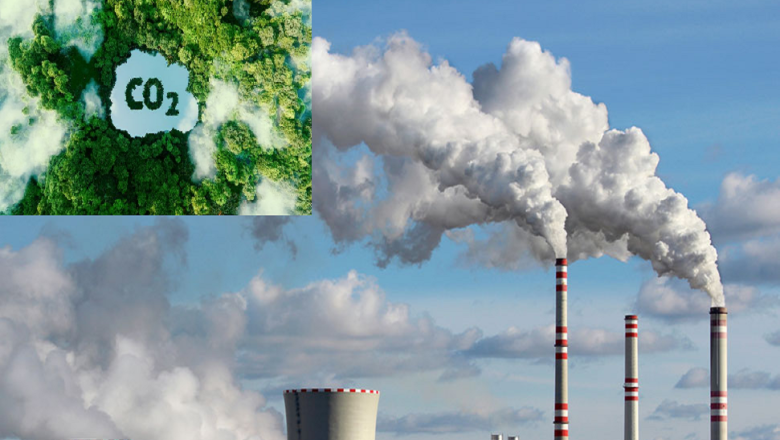
Germany witnessed a significant drop in carbon dioxide (CO2) emissions in 2023, reaching levels not seen since the 1950s, attributed to reduced coal-fired power usage and decreased output by energy-intensive industries. However, a recent study by the Berlin-based Agora Energiewende think tank highlights that this decline is unsustainable without crucial changes in climate policies. Germany has set ambitious climate goals, aiming to reduce its greenhouse gas emissions by 65% by 2030 compared to 1990, with a broader target of achieving carbon neutrality by 2045. According to the study, CO2 emissions in Germany for the year 2023 reached 673 million tonnes, the lowest since the 1950s, representing a 46% decrease from 1990 levels. This surpassed the government's 2023 climate goal of 722 m...