Thursday, February 26News That Matters

Breaking News

Rare January Weather System over the Bay of Bengal Deep Depression Heavy Rainfall to Tamil Nadu

Rare January Weather System over the Bay of Bengal Deep Depression Heavy Rainfall to Tamil Nadu

Breaking News
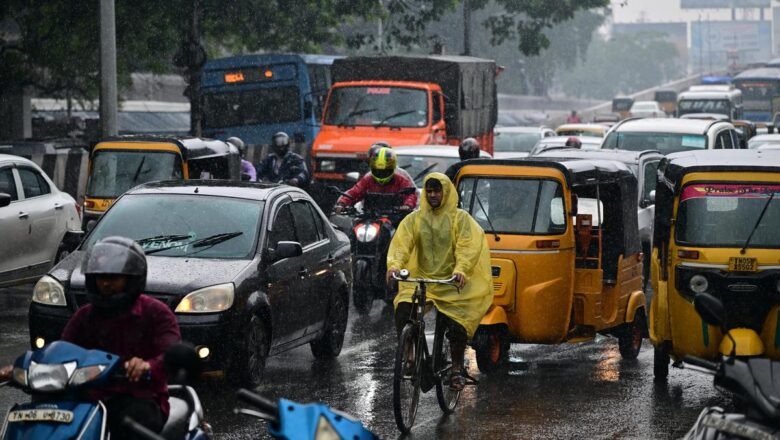
The prolonged dry spell over Tamil Nadu is expected to ease in the coming days as an unusual weather system over the Bay of Bengal has intensified into a deep depression. Meteorological officials have forecast scattered to heavy rainfall across several parts of the State, particularly along the coast, for at least three days beginning Friday, January 9. According to the Regional Meteorological Centre (RMC), Chennai, the deep depression is currently positioned over the southwest Bay of Bengal and the adjoining east Equatorial Ocean. It is located approximately 810 kilometres southeast of Karaikal and about 980 kilometres south-southeast of Chennai. The system is likely to move west-northwestwards and cross the Sri Lanka coast between Hambantota and Kalmunai by Friday evening or night. ...

Water Supply Disruption Likely Across Parts of South and North Delhi Due to Pipeline Damage

Water Supply Disruption Likely Across Parts of South and North Delhi Due to Pipeline Damage

Breaking News
    Residents across several parts of south, southeast and north Delhi are likely to face disruptions in water supply over the next few days following damage to a major pipeline in north Delhi and a scheduled maintenance shutdown at a key water treatment plant, officials from the Delhi Jal Board (DJB) said on Monday. In north Delhi, water supply has been affected after an 800-millimetre pipeline originating from the Haiderpur Water Treatment Plant was damaged. The disruption is expected to continue until the morning of January 8. Officials said technical teams have been deployed and repair work is underway on a priority basis, though restoration may take over 24 hours due to the depth of the pipeline and site-related constraints. Areas likely to be affected in north D...
Why Winter Turns Air Pollution into a Silent Killer

Why Winter Turns Air Pollution into a Silent Killer

Breaking News
Every winter, air pollution in India is treated like a seasonal inconvenience. Governments blame stubble burning, fireworks or cold weather, announce emergency measures, and wait for the season to pass. Once the air clears, so does public attention. What is rarely discussed is the real reason winter air becomes so deadly. Winter does not create pollution. It traps it. And by ignoring the basic physics of how air behaves in winter, governments continue to allow a predictable public health disaster to repeat itself every year. The most important factor behind winter pollution is a phenomenon called temperature inversion. Normally, warm air near the ground rises and carries pollutants upward, allowing them to disperse. In winter, especially during calm nights, the ground cools rapidly. ...
Global Carbon Markets Cross One Hundred Billion Dollars, but India’s Carbon Trading System Is Still Finding Its Footing

Global Carbon Markets Cross One Hundred Billion Dollars, but India’s Carbon Trading System Is Still Finding Its Footing

Breaking News
Global carbon markets have crossed the $100 billion mark for the second year in a row, signalling the growing acceptance of carbon pricing as a central climate policy tool. Nearly 28 per cent of global greenhouse gas emissions are now covered by a direct carbon price, a sharp rise from just 5 per cent in 2005, according to the World Bank State and Trends of Carbon Pricing 2025 report. While this expansion reflects progress at the global level, India’s experience with carbon markets suggests that scale alone does not guarantee meaningful emission reductions. Across the world, carbon pricing instruments are expanding rapidly. The World Bank report notes that 80 direct carbon pricing mechanisms are currently operational, including 37 emissions trading systems and 43 carbon taxes. Much of t...
The Lima Standoff Emergence of “Biodiversity Cartels” Reveal a Growing Assertion of Power by the Global South

The Lima Standoff Emergence of “Biodiversity Cartels” Reveal a Growing Assertion of Power by the Global South

Breaking News
    The failure of negotiations at the 11th Session of the Governing Body of the International Treaty on Plant Genetic Resources for Food and Agriculture, held in Lima, Peru, in late November 2025, has exposed a deep and widening fault line in global biodiversity governance. What unfolded in Lima was not merely a technical disagreement over seeds, but a fundamental clash between the Global North and the Global South over control, compensation, and the future of food security. At the heart of the deadlock was a long-standing dispute over access to plant genetic resources and the equitable sharing of benefits derived from them. Developed nations pushed for a sweeping expansion of Annex I of the Treaty, seeking access to all plant genetic resources under a single multilater...
Delhi Fog and Chilly Winds Keep Maximum Temperature Below Normal, IMD Issues Yellow Alert

Delhi Fog and Chilly Winds Keep Maximum Temperature Below Normal, IMD Issues Yellow Alert

Breaking News
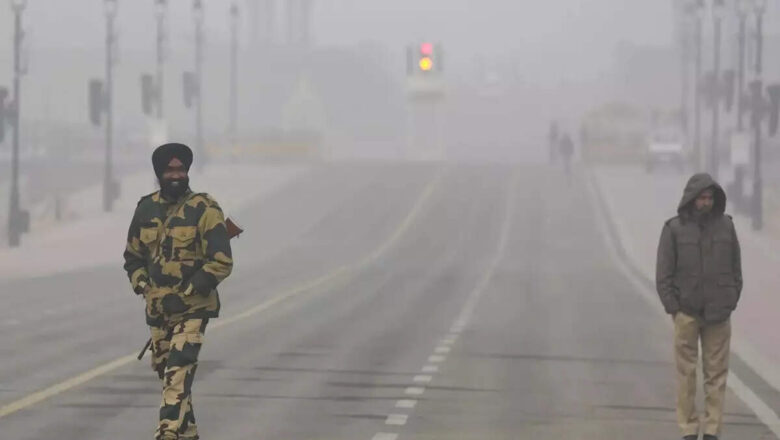
    New Delhi witnessed continued cold day conditions for the second consecutive day as dense upper-level fog and icy northwesterly winds kept daytime temperatures well below normal. The maximum temperature on Wednesday settled at 16.7 degrees Celsius, marginally higher than Tuesday’s 15.7 degrees Celsius, but still around two degrees below the seasonal average. According to the India Meteorological Department (IMD), cold day conditions were recorded at Palam and Lodhi Road weather stations, similar to the previous day. The weather agency has issued a yellow alert for the Capital, warning that chilly conditions are likely to persist, even as a slight rise of about one degree in the maximum temperature is expected on Thursday. Meteorological officials said shallow fog ...
Saudi Arabia Deserts Were Once Lush Green Landscapes With Lakes and Human Life, Scientific Studies Reveal

Saudi Arabia Deserts Were Once Lush Green Landscapes With Lakes and Human Life, Scientific Studies Reveal

Breaking News
    Saudi Arabia now known for its vast deserts and arid climate, was once a land shaped by flowing rivers, large lakes and fertile grasslands, according to a growing body of scientific research. Multiple international studies suggest that the Arabian Peninsula experienced long periods of humid and green conditions in the past, supporting wildlife and repeated human settlement. Today, nearly 95 per cent of Saudi Arabia is covered by desert, including the Arabian Desert and the Rub’ al Khali, or Empty Quarter. Despite this, recent scientific evidence shows that extreme dryness is not the region’s permanent natural state. Researchers say dramatic climate shifts over millions of years repeatedly transformed Arabia into a habitable landscape. Much of this transformation o...
Winter Season Transforms the Yamuna Riverbanks in Delhi into a Temporary Home for Migratory Birds

Winter Season Transforms the Yamuna Riverbanks in Delhi into a Temporary Home for Migratory Birds

Breaking News
    Every winter, the banks of the Yamuna River in Delhi turn into a vibrant refuge for hundreds of migratory birds that travel thousands of kilometres to escape extreme cold in their native regions. With the arrival of the winter season, these winged visitors settle along the river, adding life and movement to the otherwise quiet riverbanks. Among the most prominent visitors are Siberian seagulls, which migrate from the freezing landscapes of Siberia to the comparatively milder climate of Delhi. These birds typically arrive in the national capital between November and remain until March, using the Yamuna as a resting and feeding ground during their long seasonal journey. Large congregations of Siberian seagulls can be seen at Nigambodh Ghat, one of Delhi’s most promi...
Water Pollution and Habitat Loss Lead to Decline in NCR Migratory Birds

Water Pollution and Habitat Loss Lead to Decline in NCR Migratory Birds

Breaking News
The Asian Waterbird Census 2026 has sounded a major ecological alarm for the National Capital Region, reporting a sharp decline in both the population and diversity of migratory birds. The findings highlight a troubling trend in two of the region's most vital ecosystems, specifically the Surajpur Wetland in Greater Noida and the Yamuna riverine wetlands. According to the latest data, the Surajpur Wetland saw its bird count drop from 3,137 individuals across 37 species in 2023 to just 2,633 individuals belonging to 31 species in 2026. The situation is even more dire at the Yamuna wetland, where the count plummeted from 2,451 birds in 2023 to a mere 1,564 birds this year, representing a loss of nearly a third of the visiting population. Experts, including TK Roy, the Delhi state coordi...
New Anti-Diabetic Compounds Discovered in Roasted Coffee

New Anti-Diabetic Compounds Discovered in Roasted Coffee

Breaking News
Researchers from the Kunming Institute of Botany at the Chinese Academy of Sciences have uncovered previously unknown bioactive compounds in roasted coffee beans that could revolutionize the management of type 2 diabetes. The study, published in Beverage Plant Research, identified three specific molecules named caffaldehydes A, B, and C that effectively inhibit a key enzyme responsible for blood sugar spikes. These findings reveal that coffee is far more than a morning stimulant; it is a chemically rich functional food with significant implications for metabolic health. The primary focus of the research was the enzyme \alpha-glucosidase, which plays a critical role in the human digestive system by breaking down complex carbohydrates into simple sugars like glucose. When this process ...