Wednesday, February 25News That Matters

Breaking News

Nepal Launches Five-Year Action Plan to Restore the Himalayas

Nepal Launches Five-Year Action Plan to Restore the Himalayas

Breaking News
Nepal has officially introduced a landmark five-year strategy aimed at restoring the ecological balance of the Himalayas and addressing the growing garbage crisis on Mount Everest. Endorsed by the cabinet, the "Action Plan to Keep the Mountains Clean (2025–2029)" represents a shift from temporary cleanup drives to a permanent, technology-driven management system. This plan comes at a critical time, as melting snow has made decades of abandoned waste including tents, oxygen bottles, and even human remain increasingly visible to the world. A central component of the new strategy is the implementation of a sophisticated waste-tracking system. Every expedition team will now be required to submit a detailed inventory of their equipment before starting their climb. To ensure accountability, a...

Stormy Seas: How Violent Weather Drives Carbon into the Deep Ocean

Stormy Seas: How Violent Weather Drives Carbon into the Deep Ocean

Breaking News
    In the spring of 2021, a multinational team of scientists embarked on a high-stakes expedition into the North Atlantic. Their mission was to solve a fundamental climate puzzle: how does organic carbon, created by life at the ocean's surface, reach the deep sea for long-term storage? Battling both COVID-19 lockdowns and four massive storms with 50-knot winds, the NASA-led EXPORTS campaign has finally provided a definitive answer. The research reveals that violent storms act as a critical mechanical "reset" for the ocean’s biological carbon pump, shredding and then accelerating the sinking of "marine snow." The Ocean’s Biological Carbon Pump The process begins with phytoplankton tiny photosynthetic organisms that fix roughly 55 to 60 billion metric tons of carbon an...
Delhi Implements Strict GRAP-4 Rules: BS-III and BS-IV Outstation Vehicles Barred

Delhi Implements Strict GRAP-4 Rules: BS-III and BS-IV Outstation Vehicles Barred

Breaking News
The Delhi government has significantly tightened its grip on vehicular emissions as air quality in the national capital remains in the "Severe Plus" category. Under the newly enforced Graded Response Action Plan (GRAP) Stage 4, a strict ban has been placed on the entry of older outstation vehicles, alongside a pioneering policy that denies fuel to any vehicle lacking a valid Pollution Under Control Certificate (PUCC). This enforcement comes after a brief period of internal deliberation, with officials deciding to narrow the scope of the ban to specifically target periods when the Air Quality Index exceeds 450 to avoid constant cross-border disruption. The primary target of the new restrictions is older, high-emission vehicles arriving from neighboring states like Uttar Pradesh and Ha...
Understanding Climate Change in America: Skepticism, Dogmatism, and Personal Experience

Understanding Climate Change in America: Skepticism, Dogmatism, and Personal Experience

Breaking News
In the landscape of public discourse, the terms "skepticism" and "dogmatism" are often used interchangeably, yet in the realm of science, they represent polar opposites. While scientists are trained to be professional skeptics judging claims solely on empirical evidence public debate is frequently hijacked by dogmatism, the tendency to assert opinions as truth while ignoring contrary data. This friction has defined the climate change conversation for decades, but as the effects of a warming planet move from laboratory models to our own backyards, personal experience is starting to bridge the gap where data alone could not. The Scientific "Fingerprints" of Human Influence Since 1995, when the Intergovernmental Panel on Climate Change (IPCC) first noted a "discernible human influence" ...
Ancient Wooden Structure Discovered: 300,000 Years Older Than Homo Sapiens

Ancient Wooden Structure Discovered: 300,000 Years Older Than Homo Sapiens

Breaking News
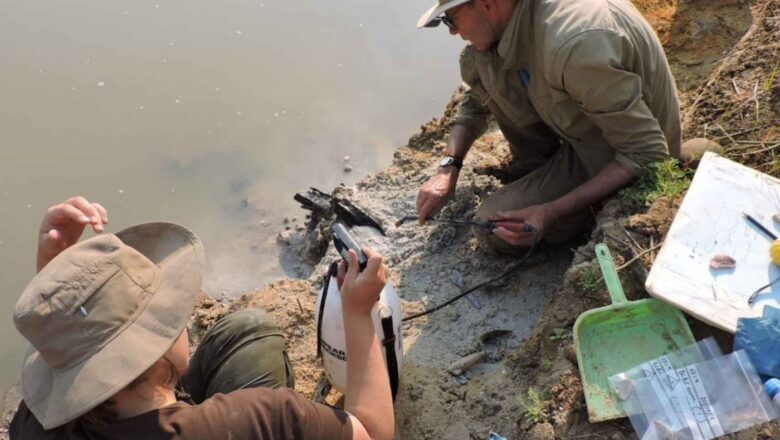
    Archaeologists working at Kalambo Falls in northern Zambia have unearthed a discovery that fundamentally shifts our understanding of prehistoric technology. Two large wooden logs, deliberately shaped and joined, have been dated to approximately 476,000 years ago. This remarkable structure was built nearly 300,000 years before the first Homo sapiens appeared, proving that ancient hominins were reshaping their environment with timber long before the dawn of modern humanity. The discovery was made possible by the unique conditions at Kalambo Falls, located on the border between Zambia and Tanzania. Beneath the towering cliffs, the Kalambo River banks contain deep layers of mud and sand that remain waterlogged year-round. This constant dampness created an oxygen-free env...
India groundwater crisis deepens as several states inch closer to ‘Day Zero’

India groundwater crisis deepens as several states inch closer to ‘Day Zero’

Breaking News
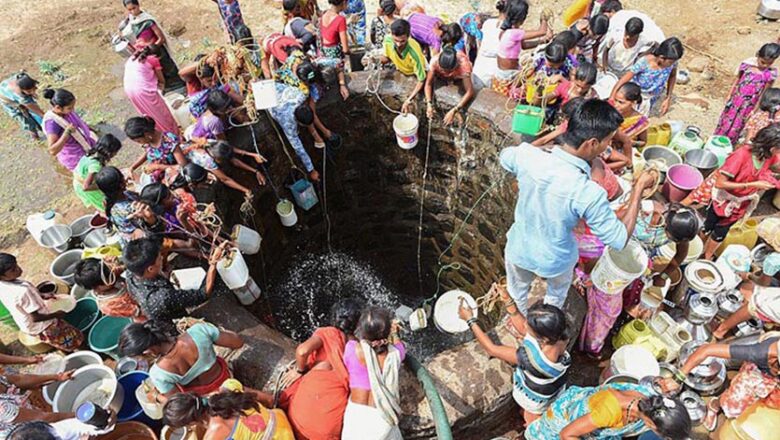
    India is staring at a rapidly intensifying groundwater crisis, with several states and major cities moving dangerously close to a point where usable water may simply run out. Across urban neighbourhoods and rural landscapes, scenes of water tankers, empty wells and long queues have become a daily reminder that water scarcity is no longer a future threat but a lived reality for millions. In narrow city lanes, residents wait silently with plastic drums for tankers to arrive, while in villages, women walk kilometres in search of a few litres of water from drying wells and shrinking ponds. These contrasting yet connected realities underline a single truth: despite episodes of flooding in some regions, India as a whole is running short of freshwater. India supports nea...
Small farms, big climate gains as ICAR study shows agroforestry can become a strong climate solution

Small farms, big climate gains as ICAR study shows agroforestry can become a strong climate solution

Breaking News
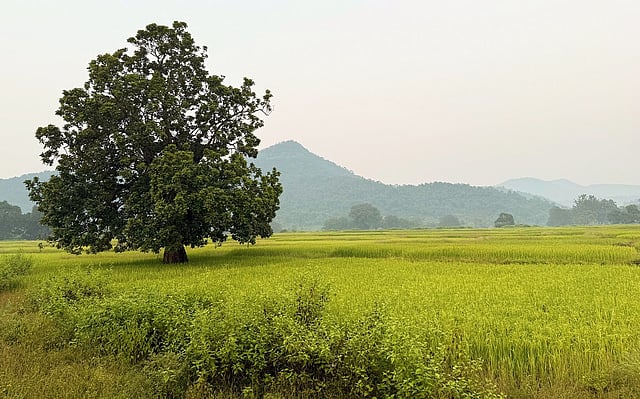
    Agroforestry practiced on small family farms can deliver major climate benefits while strengthening rural livelihoods, according to a nine-year study conducted by scientists from the Indian Council of Agricultural Research in eastern India. The research shows that even a one-acre farm, when designed carefully with trees and crops together, can act as a powerful carbon sink without compromising food production. The study was carried out in Odisha’s Eastern Ghats, a region increasingly affected by erratic monsoons, intense rainfall, soil erosion and rising crop failures. These climate stresses have worsened food insecurity and livelihood risks, especially for tribal communities dependent on rain-fed agriculture. Researchers worked directly with 15 farmers to develop an...
Delhi Gasps Under Severe Smog as Authorities Enforce Toughest Measures to Tackle Toxic Air

Delhi Gasps Under Severe Smog as Authorities Enforce Toughest Measures to Tackle Toxic Air

Breaking News
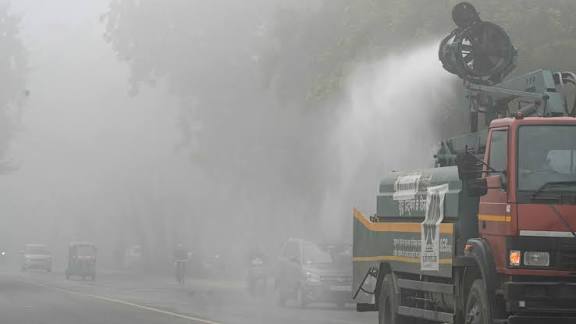
    Union Environment Minister Bhupender Yadav on Wednesday reviewed the action plans of municipal bodies in Delhi and Sonipat to tackle worsening air pollution across the Delhi–NCR region, and ordered strict, time-bound measures to cut emissions at their source. Chairing the third review meeting in a series launched earlier this month, the minister stressed that cleaning NCR’s air needs a whole-of-government and whole-of-society approach, with decisions grounded in ground realities rather than paperwork. Focusing on construction and demolition activities as a major contributor to particulate pollution, Yadav directed that no demolition or construction work should be allowed unless waste processing facilities exist within 10 kilometres of the site. He also called for a b...
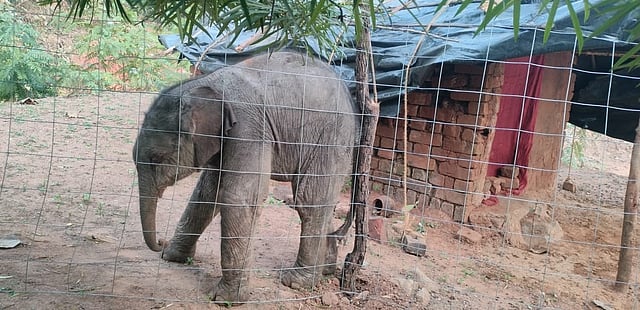
Shivering Elephant Calf in Odisha’s Kalahandi Highlights India Deepening Human–Wildlife Conservation Crisis

Shivering Elephant Calf in Odisha’s Kalahandi Highlights India Deepening Human–Wildlife Conservation Crisis

Breaking News
    On one of the coldest mornings of the year, a frail and shivering elephant calf was found lying near the edge of a forest in Odisha’s Kalahandi district, drawing national attention to the growing crisis of human–elephant conflict in India. The calf, believed to be just three to four months old, was discovered by a farmer near a dilapidated hut as dense mist and frost covered nearby paddy fields. According to eyewitnesses, the calf appeared weak and disoriented, unable to follow its herd up a steep forest slope. Moments later, loud trumpeting from nearby trees revealed the presence of the mother elephant and a protective tusker, who stood guard before retreating deeper into the forest. Forest officials believe the calf was not abandoned intentionally, but left behind ...
India–South Africa Fourth Twenty20 Match Abandoned in Lucknow as Smog Reduces Visibility

India–South Africa Fourth Twenty20 Match Abandoned in Lucknow as Smog Reduces Visibility

Breaking News
    The fourth Twenty20 cricket match between India and South Africa was called off midway on Wednesday after dense smog significantly reduced visibility at the Ekana Cricket Stadium in Lucknow, forcing officials to abandon play in the interest of player safety. The decision was taken following repeated assessments by match officials, who found that the thick haze made it difficult for players to clearly sight the ball. Soon after the cancellation, questions were raised on social media about the city’s air quality, with several posts claiming that pollution levels in Lucknow had reached dangerous levels. Addressing these concerns, the Uttar Pradesh government clarified that the city’s Air Quality Index stood at 174, which falls under the “moderate” category as per India’...