Tuesday, February 24News That Matters

Breaking News

India Hands Over Modular Bridge to Nepal to Boost Post-Disaster Recovery

India Hands Over Modular Bridge to Nepal to Boost Post-Disaster Recovery

Breaking News
India has delivered a 70-metre modular bridge along with specialized launching equipment to Nepal, strengthening ongoing post-disaster reconstruction efforts after October’s devastating rains and landslides. The handover ceremony was held in Hetauda on November 20, where India’s Ambassador to Nepal formally transferred the complete bridge set to Nepal’s Minister of Physical Infrastructure and Transport. The modular bridge, provided on a grant basis, is part of a larger commitment by the Government of India to supply ten high-span bailey bridges requested by Nepal in the aftermath of severe rainfall that struck eastern regions last month. Valued at more than NPR 73 crore, these bridges are intended to swiftly restore disrupted road connectivity in vulnerable districts. The newly handed-o...

SAP–UNESCO Join Forces to Bring AI-Powered Disaster Management to Solomon Islands

SAP–UNESCO Join Forces to Bring AI-Powered Disaster Management to Solomon Islands

Breaking News
SAP SE has announced a major global collaboration with UNESCO to deploy an advanced AI-assisted disaster risk management system, EDiSON, in the Solomon Islands a nation highly vulnerable to cyclones, floods, earthquakes, tsunamis and rising climate threats. The initiative, unveiled on Wednesday, marks a significant step toward making cutting-edge disaster resilience technology accessible to small island developing states. Developed by SAP Japan and INSPIRATION PLUS, a disaster-prevention venture from Oita University, EDiSON runs on the SAP Business Technology Platform and is designed to integrate real-time meteorological visuals, historical disaster data, and machine learning analytics. The platform uses SAP Business AI to generate predictive insights that can drastically improve early ...
Dras Valley: The Second Coldest Inhabited Place Emerges as a Stirring Himalayan Destination

Dras Valley: The Second Coldest Inhabited Place Emerges as a Stirring Himalayan Destination

Breaking News
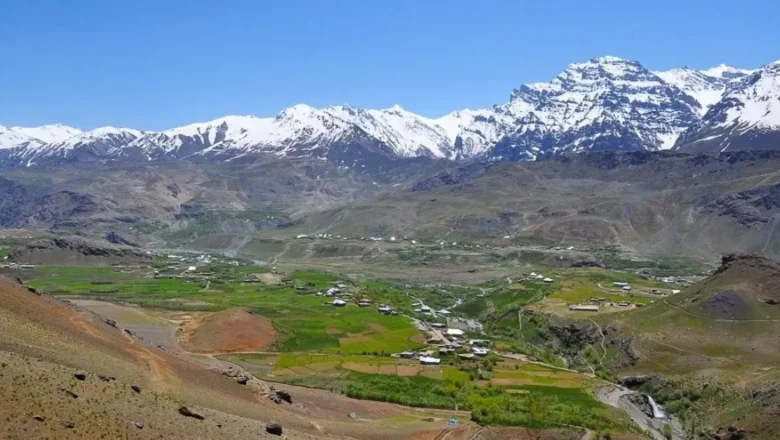
Dras, Ladakh - Known primarily as the world second-coldest inhabited place, the ancient settlement of Dras in the Kargil district of Ladakh is finally emerging from the shadow of its extreme climate and strategic history to become a compelling new destination for travelers seeking raw mountain beauty and a powerful link to India's past. Perched at an altitude of approximately 3,230 meters 10,990 feet and often called the "Gateway to Ladakh," Dras is defined by dramatic seasonal shifts. A Land of Extreme Contrast and Resilience Winter in Dras is brutal, with temperatures plummeting below 40C one of the lowest recorded temperatures in an inhabited area outside of Russia’s Oymyakon. Life, however, endures with extraordinary resilience, characterized by the warmth of modest homestays...
Failure to Breathe: Delhi Air Pollution Response Plan Faces Fourth Overhaul in Three Years

Failure to Breathe: Delhi Air Pollution Response Plan Faces Fourth Overhaul in Three Years

Breaking News
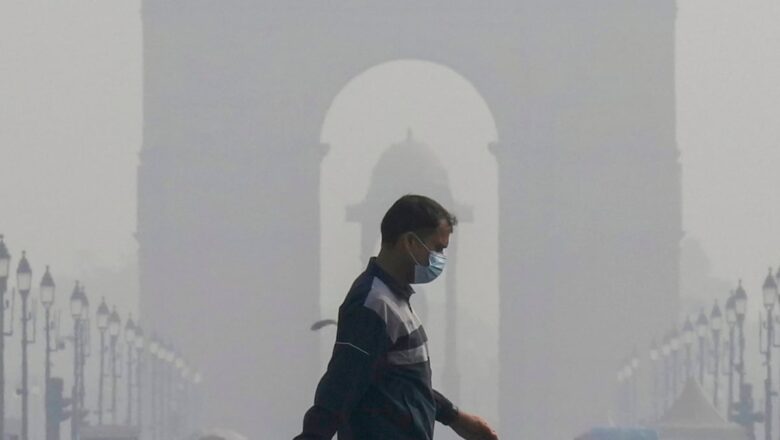
New Delhi - The Graded Response Action Plan (GRAP), the national capital region's emergency framework for combating toxic air, is set for its fourth major revision in three years, raising serious concerns that constant tinkering is masking the system’s fundamental failure to act before pollution strikes. Experts warn that despite a significant 2022 redesign that intended to transform GRAP into a pre-emptive framework taking action based on air quality forecasts the plan consistently fails due to a combination of faulty forecasting and weak on-ground implementation. Pre-emptive Promise Undercut by Forecast Failures The core principle of the 2022 overhaul was to link emergency measures to Air Quality Index (AQI) forecasts, invoking severe restrictions at least three days in advance ...
39,000 Year-Old Woolly Mammoth RNA Unlocks Secrets of Ice Age Biology

39,000 Year-Old Woolly Mammoth RNA Unlocks Secrets of Ice Age Biology

Breaking News
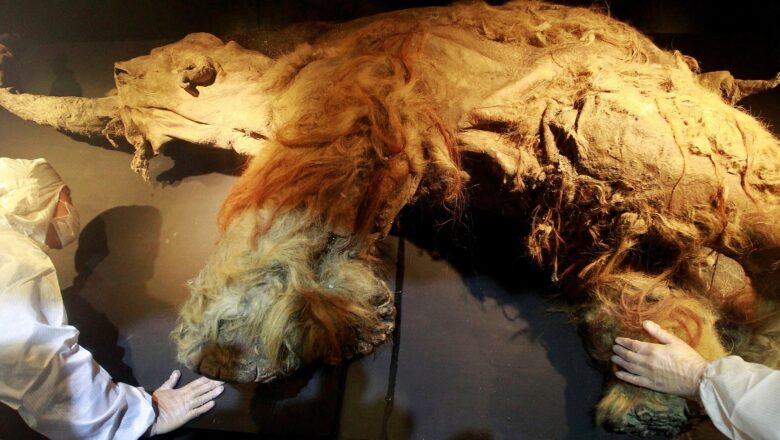
Siberia - In a breakthrough that challenges long-held assumptions about the durability of biomolecules, scientists have successfully recovered and sequenced ancient Ribonucleic Acid (RNA) from the frozen remains of a woolly mammoth. The discovery, detailed in the journal Cell, provides an unprecedented molecular snapshot of an animal that lived nearly 40,000 years ago, offering a rare look into its cellular activity and final moments. The RNA was extracted from muscle tissue belonging to a juvenile male mammoth named Yuka, whose remarkably preserved carcass was found near the Laptev Sea coast in Siberian permafrost. RNA, which acts as a crucial messenger carrying instructions from DNA to create proteins, was previously thought to decay within minutes or hours of death, making its surviv...
Delhi Finally Declares 4,080 Hectares of Southern Ridge as Reserve Forest After 31 Year Delay

Delhi Finally Declares 4,080 Hectares of Southern Ridge as Reserve Forest After 31 Year Delay

Breaking News
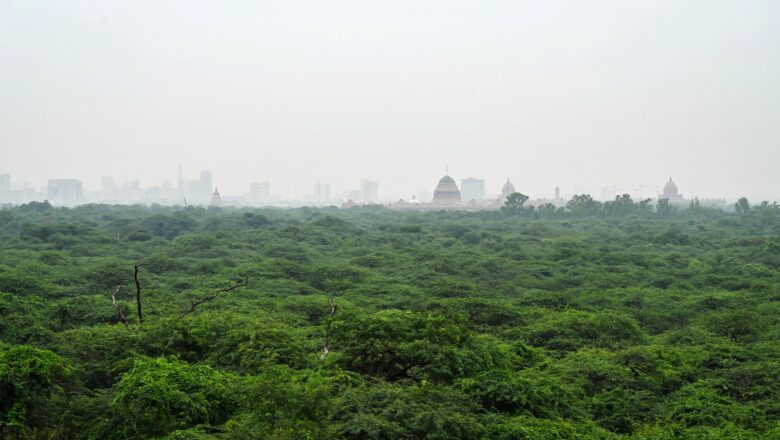
New Delhi has finally granted the highest level of legal protection to a massive portion of the Southern Ridge, the city’s largest "green lung," 31 years after the initial step to conserve the land was taken. The final gazette notification, issued on October 24 and published on Monday, officially declares 4,080 hectares, or nearly two-thirds of the total Southern Ridge area, as a "reserve forest" under Section 20 of the Indian Forest Act,1927. The notification, which received approval from Delhi Chief Minister Rekha Gupta and the Lieutenant Governor, is considered the most significant legal protection afforded to the Ridge in decades. It now grants the Forest and Wildlife Department full authority to act against encroachments since the boundaries have been conclusively demarcated and al...
Population Growth, Not Climate Change, Primary Driver of Massive Biodiversity Loss on Mount Kilimanjaro

Population Growth, Not Climate Change, Primary Driver of Massive Biodiversity Loss on Mount Kilimanjaro

Breaking News
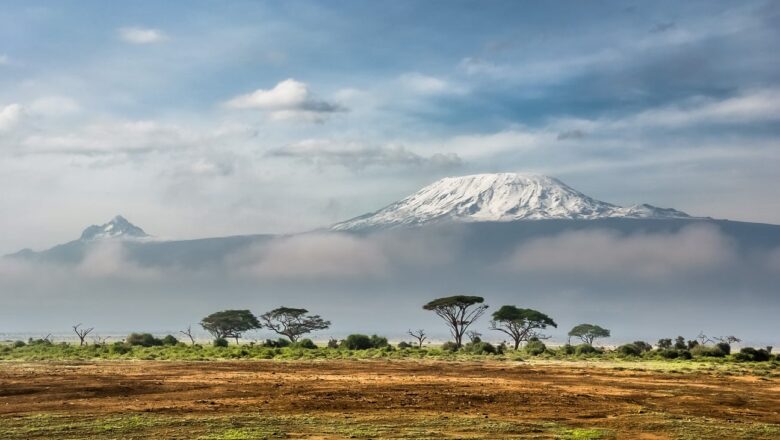
A new international study published in the journal PLOS One reveals that land-use change caused by rapid population growth, not climate change, was the primary direct cause of the loss of 76 per cent of natural plant species on the lower slopes of Mount Kilimanjaro between 1911 and 2022. The findings, which mark one of the most detailed long-term ecological studies in the region, highlight a severe and accelerating threat to the biodiversity of Africa’s tallest free-standing mountain, located in Tanzania. The Role of Population and Land Use Researchers analyzed historical maps, census data, satellite imagery, and a high-resolution dataset of nearly 3,000 plant species over the 111-year period. The analysis conclusively showed that the expansion of urban areas and the conversion of...
Majority of Indians Link Extreme Weather to Global Warming, Yale Study Reveals High Risk Perception

Majority of Indians Link Extreme Weather to Global Warming, Yale Study Reveals High Risk Perception

Breaking News
New Delhi - An overwhelming majority of Indians believe that global warming is driving the country’s increasingly frequent severe weather events, according to a detailed new report published by the Yale Program on Climate Change Communication. The study, released on November 19, 2025, underscores a high level of public awareness and risk perception regarding the climate crisis across the nation. The research used advanced modeling techniques to create detailed climate opinion maps, revealing that large majorities of the population attribute major weather phenomena to climate change: • Severe Heat Waves 78% of Indians believe global warming is affecting these events. • Droughts and Water Shortages 77% link these to global warming. • Severe Cyclones 73% see a link with global war...
Antarctic Sea Ice Hits Third-Lowest Winter Peak on Record, Alarm Scientists

Antarctic Sea Ice Hits Third-Lowest Winter Peak on Record, Alarm Scientists

Breaking News
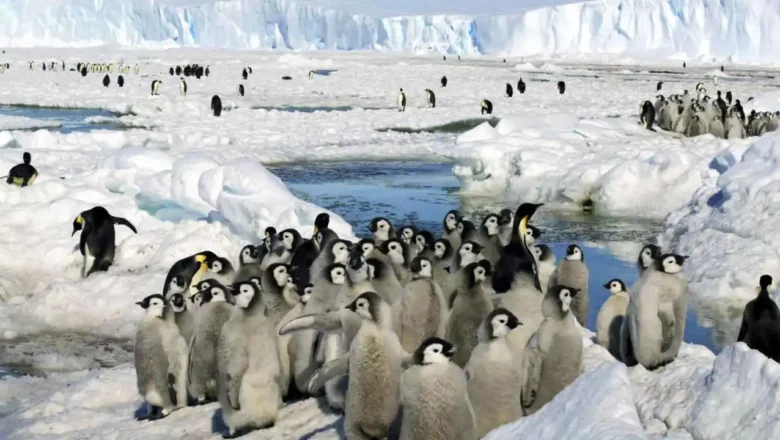
Washington D.C. - Antarctic sea ice reached one of its lowest winter maximums on record this year, sparking alarm among climate scientists who are grappling with unprecedented volatility in the remote Southern Ocean. Data released by NASA and the National Snow and Ice Data Center (NSIDC) revealed that the maximum winter extent, typically a natural buffer for global ocean systems, remained significantly below the long-term average. On September 17, the sea ice reached a maximum of 6.88 million square miles, ranking as the third-lowest peak in the 47-year satellite record. This figure represents a deficit of about 348,000 square miles compared to the 1981–2010 average. A System Entering a New State The notable shortfall has researchers on alert because the frozen edge of the Antarct...
Political Firestorm Over Smog: Punjab CM Denies Stubble Smoke Reaches Delhi Amid ‘Very Poor’ Air

Political Firestorm Over Smog: Punjab CM Denies Stubble Smoke Reaches Delhi Amid ‘Very Poor’ Air

Breaking News
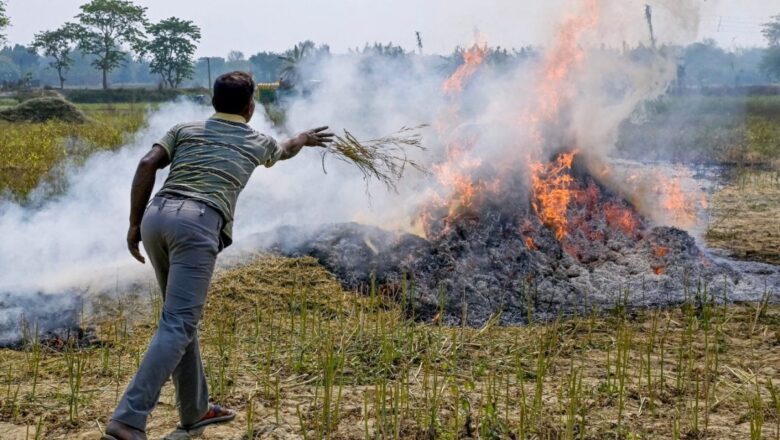
New Delhi - The political friction over Delhi's persistent air pollution escalated on Tuesday as Punjab Chief Minister Bhagwant Mann categorically denied that smoke from Punjab's farm fires was contributing to the toxic haze over the national capital. Speaking at a press conference in New Delhi, CM Mann dismissed the claims, stating, "...The smoke from Punjab doesn't even reach Delhi." He argued that for the smoke to travel the required distance in 10 days, a sustained north-to-south wind speed of 30 kmph would be necessary, a condition he asserted "never happens." The CM's statement was a direct counter to the Delhi administration, following an attack by Delhi Chief Minister Rekha Gupta on the Punjab government over stubble burning during the Northern Zonal Council meeting on Novemb...