Thursday, May 7News That Matters

Breaking News

China’s Changing Water Cycle Deepens North–South Divide, Study Warns

China’s Changing Water Cycle Deepens North–South Divide, Study Warns

Breaking News
A new scientific study has revealed that China’s water cycle is undergoing major shifts, but these changes are far from uniform across the country. Researchers found a widening disparity between the eastern monsoon regions and the northern and western parts of China, raising fresh concerns about long-term water security for millions of people. According to the findings, the eastern monsoon region has experienced a decline in water availability, largely driven by an increase in evapotranspiration. In simple terms, more water is evaporating from land and vegetation than before, leaving less available for human use. In contrast, the Tibetan Plateau recorded a modest rise in precipitation. However, scientists emphasise that this additional rainfall is too small to balance the significant wa...
Flames Return to New South Wales as Authorities Battle Worsening Wildfires

Flames Return to New South Wales as Authorities Battle Worsening Wildfires

Breaking News
    Wildfires have returned to the bushland of New South Wales, forcing evacuations and destroying homes as authorities warn of an increasingly dangerous summer. Regions around the Central Coast, including Phegans Bay and Woy Woy, experienced intense fire activity over the weekend, with emergency crews working throughout scorching conditions to protect residents and property. Officials recorded temperatures reaching forty-two degrees Celsius, creating ideal conditions for flames to spread rapidly through dry terrain. More than fifty fires were reported across the state at the height of the crisis, with several classified as high-risk. Emergency alerts urged people to move toward safer areas, particularly around Woy Woy, where wind and heat made containment difficult. ...
Delhi Air Pollution Alert: Traffic Fumes Quietly Damaging Lungs and Raising PM2.5 Levels

Delhi Air Pollution Alert: Traffic Fumes Quietly Damaging Lungs and Raising PM2.5 Levels

Breaking News
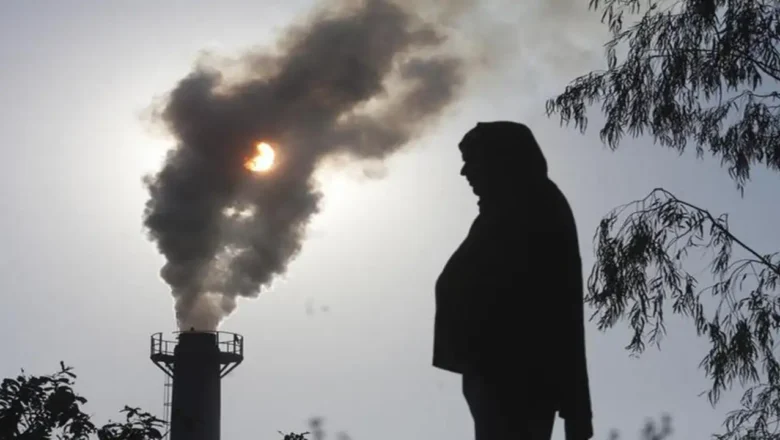
    Delhi air pollution debate often focuses on particulate matter, especially PM2.5. However a more immediate threat has been steadily rising across the city’s busiest roads: nitrogen dioxide. This harmful gas, released primarily from vehicle exhaust during rush hour, regularly exceeds recommended safety limits and is directly linked to respiratory irritation, coughing, wheezing and reduced lung function. A recent report by the Centre for Science and Environment highlights a significant connection between traffic and daily pollution spikes. According to the findings, levels of PM2.5 tend to rise and fall in line with nitrogen dioxide during morning and evening congestion. While nitrogen dioxide levels surge immediately because of tailpipe emissions, PM2.5 builds slowly ...
Delhi to launch new pollution-source study as outdated data hampers clean-air action

Delhi to launch new pollution-source study as outdated data hampers clean-air action

Breaking News
    With the Capital’s air continuing to remain in the “severe” and “very poor” categories, the Delhi government has announced a new scientific study to identify sources of pollution across the city. The move comes after it emerged that key clean-air strategies were still being guided by a seven-year-old report. Environment Minister Manjinder Singh Sirsa said on Saturday that the government would sign a formal partnership with the Indian Institute of Technology Delhi and the Indian Institute of Tropical Meteorology in Pune. The study will aim to map both citywide and local pollution sources, track the scale of emissions, and update hotspot zones. He said the new exercise is essential to understand where the pollution is originating, how it is spreading, and which area...
Freezing Temperatures Grip North India as Cold Wave Sweeps Across Several States

Freezing Temperatures Grip North India as Cold Wave Sweeps Across Several States

Breaking News
    A severe cold wave tightened its hold over northern India on Saturday, with sub-zero temperatures recorded in many hill regions and dense fog blanketing large parts of Jammu and Kashmir, Himachal Pradesh, Punjab, Haryana, Rajasthan and Delhi. Meteorological officials warned that the chill is likely to continue through the weekend, bringing discomfort to residents and impacting visibility on roads and highways. In Jammu and Kashmir, Shopian reported the lowest temperature in the region, with the mercury dipping to minus 6.4 degrees Celsius. Srinagar recorded a minimum of minus 4.1 degrees Celsius, while tourist destinations Pahalgam and Gulmarg registered lows of minus 4.4 and minus 2.6 degrees Celsius respectively. The Met department said light snowfall is expected i...
Why India Can Not Fight Air Pollution Alone Without Regional Cooperation

Why India Can Not Fight Air Pollution Alone Without Regional Cooperation

Breaking News
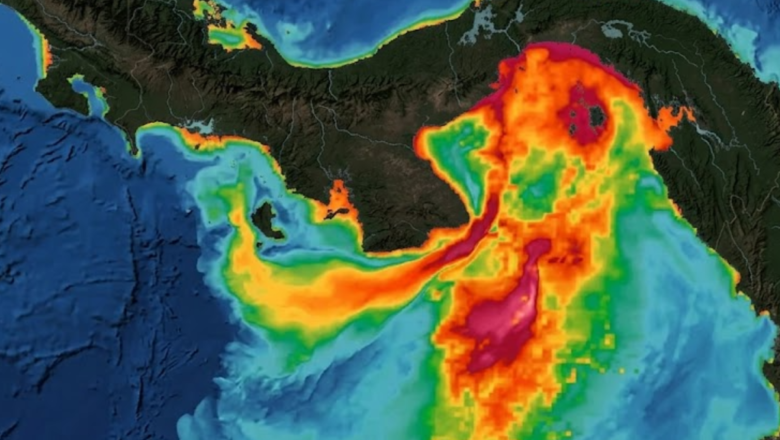
    India’s winter smog is often seen as a domestic problem, but new research shows that the toxic air choking millions is not confined by borders. Even as the government rolls out policies to control stubble burning, regulate industry and curb vehicular emissions, a significant share of the pollution drifting over Indian cities originates in neighbouring countries. Experts say that without coordinated regional action across South Asia, India’s efforts will continue to fall short. A report by the World Bank, titled Striving for Clean Air, shows that as much as 30 per cent of Punjab’s air pollution comes from Pakistan. Wind patterns carry emissions, dust and smoke across hundreds of kilometres, crossing state and national boundaries. The research also finds that around 30...
India Confronts Ecological Emergency as Invasive Plants Rapidly Transform Natural Landscapes

India Confronts Ecological Emergency as Invasive Plants Rapidly Transform Natural Landscapes

Breaking News
India is facing an escalating ecological threat as invasive alien plants spread through forests, grasslands, wetlands and agricultural land at unprecedented speed, according to new research. A peer-reviewed study published in Nature Sustainability this year has provided the most detailed national assessment so far, showing that invasive species are advancing across nearly 15,500 square kilometres of natural areas every year. This rapid spread is displacing native flora, degrading wildlife habitats and endangering the livelihoods of pastoral communities, with researchers warning of long-term ecological disruption. The danger is part of a wider global trend. The Intergovernmental Science-Policy Platform on Biodiversity and Ecosystem Services (IPBES) has identified invasive species as one ...
Road Construction Has Caused the Biggest Forest Loss Since 2020, Centre Tells Rajya Sabha

Road Construction Has Caused the Biggest Forest Loss Since 2020, Centre Tells Rajya Sabha

Breaking News
    New data presented in Parliament shows that road construction has driven the largest diversion of forest land in India over the past five years. In a written reply to a question in the Rajya Sabha, the Union environment ministry reported that more than 22,000 hectares of forest have been cleared to make way for road projects since 2020. According to the ministry, a total of 22,233.44 hectares of forest area were diverted for road building, making it the biggest category of forest loss during this period. Mining projects accounted for 18,913.64 hectares, while hydropower and irrigation projects led to the diversion of 17,434.38 hectares. Power transmission lines were another major driver, requiring 13,859.31 hectares of forest clearance. For perspective, the entire Co...
India Confronts Ecological Emergency as Invasive Plants Rapidly Transform Natural Landscapes

India Confronts Ecological Emergency as Invasive Plants Rapidly Transform Natural Landscapes

Breaking News
India is facing an escalating ecological threat as invasive alien plants spread through forests, grasslands, wetlands and agricultural land at unprecedented speed, according to new research. A peer-reviewed study published in Nature Sustainability this year has provided the most detailed national assessment so far, showing that invasive species are advancing across nearly 15,500 square kilometres of natural areas every year. This rapid spread is displacing native flora, degrading wildlife habitats and endangering the livelihoods of pastoral communities, with researchers warning of long-term ecological disruption. The danger is part of a wider global trend. The Intergovernmental Science-Policy Platform on Biodiversity and Ecosystem Services (IPBES) has identified invasive species as one ...
Tiny Amazon fish discovered with mysterious new organ surprises scientists

Tiny Amazon fish discovered with mysterious new organ surprises scientists

Breaking News
    A fingernail-sized fish living in a shaded Amazon stream has astonished scientists with an organ that has never been recorded before. Researchers working in the Colombian Amazon have described a new species called Priocharax rex, only about 0.8 inches long, but with a strange skin “wing” on its belly that no other known fish possesses. The discovery, published in the journal Zootaxa in 2025, suggests that even miniature species continue to evolve new and complex structures rather than simply losing parts of their anatomy over time. The research team was led by George Mendes Taliaferro-Mattox, a fish biologist at the Federal University of São Carlos in Brazil. His work focuses on miniature freshwater fishes in South America and how their bodies change when they sto...