Sunday, September 20News That Matters

Breaking News

Warming Rivers Emerging As Major Source Of Greenhouse Gas Emissions

Warming Rivers Emerging As Major Source Of Greenhouse Gas Emissions

Breaking News
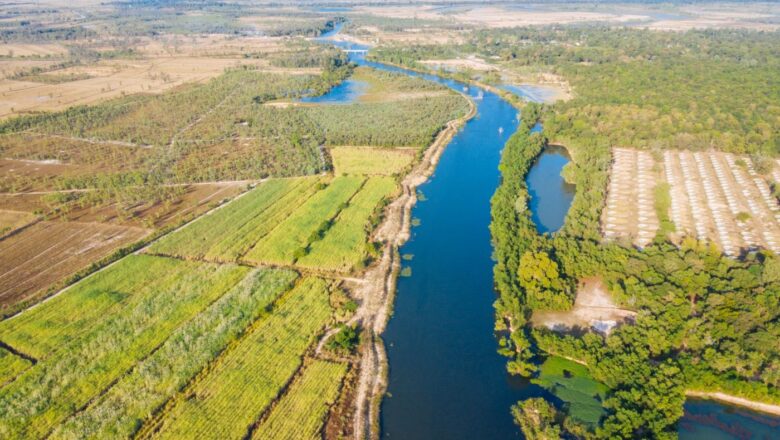
    Rivers across the world are undergoing alarming changes, with rising temperatures, declining oxygen levels and increasing greenhouse gas emissions, according to a new global study. Scientists warn that these shifts are not only damaging aquatic ecosystems but are also contributing significantly to climate change. The research, led by Ricky Mwangada Mwanake at the Karlsruhe Institute of Technology, analysed river systems across 5,084 catchments between 2002 and 2022. The findings reveal a consistent global trend of rivers becoming warmer and more polluted, with increased levels of heat-trapping gases such as carbon dioxide, methane and nitrous oxide. Experts say these changes are closely linked to rising global temperatures and human activities, which are accelerat...
Deep Global Warning Climate Crisis Is Reshaping Lives, Learning, Cities, Nature

Deep Global Warning Climate Crisis Is Reshaping Lives, Learning, Cities, Nature

Breaking News
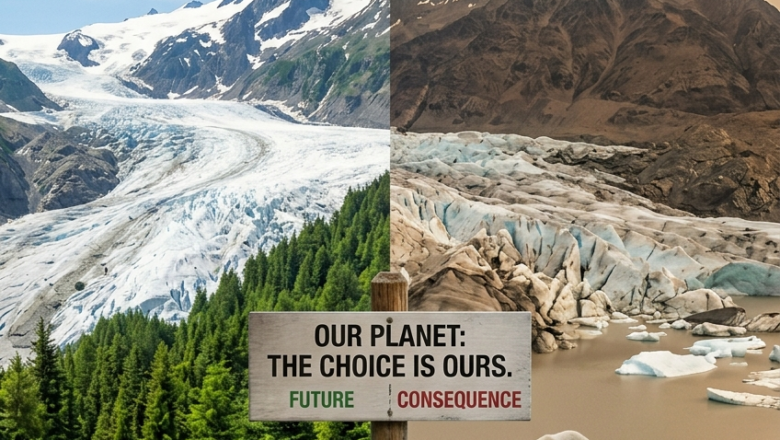
Climate crisis is no longer a distant environmental concern it is now actively reshaping education systems, ecosystems, economies, cities, and even human activities like sports. A growing body of research and reports from global institutions reveals a connected story: climate change is not a single problem, but a cascading crisis affecting every layer of life on Earth. From disrupted classrooms in Africa to overheating cities, collapsing water systems, and warming rivers releasing greenhouse gases, the impacts are accelerating faster than adaptation efforts. What emerges is a stark reality climate change is no longer about the future. It is already redefining the present. Education Under Climate Pressure One of the most alarming impacts is unfolding in education. Across Eastern and ...
Extreme Weather and Disasters Cost Millions of Jobs Globally New Study Finds

Extreme Weather and Disasters Cost Millions of Jobs Globally New Study Finds

Breaking News
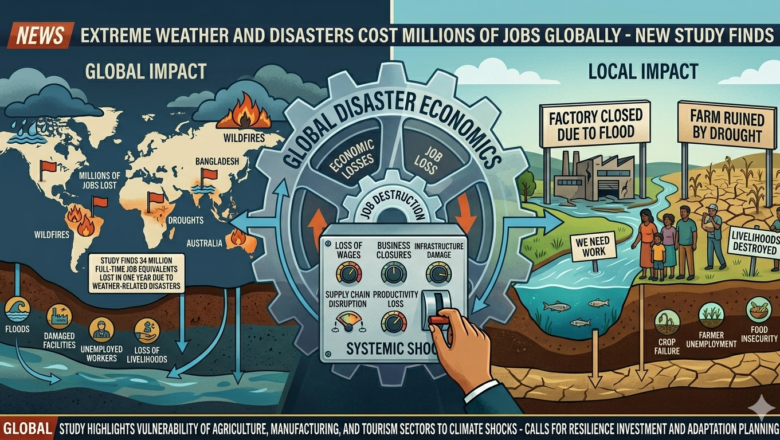
    Natural hazards are not only destroying infrastructure and livelihoods they are quietly eroding employment on a massive scale, according to new global research that quantifies job losses linked to disasters and rising temperatures. The study estimates that fast onset hazards such as floods, earthquakes, storms and tsunamis cause an average of 9.4 million full time job equivalent losses (JEL) every year across 132 countries. Among these, earthquakes and floods account for the largest share of employment disruption. The burden is not evenly distributed. Regions such as East Asia and the Pacific, along with Sub-Saharan Africa, are experiencing the most severe job losses from these sudden disasters, reflecting both high exposure to hazards and limited resilience in la...
Water Crisis Warning Urgent Overhaul Needed to Curb Farm Pollution Says Watchdog

Water Crisis Warning Urgent Overhaul Needed to Curb Farm Pollution Says Watchdog

Breaking News
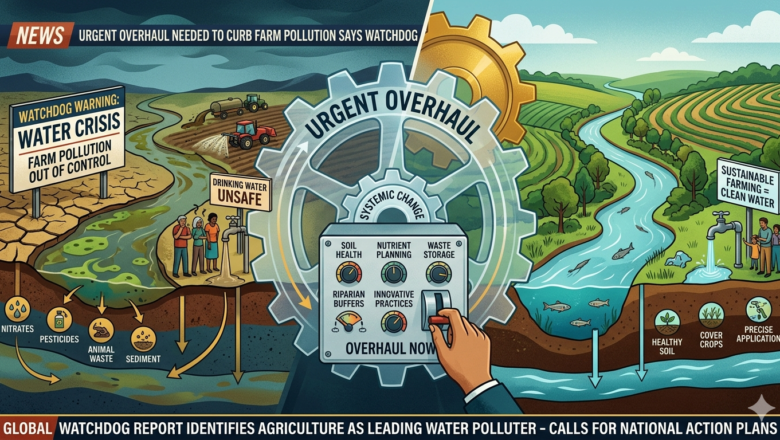
    A major environmental warning has been issued over rising agricultural pollution, with regulators calling for “significant change” to prevent further damage to water bodies and ecosystems. The Office for Environmental Protection (OEP) has reviewed the effectiveness of the Nutrients Action Programme (NAP), the key policy aimed at reducing pollution from farming. While acknowledging “considerable progress,” the watchdog concluded that current regulations are not strong enough to deliver meaningful improvements in water, air, and land quality. Farming Practices Driving Water Pollution Crisis The report highlights that modern agri-food systems have become heavily reliant on imported animal feed and fertilisers. This excess nutrient use leads to agricultural run-off...
Vanishing Ice Rising Encounters Why Polar Bears Are Increasingly Entering Human Territory

Vanishing Ice Rising Encounters Why Polar Bears Are Increasingly Entering Human Territory

Breaking News
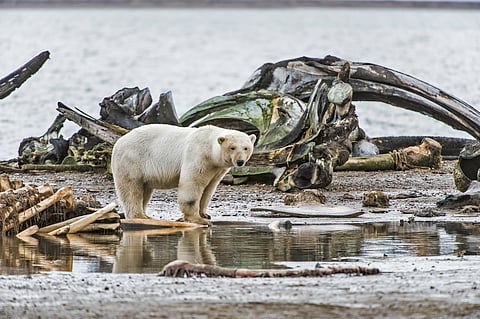
    A new study has overturned common assumptions about polar bear behavior, revealing that the growing number of encounters between humans and these Arctic predators is driven more by disappearing sea ice than by hunger. Researchers recorded over 580 polar bear visits across a decade using trail cameras at sites in Wapusk National Park and near the Churchill Northern Studies Centre. Their findings show a clear pattern: the longer the Arctic remains ice-free, the more frequently polar bears approach human camps and infrastructure. Polar bears depend on sea ice to hunt seals, their primary food source. However, as climate change causes ice to melt earlier in spring and return later in autumn, bears are being forced to spend extended periods on land. During these times,...
Microplastics Travel From Coasts To Plates, Raising Health Concerns

Microplastics Travel From Coasts To Plates, Raising Health Concerns

Breaking News
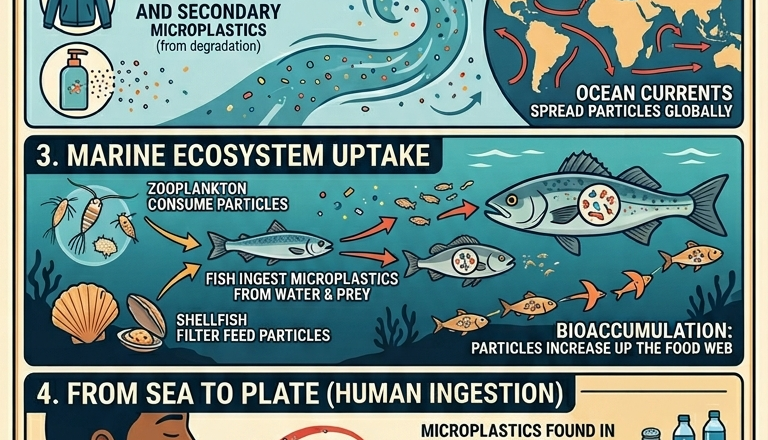
    Microplastics tiny plastic particles measuring less than 5 millimetres are rapidly emerging as a major environmental and public health threat, with studies showing their presence across India’s rivers, coastlines, soils, food and even within the human body. Scientists warn that these particles are not confined to one region but travel across ecosystems, making them a transboundary challenge that is difficult to contain once released. Plastic, widely used for its affordability, durability and accessibility, gradually breaks down into smaller fragments over time. These microplastics have now been detected in nearly every environmental medium, including air, water and soil. Their widespread presence has raised alarm among researchers, particularly due to their ability to mo...
Climate Crisis Threatens Education Of 520 Million Children In Africa By 2050: UNICEF

Climate Crisis Threatens Education Of 520 Million Children In Africa By 2050: UNICEF

Breaking News, Environment
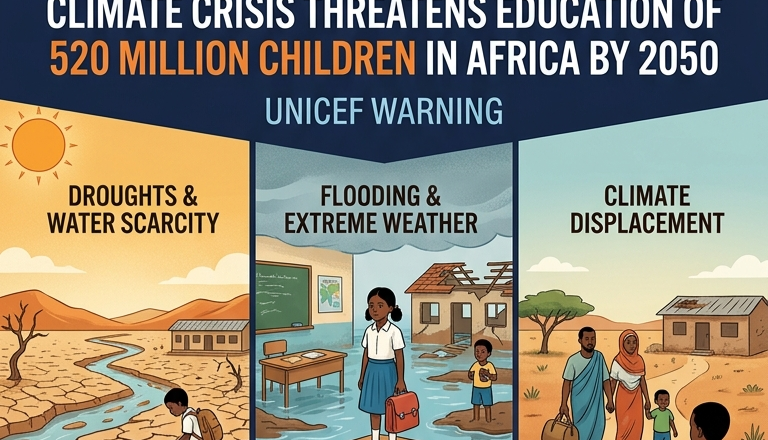
    Climate change is emerging as a major threat to education systems across Eastern and Southern Africa, with a new report by UNICEF warning that up to 520 million students could face learning disruptions by 2050 if urgent action is not taken. The report highlights that climate-related disasters such as floods, droughts and cyclones have already severely impacted education in the region. Between 2005 and 2024, nearly 130 million children experienced interruptions in their schooling, leading to long-term economic consequences. These disruptions are estimated to result in future earnings losses ranging from 120 billion to 140 billion US dollars. Looking ahead, the situation is expected to worsen significantly. Projections suggest that between 2025 and 2050, cumulative disr...
Ancient Mega Reef System Shaped Today Ocean Life, Study Finds

Ancient Mega Reef System Shaped Today Ocean Life, Study Finds

Breaking News
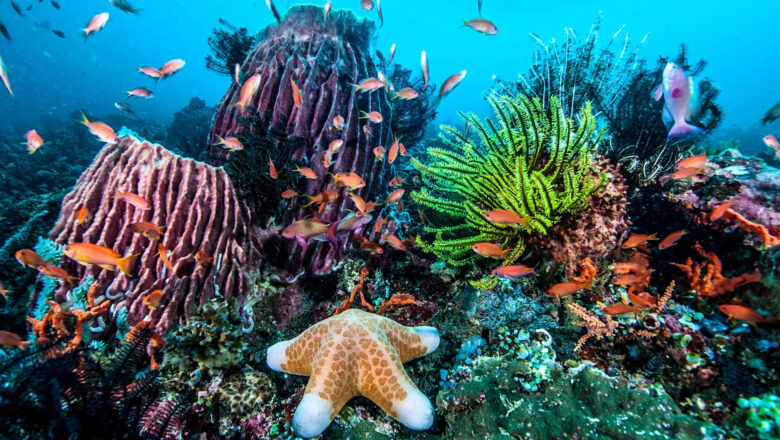
    A massive coral reef network that existed millions of years ago may hold the key to understanding how modern marine biodiversity evolved, according to new research published in Science Advances. Scientists say this ancient system, formed between 20 and 10 million years ago, laid the foundation for the rich ocean life seen today. The study identifies a vast reef expansion between Australia and Southeast Asia, a region now known for its exceptional marine biodiversity. Researchers believe this large-scale growth of reefs created the ecological conditions necessary for thousands of marine species to emerge and thrive. Coral reefs today cover less than one per cent of the ocean floor but support nearly a quarter of all marine species. Despite their importance, scientists ...
Haryana Among Top Three States Facing Severe Groundwater Crisis

Haryana Among Top Three States Facing Severe Groundwater Crisis

Breaking News
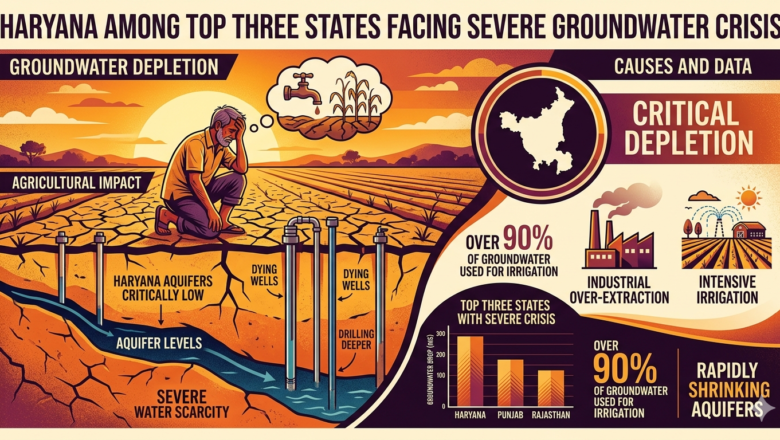
    Haryana has emerged as one of the most groundwater-stressed regions in India, ranking third among major states in terms of overexploitation, according to data presented by the Central Ground Water Authority before the National Green Tribunal. The data reveals that 88 assessment units in the state have been classified as “overexploited,” accounting for 61.5 per cent of its total groundwater blocks. Only Punjab and Rajasthan rank worse, with 75.1 per cent and 70.9 per cent of their groundwater units respectively falling into the overexploited category. The issue came under scrutiny during a suo motu hearing by the tribunal, which highlighted serious lapses across states in addressing groundwater depletion. The NGT bench observed that authorities have failed to effec...
Fertiliser Shock from Iran Conflict Threatens Africa’s Food Security, Experts Warn

Fertiliser Shock from Iran Conflict Threatens Africa’s Food Security, Experts Warn

Breaking News
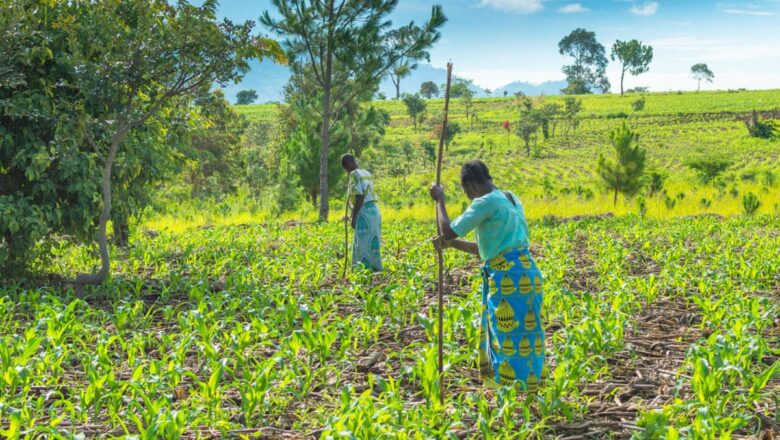
Africa’s food systems are facing fresh pressure as global fertiliser supplies are disrupted by conflict in the Persian Gulf, exposing the continent’s heavy dependence on imports and raising concerns over rising food insecurity. New analysis highlights that nearly 80% of fertiliser used across Africa is imported, making the region highly vulnerable to global supply shocks. The ongoing crisis linked to Iran has already disrupted key supply chains, with experts warning that the impact could ripple across farming, food prices, and nutrition. Supply Disruptions Hit Critical Trade Routes A major bottleneck has emerged at the Strait of Hormuz, one of the world’s most important shipping corridors for energy and fertiliser exports. Shipping activity in the narrow channel has dropped sharp...