Thursday, May 7News That Matters

Breaking News

Vehicular Emissions, Not Stubble Burning, Are Driving Delhi Winter Air Pollution: CSE Report

Vehicular Emissions, Not Stubble Burning, Are Driving Delhi Winter Air Pollution: CSE Report

Breaking News
Vehicular emissions are now the biggest contributors to Delhi’s worsening winter air quality, according to a new analysis released by the Centre for Science and Environment (CSE). The national capital-based think tank found that traffic-related pollution is rising sharply while the level of fine particulate matter has shown no improvement since 2022, raising serious concerns over the effectiveness of current pollution control measures. The report shows a consistent pattern of PM2.5 levels rising and falling in tandem with nitrogen dioxide during morning and evening rush hours. This synchronised movement, the CSE says, underscores the dominant role of daily traffic in driving air pollution. Nitrogen dioxide, a gas produced immediately from tailpipe emissions, peaks sharply at busy times,...
Car-Sized Millipede Fossil Unearthed in Northumberland Reveals Ancient Giant Arthropod

Car-Sized Millipede Fossil Unearthed in Northumberland Reveals Ancient Giant Arthropod

Breaking News
A remarkable fossil discovery in Northumberland, United Kingdom, has astonished scientists by confirming that a millipede species once grew to the size of a small car. Unearthed along the northeastern coast, the find reveals a colossal creature that lived 326 million years ago during the Carboniferous period, long before the age of dinosaurs. The species, known as Arthropleura is an extinct genus of millipedes believed to be the largest invertebrate ever to walk on land. While the fossil segment found in 2018 measured just under 30 inches, researchers estimate that the animal it belonged to likely stretched nearly 9 feet in length and weighed around 110 pounds. The fossil was preserved in sandstone, and scientists say it is one of the most complete remains ever found of this ancient gia...
Yamuna Pollution Persists in Delhi Despite Major Spending, Says Jal Shakti Ministry

Yamuna Pollution Persists in Delhi Despite Major Spending, Says Jal Shakti Ministry

Breaking News
The Jal Shakti Ministry has stated that untreated sewage, inadequate treatment facilities, project delays and a significant shortfall in solid waste processing remain the main reasons the Yamuna continues to flow polluted through the national capital. In a written reply to the Rajya Sabha, Minister of State for Jal Shakti Raj Bhushan Choudhary reported that the Delhi Jal Board has spent nearly ₹5,536 crore over the last three financial years on efforts to clean the river, yet critical gaps continue to hold back progress. According to the ministry, Delhi has a sewage treatment gap of 414 million litres per day as of August 2025. Several approved industrial areas do not have common effluent treatment plants, and major sewage treatment projects are either delayed or in need of upgrades. Ch...
Iran President Proposes Moving Capital as Water Crisis Pushes Tehran Towards “Day Zero”

Iran President Proposes Moving Capital as Water Crisis Pushes Tehran Towards “Day Zero”

Breaking News
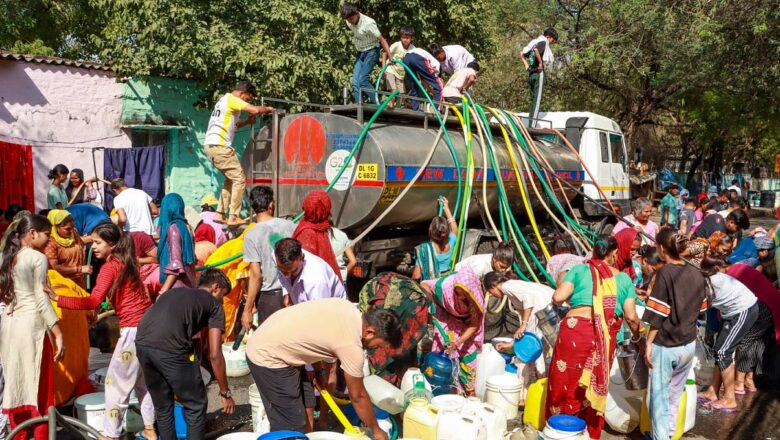
Iran is confronting one of the worst water emergencies in its modern history, with depleted reservoirs, shrinking groundwater and record heat raising the risk that the capital, Tehran, could soon run out of water. President Masoud Pezeshkian has warned that environmental pressures have become so severe that relocating the capital may be necessary to save millions of people from a future without reliable water. The warning comes at a time when rainfall has sharply declined across large parts of the country. Autumn marks the beginning of the rainy season in Iran, but this year many regions have seen almost no precipitation. Reservoir levels are at historic lows, and experts fear that Tehran, a metropolitan area of fifteen million people, is approaching “Day Zero,” the point at which taps ...
Developing Nations Demand “Meat Tax” From High-Income Countries at COP30

Developing Nations Demand “Meat Tax” From High-Income Countries at COP30

Breaking News
A coalition of twenty-eight low-income countries has called for a greenhouse gas pricing mechanism targeting industrial livestock production in wealthy nations. The appeal was made during the thirtieth Conference of the Parties to the United Nations Framework Convention on Climate Change in Belem, Brazil, where developing countries argued that high levels of meat consumption in rich economies are driving disproportionate climate damage. The group, made up of seven African countries and twenty-one Pacific island nations, signed a “Belem Declaration on Greenhouse Gas Emission Pricing on Agri-Food Systems.” The declaration urges high-income countries, the European Union, Organisation for Economic Co-operation and Development member states and China to impose greenhouse gas pricing on their...
Report Finds Good Groundwater Quality Across India, but Highlights Serious Contamination in Rajasthan, Haryana and Andhra Pradesh

Report Finds Good Groundwater Quality Across India, but Highlights Serious Contamination in Rajasthan, Haryana and Andhra Pradesh

Breaking News
A new national assessment has found that India’s groundwater quality is generally strong, but several states continue to face significant contamination challenges. The Annual Groundwater Quality Report 2025, released by the Central Ground Water Board last week, analysed 14,978 groundwater samples collected during 2024 and offers a detailed picture of drinking water safety across the country. According to the report, more than 71 percent of samples meet permissible drinking water standards set by the Bureau of Indian Standards. Some states and Union Territories, including Arunachal Pradesh, Mizoram, Meghalaya and Jammu and Kashmir, recorded one hundred percent compliance with safety norms. However, 28.3 percent of samples exceeded limits on at least one quality parameter, indicating the ...
Sikkim Fortifies Against Climate Shocks: High-Altitude Rescue Training and Community Drills Intensified

Sikkim Fortifies Against Climate Shocks: High-Altitude Rescue Training and Community Drills Intensified

Breaking News
Gangtok - In direct response to the escalating climate crisis impacting the Eastern Himalayas, the government of Sikkim is taking extensive measures to fortify its disaster preparedness and management framework. The devastating Glacial Lake Outburst Flood (GLOF) from the South Lhonak Lake in October 2023 which tragically destroyed the Teesta-III dam and caused the River Teesta's water level to rise by up to 20 feet downstream has driven the state to focus on building resilience through advanced warning systems, specialized rescue training, and deep community involvement. The state is prioritizing enhanced operational readiness for high-altitude emergencies. This includes specialized training in ropeway rescues being conducted regularly, even outside the usual monsoon season, in collabor...
Heat Stress Puts India Agriculture Among High-Risk in Asia-Pacific, Warns UN ESCAP Report

Heat Stress Puts India Agriculture Among High-Risk in Asia-Pacific, Warns UN ESCAP Report

Breaking News
A new report from the UN Economic and Social Commission for Asia and the Pacific (ESCAP) identifies India as one of five Asia-Pacific countries where the agriculture sector faces a consistently "high risk" from rising temperatures. The 2025 Asia-Pacific Disaster Report warns that the impacts including reduced crop yields, lower livestock productivity, declining labor capacity, and deepening rural poverty remain high under both low- and high-emissions climate scenarios. India joins Afghanistan, Pakistan, Nepal, and Bangladesh in this high-risk category, underscoring the severe threat to the South Asian region. The Looming Threat to Food Systems Agriculture is central to the region's food security and employment, contributing more than a quarter of the region GDP and employing the m...
Rising Heat Pushes Asia-Pacific Power Systems to ‘Breaking Point,’ Warns UN ESCAP

Rising Heat Pushes Asia-Pacific Power Systems to ‘Breaking Point,’ Warns UN ESCAP

Breaking News
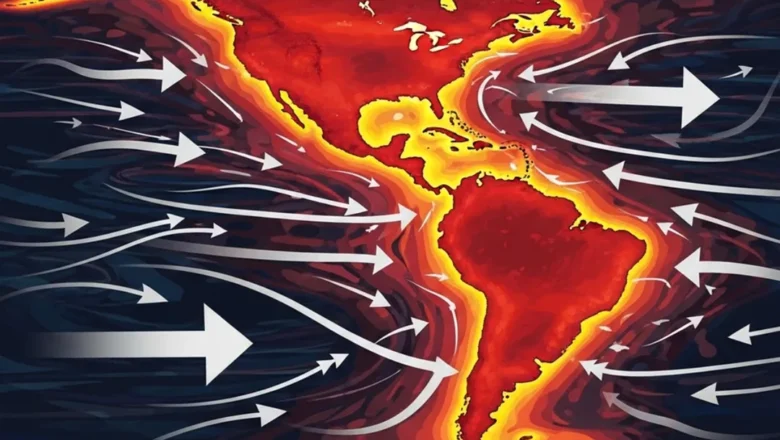
Sydney - The Asia-Pacific region energy systems are edging towards systemic failure as extreme heat intensifies, according to the latest 2025 Asia-Pacific Disaster Report from the United Nations Economic and Social Commission for Asia and the Pacific (ESCAP). The report warns that climate-driven heat will push the region power infrastructure past its breaking point precisely when billions of people need cooling the most. ESCAP projects that the share of power plants exposed to days above 40°C is expected to more than double to 8 per cent by 2099 across the region, with the surge expected to be most extreme in South and South-West Asia, where exposure could climb to more than 20 per cent. Under a high-emissions pathway, the share of power plants exposed to days above 45°C could rise to n...
Climate Stories Hidden in Plain Sight as Newsrooms Miss Key Links

Climate Stories Hidden in Plain Sight as Newsrooms Miss Key Links

Breaking News
The United Kingdom’s latest budget did not present itself as climate-focused, yet almost every major decision inside it will influence the country’s climate future. On November 26, 2025, Chancellor Rachel Reeves delivered a budget centred on economic growth, productivity and cost of living. Climate change and Net Zero targets hardly appeared in her speech. The word “climate” was mentioned only a few times. But a deeper look at the budget documents shows a very different picture. The government decided to end the Energy Company Obligation, a long-running scheme that funded home insulation and low-carbon upgrades. A new per-mile tax on electric vehicles was announced for 2028. The budget extended the current 5 pence fuel duty cut, kept the 78 per cent windfall tax on North Sea oil and gas...