Thursday, January 29News That Matters

Climate Actions

Arctic Sea Ice Hits Lowest Ever Winter Peak in 2025 Raising Alarms Over Global Climate Shifts

Arctic Sea Ice Hits Lowest Ever Winter Peak in 2025 Raising Alarms Over Global Climate Shifts

Breaking News, Climate Actions
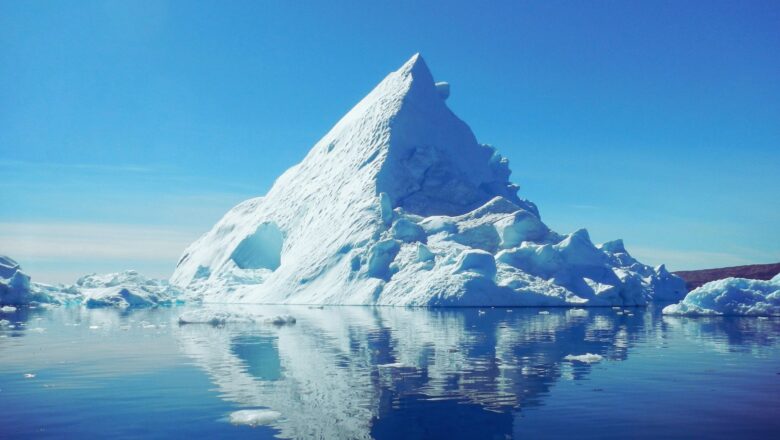
The Arctic winter sea ice has hit an unprecedented low in 2025, reaching 14.33 million square kilometres the smallest winter maximum ever recorded since satellite monitoring began in 1979, according to NASA and the National Snow and Ice Data Center (NSIDC). This year’s peak, reached on March 22 is lower than the previous record of 14.41 million sq km set in 2017 and a massive 1.32 million sq km below the 1981–2010 average. The "missing ice" area is larger than the entire state of California, a striking reminder of the planet’s rapid warming. At the same time, Antarctica clocked its second-lowest sea ice minimum 1.98 million sq km on March 1 making February 2025 the month with the least global sea ice coverage ever recorded. According to experts, this Arctic record is more than a s...
Experts Call for Unified Climate Strategy to Protect Kolkata and Sundarbans Push for Revival of Trams

Experts Call for Unified Climate Strategy to Protect Kolkata and Sundarbans Push for Revival of Trams

Breaking News, Climate Actions
The climate futures of Kolkata and the Sundarbans are deeply intertwined, and experts now warn that failing to address them together could worsen the vulnerabilities of both regions. In a recent meeting held in Kolkata, scientists, activists, and urban planners came together to issue the ‘Kolkata Declaration 2025’, calling for an integrated climate security strategy, particularly highlighting the revival of eco-friendly public transport like trams as part of the solution. The air and water pollution from Kolkata is degrading the Sundarbans mangroves, which in turn weakens the city’s natural shield against cyclones and extreme weather. Experts said that despite being just 100 km apart, Kolkata and the Sundarbans are often dealt with separately in climate policies a mistake that needs urg...
Telangana University Land Taken Forest Cut  2,000 acres at Kancha Gachibowli

Telangana University Land Taken Forest Cut 2,000 acres at Kancha Gachibowli

Breaking News, Climate Actions, Environment
In a move that has sparked outrage the Telangana government has unveiled a grand plan to build one of the world largest eco parks by taking over 2,000 acres at Kancha Gachibowli land that includes the University of Hyderabad campus. But what’s being called an ‘eco dream’ by the state feels like a green disaster to many on the ground. Just weeks ago, 400 acres were marked for auction. But after protests and legal action, including intervention by the Supreme Court, the government didn’t back down it doubled down. The new plan? Remove UoH, shift it outside the city, and use the entire land for the park project. Students and environmentalists are calling this a cover-up for the damage already done. Large patches of green have been cleared, trees cut, and the local ecosystem visibly dist...
Japan Baba Vanga Predicts Mega Tsunami in July 2025 Causes Global Stir

Japan Baba Vanga Predicts Mega Tsunami in July 2025 Causes Global Stir

Breaking News, Climate Actions, Thoughts & Talks
Ryo Tatsuki a former manga artist turned unexpected prophet is sending shockwaves through Japan and beyond with her latest dream-based warning massive tsunami in July 2025. Often compared to mystics like Baba Vanga, Tatsuki claims to have foreseen past disasters that eventually came true and her new vision is raising serious concern. Tatsuki first gained attention in the 1990s for her self-published manga The Future I Saw, a work based on detailed dream diaries she began keeping in the 1980s. Her followers point to a series of dreams that eerily aligned with real events including the 1995 Kobe earthquake, the death of Freddie Mercury, and most notably, the 2011 Tohoku earthquake and tsunami that devastated Japan and triggered the Fukushima nuclear crisis. Now, her most alarming predi...
El Niño Now Lasts Longer Hits Harder Scientists Warn of Deepening Global Crisis

El Niño Now Lasts Longer Hits Harder Scientists Warn of Deepening Global Crisis

Breaking News, Climate Actions, Environment
El Niño, the notorious climate disruptor, is evolving and not in a good way. Once known for its irregular but relatively short-lived bouts of weather chaos, new research reveals that both El Niño and La Niña are now persisting longer, bringing amplified and prolonged destruction to ecosystems, economies and communities worldwide. Triggered by shifts in Pacific Ocean temperatures, El Niño and its cold-phase counterpart La Niña have long reshaped global weather drying out regions like Africa and Australia, flooding the Americas, and damaging agriculture and fisheries. The 1997-98 El Niño alone caused an estimated $5.7 trillion in global income losses. But what's emerging now is far more alarming. A recent study combining fossilised coral records and cutting-edge climate models revea...
AI Predicts Atlantic & Benguela Niño Events Months in Advance: A Breakthrough for Ocean Ecosystems

AI Predicts Atlantic & Benguela Niño Events Months in Advance: A Breakthrough for Ocean Ecosystems

Breaking News, Climate Actions, Tech
In a game-changing climate study, researchers have harnessed artificial intelligence (AI) to predict extreme Atlantic Niño and Benguela Niño events up to 3–4 months in advance, offering new hope for protecting marine ecosystems and coastal communities that rely on them. Led by Marie-Lou Bachèlery at the CMCC (Euro-Mediterranean Center on Climate Change), this research marks a major leap in our ability to forecast complex oceanic phenomena that were once considered nearly impossible to predict. Published in Science Advances, the study introduces a deep learning model trained on 90 years of ocean temperature data, delivering unmatched accuracy and early warnings for climate anomalies in the tropical Atlantic. Why It Matters The Tropical Atlantic, particularly the Angola-Benguela Upw...
2 Earthquakes Shakes Western Nepal Jajarkot district to Kathmandu

2 Earthquakes Shakes Western Nepal Jajarkot district to Kathmandu

Breaking News, Climate Actions, Disasters
Two moderate earthquakes struck western Nepal’s Jajarkot district on Friday evening sending tremors across several nearby regions. The first quake measuring 5.2 in magnitude, hit at 8:07 PM, followed just three minutes later by a stronger 5.5-magnitude tremor at 8:10 PM, according to the National Earthquake Monitoring Centre. Both quakes were centered in the Panik area of Jajarkot, approximately 525 kilometers west of Kathmandu. While the tremors were widely felt in surrounding districts including Surkhet, Dailekh, and Kalikot, no immediate casualties or major damage were reported. Authorities have placed the region on high alert as aftershocks remain a possibility. Nepal, located in a highly seismic zone, frequently experiences such events, prompting continued vigilance and structur...
Fungi Face Extinction Threat Climate Action Boosts Economies Weekly Nature & Climate Roundup

Fungi Face Extinction Threat Climate Action Boosts Economies Weekly Nature & Climate Roundup

Breaking News, Climate Actions
A third of the world’s most threatened fungi species are on the brink of extinction, climate action is set to boost global GDP, and extreme weather events continue to make headlines. Here’s your quick catch-up on the top climate and nature stories this week. The International Union for Conservation of Nature (IUCN) has warned that 411 of 1,300 threatened fungi species are at risk of extinction. These "unsung heroes of life on Earth" play a crucial role in ecosystems by nourishing plants, recycling nutrients, and supporting biodiversity. However, climate change, deforestation, illegal logging, and land conversion for agriculture are wiping them out. In the U.S. alone, more than 50 fungi species are endangered due to changing fire patterns. The IUCN is calling for better forest managem...
Wall St Bets on Hotter Future: US Banks Doubt Climate Goals, See Boon for AC Firms

Wall St Bets on Hotter Future: US Banks Doubt Climate Goals, See Boon for AC Firms

Breaking News, Climate Actions
Leading US financial giants now predict that global climate goals will fail but they’re eyeing big profits as the planet heats up. In a wave of new forecasts, Wall Street banks including Morgan Stanley and JPMorgan Chase admit that the Paris Agreement’s aim to limit global heating is effectively out of reach. Instead, investors are being advised to prepare for a 3°C warmer world, well beyond the internationally agreed threshold of 2°C. The consequences? More deadly heatwaves, extreme weather, economic chaos and a massive surge in demand for air conditioning. Morgan Stanley’s March analysis predicts that the global AC market could jump 41% by 2030, reaching $331 billion, driven by the intensifying need for cooling in a hotter world. The report identifies dozens of air conditioning fir...
L.A Wildfires Leave 700,000 Children Displaced from Schools Experts Urge Urgent Focus on Mental Health

L.A Wildfires Leave 700,000 Children Displaced from Schools Experts Urge Urgent Focus on Mental Health

Breaking News, Climate Actions, Fact Check
The devastating wildfires that swept through Los Angeles in January 2025 destroyed more than 15,000 buildings in just a few days. Among them were 11 schools and 30 child care centers. As a result, over 700,000 children had their education and daily routines suddenly disrupted. The fires started on January 7 in Pacific Palisades and Eaton Canyon, near Altadena. Strong winds pushed the flames through neighborhoods, making it one of California’s five worst wildfires ever. While much of the news focused on property damage and loss of life, the challenges faced by children after the disaster received very little attention. Two experts from the University of Southern California one a disaster epidemiologist, the other a disaster planner say that when a disaster hits your own community, it ...