Monday, March 23News That Matters

Climate Actions

Rising Heat Poses New Threat to Bangladesh’s Fight Against Child Stunting

Rising Heat Poses New Threat to Bangladesh’s Fight Against Child Stunting

Breaking News, Climate Actions, Fact Check
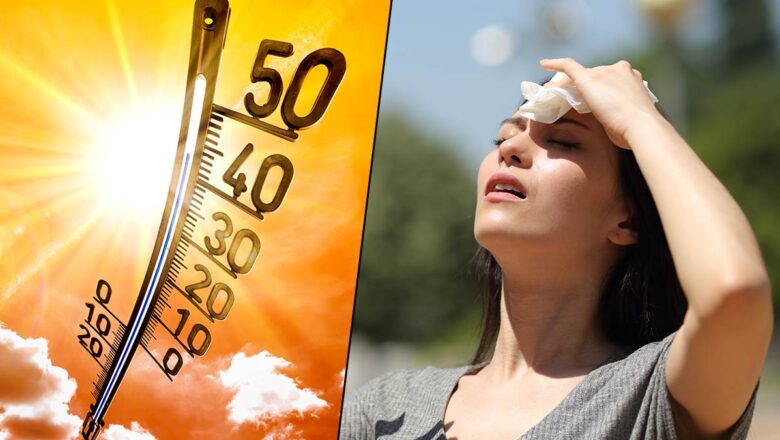
Bangladesh has made remarkable strides in reducing childhood stunting, cutting rates from 42% in 2012 to 28% in 2019. However™a new less understood threat looms climate change. Could rising temperatures erase years of progress in child health and nutrition? A recent study, Extreme Heat Exposure in the First 1,000 Days: Implications for Childhood Stunting in Bangladesh, has drawn a direct link between heat exposure during early childhood and stunting. It found that a 1% increase in extreme heat days raises the odds of stunting by 56%, with heat exposure after birth having a 67% stronger effect than in utero exposure (28%). How Heat Impacts Child Growth Extreme heat disrupts critical biological processes in both mothers and children: Pregnant women exposed to heat suffer from r...

World Meteorological Day Highlights Urgency of Closing Early Warning Gap

World Meteorological Day Highlights Urgency of Closing Early Warning Gap

Breaking News, Climate Actions, Tech
Celebrations for World Meteorological Day took place worldwide today, focusing on closing the early warning gap and strengthening resilience against extreme weather. Organized by national weather services, events included a gathering at WMO headquarters in Geneva. Though the official day falls on March 23, global discussions continued into Monday. Progress in Early Warnings for All The UN Early Warnings for All (EW4All) initiative, launched at COP 28, aims to bring the world’s population under a protective early-warning system by 2027. Now at its halfway point, the initiative has seen major progress: In 2023, 108 countries reported having some capacity for multi-hazard early warning systems more than double the 52 countries in 2015. The initiative has saved lives, protected liv...
ADB Triple A Initiative Securing the Future of Atoll Nations Amid Climate Crisis

ADB Triple A Initiative Securing the Future of Atoll Nations Amid Climate Crisis

Breaking News, Climate Actions
Kiribati, Maldives, Marshall Islands, and Tuvalu four atoll nations at the frontline of climate change are facing an existential threat from rising sea levels, coastal erosion and freshwater scarcity. With a combined population of over 700,000 people living on just 1,300 km² of land, these nations are among the world’s most vulnerable to climate risks. Without urgent intervention, projections suggest sea levels could rise by up to 1 meter by 2100, putting large portions of these islands at risk of permanent inundation. In response, the Asian Development Bank (ADB) has launched the Triple A “Accelerating Atoll Adaptation” Initiative, a transformational adaptation strategy designed to strengthen the climate and disaster resilience of these nations. The Socioeconomic Threat of Climate C...
WMO 2024 Climate Report Warns of Unprecedented Heat Surging Greenhouse Gases and Rising Seas

WMO 2024 Climate Report Warns of Unprecedented Heat Surging Greenhouse Gases and Rising Seas

Breaking News, Climate Actions
The State of the Climate Report 2024 released by the World Meteorological Organization (WMO) delivers a stark warning: the world is on the verge of surpassing critical climate thresholds, with global temperatures, greenhouse gas concentrations, and sea levels reaching unprecedented levels. According to the report, carbon dioxide (CO₂), methane (CH₄), and nitrous oxide (N₂O) levels are now at their highest in 800,000 years, driving the planet towards dangerous warming. The data suggests that 2024 could be the first full calendar year to exceed 1.5°C above pre-industrial levels, a limit scientists have long warned could trigger catastrophic climate consequences. Oceans at a Boiling Point The relentless accumulation of heat in the world’s oceans has shattered records once again fueli...
Nepal Sagarmatha Sambaad Set to Tackle Climate Crisis Invite Global Leaders Amid Rising Environmental Concerns

Nepal Sagarmatha Sambaad Set to Tackle Climate Crisis Invite Global Leaders Amid Rising Environmental Concerns

Breaking News, Climate Actions, Environment
Nepal is gearing up to host its much-anticipated international dialogue, Sagarmatha Sambaad, from May 16 to 18 bringing together world leaders foreign ministers and experts to address the escalating climate crisis. The forum originally planned for 2020 but postponed due to the COVID-19 pandemic aims to spark crucial discussions on climate change climate justice, and its devastating impacts on mountainous nations. During a media briefing in Kathmandu, Amrit Bahadur Rai, Secretary at Nepal’s Ministry of Foreign Affairs, revealed that heads of state, foreign ministers, and ministers of forest and environment from various countries have been invited. While the list of attendees has yet to be finalized he confirmed that continuous dialogue is underway with different governments and internati...
Earth Drying Up UN Report Warns of Expanding Drylands and Looming Crisis

Earth Drying Up UN Report Warns of Expanding Drylands and Looming Crisis

Breaking News, Climate Actions
A 2024 UN report has revealed a troubling trend Earth is becoming increasingly dry as global temperatures rise. Over the past three decades, more than three-fourths of the world’s land has become drier compared to the previous 30 years. Today drylands cover 40.6% of the planet’s landmass, excluding Antarctica. As these regions expand number of people living in drylands has doubled to 2.3 billion making up over a quarter of the global population. If climate change continues at its current pace this number could soar to 5 billion by 2100. Drylands Expanding Across Continents The drying trend is being observed worldwide, from the western United States to Brazil, Europe, Asia, and central Africa. Scientists warn that without significant reductions in greenhouse gas emissions, an addition...
Rising Temperatures Rising Heart Risks: How Extreme Heat Strains the Heart

Rising Temperatures Rising Heart Risks: How Extreme Heat Strains the Heart

Breaking News, Climate Actions, Fact Check
For years scientists have studied how heat affects the human heart. However new research suggests that the most commonly used testing methods may not accurately reflect what happens during real-world heat waves. As climate change drives global temperatures higher understanding the true impact of extreme heat on heart function has become more crucial than ever. A groundbreaking study has uncovered key insights into how the human heart responds to heat stress. This findings could reshape how health agencies protect vulnerable populations during extreme weather events. The study analyzed data from over 400 laboratory studies involving more than 6,800 participants, revealing significant differences in how heating methods influence heart performance. Researchers find that exposure to enca...
Himalayan Glaciers Melting Rapidly Raising Risks for 2 Billion People

Himalayan Glaciers Melting Rapidly Raising Risks for 2 Billion People

Breaking News, Climate Actions, Fact Check
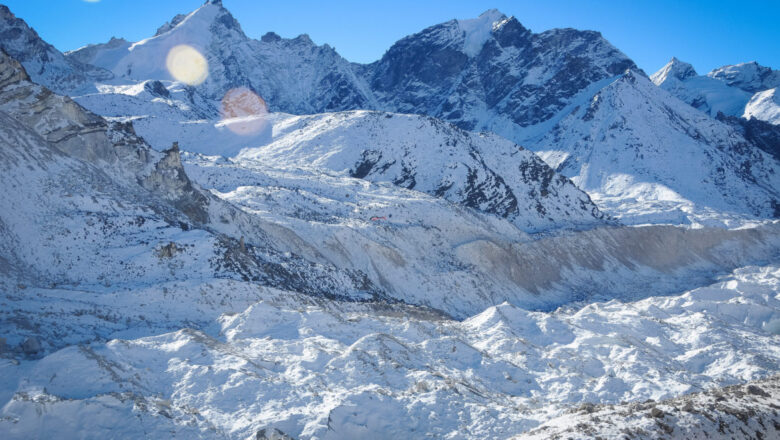
Glaciers in the Hindu Kush Himalayas, a crucial freshwater source for nearly 2 billion people are melting at an alarming rate, heightening the risk of floods, landslides and infrastructure damage across Asia. The region home to the world's largest ice reserves outside the polar areas is experiencing glacial melt 65% faster than in the previous decade with the risk of glacial lake outburst floods (GLOFs) projected to triple by the century’s end. The impact is already being felt. In August last year, a glacial lake in Nepal's Everest region burst its banks unleashing a destructive flood in Thame village. Homes, farms, a school, and a hydropower plant were damaged, but timely evacuation saved lives. With such disasters set to become more frequent, governments and international organization...
Cambridge AI Weather System ‘Aardvark’ Revolutionizes Forecasting

Cambridge AI Weather System ‘Aardvark’ Revolutionizes Forecasting

Breaking News, Climate Actions, Idea & Innovations, Tech
A breakthrough artificial intelligence system developed by researchers at the University of Cambridge is set to redefine weather forecasting. The AI model, named Aardvark Weather, delivers highly accurate predictions tens of times faster than current forecasting methods while using significantly less computing power. Supported by the Alan Turing Institute, Microsoft Research, and the European Centre for Medium-Range Weather Forecasts (ECMWF), Aardvark has the potential to transform global weather prediction, researchers say. The findings were recently published in Nature. "Aardvark reimagines current weather prediction methods, offering faster, cheaper, more flexible, and more accurate forecasts than ever before," said Professor Richard Turner from Cambridge’s Department of Engineeri...
Study Discovered New Methods to Predict Unrecorded Extreme Weather Events

Study Discovered New Methods to Predict Unrecorded Extreme Weather Events

Breaking News, Climate Actions, Idea & Innovations, Learning & Developments
A groundbreaking study published in Nature Communications reveals how communities can anticipate extreme weather events that have never been recorded in modern history. Researchers from the Climate Adaptation Services Foundation the University of Reading, and international institutions have developed new techniques that go beyond conventional weather records, which typically span only the last century. The study highlights how nature's archives such as tree rings combined with forgotten historical documents can unlock centuries of missing climate data. Lead author Timo Kelder "We've been limited by thinking extreme weather is only as bad as what we've measured since weather stations were invented, But our research shows we can use weather models to look back hundreds or even thousands o...