Monday, March 23News That Matters

Climate Actions

Unplanned Urbanisation Fuels Rising Heat Managing Blue-Green Spaces Key to Mitigation

Unplanned Urbanisation Fuels Rising Heat Managing Blue-Green Spaces Key to Mitigation

Breaking News, Climate Actions, Environment
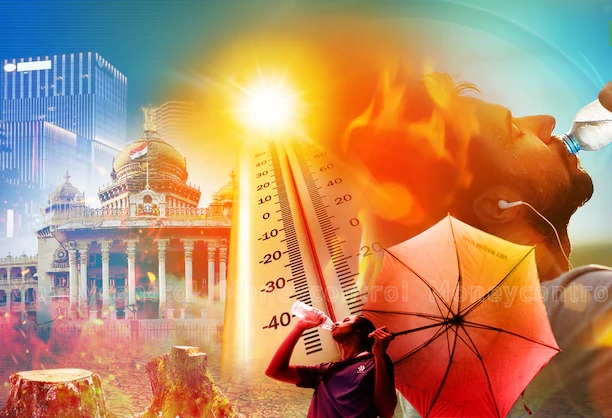
Urbanisation is coming at the cost of natural blue and green spaces leading to a surge in surface temperatures and exacerbating the Urban Heat Island (UHI) effect. Researchers warn that without sustainable urban planning or urban centres especially in developing nations like India will face hazardous heat stress, threatening both human health and local ecosystems. Urbanisation and Rising Temperatures The C(UN) estimates that by 2050, 68% of the global population will live in urban areas, with 90% of this growth concentrated in Asia and Africa. As a result, the rate of urban land expansion is already twice as fast as population growth, leading to a dramatic transformation of landscapes. Studies project that by the end of the 21st century, the Land Surface Temperature (LST) could ri...
Rajasthan Churu Leaving Farmers Devastated as Crops Destroyed in Thar Desert’s Unexpected Winter Scene

Rajasthan Churu Leaving Farmers Devastated as Crops Destroyed in Thar Desert’s Unexpected Winter Scene

Breaking News, Climate Actions
The Churu district of Rajasthan known for its scorching temperatures and arid terrain witnessed an unusual hailstorm and heavy rainfall, transforming parts of the Great Indian Thar Desert into a surreal winter-like landscape. Villages such as Bhanipura, Bisarasar, Rajasar, and Sardarshahar were blanketed in hail, with farmers counting heavy losses as crops neared harvest. Hailstones, described as the size of jujubes, wreaked havoc on farmlands, devastating mustard, wheat, barley, isabgol, fenugreek, and gram crops. Vishnu Parikh, a farmer from Rajasar Panwaran, expressed his distress, stating, "Everything we worked for this season is gone in minutes. The damage is severe." Another farmer, Raj Kumar Sharma, called for immediate government relief and compensation, fearing an economic setb...
Cloudburst Triggers Flash Floods in Himachal’s Kangra, Villages Cut Off as Roads Blocked and Homes Damaged

Cloudburst Triggers Flash Floods in Himachal’s Kangra, Villages Cut Off as Roads Blocked and Homes Damaged

Breaking News, Climate Actions, Disasters
A cloudburst in Himachal Pradesh’s Kangra district has caused flash floods, leaving villages cut off and damaging homes, roads, and vehicles. The worst-affected area is Luwai village in the remote Chhota Bhanghal valley. Heavy rainfall over the past 48 hours has led to landslides and rising water levels. Four vehicles were buried under debris, while 14 houses and a middle school building suffered severe damage. Power supply poles have been uprooted, leaving many villages without electricity. Landslides and fallen trees have blocked roads, stopping traffic in areas like Multhan, Luhardi, Barot, and Kothi Kohar. Hundreds of vehicles are stranded as roads remain covered with snow and large rocks. To prevent further damage, authorities have opened the floodgates of two hydroelectric p...
Mass NOAA Layoffs Spark Outrage Raise Alarm Over Weather Forecasting, National Security

Mass NOAA Layoffs Spark Outrage Raise Alarm Over Weather Forecasting, National Security

Breaking News, Climate Actions, Learning & Developments
Hundreds of employees at the National Oceanic and Atmospheric Administration (NOAA) have been laid off as part of the Trump administration’s sweeping effort to reduce the size of the federal government. The move has triggered strong backlash from lawmakers, scientists, and former NOAA officials, who warn of severe risks to public safety, economic stability, and national security. The layoffs, which began on February 27, targeted probationary employees—those with less than two years of service or who had recently been promoted or transferred. The Commerce Department, which oversees NOAA, issued termination notices, with some employees given as little as two hours to leave their offices, according to NPR. Weather Forecasting at Risk NOAA plays a crucial role in weather forecasting, ...
IMD Reports India Faces Hottest February in 125 Years

IMD Reports India Faces Hottest February in 125 Years

Breaking News, Climate Actions, Opinions
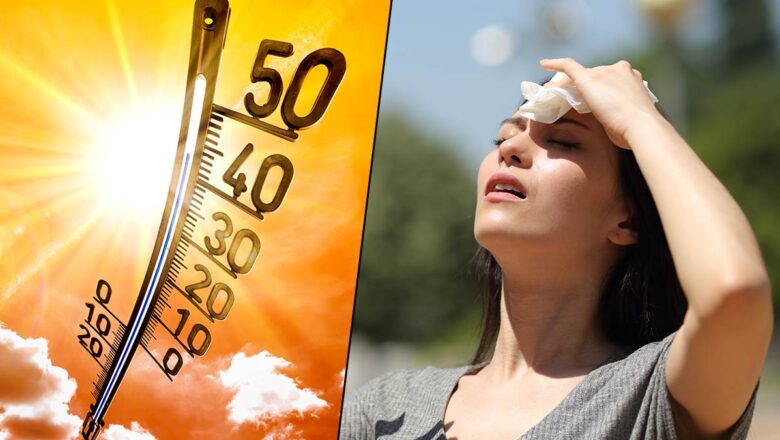
February 2025 has been the hottest in India since 1901, with the average mean temperature reaching 22.04°C, according to data from the India Meteorological Department (IMD). The month also recorded the second-highest maximum temperature at 29.07°C, nearly 1.5°C above normal. Experts attribute this extreme heat to climate change and the absence of western disturbances. Unprecedented Heat and Rainfall Deficit The IMD report highlights that February 2025 was not only abnormally warm but also among the driest in 125 years. The country received less than half of its usual rainfall, with an overall deficit of 59% during the winter season (January-February). Central India was hit hardest, recording an 89.3% rainfall deficit, while Northwest India saw a 64.4% shortfall. The cumulative rainfa...
Experts Warn of Rising Urban Heat and Extreme Weather at Anil Agarwal Dialogue 2025

Experts Warn of Rising Urban Heat and Extreme Weather at Anil Agarwal Dialogue 2025

Breaking News, Climate Actions, Thoughts & Talks
At the Anil Agarwal Dialogue 2025, climate experts painted a grim picture of India's worsening extreme weather, highlighting urban heat, rising nighttime temperatures, and the growing impact of climate change on agriculture. Urban Heat and Warm Nights on the Rise In the session titled "In the Red: Why Are Our Cities Heating Up?", experts discussed how increasing urban heat islands and warm nights are endangering public health and livelihoods. Climate scientist Roxy Mathew Koll from the Indian Institute of Tropical Meteorology, Pune, explained that India is highly vulnerable to extreme weather due to its tropical location and rapidly warming oceans. “The Indian Ocean may enter a permanent heatwave state by 2050,” Koll warned, adding that oceanic heatwaves could increase from 20–50 ...
Taranaki Drought Declared Medium-Scale Adverse Event as Farmers Struggle

Taranaki Drought Declared Medium-Scale Adverse Event as Farmers Struggle

Breaking News, Climate Actions, Environment
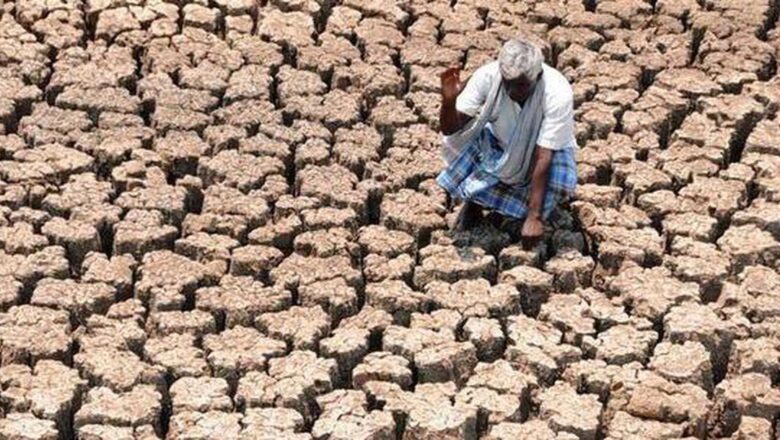
New Zealand’s Taranaki region has been officially classified as experiencing a medium-scale adverse event due to persistent drought conditions, Agriculture Minister Todd McClay announced. The extreme heat and lack of rainfall have severely impacted pasture growth, forcing many farmers to sell livestock early or rely on stored feed. "Conditions on the ground are becoming extremely difficult," McClay said. "Taranaki is experiencing persistent dry weather, and we recognize the toll this is taking on the farming community." In response, the government has allocated $30,000 to rural support groups providing direct aid to affected farmers. The Ministry for Primary Industries (MPI) is also monitoring conditions nationwide to determine if further intervention is needed. Rural Communities ...
Mathare Flood Survivors Struggle to Rebuild Amid Climate and Housing Crisis

Mathare Flood Survivors Struggle to Rebuild Amid Climate and Housing Crisis

Breaking News, Climate Actions, Fact Check
In the shadow of Nairobi’s skyline Mathare one of Kenya’s largest informal settlements bears the deep scars of nature’s wrath. The March-to-May rainy season of 2024 brought devastating floods that swept through the community, destroying homes, displacing thousands, and claiming lives. On April 24, floodwaters surged through Mathare, leaving more than 7,000 people displaced, according to a report by Save the Children. A month later, families were still grappling with the scale of destruction. Doreen Achieng, a mother of four, recalls how water seeped into her house overnight. Used to occasional flooding, she began mopping until she realized the water wasn’t stopping. Within hours, it had risen three meters, trapping her family inside. “We were stuck in the water, but the men came t...
Rare Triple Cyclone Event Seen on South Pacific Raising Climate Concerns

Rare Triple Cyclone Event Seen on South Pacific Raising Climate Concerns

Breaking News, Climate Actions, Disasters, Tech
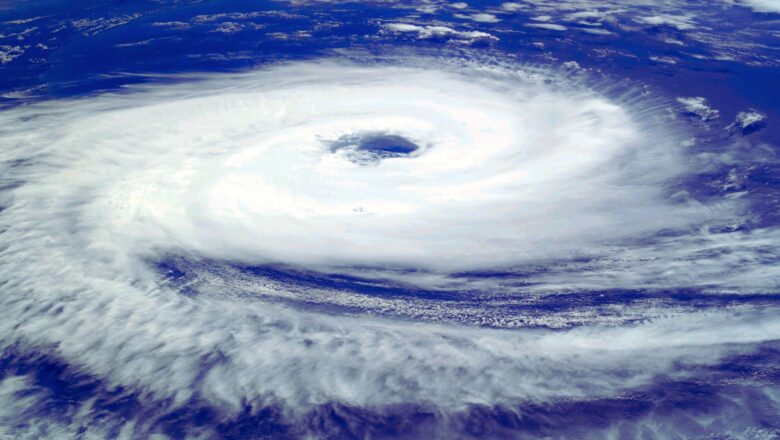
Satellite imagery has captured an extraordinary meteorological phenomenon in the South Pacific, where three tropical cyclones Rae, Seru, and Alfred are simultaneously active. Stretching over 8,000 kilometers from the eastern coast of Australia into the Pacific Ocean, this rare occurrence underscores the unpredictability of extreme weather patterns. Unprecedented Cyclone Activity Amid La Niña This triple cyclone event coincides with the peak of the region’s cyclone season. Meteorologists note that while such occurrences are rare, they are not without precedent the last recorded instance was in January 2021, with cyclones Lucas, Ana, and Bina. However, what makes this event particularly striking is that it is happening during a La Niña phase, a climate pattern that typically cools ocea...
Devastating Earthquake Strikes Nepal High Casualties Feared as Tremors Shake Himalayan Region

Devastating Earthquake Strikes Nepal High Casualties Feared as Tremors Shake Himalayan Region

Breaking News, Climate Actions, Disasters, Environment
Kathmandu: A powerful earthquake struck Nepal early Tuesday morning, sending shockwaves across the Himalayan region and triggering widespread destruction. The tremors, felt in neighboring India, China, and Bhutan, caused buildings to collapse, landslides to block key highways, and panic among millions. The full scale of the disaster is yet to be determined, but officials fear high casualties as rescue efforts intensify. According to seismologists, the quake was a result of the Indian tectonic plate pushing into the Eurasian plate at a rate of approximately 5 cm per year, a process that continuously builds stress beneath the Earth's surface. When this stress reaches a breaking point, it is released as a powerful seismic event. The Himalayas, being one of the most geologically active regi...