Friday, March 20News That Matters

Climate Actions

Heatwaves in North America, Europe Could Intensify Twice as Expected Due to Soil Moisture Variations

Heatwaves in North America, Europe Could Intensify Twice as Expected Due to Soil Moisture Variations

Breaking News, Climate Actions, Environment
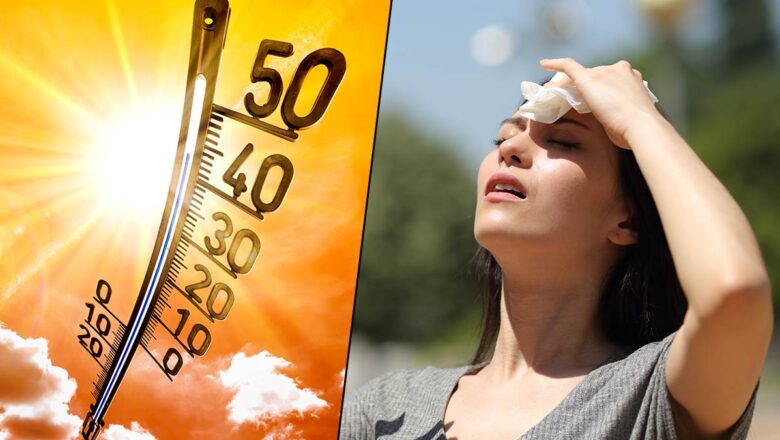
A new study has revealed that heatwaves in Eastern North America and Central Europe could become twice as intense as previously predicted, driven by variations in soil moisture. Published in Nature Communications, the research, led by Professor Douglas Maraun at the University of Graz with contributions from the University of Reading, highlights the potential for devastating temperature surges if global warming reaches 2°C. The study warns that extreme heat events in these regions could rise by up to 4°C, significantly outpacing moderate heatwave projections. This alarming trend mirrors the catastrophic heatwaves that hit Canada in 2021, India in 2022, and the Mediterranean in 2023. Reinhard Schiemann, a co-author of the study from the University of Reading, explained "While it’s kno...

Drones Combat Bushfires Australia’s High-Tech Plan to Tame Flames Before They Rage

Drones Combat Bushfires Australia’s High-Tech Plan to Tame Flames Before They Rage

Breaking News, Climate Actions, Disasters, Tech
On a typical summer evening in Australia, a dry lightning storm rolls across parched bushland. With hot, windy conditions forecast for the next day, a single lightning strike could ignite a catastrophic blaze. But thanks to cutting-edge drone technology, such threats may soon be contained before they escalate. This innovative vision, outlined in the federal government's latest roadmap, leverages drones to detect and suppress bushfires early. Equipped with thermal detectors and cameras, drones can spot smouldering roots or smoke trails in remote areas, operating tirelessly through the night. Larger drones armed with fire retardants join the effort, slowing flames until human fire crews take over at dawn. The result? What could have become a devastating megablaze is contained to a few hec...
UNESCO, WMO Unveil 2025 as Year for Glacier Preservation

UNESCO, WMO Unveil 2025 as Year for Glacier Preservation

Breaking News, Climate Actions
UNESCO and the World Meteorological Organization (WMO) have declared 2025 the International Year of Glaciers’ Preservation (IYGP), emphasizing the urgency of addressing glacier retreat and its global implications. The initiative was officially launched on January 21, aiming to protect Earth's "water towers" essential sources of freshwater for over 2 billion people. The declaration follows a UN General Assembly resolution from December 2022, marking March 21 as World Day for Glaciers annually. With glaciers covering 700,000 square kilometers and storing 70% of the world’s freshwater, their rapid melting poses severe threats such as water scarcity, rising sea levels, and ecosystem collapse. WMO Secretary-General Celeste Saulo highlighted the severity of the crisis "In 2023, glaciers su...
Brazil Prepares for COP30: Ambassador Andre Correa do Lago Takes the Helm Amid Challenges

Brazil Prepares for COP30: Ambassador Andre Correa do Lago Takes the Helm Amid Challenges

Breaking News, Climate Actions
Brazil has appointed Ambassador Andre Correa do Lago as the head of the COP30 climate summit, set to take place in November 2025 in Belem, located in the heart of the Amazon. His appointment comes at a critical juncture as global climate negotiations face challenges, including lingering effects from former U.S. President Donald Trump’s decision to withdraw from the Paris Agreement. Ambassador Correa do Lago expressed concern over the impacts of the U.S. withdrawal on climate discussions but remained hopeful about continued dialogue with the country, which remains part of the United Nations climate convention. The summit will focus on critical issues like financing energy transitions in developing nations and forging new commitments to reduce global emissions. "Despite the challenges,...
Climate Change Fuels Kala-Azar Outbreaks in Kenya’s Turkana facing Deadly Poverty

Climate Change Fuels Kala-Azar Outbreaks in Kenya’s Turkana facing Deadly Poverty

Breaking News, Climate Actions
At just 15, Ekidor Kiyong from northern Kenya’s Turkana region is battling kala-azar, a deadly disease spread by sandflies. While receiving treatment at Lodwar County Referral Hospital, his recovery brings hope, but the cost of KES 30,000 (USD 230) has left his family struggling. Known scientifically as visceral leishmaniasis, kala-azar begins with malaria-like symptoms fever, fatigue, and headaches. If untreated, it is fatal in 95% of cases, warns the World Health Organization (WHO). In Turkana, where poverty, malnutrition, and inadequate healthcare prevail, the disease has become a symbol of intersecting crises: climate change, environmental degradation, and health inequity. Turkana's semi-arid terrain, marked by cracked soils and deforestation, has created ideal conditions for san...
China Voices Strong Support for WHO Amid Global Health Debates

China Voices Strong Support for WHO Amid Global Health Debates

Breaking News, Climate Actions, Environment
China has reaffirmed its unwavering support for the World Health Organization (WHO) in the face of past criticisms, notably from former U.S. President Donald Trump, who accused the global health body of mishandling the COVID-19 pandemic. Trump had initiated U.S. withdrawal from the WHO through an executive order, a decision later reversed by President Joe Biden, signaling renewed U.S. commitment to international health cooperation. China’s Commitment to Global Health Governance Chinese Foreign Ministry spokesperson Guo Jiakun emphasized WHO’s crucial role in coordinating global health initiatives. “The WHO should be supported and strengthened,” Guo stated, pledging China’s backing to enhance the organization’s capacity and deepen international health collaboration. China’s endorse...
Official Statistics Key to Climate Action Paris Agreement Reporting

Official Statistics Key to Climate Action Paris Agreement Reporting

Breaking News, Climate Actions, Environment
A new publication reveals how official statistics can play a pivotal role in supporting climate action, helping countries meet their obligations under the Paris Agreement. The guide outlines how National Statistical Offices (NSOs) can contribute to climate change mitigation, adaptation efforts, and ensuring a just transition while providing essential data to inform the public and measure financial flows related to climate policies. The report emphasizes that NSOs have a critical part to play in shaping climate action by providing robust data that addresses current gaps and anticipates future needs. It explains how statistical systems can align their work with the policy context to better serve governments, international organizations, and the wider public. One of the central themes o...
Global Economy Faces 50% GDP Loss by 2090 Without Climate Action, Warns Report

Global Economy Faces 50% GDP Loss by 2090 Without Climate Action, Warns Report

Breaking News, Climate Actions, Fact Check
A stark warning has been issued about the economic and humanitarian costs of inaction on the climate crisis. According to the "Planetary Solvency – Finding Our Balance with Nature" report, global GDP could shrink by 50% between 2070 and 2090 if decisive measures are not taken. Populations are already grappling with food system shocks, water insecurity, heat stress, and infectious diseases. Without intervention, the likelihood of mass mortality, displacement, economic collapse, and conflict increases dramatically. The report, the fourth in a series by the Institute and Faculty of Actuaries (IFoA) in collaboration with climate scientists, offers a framework for global risk management. It emphasizes that ineffective risk messaging has hampered policy decisions and delayed critical action, ...
Iraq From Cradle of Civilization to Climate Crisis Epicenter

Iraq From Cradle of Civilization to Climate Crisis Epicenter

Breaking News, Climate Actions, Disasters, Environment
Iraq, once revered as the cradle of human civilization, is now a stark warning of the perils of climate change. Known historically as the land of the Tigris and Euphrates, the fertile rivers that nourished the first farming communities are now emblematic of a country grappling with escalating environmental and socio-economic challenges. As global temperatures rise, Iraq faces a confluence of crises water scarcity, desertification, heat stress, and displacement that threaten its future. The Drying Lifelines: Water Scarcity in Iraq The Tigris and Euphrates rivers, which supply 98% of Iraq’s surface water, have seen their flow decrease by up to 40% over the past four decades. The reasons are manifold: reduced rainfall, intensified evaporation due to rising temperatures, and upstream dam...
La Niña Returns Mixed Bag for Global Weather Amid Ongoing Climate Crisis

La Niña Returns Mixed Bag for Global Weather Amid Ongoing Climate Crisis

Breaking News, Climate Actions, Disasters, Environment
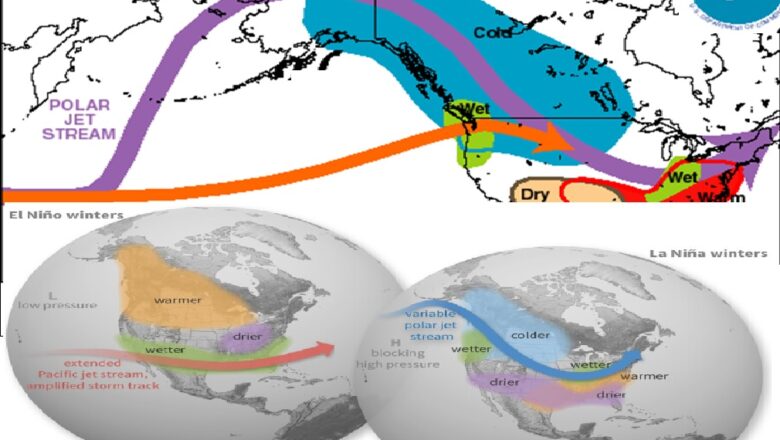
The U.S. National Oceanic and Atmospheric Administration (NOAA) has officially confirmed the arrival of a weak La Niña in late December 2024, a natural climate phenomenon expected to last until February to April. This shift could influence global weather patterns, potentially offering respite from the extreme heat experienced in recent years. La Niña the cooler counterpart of El Niño, is part of the El Niño Southern Oscillation (ENSO), a natural climate dynamic that alternates between warm (El Niño), cool (La Niña), and neutral phases. During La Niña, cooler-than-average sea surface temperatures in the tropical Pacific Ocean typically interact with the atmosphere, driving changes in global weather. For most of 2024, scientists observed La Niña-like atmospheric patterns, such as stron...