Thursday, June 4News That Matters

Climate Actions

La Niña Makes a Comeback Cooler Pacific Waters Signal Global Weather Shifts

La Niña Makes a Comeback Cooler Pacific Waters Signal Global Weather Shifts

Breaking News, Climate Actions, Disasters, Environment
The phenomenon of La Niña has officially returned to the Pacific Ocean, according to the National Oceanic and Atmospheric Administration (NOAA), which announced its emergence on Thursday, January 9. Cooler-than-average sea surface temperatures have been recorded in the central and eastern Pacific, signaling the onset of La Niña conditions after more than a year of unusually warm ocean temperatures. NOAA confirmed that the shift began in December 2024, marking the first La Niña phase since the 2020–2023 cycle. Though the current event is classified as weak, its timing and potential impacts on global weather patterns are drawing significant attention. La Niña, part of the larger El Niño Southern Oscillation (ENSO) phenomenon, is known for altering atmospheric conditions worldwide. The ...
Hydroclimate Whiplash Intensifies Amid Global Warming, Researchers Warn

Hydroclimate Whiplash Intensifies Amid Global Warming, Researchers Warn

Breaking News, Climate Actions, Disasters, Environment
Rapid swings between extreme wet and dry weather known as hydroclimate whiplash are accelerating globally due to climate change, with further escalation expected as temperatures rise, according to a study led by UCLA climate scientist Daniel Swain. The study, published in Nature Reviews, highlights the role of the "expanding atmospheric sponge," a phenomenon where the atmosphere absorbs, evaporates, and releases 7% more water for every degree Celsius of global warming. This process intensifies the swings between droughts and floods, posing new challenges for water and disaster management. California offers a vivid illustration of hydroclimate whiplash. Following years of drought, the state experienced record-breaking precipitation during the winters of 2022-23, triggering floods, sno...
Saint Kitts Farmers Battle Drought with Climate Tech Amid Mounting Water Crisis

Saint Kitts Farmers Battle Drought with Climate Tech Amid Mounting Water Crisis

Breaking News, Climate Actions, Disasters, Environment
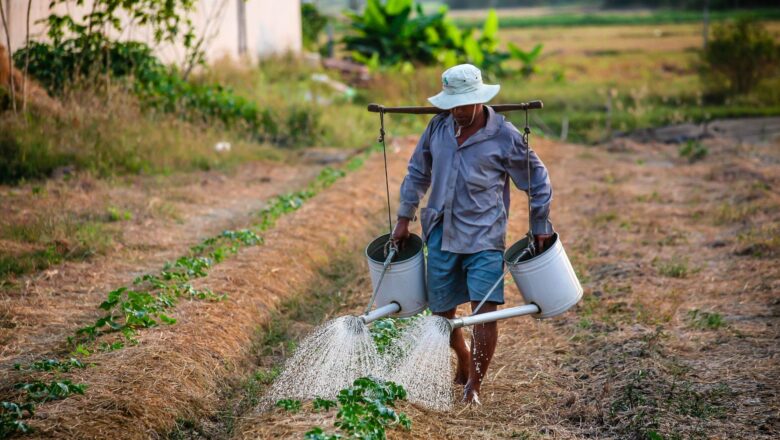
On the Caribbean island of Saint Kitts, farmers like Meshach Alford face the daily struggle of nurturing crops in bone-dry soil. "I have planted crops, and there has been no water for weeks, for months," says Alford, who farms 11 hectares in Saint Paul’s. "Even 18 inches deep, the soil is still dry." This harsh reality is becoming increasingly common in Saint Kitts and Nevis, a twin-island nation grappling with the growing impacts of climate change. Drought, once a rare occurrence, is now disrupting livelihoods and threatening food security. Rainfall, the islands' sole source of potable water, has diminished significantly, leaving 80% of Saint Kitts residents facing regular water outages. Unpredictable Seasons, Uncertain Futures "What was considered a wet season is no longer a wet...
Researchers Reveal Ancient Hotspot Shaped Formation of Great Lakes

Researchers Reveal Ancient Hotspot Shaped Formation of Great Lakes

Breaking News, Climate Actions, Environment, Learning & Developments
New evidence suggests that the Great Lakes owe their extraordinary size and depth not just to Ice Age glacial activity but also to ancient geological processes. A study published in Geophysical Research Letters highlights the role of a geographic hotspot that interacted with the Earth's lithosphere millions of years ago, reshaping our understanding of these iconic water bodies' origins. As the ancient supercontinent Pangea drifted over the hotspot, the Earth's lithosphere thinned. This thinning made the region's crust more fragile and susceptible to deformation, paving the way for significant geological transformations over time. Seismic Wave Analysis Confirms Deformation Seismic wave data provided key evidence for the hotspot's role. Unusual horizontal wave movements beneath ...
Rising Temperatures and Warnings: Latest Climate Research Highlights Urgent Action Needed

Rising Temperatures and Warnings: Latest Climate Research Highlights Urgent Action Needed

Breaking News, Climate Actions, Environment
As global temperatures soared to record highs in 2024, the urgency to address climate change is intensifying. New research underscores how rapidly the planet is warming and reveals unexpected consequences of climate shifts, from ocean changes to wildfires and ecosystem transformations. Recent findings suggest Earth may have already reached 1.5°C of warming above pre-industrial levels, a critical threshold that could lead to irreversible climate impacts. A November 2024 study based on 2,000 years of atmospheric gas data from Antarctic ice cores indicates that warming hit 1.49°C in 2023. Unlike previous calculations, which used a baseline from 1850-1900, this analysis extends the pre-industrial baseline back to 13 CE, offering a broader historical perspective. The warming Atlantic Ocea...
Winter Storm Batters Eastern US: Heavy Snow, Freezing Rain Disrupt Travel, Claim Lives

Winter Storm Batters Eastern US: Heavy Snow, Freezing Rain Disrupt Travel, Claim Lives

Breaking News, Climate Actions, Disasters, Environment
A powerful winter storm system swept across the eastern United States on Monday, blanketing cities in heavy snow and freezing rain, disrupting travel for millions, and leaving at least five people dead. The storm, which had already caused hazardous road conditions in the Midwest over the weekend, left a trail of destruction, power outages, and travel chaos. As of Monday afternoon, over 175,000 residents from Missouri to Virginia were without power, according to Poweroutage.us. Meanwhile, air travel was severely impacted, with more than 2,400 flights canceled and thousands more delayed, per FlightAware. The National Weather Service (NWS) forecasted up to a foot of snow in Washington, D.C., paralyzing the nation’s capital. Schools were closed, and residents waded through snow-laden str...
India Forest Cover Growth Comes at a Cost: Biodiversity Hotspots Face Decline

India Forest Cover Growth Comes at a Cost: Biodiversity Hotspots Face Decline

Breaking News, Climate Actions, Environment
The India State of Forest Report (ISFR) 2023, released by the Forest Survey of India, paints a picture of paradoxical progress. While India's total forest and tree cover has shown a marginal increase, the ecological cost is hard to ignore. Biodiversity-rich areas, which are critical for sustaining ecosystems, continue to see worrying declines. India's forest and tree cover now stands at 8,27,357 square kilometres, covering 25.17% of the country's geographical area. Forests account for 21.76% (7,15,343 sq km), while tree cover constitutes 3.41% (1,12,014 sq km). Since the last report in 2021, forest and tree cover has grown by 1,446 sq km, with a modest 0.2% rise in forest cover and a 1.16% jump in tree cover. However, deeper analysis reveals a troubling reality: several states with r...
How Developing Nations Can Bridge the Climate Finance Gap

How Developing Nations Can Bridge the Climate Finance Gap

Breaking News, Climate Actions, Idea & Innovations
As climate change accelerates, the urgency to address its impacts grows, particularly for the world's most vulnerable nations. Yet, the conclusion of COP29 highlights a stark reality: the gap between climate finance needs and actual funding remains vast. Developing nations face the daunting challenge of mobilizing resources to adapt to and mitigate the climate crisis while grappling with stretched public budgets and limited international support. The Global Finance Dilemma Emerging economies require an estimated $1.3 trillion annually to combat the escalating climate crisis. However, developed nations have pledged only $300 billion per year by 2035—a figure that falls significantly short and is expected to lose real value due to inflation. By 2035, this amount may shrink to an equiva...
The Sea That Vanished: The Tragic Fall of the Aral Sea

The Sea That Vanished: The Tragic Fall of the Aral Sea

Breaking News, Climate Actions, Environment
Once a vast expanse of shimmering blue the Aral Sea was the pride of Central Asia. Straddling Kazakhstan to the north and Uzbekistan to the south, it was the world’s fourth-largest inland water body. It was a lifeline for the region, teeming with fish, bustling ports, and vibrant communities thriving along its shores. But the mid-20th century marked the beginning of its decline. As part of Soviet-era irrigation projects, the waters of the Syr Darya and Amu Darya rivers once the Aral’s lifeblood were diverted to grow cotton and other crops. The Aral began to shrink rapidly, leaving behind parched landscapes and ghostly shipwrecks marooned in desert sands. By the early 21st century, it was a shadow of its former self, its once-abundant ecosystem shattered and its communities struggling to...
Delhi experiences rain and foggy morning, slight relief from pollution but air quality remains very poor

Delhi experiences rain and foggy morning, slight relief from pollution but air quality remains very poor

Breaking News, Climate Actions, Disasters, Environment
Delhi witnessed light rain and dense fog early Friday, creating a refreshing yet chilly atmosphere across the city. However, air quality remained in the 'very poor' category, with an Air Quality Index (AQI) of 371 recorded at 7 am, according to the Central Pollution Control Board (CPCB). The India Meteorological Department (IMD) recorded a minimum temperature of 12°C, with highs expected to reach 20°C. A "thunderstorm with rain" has been forecast for Friday and Saturday, signaling more showers over the weekend. Residents embraced the weather change, calling it a welcome relief. “It feels like Kashmir,” said Deepak Pandey, a local resident. Tourists also appreciated the pleasant weather, with Raman Kushwaha from Madhya Pradesh saying it was ideal for sightseeing despite the chill. ...