Thursday, June 4News That Matters

Climate Actions

NASA Unveils Sea Level Data to Support Coastal Communities

NASA Unveils Sea Level Data to Support Coastal Communities

Breaking News, Climate Actions, Idea & Innovations, Tech
NASA has launched a global sea level change platform to help coastal communities prepare for the rising oceans disrupting livelihoods and infrastructure worldwide. Accessible through the Earth Information Center, the platform offers projections of sea level rise until 2150 and flood risks for the next 30 years, integrating data from ice sheets, ocean monitoring, and climate assessments. Developed in collaboration with organizations like the World Bank, U.S. Department of Defense, and the United Nations, the tool aims to guide critical planning and adaptation strategies. "NASA innovates for humanity," said Karen St. Germain, head of NASA’s Earth Science Division. "This data supports communities in addressing natural hazards and planning for resilience." Rising Faster Than Ever NASA...
COP29 Urges Swift Action on Early Warnings for Extreme Weather

COP29 Urges Swift Action on Early Warnings for Extreme Weather

Breaking News, Climate Actions, Environment, Thoughts & Talks
Baku, Azerbaijan: A flagship campaign to ensure universal access to life-saving early warning systems is gaining momentum, but vulnerable nations continue to bear the brunt of climate disasters, leaders stressed at COP29. The high-level event spotlighted the UN Secretary-General's Early Warnings for All (EW4All) initiative, which aims to protect everyone from hazardous weather and climate events by 2027. “This year is on track to be the hottest in history, marked by record-breaking heatwaves, rains, and deadly droughts,” said UN Secretary-General António Guterres. “Early warning systems are no longer a luxury; they are a necessity and a sound investment, with a ten-fold return.” COP29 President Mukhtar Babayev highlighted that effective early warning systems could avert losses of up ...
Strengthening Social Protection: An Urgent Economic and Climate Necessity

Strengthening Social Protection: An Urgent Economic and Climate Necessity

Breaking News, Climate Actions, Learning & Developments
As climate change intensifies and economic uncertainties mount, robust social protection systems have become essential for resilience and inclusive development. A new report by the Economic and Social Commission for Asia and the Pacific (ESCAP) underscores the critical need to address financing gaps to strengthen these systems and safeguard vulnerable populations. Far from being a mere expense, social protection is an investment in people that yields significant socioeconomic returns. Research highlights its role as an economic stabilizer, particularly evident during the COVID-19 pandemic when cash assistance programs and unemployment benefits supported incomes and stabilized aggregate demand. Such measures demonstrate how social protection systems enhance resilience and foster social c...
ESCAP Says Robust Social Protection Systems Vital Amid Climate Challenges

ESCAP Says Robust Social Protection Systems Vital Amid Climate Challenges

Breaking News, Climate Actions, Learning & Developments
New Delhi: As climate change and economic uncertainties intensify, robust social protection systems are becoming a necessity, not a choice, warns the Social Outlook 2024 report by the Economic and Social Commission for Asia and the Pacific (ESCAP). The report highlights a dire need to close financing gaps to safeguard vulnerable populations and build resilience. The Asia-Pacific region currently spends only 8.2% of its GDP on social protection, significantly below the global average of 12.9%. ESCAP cautions that without increased investment, rising poverty driven by climate change, digital disparities, and aging populations could become unavoidable. Social protection is more than a safety net; it’s an investment that stabilizes economies during crises. This was evident during the COV...
Delhi’s Air Quality Deteriorates: Second Most Polluted City in the World

Delhi’s Air Quality Deteriorates: Second Most Polluted City in the World

Breaking News, Climate Actions, Disasters, Environment
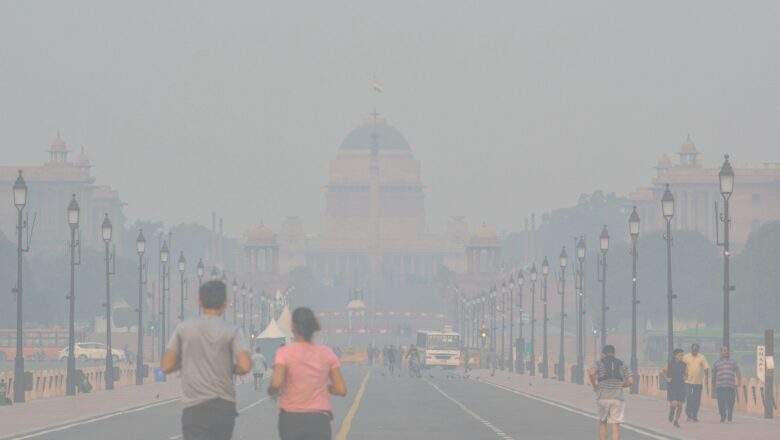
New Delhi: Delhi's air quality remains in the "severe" category for the third consecutive day, with the city now ranked the second most polluted globally. According to Swiss air quality monitoring firm IQAir, Delhi recorded an Air Quality Index (AQI) of 498 on Friday morning, trailing only Lahore, Pakistan, which reported a shocking AQI of 770. Top Polluted Areas in Delhi The Central Pollution Control Board’s Sameer app highlighted the city’s worst-affected areas: Jahangirpuri: AQI 458 Bawana: AQI 455 Wazirpur: AQI 455 Rohini: AQI 452 Punjabi Bagh: AQI 443 Transport Hit Hard by Smog Thick smog reduced visibility across the city, with Palam and Safdarjung areas reporting visibility as low as 500m and 400m, respectively. This has severely disrupted transport servic...
Geospatial Technologies Propel Climate Adaptation Efforts Across Asia

Geospatial Technologies Propel Climate Adaptation Efforts Across Asia

Breaking News, Climate Actions, Tech
Climate change, a crisis that defies national borders, demands urgent action as highlighted by the latest State of the Climate in Asia report. This report warns that extreme weather events like storms, heatwaves, and floods are intensifying, and rising sea levels are worsening the risks for coastal communities. In response, geospatial technologies are proving essential in Asia's climate adaptation efforts, enabling precise monitoring, risk assessment, and disaster preparedness. In Japan, the Arakawa 3D Flood Hazard Map offers Tokyo’s residents real-time flood risk data for the Arakawa River area, detailing inundation depths and flood retention times. By integrating live camera feeds, residents can gauge potential flooding impacts on homes or workplaces and make timely evacuation plans. ...
Toxic Smog Engulfs New Delhi as Air Pollution Soars to 50 Times WHO Limit

Toxic Smog Engulfs New Delhi as Air Pollution Soars to 50 Times WHO Limit

Breaking News, Climate Actions, Disasters, Environment
New Delhi, India – A dense toxic smog blanketed New Delhi on Wednesday, with pollution levels surging to over 50 times the World Health Organization's recommended daily limit. Residents of the sprawling city of over 30 million grappled with choking air, as monitoring firm IQAir reported hazardous levels of PM2.5 pollutants topping 806 micrograms per cubic meter – microparticles that pose severe risks as they can enter the bloodstream through the lungs. Many in the city cannot afford air filters or create sealed indoor spaces to protect themselves, and the smog has led to delayed flights, with visibility dropping below 500 meters in Delhi and even lower at 18 airports across northern India. The hazardous air is attributed to a range of factors, including agricultural stubble burning i...
World Edges Closer to Climate Crisis as 1.5°C Warming Threshold Is Set to Be Surpassed

World Edges Closer to Climate Crisis as 1.5°C Warming Threshold Is Set to Be Surpassed

Breaking News, Climate Actions, Environment, Thoughts & Talks
Baku, Azerbaijan – The world is on track to mark 2024 as the first full year of 1.5°C global warming above pre-industrial levels, according to data presented at the United Nations’ COP29 climate summit. Recent analyses from Copernicus, Berkeley Earth, and the UK Met Office underscore this troubling milestone, with average temperatures this year setting new records and surpassing last year’s high of 0.6°C above the 1991-2020 average. Despite the recent El Niño event contributing to temperature increases earlier this year, the excessive heat has endured well after its dissipation. This persistence signals a new climate reality, with the World Meteorological Organization (WMO) warning of increasing natural disasters as a direct result of fossil fuel emissions. “Record-breaking rainfall,...
Gurugram High Rise Conducts Artificial Rain to Tackle Worsening Air Pollution

Gurugram High Rise Conducts Artificial Rain to Tackle Worsening Air Pollution

Breaking News, Climate Actions, Environment
In a proactive response to the severe air quality crisis gripping Delhi NCR, authorities implemented “artificial rain” in Gurugram’s DLF Primus high-rise complex in Sector 82. Sprinkler systems and fire lines at the top of the 32-story buildings were used to release water, creating a rainfall effect aimed at reducing air pollution levels. The Resident Welfare Association (RWA) President of DLF Primus, Achal Yadav, stated, “This artificial rain initiative is our effort to curb pollution in the area. If AQI levels continue to rise, we’re ready to make this a daily measure.” Additional efforts, such as encouraging carpooling, are also underway to address the ongoing air quality issues. A video from the site shows light rainfall from the high-rise towers, clearing the skies and helping r...
Florida Faces a Critical Choice: Building Resiliently for the Future After 2024’s Hurricanes

Florida Faces a Critical Choice: Building Resiliently for the Future After 2024’s Hurricanes

Breaking News, Climate Actions, Disasters
As Florida and the Southeast recover from 2024's hurricanes, many residents and experts are asking how to rebuild in ways that prevent future losses. Civil engineering and disaster recovery experts are finding ways to build homes more resilient to extreme weather, but homeowners often encounter obstacles. One challenge is the high up-front costs of sustainable building materials, especially when the demand surge after a disaster raises prices and strains supply. Additionally, insurance coverage tends to fund only basic rebuilding, leaving residents without resources to add resilience-focused upgrades. Cost and Complexity: Rebuilding Challenges When disaster strikes, the urgency to restore housing clashes with the time and costs of "building back better." With FEMA's stretched reso...