Thursday, June 4News That Matters

Climate Actions

South Sudan Faces Permanent Displacement as Floods Ravage Communities Once Again

South Sudan Faces Permanent Displacement as Floods Ravage Communities Once Again

Breaking News, Climate Actions, Disasters
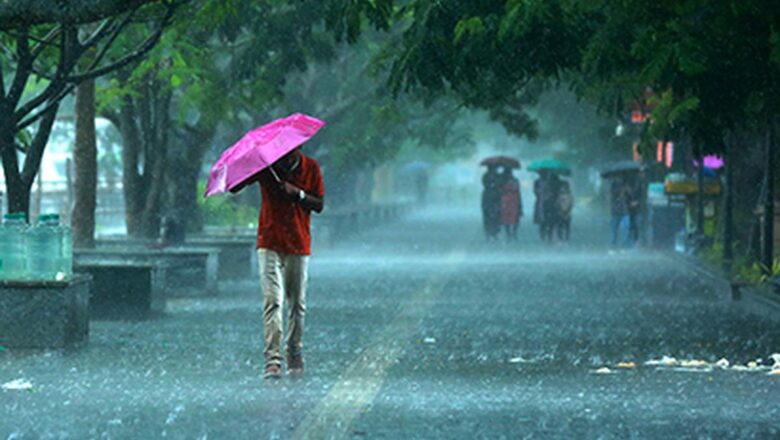
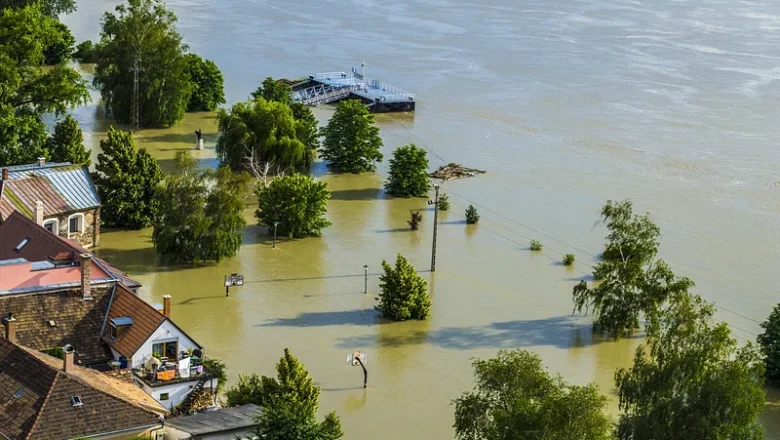
Enormous floods have struck South Sudan, affecting over 700,000 people as record water levels from Lake Victoria surge through the Nile. Communities in the Sudd region, already displaced by previous floods, now face the possibility of permanent displacement due to climate change. The Sudd, one of the world’s largest wetlands, experiences unique flooding patterns where water cannot easily drain back into the Nile, lingering for long periods. The recent floods, intensified by rising water levels in Lake Victoria, have overwhelmed traditional coping mechanisms of local communities such as the Dinka, Nuer, Anyuak, and Shilluk. Herders, once able to move cattle to higher ground, and farmers who planted after seasonal floods, are now struggling to adapt as the floodwaters persist. The prot...
Study Reveals Desertification and Soil Erosion Worsening Floods in North Africa

Study Reveals Desertification and Soil Erosion Worsening Floods in North Africa

Breaking News, Climate Actions
A new study by researchers from USC Viterbi School of Engineering and the University of Paris Cité has revealed that soil erosion caused by desertification is intensifying the impact of floods in coastal areas of North Africa and the Middle East. The research, published in Nature Communications, focused on the deadly 2023 floods in Derna, Libya, which resulted in over 11,300 deaths. The study suggests that increased soil erosion played a critical role in worsening the effects of these unusual desert floods. The researchers found that desertification, combined with rising seawater temperatures in the Eastern Mediterranean due to global warming, has led to intensified droughts and more frequent coastal rainstorms. These conditions are increasing soil erosion, leading to dangerous mudflows...
IMD Issues Severe Weather Alert: Harsh Winter Expected Due to La Niña

IMD Issues Severe Weather Alert: Harsh Winter Expected Due to La Niña

Breaking News, Climate Actions
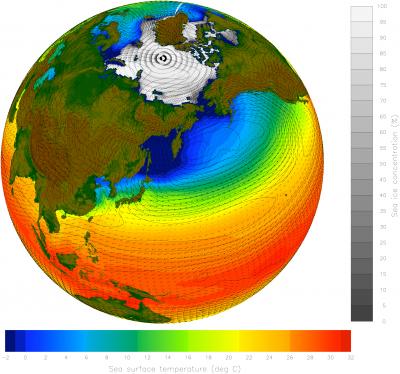
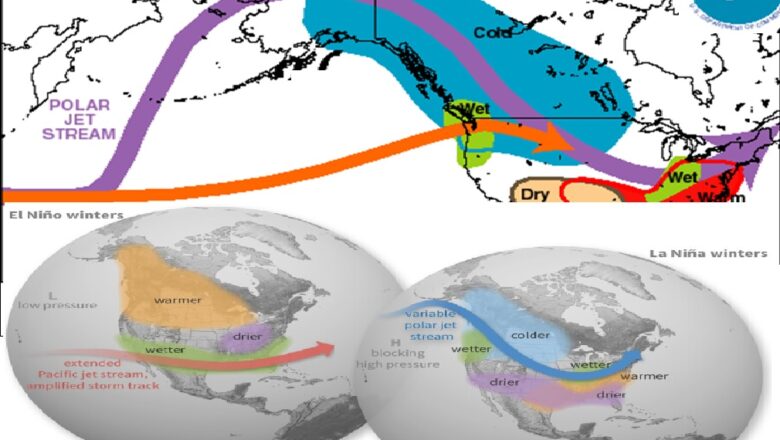
The India Meteorological Department (IMD) has issued a severe weather alert, forecasting an unusually harsh winter across India, largely due to the onset of the La Niña phenomenon. This climate pattern, characterized by cooler-than-average sea surface temperatures in the equatorial Pacific Ocean, is expected to cause a significant drop in temperatures and increased rainfall throughout the country. In an announcement made on September 2, 2024, the IMD confirmed that the country is likely to experience one of its coldest winters in recent years due to La Niña. This phenomenon, which typically begins between April and June, is driven by strong easterly winds that push warm ocean waters westward, resulting in a cooling effect on the ocean's surface. Impact on Northern India Northern s...
Study Warns of Drastic Climate Extremes for Three-Quarters of Global Population Without Emissions Cuts

Study Warns of Drastic Climate Extremes for Three-Quarters of Global Population Without Emissions Cuts

Breaking News, Climate Actions, Environment
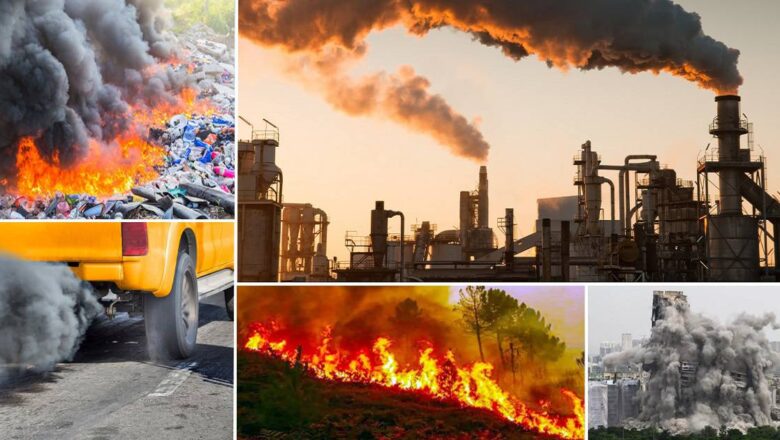
A new study has issued a stark warning about the impending global climate crisis, projecting that nearly 70% of the world’s population could face significant and rapid changes in extreme temperatures and rainfall over the next two decades if greenhouse gas emissions are not drastically reduced. This groundbreaking research was led by the CICERO Center for International Climate Research and supported by the University of Reading. The study, published in Nature Geoscience, reveals that up to 20% of the population could still face extreme weather risks even if emissions are reduced enough to meet the goals of the Paris Agreement. Without substantial action, however, this figure could soar to 70%, underscoring the urgent need for more aggressive climate mitigation strategies. Impact of R...
Summer 2024 Becomes Hottest on Record, Likely Making 2024 Warmest Year Ever

Summer 2024 Becomes Hottest on Record, Likely Making 2024 Warmest Year Ever

Breaking News, Climate Actions, Environment
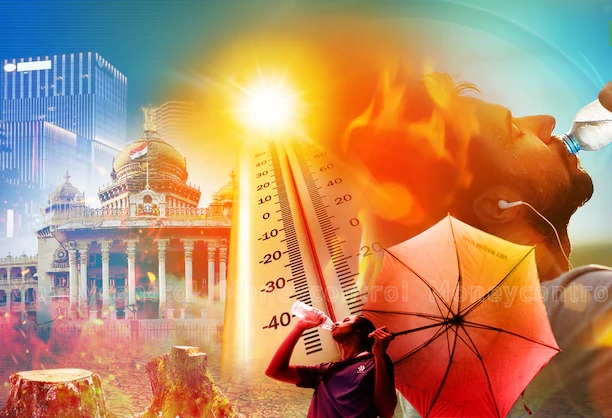
Summer 2024 has officially sweltered its way to becoming the hottest on record, according to the European climate service Copernicus. This milestone adds to the mounting evidence that 2024 is on track to be the warmest year ever measured by humanity. While a temporary La Niña event a cooling phenomenon affecting parts of the central Pacific is forecast for the last four months of the year, it’s unlikely to offset the unprecedented heat experienced throughout the year. Despite this cooling effect, the trend of extreme warmth is expected to continue, making it increasingly probable that 2024 will surpass all previous annual temperature records. Carlo Buontempo, a climate scientist at Copernicus, noted that while part of the record heat from last year was driven by the El Niño event, th...
New Canadian Climate Tracker Highlights Soaring Costs of Climate Disasters, Calls for Proactive Adaptation

New Canadian Climate Tracker Highlights Soaring Costs of Climate Disasters, Calls for Proactive Adaptation

Breaking News, Climate Actions, Environment
Attribution science has become increasingly precise in linking extreme weather events to climate change, and a new tracker from the Canadian Climate Institute (CCI) is emphasizing the urgent need for proactive measures to limit the damage caused by climate-fueled disasters. The online tool provides real-time data on the financial toll of wildfires, floods, and droughts across the country, using media reports to paint a stark picture of the growing costs. This summer alone, Toronto and Jasper, separated by 3,400 kilometers, faced significant climate-related losses. According to the Toronto Star, a single afternoon of heavy rain in Toronto on July 16 could result in damages exceeding C$1 billion. Meanwhile, as reported by CBC and confirmed by CCI’s tracker, the wildfire that ravaged Jaspe...
New Study Reveals Severe Weather Costs Global Economy Billions Annually

New Study Reveals Severe Weather Costs Global Economy Billions Annually

Breaking News, Climate Actions
A recent analysis of weather and economic data reveals that severe weather events, driven by climate change, are costing the global economy billions of dollars each year. The research highlights the growing financial impact of extreme heat, droughts, and a reduction in mild weather days, all of which are hindering economic growth. Berkay Akyapi, Ph.D., co-author of the study and a professor of business at the University of Florida, emphasized the importance of proactive adaptation. “If we don’t do anything to respond to these climate shocks, we are hurting the economy,” he said. The study suggests that extreme heat and severe droughts can reduce a country's GDP by about 0.2%, a figure that may seem small but equates to billions of dollars globally. The research, conducted by Akyapi a...
Alarming Climate Shift in India: Study Reveals Swapping Trends in Weather Patterns

Alarming Climate Shift in India: Study Reveals Swapping Trends in Weather Patterns

Breaking News, Climate Actions
A groundbreaking study by IPE-Global and Esri India has revealed a worrying trend in India's climate, with traditionally flood-prone areas now experiencing droughts and drought-affected regions witnessing floods. This "swapping trend" is reshaping the nation's climate risk landscape, putting millions of lives and livelihoods in jeopardy. The research, which analyzed climate data from 1973 to 2023, found that over 85% of India's districts are vulnerable to extreme weather events, with nearly 45% showing evidence of this dramatic shift. The study reported a four-fold increase in the frequency, intensity, and unpredictability of climate extremes over recent decades, with the past 10 years seeing a five-fold surge. Abinash Mohanty, Head of Climate Change and Sustainability Practice at IP...
Climate Crisis Linked to Surge in Intimate Partner Violence in Sub-Saharan Africa: UN Report

Climate Crisis Linked to Surge in Intimate Partner Violence in Sub-Saharan Africa: UN Report

Breaking News, Climate Actions, Environment
A recent report from the UN's sexual and reproductive health agency, UNFPA, highlights a deeply troubling connection between climate change and intimate partner violence in sub-Saharan Africa. The findings suggest that tens of millions of women and girls in the region will face catastrophic levels of violence if the world fails to curb rising global temperatures. According to projections, the number of individuals experiencing intimate partner violence could nearly triple by 2060, reaching 140 million in the worst-case scenario of unchecked emissions and stalled socioeconomic development. The report, Climate Change Impacts and Intimate Partner Violence in Sub-Saharan Africa, was produced by UNFPA in collaboration with the International Institute for Applied Systems Analysis (IIASA) and ...
New Study Reveals El Niño-Southern Oscillation Linked to Increasing Heat Waves in Southwest India

New Study Reveals El Niño-Southern Oscillation Linked to Increasing Heat Waves in Southwest India

Breaking News, Climate Actions
A recent study has identified the El Niño-Southern Oscillation (ENSO) as a significant contributor to the rising frequency and intensity of heat waves in southwest India. ENSO, characterized by periodic warming and cooling of sea surface temperatures and atmospheric pressure shifts in the tropical eastern Pacific Ocean, is now recognized as a major player in exacerbating heat conditions in the region. The research highlights that while ENSO is a key factor, other major climatic patterns also play roles in influencing the heat waves affecting southwest India. This finding comes amid a troubling trend of increasingly severe heat waves not only in South Asia but globally. Historical Context and Recent Trends The study is set against a backdrop of heightened concern over climate chang...