Wednesday, March 18News That Matters

Climate Actions

Harnessing AI to Predict and Mitigate Climate-Induced Displacement: Study Reveals

Harnessing AI to Predict and Mitigate Climate-Induced Displacement: Study Reveals

Breaking News, Climate Actions
As the planet faces escalating climate change, extreme weather events like floods, storms, and landslides are forcing millions to abandon their homes and livelihoods. Understanding and anticipating these disaster-driven displacements has become more crucial than ever. To tackle this challenge, researchers are turning to a groundbreaking tool: machine learning. This sophisticated form of artificial intelligence (AI) is not just predicting displacement but also holds the potential to mitigate its impacts, transforming how we respond to the growing crisis. What Drives Forced Displacements? When we think of climate change, images of melting ice caps and drought-stricken lands often come to mind. Yet, another pressing consequence is the forced displacement of human populations due to inte...

How Climate Change Impacing Infrasturcture: Heatwaves Cause Major Problems for U.S. Infrastructure Study reveals

How Climate Change Impacing Infrasturcture: Heatwaves Cause Major Problems for U.S. Infrastructure Study reveals

Breaking News, Climate Actions
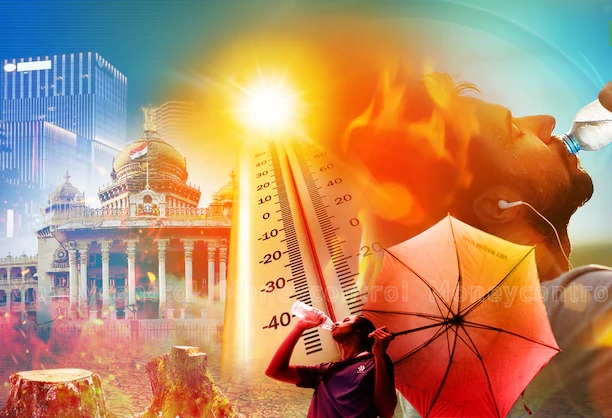
New York's Third Avenue Bridge got stuck for hours when its metal expanded in the heat, preventing it from closing. Roads have buckled on hot days in several states, including Washington and Wisconsin. Amtrak warned passengers about heat-related problems, leading to a daylong outage between New York and New Jersey. High temperatures pose a growing risk to power lines and rails, causing delays for the train system. The worsening heat is hitting an already troubled U.S. infrastructure system. The American Society of Civil Engineers gave U.S. infrastructure a grade of C- in its 2021 report. Despite some improvements, such as a reduction in the number of poor-condition bridges from over 12% to 7.5% in a decade, many bridges remain old and hard to maintain. Forty percent of the road system i...
Rapid Glacier Melt Threatens Global Freshwater Supplies and Ecosystems

Rapid Glacier Melt Threatens Global Freshwater Supplies and Ecosystems

Breaking News, Climate Actions
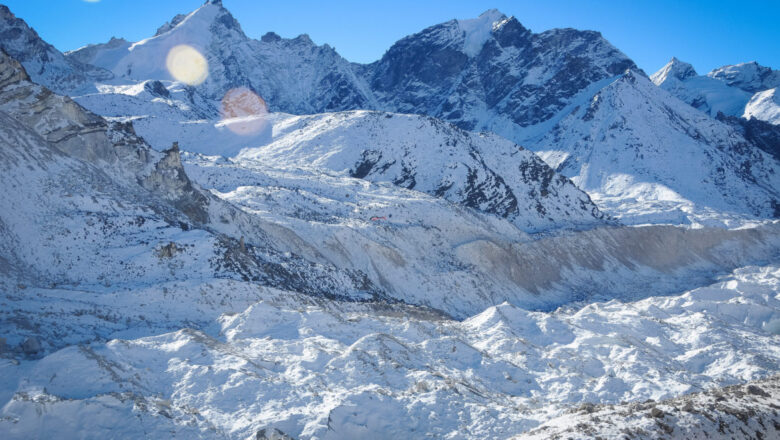
Roughly one out of every four people on Earth depends on freshwater supplied by glacial regions, which cover 10 percent of our planet's surface. However, this crucial resource is in crisis. New research highlights the alarming pace at which these frozen ecosystems are changing. A study conducted by an international team of scientists reveals that glaciers in the tropics are melting faster than previously forecasted, retreating to sizes researchers did not expect to see for many years. "This shocked us, frankly," said Andrew Gorin, a paleoclimatologist at the University of California, Berkeley, speaking to New Scientist. "I think this is clear evidence that at least one region in the world has now departed the hospitable climatic conditions that have fostered the development of human civ...
Cocaine in Brazilian Sharpnose Sharks: Alarming Levels Found in South America’s Coastal Waters

Cocaine in Brazilian Sharpnose Sharks: Alarming Levels Found in South America’s Coastal Waters

Breaking News, Climate Actions
In a surprising and concerning discovery, researchers in Brazil have found significant levels of cocaine and its metabolites in the system of Brazilian sharpnose sharks (Rhizoprionodon lalandii) swimming in South America's coastal waters. This finding, spearheaded by environmental scientist Gabriel de Farias Araujo from the Oswaldo Cruz Institute, underscores the pervasive issue of pharmaceutical pollution affecting marine life. The research team tested 13 juvenile and young adult Brazilian sharpnose sharks, finding high concentrations of cocaine in all of them. Additionally, the drug's main metabolite, benzoylecgonine, was present in all but one shark. These findings are particularly alarming given that these predators play a crucial role in the marine food chain. While Hollywood mi...
Cooling Urban Heat Islands: New Study Highlights the Role of Surrounding Countryside

Cooling Urban Heat Islands: New Study Highlights the Role of Surrounding Countryside

Breaking News, Climate Actions
Scientists at the University of Surrey's Global Centre for Clean Air Research (GCARE) and Southeast University (China) have discovered that cooling "urban heat islands" may depend significantly on the surrounding rural areas. The study, which analyzed 20 years of data, reveals that rural regions can effectively reduce city temperatures, especially when the rural ring around a city extends for at least half the city's diameter. Urban heat islands, characterized by significantly higher temperatures in city centers compared to their rural surroundings, are a growing concern as global temperatures rise. Traditional approaches to mitigate these effects have focused on integrating green spaces, wetlands, and waterways within urban areas. However, the scarcity of urban land makes these measure...
Researchers Develop Advanced AI Model for Accurate Typhoon Prediction

Researchers Develop Advanced AI Model for Accurate Typhoon Prediction

Breaking News, Climate Actions, Idea & Innovations
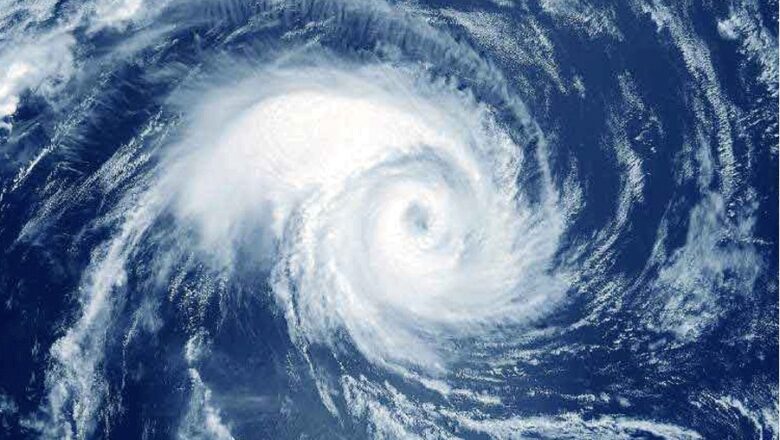
In a significant advancement for climate science, a team of researchers from the Department of Civil, Urban, Earth, and Environmental Engineering at the Ulsan National Institute of Science and Technology (UNIST), led by Professor Jungho Im, has developed a pioneering deep learning-based model for predicting tropical cyclones (TCs). Their findings have been published in GIscience & Remote Sensing and iScience in March and May 2024, respectively. The newly developed Hybrid-Convolutional Neural Networks (Hybrid-CNN) model integrates real-time geostationary weather satellite data and numerical prediction model outputs to forecast TC intensity with lead times of 24, 48, and 72 hours. This approach offers a significant improvement over traditional methods, which often suffer from lengthy ...
Alarming Erosion Threatens Gujarat’s Coastline Impacting Over a Million People

Alarming Erosion Threatens Gujarat’s Coastline Impacting Over a Million People

Breaking News, Climate Actions
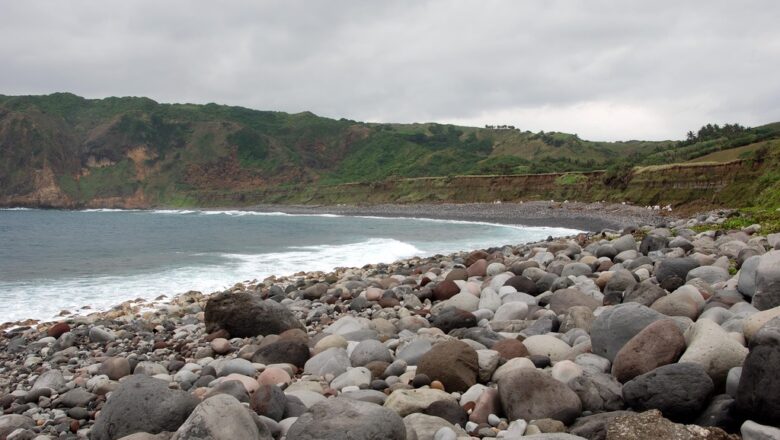
A comprehensive 40-year study has revealed a distressing trend of rapid coastal erosion along Gujarat's once stable shores. From the Gulf of Khambhat to the Gulf of Kutch and from the Saurashtra coast to the South Gujarat coast, the state's coastline is vanishing at an alarming rate. The study, conducted by researchers at the Bhaskaracharya National Institute for Space Applications and Geoinformatics (BISAG-N), highlights significant erosion in 10 out of the 16 coastal districts, affecting nearly 45.8% of Gujarat's coastline and impacting around 549 villages, home to over a million people. Erosion Rates and Affected Areas The study found that districts like Ahmedabad, Surat, and Bharuch are witnessing erosion encroaching within 30 meters of the coast. A striking example is the Khambh...
Shenzhen’s Mangroves: A Beacon of Conservation Amidst Rapid Urbanization

Shenzhen’s Mangroves: A Beacon of Conservation Amidst Rapid Urbanization

Breaking News, Climate Actions, Environment
Each spring, as Shenzhen's mangroves burst into life, the region becomes a prime spot for birdwatchers observing the endangered black-faced spoonbill. Known as the "giant panda of birds," this species winters in Shenzhen Bay from October to April, preparing for its northbound migration. Shenzhen Bay, located in southern China and part of the Pearl River Delta expanding into Hong Kong, is a crucial stop-off point for migratory birds using the East Asian-Australasian flyway. The mangroves support over 200 species of birds and host 100,000 migratory birds each winter, drawing enthusiasts and scientists alike to witness these natural spectacles against the backdrop of one of China's most bustling urban settings. Amid the rapid urbanization that defines modern China, Shenzhen stands out n...
Climate Change Puts More Children at Risk by Excessive Heat Stress: Report

Climate Change Puts More Children at Risk by Excessive Heat Stress: Report

Breaking News, Climate Actions
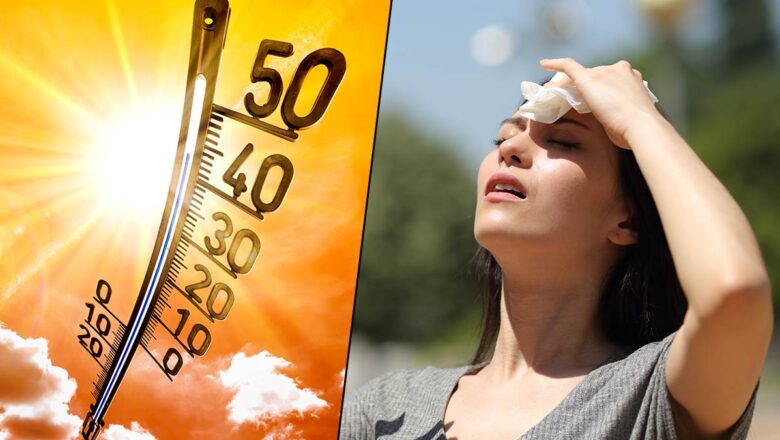
Rising global temperatures and increasing frequency of historic heat waves are putting more children at risk of heat stress each year. According to recent studies, heat stress caused by extreme temperatures can significantly affect the health and well-being of infants and young children. As climate change continues to drive up temperatures, more countries are facing hotter days more frequently, with greater intensity and for longer periods. Currently, a third of the world's children experience 4-5 heat waves annually. This exposure involves enduring temperatures over 35°C for 83.54 or more days per year, enduring heat waves lasting at least 4.7 days, or facing temperatures 2°C or more above the local 15-day average. By 2050, nearly every child in the world, around 2.2 billion children, ...
New Study Reveals Ancient Origins of LUCA Early Life on Earth

New Study Reveals Ancient Origins of LUCA Early Life on Earth

Breaking News, Climate Actions, Idea & Innovations
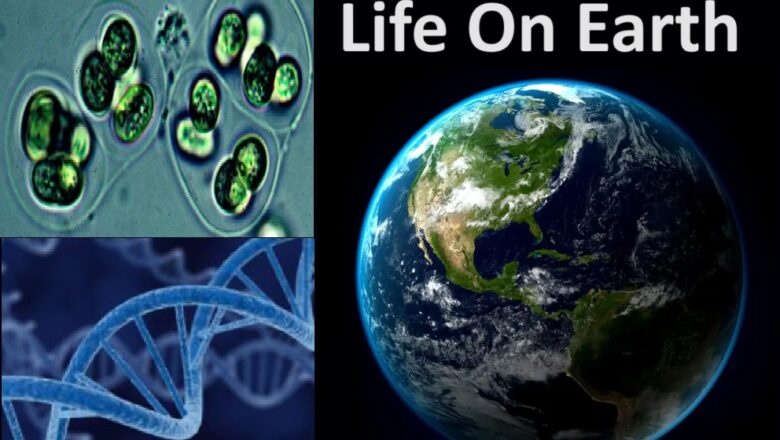
Once upon a time, Earth was a barren planet. That changed dramatically when, out of the chemistry present during its early history, something began to squirm processing matter to survive, reproduce, and thrive. The nature of that something, and when it first appeared, have puzzled humanity for as long as we have been able to ask, "What am I?" Now, a groundbreaking study has provided some answers, revealing that life emerged surprisingly early in Earth's history. By analyzing the genomes of organisms alive today, scientists have determined that the last universal common ancestor (LUCA) the first organism that spawned all current life on Earth emerged as early as 4.2 billion years ago. Given that Earth is around 4.5 billion years old, this suggests that life began when the planet was s...