Tuesday, March 3News That Matters

Disasters

Earthquake Hotspots: Why Suburban Areas Face Greater Devastation

Earthquake Hotspots: Why Suburban Areas Face Greater Devastation

Breaking News, Disasters, Fact Check, Learning & Developments
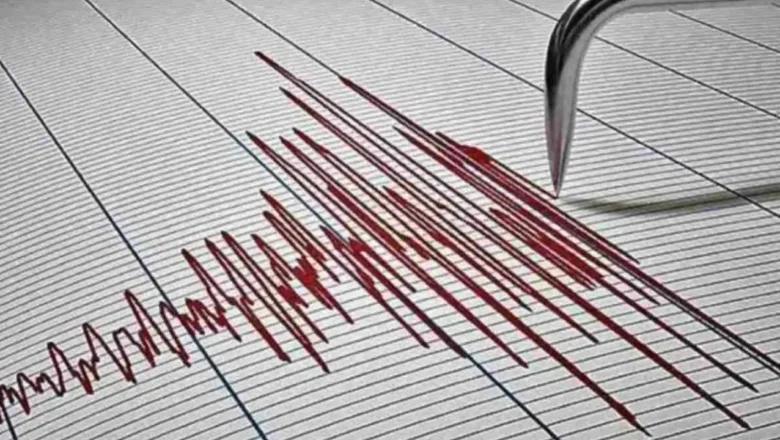
A vast majority of earthquakes occur within the infamous Ring of Fire, a seismic hotspot encircling the Pacific Ocean. Yet, when these earthquakes strike, the areas that experience the most intense shaking aren’t always the ones that suffer the worst destruction. Recent research has uncovered a hidden factor contributing to earthquake devastation: migration patterns and housing vulnerabilities. The 1999 Chi-Chi Earthquake Case Study Taiwan’s catastrophic Chi-Chi earthquake in 1999, which claimed over 2,400 lives, presented an unexpected pattern of destruction. Contrary to expectations, the worst damage was not in the bustling city centers but in the suburbs and outer regions. Similar trends have been observed in earthquakes that hit China, Chile, and Nepal, raising questions about wh...
Greenland Ice Sheet Cracking at Alarming Rate, Study Warns

Greenland Ice Sheet Cracking at Alarming Rate, Study Warns

Breaking News, Climate Actions, Disasters
Over the past five years, an astonishing 930 million cubic meters of crevasses have opened across Greenland’s ice sheet equivalent to a crack the size of the Great Pyramid of Giza forming every few days. This rapid increase in fracturing, particularly in the ice sheet’s fast-moving regions, could trigger a dangerous feedback loop that accelerates ice loss and raises global sea levels. A new multi-year study, led by researchers from the University of Florida and Durham University, provides the first large-scale analysis of Greenland’s glacier crevasses, spanning 2016 to 2021. The findings reveal significant variations across the ice sheet, with some areas especially in the west initially experiencing fewer crevasses, only to see an uptick in recent years. Overall, the study detected a sh...
Drought in U.S. Northeast Signals Nationwide Water Crisis Risk

Drought in U.S. Northeast Signals Nationwide Water Crisis Risk

Breaking News, Climate Actions, Disasters, Environment
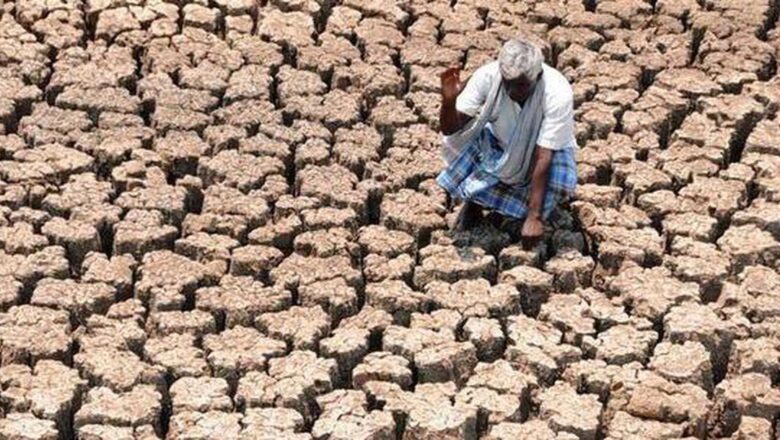
The severe drought that gripped the U.S. Northeast in 2024 shattered the notion that water scarcity is only a problem for the arid West. After an exceptionally hot and dry summer, cities like New York, Boston, and Philadelphia faced unprecedented water shortages, with wildfires breaking out in states rarely affected by them. By December, much of the region was in moderate to severe drought, prompting officials to urge water conservation. This crisis serves as a warning: as global temperatures rise, extreme droughts can impact any part of the country. Hotter, drier conditions increase evaporation, deplete groundwater, and heighten the risk of wildfires. Though the Northeast’s drought began easing in early 2025, its effects highlight the urgent need for long-term water management strategi...
India Needs Comprehensive Climate Justice Policy for Disaster Resilience

India Needs Comprehensive Climate Justice Policy for Disaster Resilience

Breaking News, Climate Actions, Disasters, Environment
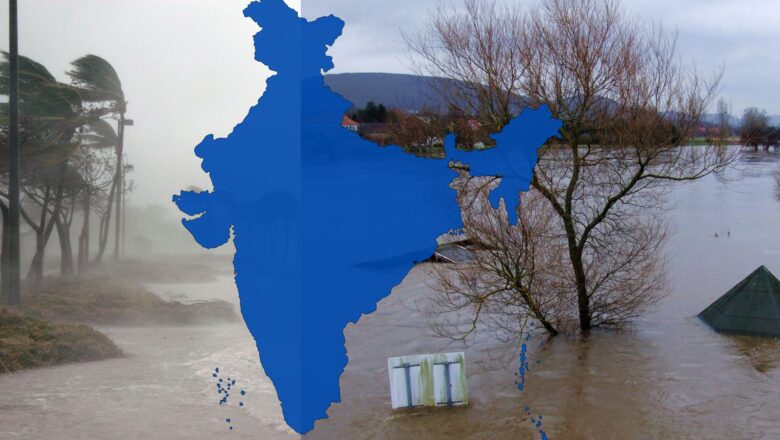
As climate change-driven disasters intensify across India, experts are calling for a comprehensive climate justice policy that integrates disaster risk reduction, resilience building, and adequate budgetary allocations. In 2024, extreme weather events impacted 255 out of 274 days, leading to 3,238 deaths, destruction of 2.35 lakh houses, and damage to 3.2 million hectares of land, according to the Centre for Science and Environment. Meanwhile, the Ministry of Home Affairs reported a 24% rise in disaster-related fatalities compared to the previous year. Key Policy Gaps & Recent Amendments The 2024 amendments to the Disaster Management Act, 2005, now include "disaster risk reduction", but effective implementation and budget oversight remain crucial. Urban Disaster Management ...
Kobe 1995 Deadly Earthquake Legacy Shapes Japan’s Disaster Preparedness

Kobe 1995 Deadly Earthquake Legacy Shapes Japan’s Disaster Preparedness

Breaking News, Disasters, Fact Check
On January 17, 1995, a devastating 6.9-magnitude earthquake struck Kobe, Japan, killing over 6,400 people and leaving a lasting impact on the country’s disaster preparedness. The Hanshin region bore the brunt of the destruction, with tens of thousands injured and hundreds of thousands displaced. The economic toll was staggering, reaching approximately $130 billion as infrastructure, homes, and businesses crumbled under the quake’s force. The disaster exposed critical weaknesses in urban planning and construction, prompting sweeping reforms. Stricter building codes, retrofitting programs, and advancements in early warning systems became the foundation of Japan’s strengthened approach to earthquake resilience. The tragedy also led to a surge in earthquake insurance coverage, bolstering fi...
Sikkim Flood Disaster Highlights Growing Climate Risks in the Himalayas

Sikkim Flood Disaster Highlights Growing Climate Risks in the Himalayas

Breaking News, Disasters, Fact Check, Learning & Developments
An international research team has concluded that the devastating flood disaster in Sikkim, India, in October 2023 was caused by the collapse of 14.7 million cubic meters of frozen moraine material into South Lhonak Lake, triggering a tsunami-like flood wave that reached up to 20 meters in height. This tragic event, which claimed at least 55 lives and caused widespread damage along the Teesta River, serves as a stark reminder of the escalating dangers posed by climate change in high mountain regions. A Massive Tsunami-like Wave On October 3, 2023, the collapse of frozen moraine material into the lake unleashed a catastrophic glacial lake outburst flood (GLOF), releasing about 50 million cubic meters of water—equivalent to the volume of 20,000 Olympic-sized swimming pools. The flood c...
Doomsday Rock? NASA Flags Asteroid That Might Strike Earth in 2032

Doomsday Rock? NASA Flags Asteroid That Might Strike Earth in 2032

Breaking News, Disasters, Space
NASA has identified an asteroid, 2024 YR4, that carries a 1-in-83 chance of colliding with Earth on December 22, 2032. If the asteroid, estimated to be 130 to 300 feet in diameter, strikes a densely populated area, it could unleash devastation equivalent to 8 megatons of TNT 500 times the power of the Hiroshima bomb. Discovered on December 27, 2024, by the NASA-funded ATLAS station in Chile, 2024 YR4 quickly appeared on NASA’s Sentry risk list, which tracks potentially hazardous space rocks. However, experts emphasize that early impact probabilities often change with further observations, and there is still a 99% chance the asteroid will miss Earth. NASA continues to monitor the asteroid’s trajectory closely, collecting more data to refine its impact risk. While past asteroids have b...
England Reports New Mpox Case, Risk Level Stays Low

England Reports New Mpox Case, Risk Level Stays Low

Breaking News, Disasters, Environment
Health officials in England have confirmed a new case of the mpox variant clade Ib, bringing the total to eight since October 2024. The UK Health Security Agency (UKHSA) reported that the case was detected in London and involved a traveler returning from Uganda, a region where the variant is spreading locally. Despite concerns over mpox’s links to a WHO-declared global health emergency, UKHSA maintains that the overall risk to the public remains low. Authorities note that imported cases are expected as outbreaks persist in parts of Africa, but no direct links have been found between this patient and previous cases in England. Health officials continue to monitor the situation while urging awareness but not alarm, as containment measures remain in place. From News Desk
Flooding After Wildfires LA Faces Growing Risk Amid Climate Change

Flooding After Wildfires LA Faces Growing Risk Amid Climate Change

Breaking News, Climate Actions, Disasters, Environment
In the aftermath of devastating urban wildfires, a rainstorm might seem like a welcome relief. However, fire-scorched landscapes are highly vulnerable to floods, which can bring further destruction. Los Angeles has experienced this repeatedly, from the 1933 Griffith Park Fire to the 2009 Station Fire in the San Gabriel Mountains and the 2018 Woolsey Fire in Malibu. Mitul Luhar, an expert in fluid dynamics and associate professor of aerospace, mechanical, civil, and environmental engineering at USC, is studying these risks. At the City of Los Angeles's Hydraulic Research Laboratory in Frogtown, Luhar and his team have developed a 1:120 scale hydraulic model of a section of the L.A. River to simulate flood scenarios. Luhar explains why floods often follow wildfires and what engineers c...
Climate Change Made LA Wildfires 35% More Likely, Study Finds

Climate Change Made LA Wildfires 35% More Likely, Study Finds

Breaking News, Disasters, Fact Check
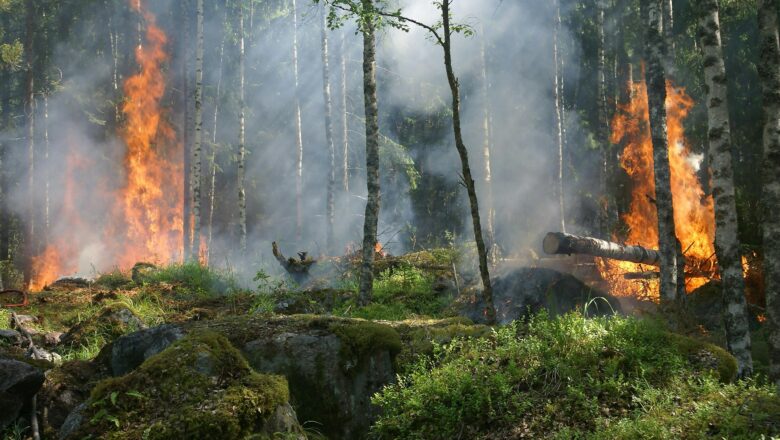
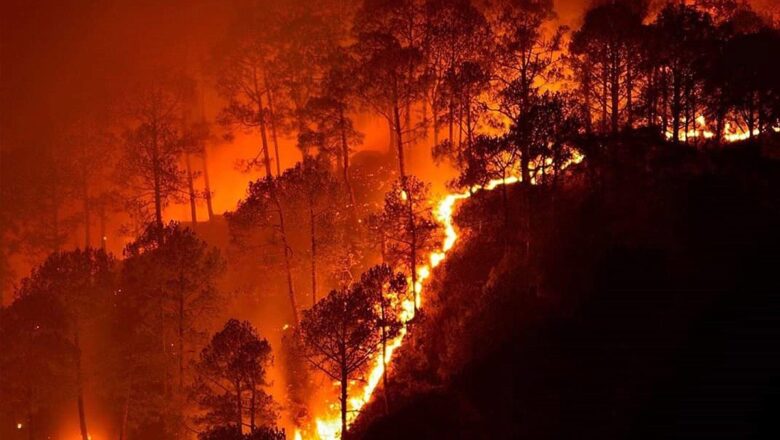
Los Angeles witnessed one of its worst wildfire outbreaks in January 2025, and according to a new World Weather Attribution (WWA) report, human-induced climate change played a key role in making the conditions 35% more likely. The fires, which began on January 7 in Palisades and Eaton counties, quickly spread, fueled by dry vegetation and strong Santa Ana winds. Over the following weeks, additional fires erupted in San Diego County, ultimately burning over 57,000 acres and causing 28 deaths. For the first time in history, global temperatures surpassed 1.5°C in 2024. The WWA report warns that if temperatures rise to 2.6°C by 2100, the likelihood of such wildfire-friendly conditions will increase by another 35%. Clair Barnes, a researcher at Imperial College London, emphasized how p...