Sunday, June 14News That Matters

Environment

Nepal Sagarmatha Sambaad Set to Tackle Climate Crisis Invite Global Leaders Amid Rising Environmental Concerns

Nepal Sagarmatha Sambaad Set to Tackle Climate Crisis Invite Global Leaders Amid Rising Environmental Concerns

Breaking News, Climate Actions, Environment
Nepal is gearing up to host its much-anticipated international dialogue, Sagarmatha Sambaad, from May 16 to 18 bringing together world leaders foreign ministers and experts to address the escalating climate crisis. The forum originally planned for 2020 but postponed due to the COVID-19 pandemic aims to spark crucial discussions on climate change climate justice, and its devastating impacts on mountainous nations. During a media briefing in Kathmandu, Amrit Bahadur Rai, Secretary at Nepal’s Ministry of Foreign Affairs, revealed that heads of state, foreign ministers, and ministers of forest and environment from various countries have been invited. While the list of attendees has yet to be finalized he confirmed that continuous dialogue is underway with different governments and internati...
New Global Tool and Finance Report Boosts Investment in Nature Based Climate Solutions

New Global Tool and Finance Report Boosts Investment in Nature Based Climate Solutions

Breaking News, Climate Actions, Environment
A newly launched Global Tool and Finance Report, developed by the University of Oxford’s Environmental Change Institute (ECI) and the Global Center on Adaptation (GCA), aims to scale investment in nature-based solutions (NbS) for climate-resilient infrastructure. Nature-based solutions play a crucial role in climate adaptation by strengthening resilience mitigating climate impacts, and supporting biodiversity. A UNEP report highlights that NbS influence up to 79% of Sustainable Development Goal targets. However, funding remains insufficient, with UNEP estimating that global investment in NbS needs to nearly triple to $542 billion by 2030 to meet critical biodiversity and climate targets. Finance Report: Unlocking Private Investment for NbS The Finance Report, led by researchers Ni...
2024 Becomes Hottest Year on Record as WMO Warns of Irreversible Climate Crisis

2024 Becomes Hottest Year on Record as WMO Warns of Irreversible Climate Crisis

Breaking News, Climate Actions, Environment
The World Meteorological Organization (WMO) has issued a stark warning in its latest report, confirming that 2024 was the hottest year ever recorded with global temperatures surpassing 1.5°C above pre-industrial levels for the first time. The findings highlight worsening climate conditions, including rising sea levels, record ocean warming, and extreme weather events leading to widespread displacement and economic losses. According to the report, the global mean temperature in 2024 was 1.55 ± 0.13°C above the 1850-1900 average, marking a devastating milestone in human-induced climate change. WMO Secretary-General Celeste Saulo described the findings as an “urgent warning sign” rather than a definitive failure of the Paris Agreement goals, emphasizing that every fraction of a degree of w...
CO2 Levels Hit 8,00,000 Year High 2024 Warmest Year on Record

CO2 Levels Hit 8,00,000 Year High 2024 Warmest Year on Record

Breaking News, Climate Actions, Environment
The State of Climate 2024 report by the World Meteorological Organization (WMO) has confirmed that carbon dioxide (CO2) levels are now at their highest in the past 8,00,000 years with measurements reaching 420 parts per million in 2023. Alongside CO2, other greenhouse gases like methane (CH4) and nitrous oxide (N2O) have also hit record levels intensifying global warming. Temperature Crosses 1.5°C Threshold The WMO’s analysis using six international datasets, found that 2024 became the first year where global temperatures exceeded the 1.5°C threshold annually a key limit set by the Paris Agreement. The global mean near-surface temperature was 1.55°C above pre-industrial levels driven by long-term warming and the early-year El Niño effect. Celeste Saulo, WMO Secretary-General said ...
142,400 Tonnes of CO2 Emissions Protect 140 Million Hectares and Raise $633 Million in Sustainable Investments

142,400 Tonnes of CO2 Emissions Protect 140 Million Hectares and Raise $633 Million in Sustainable Investments

Breaking News, Climate Actions, Environment
A new report from the World Economic Forum’s UpLink initiative has highlighted the significant environmental and economic contributions of early-stage innovators working on sustainability solutions. The Annual Impact Report 2025 revealed that UpLink-supported ventures have prevented 142,400 tonnes of carbon dioxide emissions over the past two years, equivalent to the annual emissions of more than 30,000 cars. In addition to reducing emissions, these ventures have played a crucial role in protecting 140 million hectares of terrestrial and aquatic ecosystems, an area nearly one-fifth the size of the Amazon rainforest. The report also stated that these initiatives treated 2.5 billion litres of hazardous wastewater and tracked 28 million tonnes of waste, contributing to global efforts in po...
India Records Earliest Heatwave and Warm Nights in 2025 Break 125 Year Old Records

India Records Earliest Heatwave and Warm Nights in 2025 Break 125 Year Old Records

Breaking News, Climate Actions, Disasters, Environment
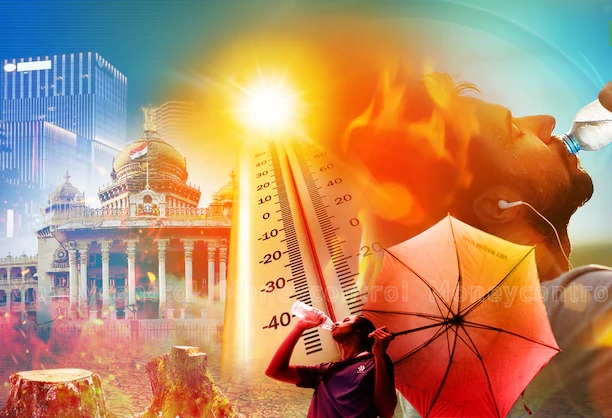
India has recorded its earliest heatwave and warm nights in 2025, marking a concerning trend in rising temperatures. On February 25, 2025, Goa and Maharashtra experienced the first heatwave of the year making it the first time a heatwave has been recorded during winter (January–February) according to the India Meteorological Department (IMD). IMD also confirmed that February 2025 was the hottest February in 125 years. The impact of extreme temperatures has been felt in Odisha and Jharkhand which recorded their earliest heatwaves in four years. On March 15 Odisha’s Boudh registered the highest temperature in India, reaching 43.6°C on March 16. Jharsuguda followed with 42°C, while Bolangir recorded 41.7°C. These extreme heat conditions arrived much earlier than in previous years indicatin...
Smoke from Wildland Urban Fires Poses Greater Health Risk Than Remote Wildfires

Smoke from Wildland Urban Fires Poses Greater Health Risk Than Remote Wildfires

Breaking News, Climate Actions, Environment
Smoke from fires that rage through wildland-urban interface (WUI) areas where human development meets wildland vegetation has a significantly higher health impact than smoke from wildfires in remote areas, according to a groundbreaking study published in Science Advances. The research, led by scientists at the U.S. National Science Foundation National Center for Atmospheric Research (NSF NCAR), reveals that emissions from WUI fires are about three times more likely to contribute to premature deaths annually than emissions from wildfires in general. The reason: WUI fires burn closer to populated areas, exposing more people to harmful pollutants like fine particulate matter and ground-level ozone. Rising Risk of WUI Fires The wildland-urban interface has been expanding globally, now...
Climate Change Pushing Amphibians Beyond their Tolerance  Heatwave Study Warns

Climate Change Pushing Amphibians Beyond their Tolerance Heatwave Study Warns

Breaking News, Climate Actions, Environment
A new study published in Nature has revealed that two per cent of the world’s amphibians are already experiencing temperatures beyond their tolerance limits raising alarms about the impact of global warming on these highly vulnerable species. Researchers studied 5,203 amphibian species and found that 104 are already exposed to overheating in shaded terrestrial conditions. The study warns that if global temperatures rise by 4°C, as many as 7.5 per cent (391 species) could be pushed beyond their physiological limits, significantly increasing the risk of extinction. Amphibians are ectothermic meaning they regulate body heat using external sources. As over 40 per cent of amphibian species are already under threat rising thermal extremes could accelerate their decline. Scientists analyzed...
Mediterranean Deepest Point Becomes Plastic Dump, Study Finds

Mediterranean Deepest Point Becomes Plastic Dump, Study Finds

Breaking News, Climate Actions, Environment, Learning & Developments
The Mediterranean Sea has turned into Europe deepest garbage dump with plastic waste found at a record depth of 5,112 meters in the Calypso Deep a trench within the Ionian Sea. Researchers discovered 167 pieces of trash mostly plastic, along with metal cans and paper cartons at the bottom, according to a new study published in Marine Pollution Bulletin. Plastic made up 88% of the waste collected from the seabed. Though no interactions between the litter and rare deep-sea life were observed, scientists warn that pollution at such depths poses a serious threat to marine ecosystems. A team from the University of Barcelona used the high-tech manned submarine Limiting Factor to explore the Calypso Deep. The sub covered 650 meters in 43 minutes, revealing an alarming accumulation of waste....
Small Quakes Big Shakes Mexico City Faces Unexpected Seismic Threat

Small Quakes Big Shakes Mexico City Faces Unexpected Seismic Threat

Breaking News, Climate Actions, Disasters, Environment
recent study has revealed that a series of small, shallow earthquakes in Mexico City in 2019 and 2023 caused unexpectedly strong ground shaking, raising concerns about the impact of future moderate-sized quakes on the city's buildings. The findings, published in the Bulletin of the Seismological Society of America, suggest that even moderate tremors could cause significant damage, depending on the region’s underlying geology. Researchers Miguel Jaimes and Gerardo Suárez from Universidad Nacional Autónoma de México analyzed potential damage scenarios for three key areas within the Mexico City basin, modeling earthquakes up to magnitude 5.5. Their simulations were based on past seismic events, including a 2023 quake in La Magdalena Contreras, the 2018 San Juan de Aragón earthquake, and ea...