Tuesday, August 4News That Matters

Environment

Climate Change Fuels Rising Urban Fire Risks Across 20 countries

Climate Change Fuels Rising Urban Fire Risks Across 20 countries

Breaking News, Climate Actions, Environment
A new study published in Nature Cities has revealed that climate change is intensifying the threat of urban fires worldwide, with cities facing a significant rise in fire incidents if global temperatures continue to climb. Fire Risk Increases with Rising Temperatures Researchers analyzed fire data and maximum temperatures from over 2,800 cities across 20 countries, covering 20% of the global population. The study found that if global warming exceeds 4°C, the world could witness: 300,000 fire-related deaths and over a million injuries by 2100. A 22.2% rise in outdoor fires and an 11.6% increase in vehicle fires. A 3.3% increase in vehicle fires and a 6.9% rise in outdoor fires for every 1°C rise in temperature. Building fires, however, may decline by 4.6% due to better f...

California Billion Dollar Fisheries Face Collapse as Ocean Heats Up climate change

California Billion Dollar Fisheries Face Collapse as Ocean Heats Up climate change

Breaking News, Climate Actions, Environment
In a dire warning for California fishing industry according to study the state’s most valuable marine species are on the brink of collapse due to climate change. Rising ocean temperatures, acidification and habitat loss threaten Dungeness crab, Pacific herring and red abalone, endangering fisheries worth hundreds of millions of dollars. The study conducted by UC Santa Cruz and UC Davis, found that several key species could face severe declines by 2100, with some already in crisis: Dungeness crab – A $45 million industry at risk as warming waters disrupt their lifecycle. Red abalone – Once a $44 million recreational fishery, it has been shut down since 2018 due to ocean heatwaves. Pacific herring – Stocks in San Francisco Bay have collapsed by 75%, pushing fishers out of busin...
Urban Expansion Drains 64.6 billion cubic Groundwater Reserves in Five Indian States

Urban Expansion Drains 64.6 billion cubic Groundwater Reserves in Five Indian States

Breaking News, Climate Actions, Environment, Fact Check
A groundbreaking hydrology model based study has established a direct link between rapid urbanisation and alarming decline in groundwater reserves across five Indian states. Published in the Hydrogeology Journal the research titled Detection and Socio-economic Attribution of Groundwater Depletion in India presents a stark warning about the scale of groundwater loss particularly in northern and northwestern India. According to the study led by Gautam Kunwar from the University of Texas Austin, India has lost approximately 64.6 billion cubic metres of groundwater over the past two decades. While irrigation remains a key driver of depletion, the study highlights that urbanisation and industrialisation are equally responsible for falling groundwater levels a factor that has often been overl...
Urbanisation Disappear Eight Dragonfly Species from Pune as 27 New Ones Discovered

Urbanisation Disappear Eight Dragonfly Species from Pune as 27 New Ones Discovered

Breaking News, Climate Actions, Environment
A recent study has revealed a dramatic shift in Pune’s dragonfly population, with eight species vanishing while 27 new species have been discovered. Conducted by researchers and citizen scientists, the study attributes the loss of local species to land-use changes, water pollution, shifting weather patterns, and rapid urbanisation. Published in the International Journal of Tropical Insect Science the research was led by scientists from Maharashtra Institute of Technology-World Peace University and conducted between 2019 and 2022 across 52 locations in Pune. The city, which falls within the Western Ghats and Deccan Peninsula biogeographic zones, is home to a rich diversity of odonates, the insect order that includes dragonflies and damselflies. Dragonflies as Environmental Indicators ...
Unplanned Urbanisation Fuels Rising Heat Managing Blue-Green Spaces Key to Mitigation

Unplanned Urbanisation Fuels Rising Heat Managing Blue-Green Spaces Key to Mitigation

Breaking News, Climate Actions, Environment
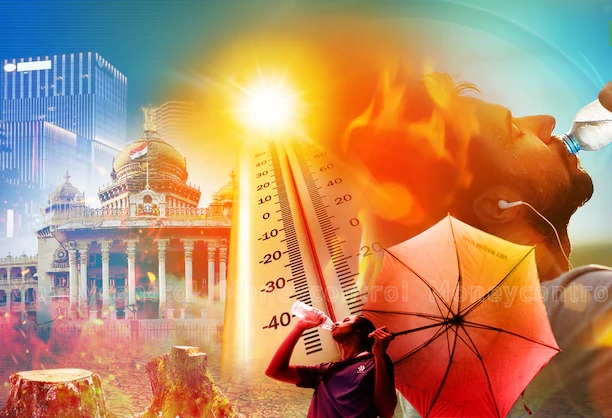
Urbanisation is coming at the cost of natural blue and green spaces leading to a surge in surface temperatures and exacerbating the Urban Heat Island (UHI) effect. Researchers warn that without sustainable urban planning or urban centres especially in developing nations like India will face hazardous heat stress, threatening both human health and local ecosystems. Urbanisation and Rising Temperatures The C(UN) estimates that by 2050, 68% of the global population will live in urban areas, with 90% of this growth concentrated in Asia and Africa. As a result, the rate of urban land expansion is already twice as fast as population growth, leading to a dramatic transformation of landscapes. Studies project that by the end of the 21st century, the Land Surface Temperature (LST) could ri...
Taranaki Drought Declared Medium-Scale Adverse Event as Farmers Struggle

Taranaki Drought Declared Medium-Scale Adverse Event as Farmers Struggle

Breaking News, Climate Actions, Environment
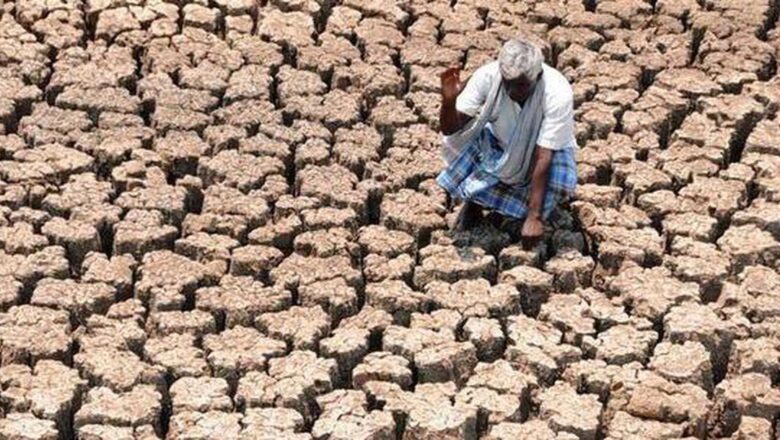
New Zealand’s Taranaki region has been officially classified as experiencing a medium-scale adverse event due to persistent drought conditions, Agriculture Minister Todd McClay announced. The extreme heat and lack of rainfall have severely impacted pasture growth, forcing many farmers to sell livestock early or rely on stored feed. "Conditions on the ground are becoming extremely difficult," McClay said. "Taranaki is experiencing persistent dry weather, and we recognize the toll this is taking on the farming community." In response, the government has allocated $30,000 to rural support groups providing direct aid to affected farmers. The Ministry for Primary Industries (MPI) is also monitoring conditions nationwide to determine if further intervention is needed. Rural Communities ...
Devastating Earthquake Strikes Nepal High Casualties Feared as Tremors Shake Himalayan Region

Devastating Earthquake Strikes Nepal High Casualties Feared as Tremors Shake Himalayan Region

Breaking News, Climate Actions, Disasters, Environment
Kathmandu: A powerful earthquake struck Nepal early Tuesday morning, sending shockwaves across the Himalayan region and triggering widespread destruction. The tremors, felt in neighboring India, China, and Bhutan, caused buildings to collapse, landslides to block key highways, and panic among millions. The full scale of the disaster is yet to be determined, but officials fear high casualties as rescue efforts intensify. According to seismologists, the quake was a result of the Indian tectonic plate pushing into the Eurasian plate at a rate of approximately 5 cm per year, a process that continuously builds stress beneath the Earth's surface. When this stress reaches a breaking point, it is released as a powerful seismic event. The Himalayas, being one of the most geologically active regi...
Texas Child Dies from Measles in First US Fatality in a Decade

Texas Child Dies from Measles in First US Fatality in a Decade

Breaking News, Climate Actions, Environment
A measles outbreak in West Texas has taken a tragic turn with the death of an unvaccinated child, marking the first measles-related fatality in the United States in ten years, state health officials reported Wednesday. The child, who succumbed overnight at a children's hospital, was among the more than 130 cases reported across Texas and eastern New Mexico. The outbreak has primarily affected children, with health experts linking its spread to a large under-vaccinated population in a rural Mennonite community. Texas health officials have warned of the disease’s severity, emphasizing its high hospitalization rate. A press conference with local and state health authorities is scheduled to provide updates and address community concerns. From News Desk
Heavy Snowfall Hits Himachal Higher Reaches IMD Predicts heavy Rain Snowfall

Heavy Snowfall Hits Himachal Higher Reaches IMD Predicts heavy Rain Snowfall

Breaking News, Climate Actions, Disasters, Environment
The higher-altitude regions of Himachal Pradesh have been blanketed in fresh snowfall, while widespread rainfall has drenched the state over the past 24 hours. The India Meteorological Department (IMD) has forecast continued snowfall in upper reaches and rain across most regions for the next 48 hours. According to IMD’s Senior Scientist Sandeep Kumar Sharma, Kullu received 22 mm of rain, while Manali witnessed 20 cm of snowfall. Other higher-altitude areas, including Lahaul-Spiti and Kinnaur, recorded nearly one to one and a half feet of snow overnight. The snowfall is expected to persist in districts like Chamba, Kangra, Kullu, Mandi, Sirmaur, Shimla, Lahaul-Spiti, and Kinnaur, with heavy rainfall likely in parts of Kangra. Daytime temperatures across Himachal Pradesh are currently ...
Climate Change Threatens Thames with Increased Algal Blooms Despite Phosphorus Reduction 80%

Climate Change Threatens Thames with Increased Algal Blooms Despite Phosphorus Reduction 80%

Breaking News, Climate Actions, Disasters, Environment
A new study has warned that climate change could fuel a rise in algal blooms in the River Thames, even though phosphorus levels an essential nutrient for algae have significantly decreased over the past four decades. Led by Helen Jarvie, a professor at the University of Waterloo, the research found that phosphorus loads in the Thames have dropped by 80% due to improved wastewater treatment and agricultural practices. Despite this progress, rising river temperatures driven by climate change are increasing the risk of both spring diatom blooms and summer cyanobacterial blooms. These algal blooms can harm aquatic ecosystems by suffocating marine life, depleting oxygen levels, and releasing potentially toxic cyanobacteria. Water Quality Management at Risk Jarvie emphasized that while ...