Saturday, February 21News That Matters

Environment

South Africa E-Waste Revolution Begins in North West Province

South Africa E-Waste Revolution Begins in North West Province

Breaking News, Climate Actions, Environment
In a decisive move to confront South Africa’s mounting electronic waste crisis, the Department of Forestry, Fisheries and the Environment (DFFE) has launched a groundbreaking community-based initiative in the North West Province. Announced during a Service Delivery Imbizo in Rustenburg, the initiative is a bold step toward building an environmentally responsible culture of electronic recycling. Understanding E-Waste: A Modern Toxic Threat Electronic waste, or e-waste, refers to discarded electrical or electronic devices. These include common items such as mobile phones, televisions, computers, printers, batteries, cables, microwaves, fridges, and even broken light bulbs. E-waste is one of the fastest-growing waste streams in the world due to rapid technological advancement and co...
How Indigenous Fire Practices Can Restore Ecosystems and Reduce Wildfire Risks in British Columbia

How Indigenous Fire Practices Can Restore Ecosystems and Reduce Wildfire Risks in British Columbia

Breaking News, Climate Actions, Environment
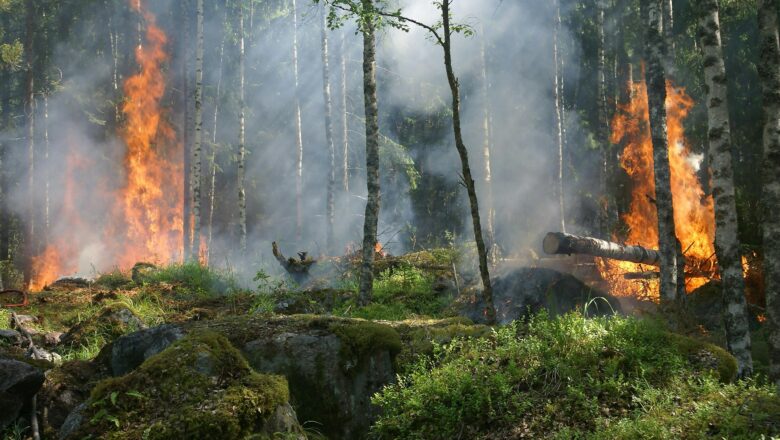
As wildfires intensify across British Columbia (BC) and much of the world, a growing body of research is pointing to a powerful, time-tested solution: fire itself. A new report from the POLIS Wildfire Resilience Project at the University of Victoria urges a fundamental shift in how society views and manages fire. Titled “Beneficial Fire in British Columbia: An Exploration of How Fire Can Contribute to Wildfire Resilience,” the report emphasizes that not all fire is destructive some fire is essential. This concept of beneficial fire marks a transformative approach to wildfire resilience. Beneficial fire refers to planned or naturally occurring wildland fires that improve ecosystem health without posing unacceptable risk to human communities. It includes cultural burning led by Indigenous...
Heat Rising, Risks Rising: Climate Change Threatens Global Maternal Health

Heat Rising, Risks Rising: Climate Change Threatens Global Maternal Health

Breaking News, Climate Actions, Environment, Fact Check
A new global analysis reveals that extreme heat, intensified by climate change, is endangering maternal health and birth outcomes around the world especially in vulnerable regions with limited access to healthcare. According to data from Climate Central, rising temperatures over the past five years have dramatically increased the number of high-risk heat days for pregnant women across the globe. The report assessed daily maximum temperatures between 2020 and 2024 in 247 countries, territories, and dependencies, as well as 940 major cities. It focused on what researchers call “pregnancy heat-risk days” those with maximum temperatures warmer than 95% of all historical temperatures at a given location. These conditions are closely associated with heightened risks of preterm birth and pregn...
Powerful Solar Flares Trigger Global Radio Blackouts, Signal Intensifying Sun Activity

Powerful Solar Flares Trigger Global Radio Blackouts, Signal Intensifying Sun Activity

Breaking News, Environment, Space
The sun erupted with two massive solar flares early Wednesday, including the strongest of 2025 so far an X2.7-class flare causing widespread shortwave radio blackouts across at least five continents. The event came just a day after NASA’s Solar Dynamics Observatory captured another major eruption, an X1.2-class flare, in a dramatic image. Solar flares are categorized by intensity, with X-class being the most powerful. Wednesday’s solar storm peaked at 4:25 a.m. ET, delivering a strong burst of plasma and charged particles into space. This flare followed an M5.3-class flare several hours earlier, further underscoring the heightened solar activity. According to NOAA’s Space Weather Prediction Center, these intense flares disrupted high-frequency radio communications in parts of Nor...
Heat Threatens Latin America Banana Industry, Puts Global Supply at Risk

Heat Threatens Latin America Banana Industry, Puts Global Supply at Risk

Breaking News, Climate Actions, Environment, Fact Check
Climate Pressures Shrinking Banana-Growing Zones Rising global temperatures are pushing Latin America’s banana-producing regions toward unsuitability, with new research warning that by 2080, up to 60% of current export-suitable areas could be lost without urgent climate action. Brazil’s Farmers Struggle in the Heat In Brazil’s northeastern state of Bahia, banana farmers are already facing severe impacts. Even with irrigation, plantations are showing signs of stress during prolonged heatwaves. In 2023, extreme heat reduced harvest output by 15%, and similar conditions are likely to return this year. Major Exporters Under Threat The most vulnerable areas include Colombia and Costa Rica, key banana exporters to Europe and North America. These regions are experiencing rising te...
Africa on Climate Frontline: Rising Heat, Floods, and Droughts Worsen Crisis, Threaten Development

Africa on Climate Frontline: Rising Heat, Floods, and Droughts Worsen Crisis, Threaten Development

Breaking News, Climate Actions, Environment
WMO's 2024 climate report warns of worsening weather extremes, mounting socio-economic toll, and urgent need for digital adaptation and resilience planning across Africa The climate emergency in Africa has reached a critical tipping point, with cascading disasters impacting lives, livelihoods, and the continent’s development prospects at an alarming pace. The State of the Climate in Africa 2024 report by the World Meteorological Organization (WMO) paints a grim portrait of a region buckling under the weight of extreme heat, deadly floods, prolonged droughts, and widespread humanitarian upheaval. From failed harvests to paralyzed power grids, and from flooded homes to growing water crises, climate change is no longer a future threat for Africa it is a destructive force in the pres...
Monsoon 2025 Advances Early: IMD Predicts Bay Entry by May 13, Kerala Onset by May 27

Monsoon 2025 Advances Early: IMD Predicts Bay Entry by May 13, Kerala Onset by May 27

Breaking News, Environment
New Delhi, May 13, 2025 — The Southwest Monsoon (SWM) is expected to advance into the South Andaman Sea, Nicobar Islands, and parts of the southeast Bay of Bengal by May 13, 2025, according to the latest update from the India Meteorological Department (IMD). This signals an early arrival of the monsoon season, ahead of its normal schedule. On May 10, the IMD had forecasted that the monsoon may begin over Kerala by May 27, which is four days earlier than the typical onset date of June 1. Earlier, on April 15, the agency had predicted that the 2025 monsoon season is likely to deliver above-normal to excess rainfall across the country. The expected early movement of the monsoon is being supported by the development of a low-pressure area in the Bay of Bengal. While this system may or ma...
15,000 Deaths from Wildfire Smoke Linked to Climate Change in U.S. Study Finds

15,000 Deaths from Wildfire Smoke Linked to Climate Change in U.S. Study Finds

Breaking News, Climate Actions, Environment
A landmark study has found that human-caused climate change led to 15,000 additional deaths from wildfire air pollution in the continental United States over a 15-year period ending in 2020. The research, led by Oregon State University and published in Nature Communications Earth & Environment, is the first to quantify how many people have died as a result of climate-driven increases in wildfire-related fine particulate pollution (PM2.5). The study reveals that 2020 alone accounted for over a third of these deaths, during which massive wildfires burned across California, Oregon, Colorado, Arizona, and the Pacific Northwest. These fires released vast quantities of fine particulate matter—PM2.5—tiny particles that can penetrate deep into the lungs and bloodstream, causing and worsenin...
India emission trading success: Gujarat scheme cuts air pollution by up to 30%

India emission trading success: Gujarat scheme cuts air pollution by up to 30%

Breaking News, Climate Actions, Environment
India has implemented a pioneering solution to address air pollution the world’s first particulate emission trading scheme (ETS). Initiated in Gujarat, this market-based program has led to a 20–30% reduction in emissions from coal-burning industries since its launch in 2019, while also reducing pollution control costs by over 10%. A new market for cleaner air The pilot scheme was developed through a collaboration between leading economists and the Gujarat Pollution Control Board. It functions on a cap-and-trade model, where industries are assigned pollution limits and can buy or sell emission permits based on their performance. This incentivizes companies to lower their emissions and save costs, creating a dynamic balance between environmental regulation and economic efficiency. S...
14 Dead in Gujarat as Thunderstorms, Winds, and Lightning Wreak Havoc

14 Dead in Gujarat as Thunderstorms, Winds, and Lightning Wreak Havoc

Breaking News, Disasters, Environment
Unseasonal thunderstorms with powerful winds and lightning have claimed at least 14 lives across Gujarat, leaving many injured and causing widespread destruction. The India Meteorological Department (IMD) has forecast continued thunderstorms with lightning and wind speeds reaching up to 50-60 km/h over the next few days. State-Wide Impact: Rainfall in 168 Talukas According to the State Emergency Operations Centre (SEOC), 168 out of Gujarat’s 253 talukas received unseasonal rainfall in the past 24 hours. Districts like Kheda, Gandhinagar, Mehsana, and Vadodara recorded 25 to 40 mm of rain, triggering sudden temperature drops and damage to infrastructure. Storm Claims Lives Across Multiple Districts The SEOC reported 13 deaths on Monday alone due to rain-related incidents, includ...