Saturday, February 21News That Matters

Environment

Urban Climate Crisis Fuelling Asthma Surge: Pulmonologists Warn on World Asthma Day 2025

Urban Climate Crisis Fuelling Asthma Surge: Pulmonologists Warn on World Asthma Day 2025

Breaking News, Climate Actions, Environment
World Asthma Day 2025, observed on May 6, highlights a growing health concern the increasing prevalence of asthma, especially in urban regions grappling with climate change and pollution. Doctors and pulmonologists are raising alarms about how worsening environmental conditions are directly contributing to this chronic respiratory illness. Urban Heat Islands and Respiratory Strain In cities, daily temperature fluctuations are becoming more extreme a phenomenon known as the urban heat island effect. During the day, concrete structures and lack of greenery trap heat, pushing temperatures above 30°C, only for the nights to cool down quickly. This irregular temperature swing severely affects human respiratory systems, particularly in densely populated zones where air circulation is p...
Canada Faces a Dual Climate Crisis: Wildfire Smoke and Extreme Heat Threaten Public Health

Canada Faces a Dual Climate Crisis: Wildfire Smoke and Extreme Heat Threaten Public Health

Breaking News, Climate Actions, Environment
As climate change intensifies, Canadians are increasingly being forced to cope with the combined threat of extreme heat and wildfire smoke two environmental hazards that not only overlap during the hottest months of the year, but also amplify each other’s impacts on health. From the devastating 2023 wildfire season to the deadly 2021 heat dome, recent events have shown that these climate risks are no longer isolated. Now, they’re occurring together more frequently, more intensely, and with serious health consequences. More Than Just Smoke or Heat: The Rising Danger of Combined Exposure While there’s robust scientific evidence linking wildfire smoke to hospitalizations for lung and heart conditions and heat waves to deadly strokes and cardiovascular stress most research has looked...
India’s Cooling Paradox: Toxic Air Slows Warming but Fuels a Public Health Crisis

India’s Cooling Paradox: Toxic Air Slows Warming but Fuels a Public Health Crisis

Breaking News, Environment, Fact Check, Thoughts & Talks
India has warmed at a slower rate than other parts of the Northern Hemisphere over the past several decades. While this might seem like good news amid the global climate crisis, scientists warn it's not a reason for comfort. The culprit behind this phenomenon is a thick blanket of aerosols tiny particles suspended in the air from industrial emissions, fossil fuel combustion, and crop burning. These aerosols reflect sunlight and create a temporary cooling effect, but they are also responsible for dangerous levels of air pollution, resulting in millions of deaths annually. The country now faces a dangerous trade-off between curbing toxic pollution and accelerating climate warming, with serious implications for public health, environmental sustainability, and economic development. A Climate ...
Korea Deadliest Wildfires: Climate Change, Old Forests, and a Deadly March Inferno

Korea Deadliest Wildfires: Climate Change, Old Forests, and a Deadly March Inferno

Breaking News, Climate Actions, Environment
In March 2025, southeastern South Korea faced its most destructive wildfire disaster in recorded history. More than 48,000 hectares were consumed by flames, 32 lives were lost, and nearly 37,000 people displaced driven by record-breaking weather conditions linked to human-induced climate change. Over a dozen wildfires erupted on March 22nd and 23rd, 2025, and rapidly spread due to scorching temperatures, dry conditions, and fierce winds. By the time the flames were contained, the fires had incinerated more than 48,000 hectares over 20,000 more than South Korea’s second-largest wildfire event in April 2022. Uiseong County suffered the worst, recording 26 of the 32 deaths, with Sancheong reporting four more. In total, 45 people were injured and over 5,000 buildings including homes, far...
Delhi Breathes Easier: CAQM Lifts GRAP Stage-I as Air Quality Improves

Delhi Breathes Easier: CAQM Lifts GRAP Stage-I as Air Quality Improves

Breaking News, Climate Actions, Environment
In a breath of fresh air for Delhi-NCR, the Commission for Air Quality Management (CAQM) has officially lifted Stage-I of the Graded Response Action Plan (GRAP) after the region’s Air Quality Index (AQI) showed a promising shift to the 'Moderate' category. The decision, rooted in favorable meteorological forecasts and sustained improvement in air conditions, marks a welcome pause in emergency pollution control measures that had been in effect since early April. The Commission for Air Quality Management (CAQM) on Thursday announced the revocation of Stage-I restrictions under the Graded Response Action Plan (GRAP) in Delhi and its adjoining National Capital Region (NCR). The decision follows a review by the Sub-Committee on GRAP, which took into account the latest AQI trends and weather ...
Monsoon Extremes Put Marine Life At Risk in Bay of Bengal: Warns Study

Monsoon Extremes Put Marine Life At Risk in Bay of Bengal: Warns Study

Breaking News, Climate Actions, Environment
A groundbreaking study has revealed that both extremely strong and weak monsoons have historically led to a 50% decline in food availability for marine life in the Bay of Bengal. Researchers warn that with climate change likely to worsen monsoon variability, marine productivity and millions of livelihoods are at serious risk. Monsoons: A Double-Edged Sword for Marine Ecosystems In the dynamic environment of the Bay of Bengal, monsoons play a central role in ocean health. But this new research, conducted by teams from the University of Arizona and IIT Gandhinagar and published in Nature Geoscience, finds that monsoon extremes are harmful, regardless of whether rainfall is too much or too little. The culprit is disrupted ocean mixing, the vertical movement of water that brings nutri...
Scorching Heat to Stormy Rains: India’s Weather Turns Extreme

Scorching Heat to Stormy Rains: India’s Weather Turns Extreme

Breaking News, Climate Actions, Environment
India is currently witnessing a dramatic clash of weather patterns intense heatwaves in northern states and heavy rainfall accompanied by thunderstorms and hailstorms in parts of the east and south. According to the India Meteorological Department (IMD) while regions like Delhi, Haryana, Punjab, and Rajasthan continue to sizzle, areas such as Odisha, Chhattisgarh, and the Northeast are battling heavy rains and hail. This complex weather situation is a result of a weak western disturbance, cyclonic circulations, and changing temperature gradients across the country. From the hilly terrains of North India to the vast plains, temperatures have soared, intensifying the heatwave gripping the region. However some relief might be in sight due to a weak western disturbance which could lead ...
Leaves of Western Ghats Trees Breaching Heat Limits, Study Warns of Climate Stress on Crops

Leaves of Western Ghats Trees Breaching Heat Limits, Study Warns of Climate Stress on Crops

Breaking News, Climate Actions, Environment
A new study reveals that leaves of several agroforestry and forest species in Karnataka's Western Ghats are regularly exposed to dangerously high temperatures, putting their health and the region’s economy at serious risk. Many species have already surpassed critical heat thresholds that impair photosynthesis and may cause irreversible damage.  Study Site in Karnataka Shows Early Signs of Thermal Stress Researchers conducted a 4.5-month-long study in 2023 at Hosagadde village near Sirsi, a region frequently experiencing temperatures above 40°C. They monitored 13 agroforestry crops and 4 native forest species, using T₅₀  the temperature at which a leaf's photosynthetic ability drops by 50% as a key stress marker. The findings show that many leaves are crossing this threshold far t...
Heatwave Grips India: IMD Issues Yellow Alerts Amid Rising Temperatures

Heatwave Grips India: IMD Issues Yellow Alerts Amid Rising Temperatures

Breaking News, Climate Actions, Environment
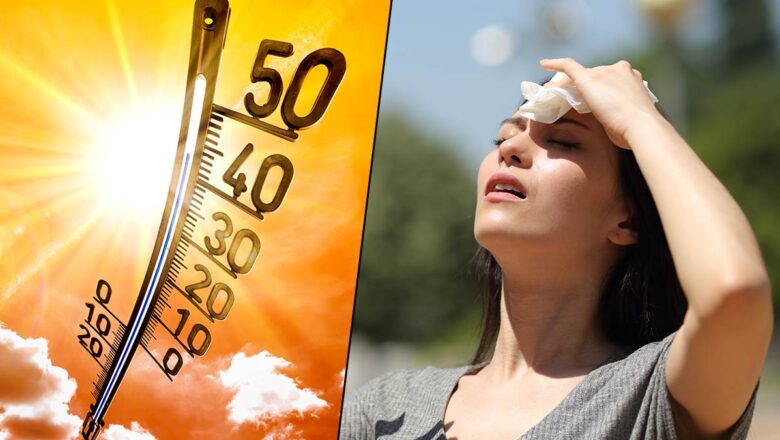
The India Meteorological Department (IMD) has issued fresh heatwave warnings for multiple parts of Northwest, Central, and Eastern India including Delhi NCR where temperatures are forecast to touch 43°C. A Western Disturbance may bring some rainfall to select northern areas, but intense heat continues to affect millions across the country. What Is a Heatwave and Why Is It Happening? A heatwave is a prolonged period of abnormally high temperatures, especially when compared to the usual climate of a region. According to the IMD, a heatwave is declared when the maximum temperature rises to 40°C or more in plains, 30°C in hilly areas, or when it is 4.5°C to 6.4°C above normal for two or more days. Causes of Heatwave High-pressure systems that trap hot air near the surface. ...
Severe Heatwave Sweeps Across India, IMD Sounds Alarm Bells

Severe Heatwave Sweeps Across India, IMD Sounds Alarm Bells

Breaking News, Climate Actions, Environment
Telangana & Northern States Critical Situation Under Scorching Heatwave IMD Sounds Orange Alert With mercury soaring past 44°C in many parts of the country India is in the grip of one of the harshest heatwaves this summer. Telangana, Delhi, Uttar Pradesh, and other states face intense heat, prompting the India Meteorological Department (IMD) to issue critical weather alerts and public health warnings. In a blazing turn of events a brutal heatwave has swept across Telangana and several other Indian states, pushing temperatures to dangerous highs. The IMD has issued orange and yellow alerts in multiple regions warning residents to brace for extreme heat and take all necessary precautions. Telangana is among the hardest-hit with Nirmal recording 44.5°C the state highest so far this ...