Monday, March 16News That Matters

Fact Check

Sea Level Could Rise Up to 1.9 Meters by 2100 if Emissions Continue

Sea Level Could Rise Up to 1.9 Meters by 2100 if Emissions Continue

Breaking News, Climate Actions, Environment, Fact Check
A new study warns that global sea levels could rise as much as 1.9 meters by 2100 if carbon emissions remain unchecked 90 centimeters higher than the latest estimates by the UN’s Intergovernmental Panel on Climate Change (IPCC). The research, conducted by scientists at Nanyang Technological University (NTU) in Singapore and Delft University of Technology (TU Delft) in the Netherlands, introduces a more accurate projection method that accounts for extreme climate scenarios. Published in Earth Future, the study highlights that traditional sea-level rise estimates vary widely due to uncertainties in climate models. While most models include well-understood factors like glacier melt, they struggle to predict less certain events such as sudden ice shelf collapse. To address this, the researc...
Banana Exports at Risk as Climate Change Threatens Key Growing Regions

Banana Exports at Risk as Climate Change Threatens Key Growing Regions

Breaking News, Climate Actions, Fact Check
A new study warns that rising temperatures caused by climate change could make banana farming uneconomical in many parts of Latin America and the Caribbean by 2080. The research published in Nature Food by the University of Exeter, highlights how climate shifts will shrink the best areas for banana cultivation while exposing more farm workers to extreme heat. Bananas valued at $11 billion annually, are a crucial export crop for many economies. However the study projects that 60% of current banana-producing regions will struggle to sustain production in the coming decades without urgent intervention. Socioeconomic factors such as labor availability and infrastructure also present major barriers to adapting banana farming to climate change. Since banana production is concentrated in dense...
Urban Expansion Drains 64.6 billion cubic Groundwater Reserves in Five Indian States

Urban Expansion Drains 64.6 billion cubic Groundwater Reserves in Five Indian States

Breaking News, Climate Actions, Environment, Fact Check
A groundbreaking hydrology model based study has established a direct link between rapid urbanisation and alarming decline in groundwater reserves across five Indian states. Published in the Hydrogeology Journal the research titled Detection and Socio-economic Attribution of Groundwater Depletion in India presents a stark warning about the scale of groundwater loss particularly in northern and northwestern India. According to the study led by Gautam Kunwar from the University of Texas Austin, India has lost approximately 64.6 billion cubic metres of groundwater over the past two decades. While irrigation remains a key driver of depletion, the study highlights that urbanisation and industrialisation are equally responsible for falling groundwater levels a factor that has often been overl...
Antarctic Ice Melt Slows World Strongest Ocean Current Raising Climate Alarm

Antarctic Ice Melt Slows World Strongest Ocean Current Raising Climate Alarm

Breaking News, Climate Actions, Fact Check
The Antarctic Circumpolar Current (ACC) world's strongest ocean current now slowing down due to unchecked melting of the Antarctic ice sheet. This powerful current flows from west to east around Antarctica plays a crucial role in regulating global climate and ocean circulation. A team of researchers from the University of Melbourne analyzed high resolution ocean and sea ice simulations to assess how changing temperature, salinity and wind conditions are affecting ocean currents. Their findings published in Environmental Research Letters suggest that the influx of freshwater from melting ice is significantly weakening the ACC. Associate Professor Bishakhdatta Gayen said "The ocean is extremely complex and finely balanced, If this current ‘engine’ breaks down there could be severe cons...
Mathare Flood Survivors Struggle to Rebuild Amid Climate and Housing Crisis

Mathare Flood Survivors Struggle to Rebuild Amid Climate and Housing Crisis

Breaking News, Climate Actions, Fact Check
In the shadow of Nairobi’s skyline Mathare one of Kenya’s largest informal settlements bears the deep scars of nature’s wrath. The March-to-May rainy season of 2024 brought devastating floods that swept through the community, destroying homes, displacing thousands, and claiming lives. On April 24, floodwaters surged through Mathare, leaving more than 7,000 people displaced, according to a report by Save the Children. A month later, families were still grappling with the scale of destruction. Doreen Achieng, a mother of four, recalls how water seeped into her house overnight. Used to occasional flooding, she began mopping until she realized the water wasn’t stopping. Within hours, it had risen three meters, trapping her family inside. “We were stuck in the water, but the men came t...
Women in Least Developed Nations Struggle for Voice in Climate Talks

Women in Least Developed Nations Struggle for Voice in Climate Talks

Breaking News, Climate Actions, Fact Check, Thoughts & Talks
A recent study has revealed that women from the world’s least developed countries (LDCs) face significant barriers to participating in global climate negotiations. Conducted by the International Institute for Environment and Development (IIED), the research highlights the gender imbalance in United Nations Framework Convention on Climate Change (UNFCCC) discussions, particularly among delegates from the 45 LDCs. Since 2008, women have made up only one in three UNFCCC delegates, with just 10% serving as heads of delegation. The study, which included surveys and case studies from Rwanda, Mozambique, and Sierra Leone, found that cultural norms, restrictive laws, and institutional barriers limit women’s roles in climate talks. Limited access to education, training, financial resources, and ...
Study Links Extreme Weather to Rising Power Outages Across U.S. Frequently

Study Links Extreme Weather to Rising Power Outages Across U.S. Frequently

Breaking News, Climate Actions, Fact Check
A new study published in PLOS Climate reveals that power outages are becoming increasingly frequent alongside extreme weather events in the U.S., highlighting regional differences in outage causes and the urgent need for preparedness. Researchers analyzed county-level data from 2018 to 2020 and found that 73% of counties experienced at least one day where a severe weather event coincided with a power outage. In 54% of counties, two simultaneous weather hazards such as hurricanes and heavy rain occurred alongside outages, raising the risk of widespread disruption. Hurricanes were the leading cause of outages, followed by snowstorms and heavy rain. However, the impact varied by region: heavy rain was a major factor in the Northeast and Gulf Coast, while extreme heat and power failures ...
Climate Change Alters Crocodile Behavior as Temperatures Rise

Climate Change Alters Crocodile Behavior as Temperatures Rise

Breaking News, Climate Actions, Environment, Fact Check
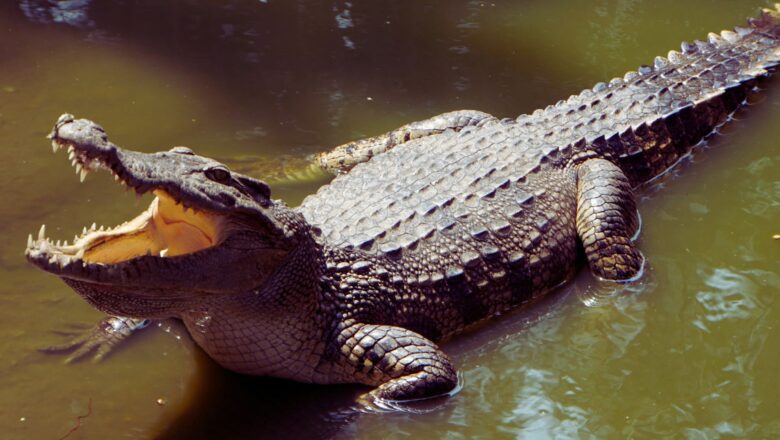
A new study has revealed that climate change is pushing estuarine crocodiles in Australia to their limits, forcing them to change their behavior in response to rising temperatures. The research, published in Current Biology, suggests that higher temperatures are reducing the reptiles’ diving ability and increasing their need to cool off. Crocodiles Struggling in the Heat Crocodiles are ectothermic (cold-blooded) animals, meaning they rely on external environments to regulate their body temperature. While they usually thrive in warm climates, rising global temperatures are pushing them closer to dangerous thermal limits. Researchers analyzed 203 crocodiles and found that since 2008, their highest body temperatures have risen by 0.55°C. The study noted that many of these crocodiles ...
Glaciers Lost 6.54 Trillion Tonnes of Ice Since 2000, Driving Sea-Level Rise

Glaciers Lost 6.54 Trillion Tonnes of Ice Since 2000, Driving Sea-Level Rise

Breaking News, Climate Actions, Environment, Fact Check
Between 2000 and 2023, glaciers lost an estimated 273 billion tonnes of ice annually, making them the second-largest contributor to rising sea levels, according to a new study published in Nature. The total global ice loss during this period reached 6.54 trillion tonnes, raising sea levels by 18 millimeters (mm) and contributing 0.75 mm of sea-level rise per year. The study revealed that ice loss accelerated by 36% in the second half of the study period (2012-2023) compared to the first half. Recent years saw the most severe losses, with the 2019-2023 period witnessing annual ice loss exceeding 400 gigatonnes per year (Gt/yr), including a record 548 Gt/yr in 2023. “This underscores the Intergovernmental Panel on Climate Change’s call for urgent action to cut greenhouse gas emissions ...
Carbon Levels Hit Record in 2024 as Climate Change Escalates

Carbon Levels Hit Record in 2024 as Climate Change Escalates

Breaking News, Climate Actions, Environment, Fact Check
Atmospheric carbon dioxide concentrations reached a new high of 422 parts per million in 2024, according to the European Union's Copernicus Climate Change Service (C3S). This milestone follows another record-breaking year for global temperatures, increasing pressure on policymakers to take more aggressive action against climate change. Recent studies indicate that global warming may be accelerating beyond previous estimates. The world may have already reached 1.5°C above pre-industrial temperatures, a critical threshold for triggering extreme and irreversible climate impacts. Research published in Nature Geoscience in November 2024 used 2,000 years of Antarctic ice core data and found warming at 1.49°C in 2023, based on a longer pre-industrial baseline. Ocean Warming and Storm Intens...