Wednesday, May 6News That Matters

Month: August 2025

India Forest Loss Outpaces Gains by 18 Times: IIT Study

India Forest Loss Outpaces Gains by 18 Times: IIT Study

Breaking News
Between 2015 and 2019 India lost 18 sq km of forest for every 1 sq km it gained, according to a new IIT Bombay study. Using high-accuracy satellite data, researchers found all states suffered net forest loss, with Tamil Nadu and West Bengal alone making up nearly half of the 1,032.89 sq km lost. While 56.3 sq km of forest cover was added, over half of it was fragmented “islets” with poor biodiversity support. Experts warn that such patchy growth can’t replace large, connected forests that sustain wildlife and prevent ecological collapse. Tigers and other species needing wide habitats face increased threats, and fragmented forests can worsen human-wildlife conflict. The team urges a shift from counting trees to planning forests with “structural connectivity” for long-term health. T...
Thiruvananthapuram Launches Kerala’s First Climate Budget to Cut Carbon Footprint

Thiruvananthapuram Launches Kerala’s First Climate Budget to Cut Carbon Footprint

Breaking News
  Thiruvananthapuram, August 11 — Kerala Chief Minister Pinarayi Vijayan on Saturday unveiled Thiruvananthapuram Corporation’s first-ever climate budget, aiming to make the capital city more sustainable and reduce its carbon footprint. This marks the first time in the state that a local body has presented a budget focused entirely on tackling climate change. Speaking at the launch at Putharikandam Maithanam, the Chief Minister said the initiative could serve as a model for other local bodies. He stressed that while climate disasters are increasing worldwide, global action remains weak, and local solutions are now crucial. “We aim to make Kerala carbon neutral by 2050, and Thiruvananthapuram’s steps are an important part of this mission,” he said. Mayor Arya Rajendran highligh...
Delhi Struggles in Pollution Fight Despite ₹13,000 Crore Fund

Delhi Struggles in Pollution Fight Despite ₹13,000 Crore Fund

Breaking News
New Delhi, August 11 — Despite receiving more than ₹13,000 crore under the National Clean Air Programme (NCAP) since 2019, Delhi has spent only 22% of the funds, leaving its battle against toxic air far from won. The capital’s air remains three times dirtier than the safe limit of 60 micrograms per cubic metre for PM10 pollution particles. In the past six years, Delhi has managed to cut PM10 levels by just 15%. By comparison, Mumbai reduced its PM10 by 44% and Kolkata by 37% over the same period. Experts say Delhi’s slow progress is worrying, especially as the city experiments with costly short-term measures like artificial rain before winter to curb smog. “Such steps show desperation, not long-term planning,” one environmentalist noted. The NCAP was launched to bring PM10 and PM2...
Satellite Images Reveal Glacial Lake Linked to Uttarakhand Floods

Satellite Images Reveal Glacial Lake Linked to Uttarakhand Floods

Breaking News
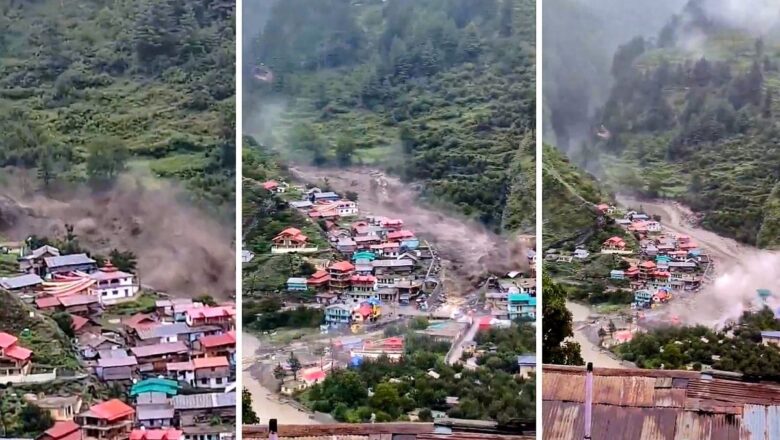
New Delhi, Aug 11 – A glacial lake high in the mountains above Uttarakhand’s Kheer Ganga river may hold clues to the devastating flash floods that buried Dharali village earlier this week, experts say. The National Institute of Disaster Management (NIDM) has identified the lake from satellite images taken between 2014 and 2022. The images show the water body at an altitude of around 5,200 metres, connected to Dharali via a steep mountain stream. However, scientists have not confirmed if a sudden burst of this lake, known as a Glacial Lake Outburst Flood (GLOF), directly caused the disaster. NIDM says the area is naturally prone to debris-filled flash floods because of its glaciers, loose rocks, and sharp slopes. The institute has called for on-ground surveys and hydrological studies ...
Indonesia Forest Loss Slows but Idle Land Raises New Environmental Fears

Indonesia Forest Loss Slows but Idle Land Raises New Environmental Fears

Breaking News
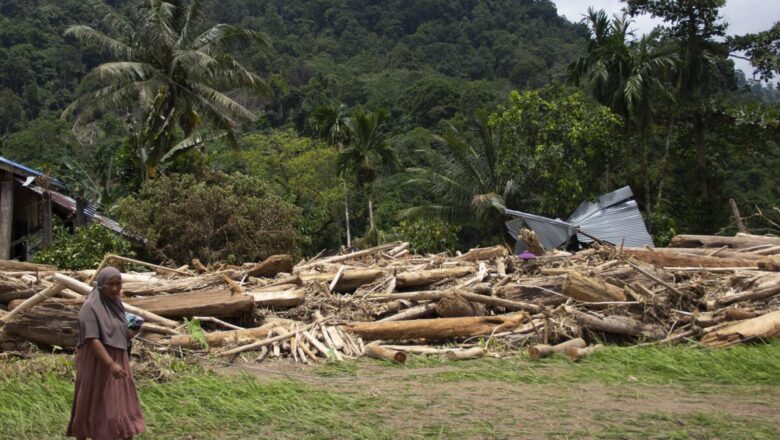
While many tropical countries are recording record-high deforestation in 2024, Indonesia has seen a slowdown in forest loss. However, nearly half of the deforestation cannot be linked to any clear cause, raising concerns over speculative land clearing, poor regulation, and hidden environmental damage. According to analysis from TheTreeMap, Indonesia lost 242,000 hectares of primary forest in 2024, a 14% drop from the previous year. Known causes such as logging, oil palm expansion, pulpwood plantations, mining, food estate projects, and fires explain less than half of this loss. The rest remains unattributed, with evidence suggesting much of the land is cleared and left unused for years. Research shows that almost half of deforested land in Indonesia stays idle for more than five year...
Study finds people’s connection to nature has dropped 60% in 200 years

Study finds people’s connection to nature has dropped 60% in 200 years

Breaking News
A new study has revealed that people’s connection to nature has fallen by more than 60% since the year 1800, raising concerns about both environmental health and human wellbeing. The research, led by Professor Miles Richardson from the University of Derby, tracked the decline using historical data on urbanisation, loss of wildlife, and the shrinking role of nature in people’s lives. The study also found a similar drop in the use of nature-related words such as “river,” “moss” and “blossom” in books between 1800 and 1990. According to Richardson, this “extinction of experience” is likely to continue unless major changes are made, such as introducing children to nature from an early age and dramatically increasing greenery in towns and cities. His modelling suggests that cities may nee...
ISRO satellite images show massive destruction in Uttarakhand Dharali village

ISRO satellite images show massive destruction in Uttarakhand Dharali village

Breaking News
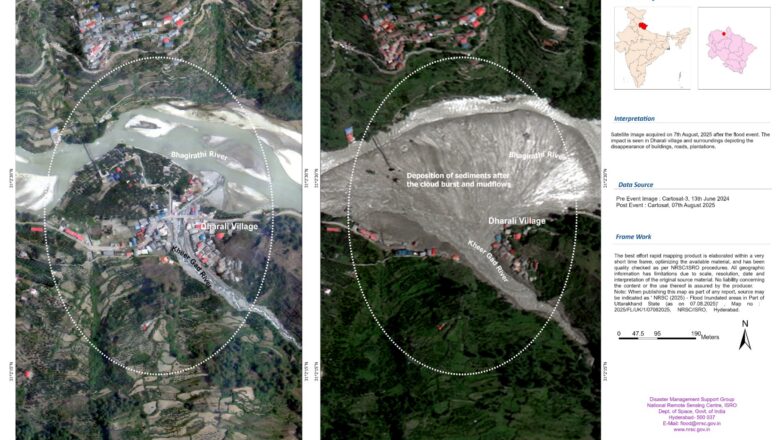
Satellite images from the Indian Space Research Organisation (ISRO) have revealed the true scale of destruction caused by the flash flood in Dharali village, Uttarakhand. The images show a huge fan-shaped deposit of mud, rocks, and debris spread across nearly 20 hectares at the meeting point of the Kheer Gad and Bhagirathi rivers. The disaster, which struck around 1:30 pm on August 5 after intense rainfall, washed away homes, buildings, bridges, and roads. Several lives were lost, and many people remain missing. Rescue teams are still searching for survivors while trying to restore connectivity to the isolated region. According to ISRO, the debris deposit measures about 750 metres long and 450 metres wide. The satellite pictures also reveal that river channels have widened, the river...
Yamuna water level inches close to warning mark in Delhi

Yamuna water level inches close to warning mark in Delhi

Breaking News
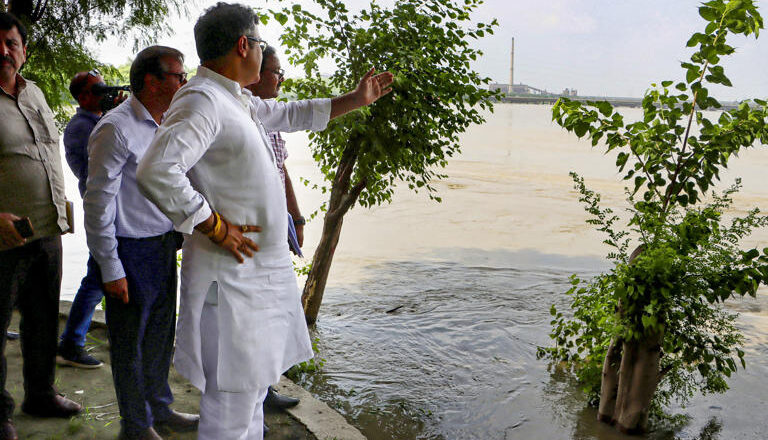
NEW DELHI, Aug 11 – The Yamuna River in Delhi rose to 204.40 metres at the Old Railway Bridge on Saturday morning, coming dangerously close to the warning level of 204.50 metres, according to flood control officials. Authorities say the surge is mainly due to heavy releases of water from the Hathnikund and Wazirabad barrages. At present, around 30,800 cusecs are being discharged from Hathnikund, while Wazirabad is releasing about 25,000 cusecs every hour. Rainfall in the upper catchment areas of Haryana and Uttarakhand has further contributed to the rise. Officials from the central flood room confirmed that the situation is being closely monitored. All concerned agencies have been instructed to remain on alert and take precautionary steps to prevent a flood-like situation. The Old...
Despite a strong start to the monsoon, nearly one-fifth of India is battling drought or drought-like conditions, according to the Drought Early Warning System (DEWS). Data shows that 19% of the country’s land area is facing varying levels of dryness, with some states seeing extreme drought.  Severe water stress is reported in Ladakh, Himachal Pradesh, Bihar, Uttar Pradesh, Punjab, Arunachal Pradesh, Manipur, Mizoram, and Assam. Many of these areas have recorded rainfall shortages of 40–70% this season, leaving soil moisture too low for healthy crop growth.  In Arunachal Pradesh, districts like Kurung Kumey, Upper Subansiri, and Kra Daadi are among the worst hit. Assam’s Karbi Anglong, Mizoram’s Champhai, and parts of Manipur are also struggling with exceptional dryness. In Bihar, districts such as Muzaffarpur and Kishanganj have rainfall deficits above 40%, while Punjab’s Kapurthala faces a 73% shortfall.  The India Meteorological Department notes that 29% of districts are currently under arid conditions. Experts warn that this shortage of water and soil moisture could harm agriculture, increase crop losses, and strain rural livelihoods.  Interestingly, Ladakh’s drought comes despite it recording 139% excess rainfall this season, showing how uneven distribution and timing of rains can still leave the land parched.  If the dry spell continues, farmers in affected regions may face reduced yields, pushing up the demand for drought-resistant crops, better irrigation, and alternative water management methods. While the IMD predicts above-normal rainfall in the second half of the monsoon, the damage to early crops may already be done.

Despite a strong start to the monsoon, nearly one-fifth of India is battling drought or drought-like conditions, according to the Drought Early Warning System (DEWS). Data shows that 19% of the country’s land area is facing varying levels of dryness, with some states seeing extreme drought. Severe water stress is reported in Ladakh, Himachal Pradesh, Bihar, Uttar Pradesh, Punjab, Arunachal Pradesh, Manipur, Mizoram, and Assam. Many of these areas have recorded rainfall shortages of 40–70% this season, leaving soil moisture too low for healthy crop growth. In Arunachal Pradesh, districts like Kurung Kumey, Upper Subansiri, and Kra Daadi are among the worst hit. Assam’s Karbi Anglong, Mizoram’s Champhai, and parts of Manipur are also struggling with exceptional dryness. In Bihar, districts such as Muzaffarpur and Kishanganj have rainfall deficits above 40%, while Punjab’s Kapurthala faces a 73% shortfall. The India Meteorological Department notes that 29% of districts are currently under arid conditions. Experts warn that this shortage of water and soil moisture could harm agriculture, increase crop losses, and strain rural livelihoods. Interestingly, Ladakh’s drought comes despite it recording 139% excess rainfall this season, showing how uneven distribution and timing of rains can still leave the land parched. If the dry spell continues, farmers in affected regions may face reduced yields, pushing up the demand for drought-resistant crops, better irrigation, and alternative water management methods. While the IMD predicts above-normal rainfall in the second half of the monsoon, the damage to early crops may already be done.

Breaking News
Despite a strong start to the monsoon, nearly one-fifth of India is battling drought or drought-like conditions, according to the Drought Early Warning System (DEWS). Data shows that 19% of the country’s land area is facing varying levels of dryness, with some states seeing extreme drought. Severe water stress is reported in Ladakh, Himachal Pradesh, Bihar, Uttar Pradesh, Punjab, Arunachal Pradesh, Manipur, Mizoram, and Assam. Many of these areas have recorded rainfall shortages of 40–70% this season, leaving soil moisture too low for healthy crop growth. In Arunachal Pradesh, districts like Kurung Kumey, Upper Subansiri, and Kra Daadi are among the worst hit. Assam’s Karbi Anglong, Mizoram’s Champhai, and parts of Manipur are also struggling with exceptional dryness. In Bihar, distr...
Drought tightens grip in parts of India, microplastics add silent threat

Drought tightens grip in parts of India, microplastics add silent threat

Breaking News
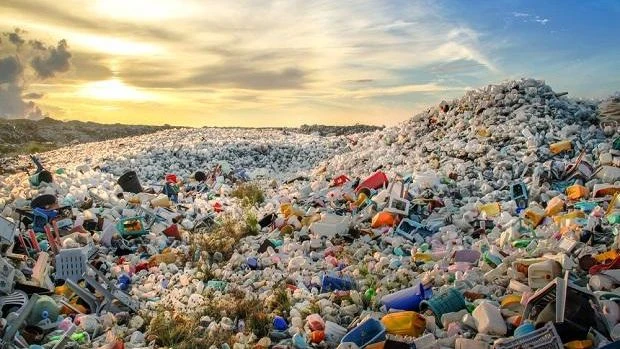
NEW DELHI: Nearly one-fifth of India is facing drought or drought-like conditions despite the monsoon beginning on a strong note, according to the Drought Early Warning System (DEWS). Experts warn the crisis is hitting not just farms and water supplies, but also public health, with microplastics emerging as a growing concern in drinking water sources. Severe dryness has been reported in states including Bihar, Uttar Pradesh, Punjab, Himachal Pradesh, Ladakh, and several in the Northeast. In many of these regions, rainfall has been 40–70% below normal, leaving fields cracked and reservoirs running low. The India Meteorological Department says 29% of districts are now under arid conditions. Farmers in districts like Muzaffarpur in Bihar and Kapurthala in Punjab say paddy fields are tur...