Sunday, June 21News That Matters

Month: June 2026

Climate Resilient Excelsa Coffee Gains Attention as Farmers Battle Rising Temperatures

Climate Resilient Excelsa Coffee Gains Attention as Farmers Battle Rising Temperatures

Breaking News
As climate change continues to disrupt global agriculture, coffee farmers and researchers are increasingly turning their attention to a little known coffee species called Excelsa. Once considered a marginal crop in India, Excelsa is now being viewed as a promising alternative to traditional coffee varieties that are struggling to cope with rising temperatures, erratic rainfall and growing pest pressures. The global coffee industry relies heavily on Arabica and Robusta, which together account for the vast majority of coffee production worldwide. However, changing weather patterns are making cultivation of these varieties more difficult. Higher temperatures, prolonged heatwaves and unpredictable rainfall are reducing yields, affecting bean quality and increasing plant stress, particularly f...
Climate Change, Extreme Heat and Emerging Risks: How a Warming World Is Reshaping Lives, Ecosystems and Global Resilience

Climate Change, Extreme Heat and Emerging Risks: How a Warming World Is Reshaping Lives, Ecosystems and Global Resilience

Breaking News
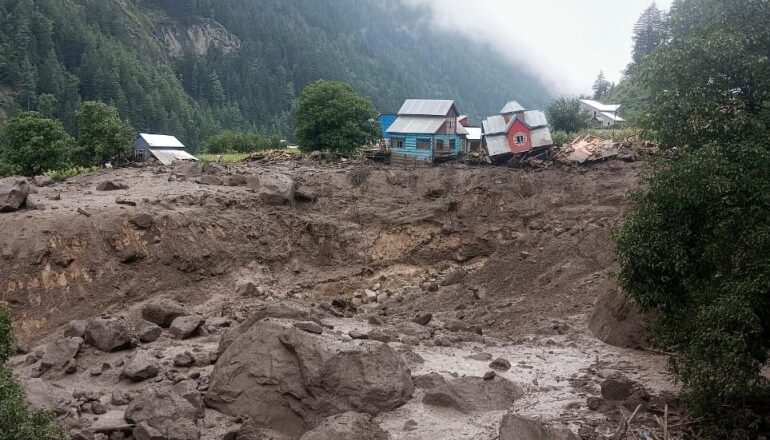
From the crowded streets of Delhi to the remote mountain villages of Bhutan, from flood prone cities in Brazil to forests in Oregon, the effects of environmental change are becoming increasingly visible across the world. Climate change is no longer a distant concern discussed only in scientific conferences and policy meetings. It is influencing where people live, how they work, what they eat, how cities are built, and even how governments prepare for future disasters. Recent studies and reports from different parts of the world reveal a common reality: societies are entering an era of heightened environmental uncertainty. Extreme heat, floods, pandemics, migration pressures, biodiversity changes, and resource challenges are converging to create new risks that require urgent action and i...
Scientists Develop Sun Powered Bacteria That Could Revolutionize Sustainable Fuel Production

Scientists Develop Sun Powered Bacteria That Could Revolutionize Sustainable Fuel Production

Breaking News
As the world searches for cleaner alternatives to fossil fuels, scientists have developed a promising new technology that could transform the future of sustainable energy. Researchers have successfully engineered a strain of cyanobacteria, commonly known as blue-green algae, that can produce key ingredients for biofuels using only sunlight, carbon dioxide and photosynthesis. The breakthrough could pave the way for a new generation of renewable fuels that are cheaper, cleaner and easier to produce than many existing biofuel sources. Turning Sunlight Into Fuel The study, published in Biotechnology for Biofuels and Bioproducts, focused on cyanobacteria, microscopic organisms that naturally use sunlight to generate energy through photosynthesis. Scientists modified these bacteria to p...
Pollution in Kerala Vembanad Lake Runs Deeper Than Houseboat Tourism, Experts Say

Pollution in Kerala Vembanad Lake Runs Deeper Than Houseboat Tourism, Experts Say

Breaking News
The ongoing debate over pollution in Kerala’s Vembanad Lake has once again come into focus following recent government action against houseboats after directions from the Kerala High Court. While houseboats are often blamed for the lake’s deteriorating condition, experts argue that the environmental crisis affecting Vembanad is far more complex and rooted in decades of ecological and governance challenges. The High Court recently observed that the growing number of tourist vessels operating on the lake has exceeded its carrying capacity, contributing to sewage discharge, oil leaks and solid waste accumulation. The court called for stricter pollution-control measures and enhanced monitoring of vessels. However, environmental researchers and local communities say the pollution problem ext...
Tigers Speak Without Words: How Big Cats Secretly Communicate Across Forests

Tigers Speak Without Words: How Big Cats Secretly Communicate Across Forests

Breaking News
New Delhi: Tigers are often seen as silent and solitary predators, but wildlife experts say these majestic animals constantly communicate through an invisible network of scents, scratches, calls, and behavioural signals. These hidden messages help tigers establish territories, attract mates, avoid conflicts, and reveal valuable information to conservationists working to protect the endangered species. According to wildlife experts, forests are filled with signs left behind by tigers that function like a sophisticated communication system. While humans may rarely notice these clues, they play a crucial role in the daily lives of the big cats. Forests Act as Giant Message Boards Unlike social animals that rely on frequent vocal communication, tigers use environmental signals to conv...
Bihar, West Bengal Emerge as Major Air Pollution Hotspots, 25 Year Study Warns

Bihar, West Bengal Emerge as Major Air Pollution Hotspots, 25 Year Study Warns

Breaking News
New Delhi: A new 25-year satellite study has identified Bihar and West Bengal as major particulate pollution hotspots in eastern India, revealing a significant rise in air pollution across the Indo Gangetic Plain (IGP), the Himalayan region, and north-east India between 2000 and 2024. Researchers warn that biomass burning, including agricultural residue burning and the use of biomass fuels in rural households, is driving much of the worsening pollution burden. The study, published in the journal Atmospheric Environment found that particulate matter (PM) pollution increased by more than 20 percent across these regions over the last two decades. Scientists say the findings highlight the urgent need to expand clean air policies beyond urban centres and address pollution sources in rural ar...
Green Hydrogen Could Turn Farm Waste Into Fuel and Income for Indian Farmers

Green Hydrogen Could Turn Farm Waste Into Fuel and Income for Indian Farmers

Breaking News
New Delhi: Every winter, smoke from crop residue burning in Punjab, Haryana and other northern states blankets large parts of India, causing severe air pollution and health concerns. However, experts believe the same agricultural waste that contributes to smog could soon become a valuable resource for farmers through the production of green hydrogen, a clean fuel widely regarded as a key energy source of the future. As India accelerates its transition towards renewable energy, researchers and policymakers are exploring ways to use agricultural residue such as paddy straw, wheat stalks and maize waste to produce green hydrogen. The technology could not only help reduce pollution but also create new income opportunities for farmers. What Is Green Hydrogen? Green hydrogen is produced...
Climate Change Could Dramatically Worsen Summer Air Pollution, Study Warns

Climate Change Could Dramatically Worsen Summer Air Pollution, Study Warns

Breaking News
New Delhi: Climate change could significantly worsen air quality across large parts of North America by the end of the century, exposing millions more people to unhealthy levels of pollution during summer months, according to a new study published by researchers from the University of Waterloo. The research warns that rising temperatures, changing weather patterns and increased atmospheric instability could reverse decades of progress made in improving air quality, posing serious health risks to vulnerable populations. According to the study, nearly 100 million Americans could be exposed to unhealthy summer air by 2100, compared to around 14 million people in 2000. Researchers found that climate change is likely to increase the frequency and intensity of air quality alerts, particula...
New Study Finds Say Limestone Reservoirs May Be Powerful Long Term Carbon Sinks

New Study Finds Say Limestone Reservoirs May Be Powerful Long Term Carbon Sinks

Breaking News
Beijing: Reservoirs located in limestone rich regions may play a much larger role in combating climate change than previously believed, according to a new study published in Carbon Research. Scientists have discovered that these reservoirs not only capture significant amounts of carbon but also store it in forms that can remain locked away for long periods. The findings come from a year-long investigation of the Songbaishan Reservoir in China's Guizhou Province, offering fresh insights into how certain freshwater ecosystems contribute to carbon sequestration. Looking Beyond Carbon Burial Rates For decades, scientists have measured how much carbon settles into reservoir sediments to estimate their climate benefits. However, researchers from Guizhou University argue that these calcu...
New study say Delhi Pollution Linked to Aravalli Degradation, Experts Warn

New study say Delhi Pollution Linked to Aravalli Degradation, Experts Warn

Breaking News
Delhi air quality improved during the summer months is showing worrying signs of deterioration this year. The Air Quality Index (AQI) has consistently remained in the low to mid-200 range and, on some occasions, has even crossed the 300 mark, prompting concerns among environmental experts and researchers. Historically, such pollution levels have been associated with winter months when crop residue burning, low wind speeds, and temperature inversions trap pollutants close to the ground. However, experts say the current situation points to a growing environmental problem linked to the degradation of the Aravalli mountain range. Meteorologists have identified dust transported from the deserts and semi-arid regions of Rajasthan as a major contributor to the rising pollution levels in Del...