Monday, July 27News That Matters

Month: July 2026

Climate Change Reshaping Water, Food Systems, Heritage and Conservation Across the Globe

Climate Change Reshaping Water, Food Systems, Heritage and Conservation Across the Globe

Breaking News
  New Delhi: Climate change is increasingly affecting water resources, agriculture, cultural heritage and conservation systems worldwide with recent reports from different regions highlighting how environmental changes are disrupting both ecosystems and human livelihoods. A report by Deutsche Welle noted that prolonged droughts and more frequent extreme rainfall events are intensifying groundwater depletion in many parts of the world. Researchers and policymakers are increasingly promoting groundwater recharge, river restoration and managed aquifer recharge systems as ways to store excess water during heavy rainfall and secure supplies during dry periods. Countries such as Germany, Namibia and the United States are already investing in such approaches to improve water security a...
Korku Adivasis in Madhya Pradesh Demand Removal of Forest Encroachments

Korku Adivasis in Madhya Pradesh Demand Removal of Forest Encroachments

Breaking News
Bhopal, July 20: Nearly 2,000 members of the indigenous Korku community from around 150 villages in Madhya Pradesh Khandwa and Burhanpur districts have demanded the removal of alleged illegal encroachments from forest land, saying continued forest degradation threatens their livelihoods and traditional way of life. The community organised a march to submit their demands to Chief Minister Mohan Yadav, urging the state government to strengthen forest protection and prevent further encroachment. Korku community leader Umakant Patil alleged that since 2020, forest areas have witnessed increasing encroachment and clearing by members of the Bharela and Bhilala tribal communities from neighbouring districts, including Khargone, Alirajpur, Barwani and Jhabua. According to the community, t...
Yamuna Shrinks by 68% in Two Centuries Study Warns of Weakened Flood Resilience

Yamuna Shrinks by 68% in Two Centuries Study Warns of Weakened Flood Resilience

Breaking News
New Delhi, July 20: The Yamuna River in Delhi has narrowed by nearly 68 per cent over the past two centuries, while its discharge has declined by around 89 per cent, significantly reducing its ability to cope with extreme flood events according to a new study by researchers from the University of Delhi and the Indian Institute of Science Education and Research (IISER), Bhopal. Published in the Journal of the Geological Society of India, the study analysed historical maps and satellite imagery to examine hydrogeomorphic changes along the 50 kilometre stretch of the Yamuna flowing through Delhi between 1799 and 2026. Researchers found that the river's average bankfull width the width when the river is full but not overflowing declined from about 658 metres in 1799 to around 210 metres ...
Heat Stress Intensifies India Advances Clean Energy Now Scientists Call for Smarter Restoration

Heat Stress Intensifies India Advances Clean Energy Now Scientists Call for Smarter Restoration

Breaking News
New scientific studies and policy developments this week underscored the growing urgency of climate adaptation, ecosystem restoration and sustainable resource management, with major developments spanning India, Europe and global climate research. India's Chhattisgarh government notified its Compressed Biogas (CBG) Policy 2026, aiming to accelerate waste to energy projects by streamlining approvals, ensuring reliable feedstock supply and promoting compressed biogas use in transport. The policy also encourages research digital monitoring and farmer participation in biomass collection, making it one of the country most comprehensive state level frameworks for the CBG sector. Urban restoration also came under scrutiny after Bengaluru's record plantation drive, during which nearly 1.5 mil...
Climate Change Could Make 100 Year Floods Occur Every 45–80 Years in the Alps Study

Climate Change Could Make 100 Year Floods Occur Every 45–80 Years in the Alps Study

Breaking News
July 20: Climate change is expected to make extreme floods in the Alps more frequent and intense by the end of the century, with floods currently considered "once in 100 year" events potentially occurring every 45 to 80 years according to a new study by the WSL Institute for Snow and Avalanche Research (SLF). The study commissioned by the Swiss Federal Office for the Environment (FOEN), used hourly discharge data from 384 rivers in Switzerland and Austria to model future flood risks. Researchers found that previous projections which relied on daily data, underestimated the impact of short duration heavy rainfall. Unlike earlier studies that suggested flooding could decline due to reduced snowmelt, the new analysis found that increasingly intense rainfall driven by global warming outw...
Global Heat Stress Intensifying as Hazardous Heat Spreads Worldwide: Study

Global Heat Stress Intensifying as Hazardous Heat Spreads Worldwide: Study

Breaking News
July 20: Heat stress is becoming more frequent, intense and widespread across the world, exposing millions more people to hazardous temperatures and extending heat stress seasons, according to a new global study published in Nature Climate Change. The study, led by researchers from the European Centre for Medium Range Weather Forecasts (ECMWF), analysed more than seven decades of data from the Copernicus Climate Change Service's ERA5-HEAT dataset using the Universal Thermal Climate Index (UTCI), which measures "feels-like" temperature by considering air temperature, humidity, wind and solar radiation. Researchers found that the maximum feels like temperature during the 10 hottest days of the year has increased by an average of 0.27°C per decade since the 1970s, while the warmest nigh...
Spain Wildfires Highlight Need to Measure Human Impact Not Just Burnt Area

Spain Wildfires Highlight Need to Measure Human Impact Not Just Burnt Area

Breaking News
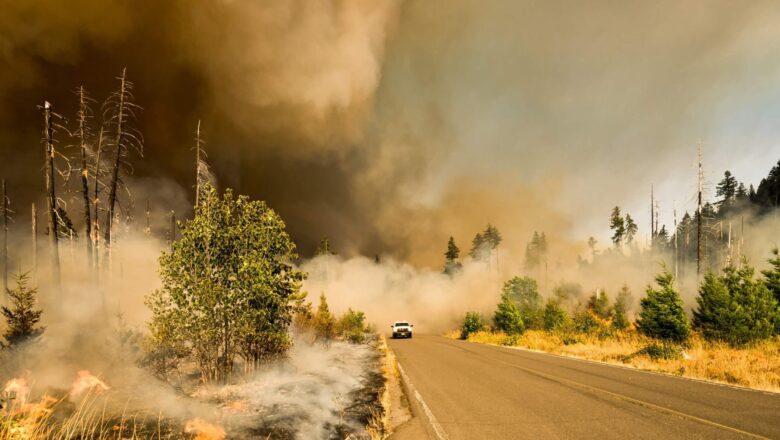
  Madrid, July 20: Spain recent deadly wildfire has reignited calls for a shift in how wildfire disasters are assessed, with experts urging authorities to prioritise human safety over traditional indicators such as the number of fires or hectares burnt. In an article geographer Fernando Medina Morales said the July 9 wildfire in Los Gallardos, Andalusia, which claimed 13 lives, demonstrated that wildfire severity should increasingly be measured by its impact on people rather than only environmental damage. The expert noted that wildfire management has traditionally focused on the number of incidents, burnt area and firefighting efficiency. However as climate change and expanding human settlements increase fire risks, protecting lives must become the primary objective. Offi...
Chhattisgarh Notifies Compressed Biogas Policy to Strengthen Waste to Energy Ecosystem

Chhattisgarh Notifies Compressed Biogas Policy to Strengthen Waste to Energy Ecosystem

Breaking News
The Chhattisgarh government has notified the Chhattisgarh Compressed Biogas (CG-CBG) Policy 2026 introducing a framework aimed at expanding compressed biogas (CBG) production by improving feedstock availability, streamlining project approvals and promoting investment in the waste to energy sector. The policy, notified on July 10, will remain in force until March 31, 2030, and applies to both new and existing CBG projects. It seeks to utilise agricultural residue, cattle dung, municipal solid waste and industrial by-products to produce clean fuel while reducing pollution and creating additional income opportunities for farmers and rural communities. According to state officials the policy focuses on strengthening the entire CBG value chain through measures covering feedstock supply, i...
Experts Call For Ecosystem Specific Urban Restoration Over Mass Tree Plantation Drives

Experts Call For Ecosystem Specific Urban Restoration Over Mass Tree Plantation Drives

Breaking News
  Urban restoration efforts should focus on ecosystem specific planning rather than large scale tree plantation drives, according to ecologists who say restoring native landscapes requires long term ecological planning instead of simply increasing the number of saplings planted. The debate has gained attention following Bengaluru's recent plantation drive, in which nearly 1.5 million saplings were planted across 240 acres using the Miyawaki method. While authorities said the initiative aims to reduce urban heat, improve climate resilience and expand green cover, researchers argue that large scale plantation campaigns alone cannot address the complex ecological challenges facing cities. Experts say the widely adopted Miyawaki method, which involves dense planting of native tre...
International Researchers Develop Electrochemical Method to Remove Textile Dyes From Wastewater

International Researchers Develop Electrochemical Method to Remove Textile Dyes From Wastewater

Breaking News
  An international team of researchers has developed a new electrochemical water treatment system capable of removing persistent textile dyes from wastewater, offering a potential solution for cleaner industrial effluent management. The study led by researchers from South Ural State University in collaboration with international scientists, introduces a flow through electrochemical process that generates reactive particles on specially designed electrodes to break down dye molecules without the use of additional chemical reagents. Textile dyes are widely used in the fabric industry due to their strong adhesion to fibres. However, once released into wastewater, these dyes remain highly stable, reduce light penetration in water bodies and pose significant risks to aquatic ecosy...