Monday, September 21News That Matters

Month: September 2026

Planting Trees in the Wrong Places Can Harm Water Biodiversity and Livelihoods

Planting Trees in the Wrong Places Can Harm Water Biodiversity and Livelihoods

Breaking News
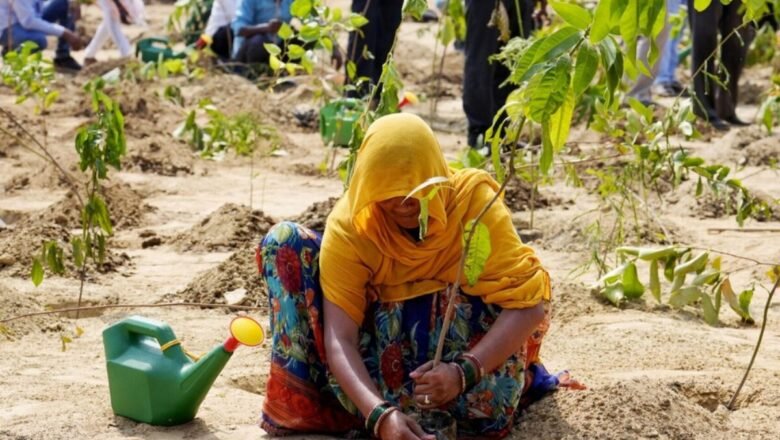
Tree planting campaigns are increasingly promoted as a climate solution but large scale planting in drylands can damage ecosystems, reduce water availability and threaten local livelihoods, according to an analysis. The article argues that landscapes without dense tree cover are not necessarily degraded. Grasslands, shrublands and savannas have evolved under conditions of low and variable rainfall, drought and periodic disturbance. Replacing these naturally open ecosystems with forests can therefore cause ecological damage rather than restore them. Global restoration programmes have set ambitious targets for increasing vegetation cover. The Bonn Challenge, for instance, aims to restore 350 million hectares of degraded and deforested land by 2030. Africa's Great Green Wall Initiative ...
Two Major Groundwater Reserves Discovered Beneath China Taklimakan Desert

Two Major Groundwater Reserves Discovered Beneath China Taklimakan Desert

Breaking News
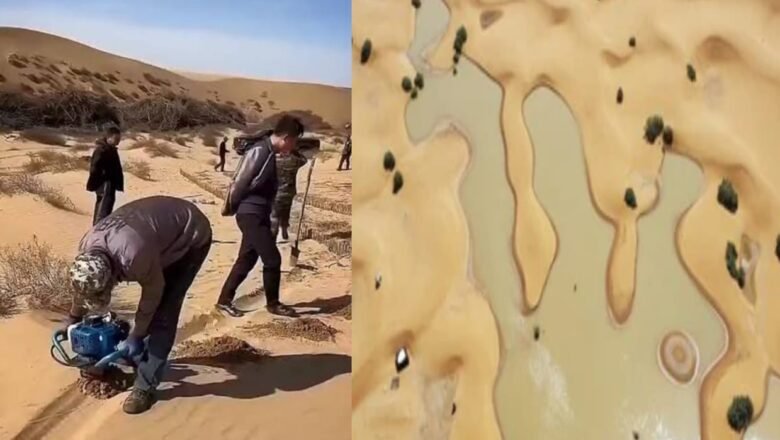
Two large groundwater reserves have been discovered beneath the Taklimakan Desert in northwest China Xinjiang Uygur Autonomous Region, offering new insights into the potential for using underground water resources in desert regions. The discoveries were made near a town in Minfeng County on the southern edge of the desert and in an area south of the Mazartag Mountains in the desert’s interior. The findings emerged from a groundwater exploration project conducted by the Xinjiang Geological Bureau’s Hydrology and Environmental Geology Survey Center. Researchers used satellite remote sensing, aerial geophysical surveys, ground exploration and drilling to investigate the underground water systems. The survey found that the groundwater is not stagnant but is flowing and renewable, with bo...
World Largest Electricity Ferry with 40 MWh Battery Arrives in Uruguay

World Largest Electricity Ferry with 40 MWh Battery Arrives in Uruguay

Breaking News
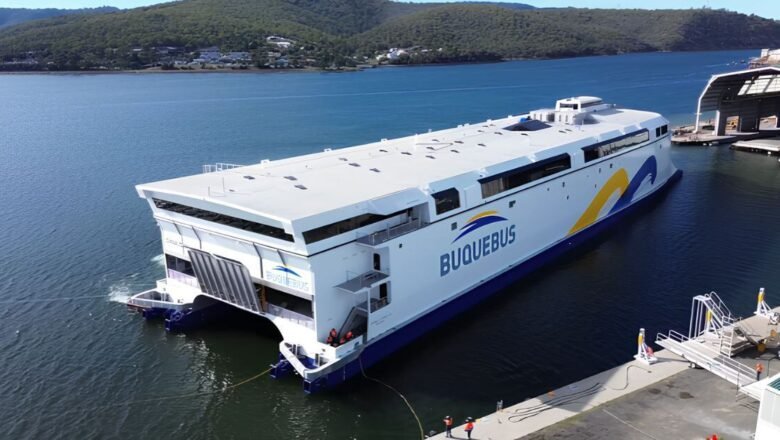
The world largest battery electric ferry Hull 096 has arrived in Uruguay after travelling thousands of kilometres from Tasmania aboard a heavy lift transport vessel. Built by Australian shipbuilder Incat for South American ferry operator Buquebus the 130 metre long ferry reached Nueva Palmira on September 11 aboard the MV Black Marlin. It was subsequently floated off the transport ship and will be towed to Colonia del Sacramento for final commissioning and testing. The vessel which will operate under the name China Zorrilla is powered by more than 5,000 batteries with a combined capacity of 40 megawatt hours. Its battery system provides an operating endurance of about 90 minutes. The aluminium ferry can carry up to 2,100 passengers and 225 vehicles at the same time. It is equipped...
Ladakh Plans to Revive Shrinking Tso Kar Lake by Channelising Glacier Water

Ladakh Plans to Revive Shrinking Tso Kar Lake by Channelising Glacier Water

Breaking News
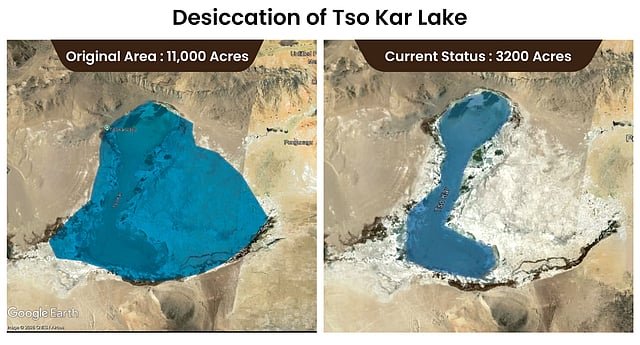
  The Ladakh administration has launched a project to revive the rapidly shrinking Tso Kar Lake by diverting untapped glacier water from the Rupsho Kharnak stream in the Changthang region. The project aims to channelise up to 132 cusecs, or about 320 million litres, of glacier water per day into the lake. The water currently flows into the Sindhu River. Tso Kar, once spread across nearly 11,000 acres, has reportedly shrunk to around 3,200 acres over the past decade affecting its wetlands, grazing grounds and migratory bird population. The Rupsho Kharnak stream is located about 11 km from Tso Kar at an altitude of nearly 18,000 feet. Under the plan, the glacier runoff will pass through three natural depressions covering approximately 270 acres, 24 acres and 10 acres before rea...
Microplastics in Soil May Act as ‘Trojan horses’ for Toxins and Antibiotic Resistance

Microplastics in Soil May Act as ‘Trojan horses’ for Toxins and Antibiotic Resistance

Breaking News
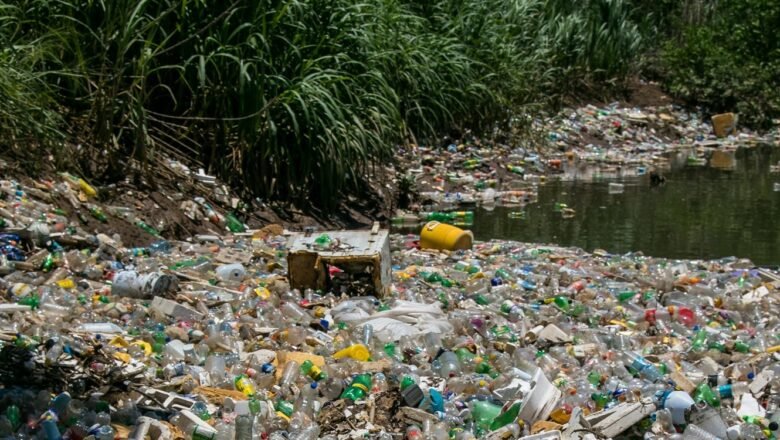
Microplastics in agricultural soil could act as carriers for pollutants, pesticides, microbes and antibiotic resistance genes, potentially creating a wider threat to soil health and food production according to findings from a five year international research project. The EU funded Minagris project which has produced 22 peer reviewed studies so far detected microplastics in all 227 agricultural fields examined across 11 European countries. Researchers said the contamination reflected both present day farming practices and historical land use, highlighting the persistence of plastic pollution in soils. Microplastics create microbial ‘hotspots’ Researchers found that microplastics can provide surfaces for microorganisms to colonise, creating what scientists call the “plastisphere”. ...
Japan Remade Coastline: How a 48 Billion Yen Landfill Capped Minamata’s Mercury Disaster

Japan Remade Coastline: How a 48 Billion Yen Landfill Capped Minamata’s Mercury Disaster

Breaking News
  MINAMATA BAY: Japan Along the eastern shore of Minamata Bay sits 58 hectares of reclaimed land a synthetic peninsula capped with mountain soil. Beneath this quiet coastal expanse lies approximately 1.5 million cubic meters of highly toxic bottom sediment containing mercury concentrations above 25 parts per million (ppm). The landfill represents one of Japan's most massive environmental engineering efforts: a 16-year, 48 billion yen ($300+ million) endeavor aimed at sealing away the physical remnants of the nation's most notorious industrial poisoning tragedy. The Legacy in the Mud Minamata disease a severe neurological syndrome caused by methylmercury poisoning was first officially discovered in 1956. The source was traced back to chemical manufacturer Chisso Corporation...
Lake Pateros: A Columbia River Reservoir Powering Hundreds of Thousands of Homes

Lake Pateros: A Columbia River Reservoir Powering Hundreds of Thousands of Homes

Breaking News
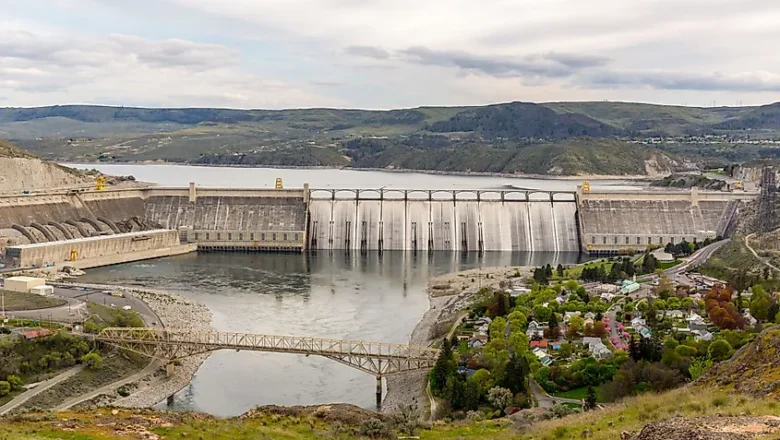
  Lake Pateros, near Pateros in north central Washington, is part of one of the most productive hydroelectric corridors in the United States. Formed by Wells Dam on the Columbia River, the reservoir combines a major power project with the scenic landscape and recreational opportunities of the upper Columbia. Recent annual generation at Wells Dam was roughly 4.3 terawatt hours equivalent to the annual electricity consumption of approximately 415,000 average U.S. homes, using the 2024 U.S. residential benchmark of 10,356 kilowatt-hours per household. Wells Dam is operated by Douglas County PUD and has ten generating units with roughly 840 megawatts of peaking capacity. Unlike many conventional dam designs, Wells uses a distinctive hydrocombine arrangement that integrates the ge...
Rivers Flushing Far More Microplastics Into Oceans Than Previously Estimated, Study Finds

Rivers Flushing Far More Microplastics Into Oceans Than Previously Estimated, Study Finds

Breaking News
BEIJING — River systems worldwide are sweeping roughly 263,000 metric tons of microplastics into the oceans every year a far greater discharge than previously understood according to new research published in Science. The findings led by Hehao Qin of Peking University, resolve long standing discrepancies in global plastic estimates. Previous computer models generated wild variations ranging from 6,100 to 2.31 million metric tons annually due to a lack of field data, inconsistent net sizes during sampling, and static modeling that ignored sudden weather events. Standardizing the Global Flow To correct these blind spots, the international team built a daily tracking model trained on 1,386 real world microplastic measurements from rivers across the globe. By applying mathematical adj...
Almost Half of Migratory Bird Species in Decline State of the World Birds Report Warns

Almost Half of Migratory Bird Species in Decline State of the World Birds Report Warns

Breaking News
Nairobi Flyways Declaration calls for coordinated conservation efforts across countries and continents as threats to migratory birds intensify. Nearly half of the world’s migratory bird species are declining in number, while one in nine faces the threat of extinction, according to the latest State of the World’s Birds report released by BirdLife International. The report, launched on September 11 at the Global Flyways Summit in Nairobi, warns of accelerating losses among migratory birds but also points to evidence that coordinated conservation action across borders can reverse population declines. According to the report, 45 per cent of migratory bird species are in decline while one in nine is threatened with extinction. The latest edition of the report is the first to focus spec...
India Approves Expedited Power Exports to Flood Hit Nepal

India Approves Expedited Power Exports to Flood Hit Nepal

Breaking News
  New Delhi clears electricity exports to Nepal for 18 hours a day until December 31 amid severe disruption to hydropower infrastructure. India has approved expedited electricity exports to Nepal following devastating floods that damaged hydropower infrastructure and caused widespread destruction across the Himalayan country. The Ministry of Power has authorised electricity exports to Nepal for 18 hours a day from September 13 through December 31, 2026, enabling Kathmandu to meet its power requirements as it recovers from the disaster. “The approval will help Nepal meet its power requirements during this difficult period and further strengthen the close and longstanding energy cooperation between India and Nepal,” the Ministry of Power said. The ministry also said the quan...