Monday, September 21News That Matters

Month: September 2026

Vietnam Giant Son Doong Cave Holds a Forest River and Clouds Beneath the Earth

Vietnam Giant Son Doong Cave Holds a Forest River and Clouds Beneath the Earth

Breaking News
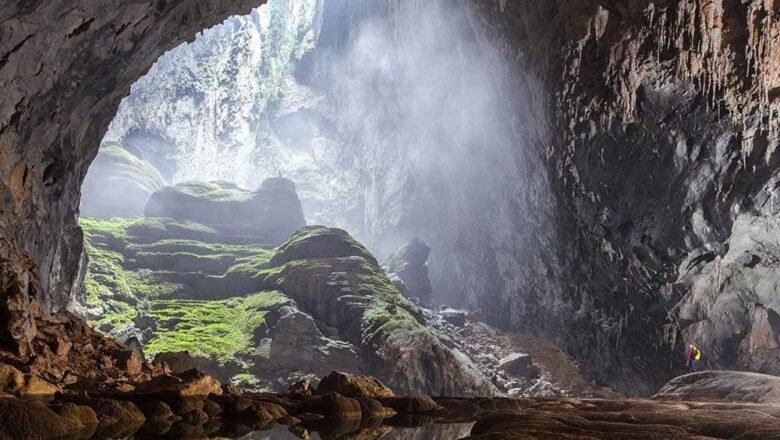
Deep inside a limestone mountain in central Vietnam lies an underground landscape unlike almost any other on Earth. Hang Son Doong, regarded as the world’s largest known single cave passage, is so vast that sunlight enters through collapsed sections of its roof, supporting a forest beneath the surface. The cave stretches for at least 4 miles (6.5 kilometres), with chambers reaching approximately 655 feet (200 metres) in height and 490 feet (150 metres) in width. Its enormous scale has transformed the idea of what a cave can be from a dark, confined tunnel into a landscape containing forests, rivers, mist and wildlife. Son Doong is located within Phong Nha-Ke Bang National Park in Vietnam’s Quang Binh province. A Cave Large Enough to Contain a Forest Two major collapses in the c...

Marine Bacteria Work Together to Break Down a Tough Carbon Storing Molecule

Marine Bacteria Work Together to Break Down a Tough Carbon Storing Molecule

Breaking News
Scientists have discovered that marine bacteria can work together to break down fucoidan, a complex carbohydrate produced by brown algae and diatoms that plays an important role in the ocean’s carbon cycle. The study shows that no single bacterial species is capable of completely degrading the molecule. Instead, different bacteria divide the task according to their specialised abilities, collectively making the breakdown process far more efficient. Fucoidan forms part of the protective outer structures of algae and has a highly complicated chemical architecture, containing numerous sugar linkages and branching patterns. Its resistance to microbial decomposition allows some of it to sink into deeper ocean waters, carrying carbon with it and potentially contributing to long-term carbon...
Monsoon Retreat Underway in India But Heavy Rains and Strong Winds Persist

Monsoon Retreat Underway in India But Heavy Rains and Strong Winds Persist

Breaking News
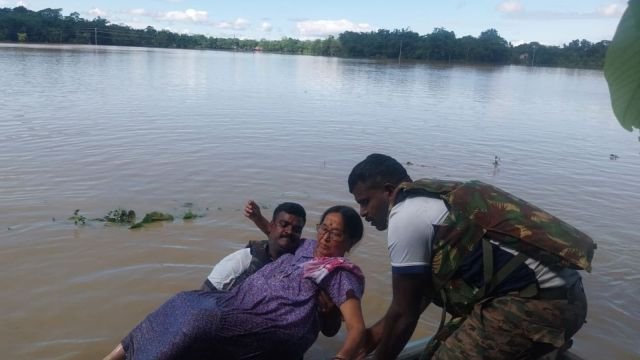
NEW DELHI — India’s southwest monsoon is showing early signs of withdrawal from parts of northwest India, though widespread heavy rainfall, severe thunderstorms, and gusty winds continue to sweep across multiple states, according to the India Meteorological Department (IMD). Favorable conditions for the monsoon's official retreat from parts of Rajasthan are expected to take shape around September 19. Despite the seasonal transition, active weather systems including a low pressure area over southwest Rajasthan and adjoining regions continue to drive unsettled conditions across the subcontinent. Regional Breakdown & Meteorological Impact Yellow Alerts Issued IMD has put regions including Haryana, Punjab, Assam, Meghalaya, Arunachal Pradesh, Tamil Nadu, Kerala, and parts of Karna...
Pacific Bluefin Tuna Gets New Protection as Countries Agree on Long Term Harvest Strategy

Pacific Bluefin Tuna Gets New Protection as Countries Agree on Long Term Harvest Strategy

Breaking News
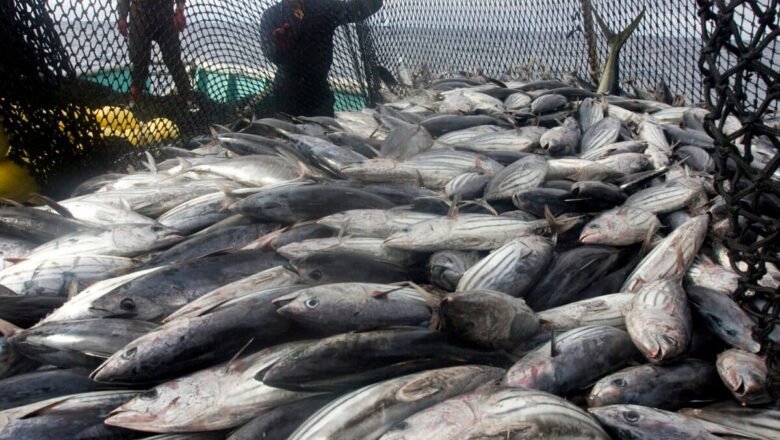
  New management plan allows limited catch increases but mandates automatic reductions if the population declines again Countries managing tuna fisheries in the Eastern Pacific Ocean have agreed on a long term harvest strategy for Pacific bluefin tuna, a species that has made a substantial recovery after decades of overfishing. The agreement was reached at the 104th meeting of the Inter American Tropical Tuna Commission (IATTC) held in Lisbon, Portugal, from August 31 to September 4. The commission manages tuna and other fish stocks and associated ecosystems across the Eastern Pacific Ocean. The new strategy establishes science-based rules aimed at completing the recovery of Pacific bluefin tuna and maintaining the population over the long term. It also allows for modest i...
OpenAI May Delay IPO Beyond 2026 as Sam Altman Calls for Slower AI Development

OpenAI May Delay IPO Beyond 2026 as Sam Altman Calls for Slower AI Development

Breaking News
OpenAI chief Sam Altman has indicated that the company may delay its much anticipated initial public offering beyond 2026 saying the current environment around artificial intelligence safety makes this an unsuitable time to go public. Altman also backed calls for the AI industry to slow the pace of frontier AI development until stronger safeguards are in place. Speaking in an interview with Fortune, Altman said OpenAI did not feel pressure to pursue an IPO immediately and suggested that going public in 2026 would be ill-advised given the safety challenges facing increasingly powerful AI systems. “I actually think that, given everything happening with safety, right now would be an ill-advised moment to go public, and we don't feel pressure on that,” Altman said. He added that th...
30 Years of Restoration Transform Degraded Himalayan Slope into Biodiversity Rich Landscape

30 Years of Restoration Transform Degraded Himalayan Slope into Biodiversity Rich Landscape

Breaking News
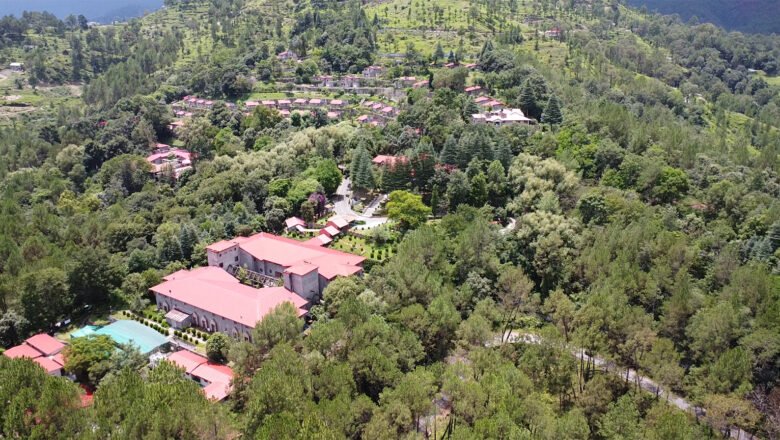
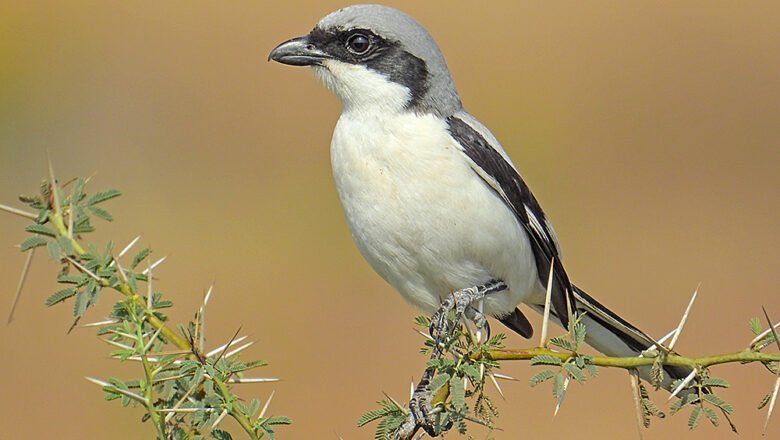
A 71 acre degraded Himalayan slope in Almora, Uttarakhand, has been transformed over three decades into a biodiversity rich landscape supporting 125 woody species, more than 160 bird species and over 100 butterfly species. The restoration project, known as Surya-Kunj, began in 1992 at the G.B. Pant National Institute of Himalayan Environment. At the time, the site was a degraded stretch of gentle slopes with only a small number of Pinus roxburghii trees and shrubs. A study published in 2025 in Frontiers in Conservation Science documented the ecological recovery of the site. It recorded 88 successfully established plant species and found that most of the planted tree species were showing healthy natural regeneration through seedlings and saplings. The site covers around 28.73 hecta...
From Degraded Slope to Biodiversity Haven: 30 Year Himalayan Restoration Brings Back More Than 160 Bird Species

From Degraded Slope to Biodiversity Haven: 30 Year Himalayan Restoration Brings Back More Than 160 Bird Species

Breaking News
Surya-Kunj restoration model in Uttarakhand shows how native plantations, soil and water conservation and community participation can revive degraded landscapes A degraded Himalayan slope in Almora, Uttarakhand, has been transformed over three decades into a biodiversity rich landscape supporting 88 established plant species, more than 160 bird species and over 100 butterfly species, demonstrating the long-term potential of ecological restoration. The restoration project, known as the Surya-Kunj model began in 1992 at the G.B. Pant National Institute of Himalayan Environment. A 2025 study published in Frontiers in Conservation Science documented the ecological changes at the 71-acre site and found widespread natural regeneration of trees and other vegetation. Researchers initially...
After Nearly 200 Years Bison Return to Northern Mexico and Begin Restoring a Lost Ecosystem

After Nearly 200 Years Bison Return to Northern Mexico and Begin Restoring a Lost Ecosystem

Breaking News
Nearly two centuries after American bison disappeared from a region of northern Mexico, their return is beginning to reshape the landscape. In 2025, 47 American bison were reintroduced into the El Santuario Reserve in Cuatrociénegas, Coahuila, marking a major step in efforts to restore an animal that once played an important ecological role across the region. The bison were released in two stages. Three animals arrived in August, followed by another 44 in November, including 38 females and six males. The animals came from a conservation population associated with Rancho El Uno in Chihuahua's Janos Biosphere Reserve. Conservationists describe bison as "ecosystem engineers" because their feeding and movement can influence vegetation, soil, nutrient cycles and other wildlife. Rest...
Elephant Skin Inspired Tiles Could Keep Buildings Cool Without Air Conditioning

Elephant Skin Inspired Tiles Could Keep Buildings Cool Without Air Conditioning

Breaking News
Researchers have developed cement-based tiles inspired by the cracked, water-retaining skin of African elephants that could help cool buildings through slow evaporation, reducing reliance on mechanical air conditioning. The tiles combine microscopic pores with deliberately engineered cracks that capture water, redistribute it across the surface and allow it to evaporate gradually. In building-scale experiments, temperatures beneath the new tiles remained around 89.6°F, compared with 107.6°F beneath cracked commercial stucco and 125.6°F beneath conventional, non-cracked stucco. The research led by architect Dorit Aviv and materials scientist Shu Yang with collaborators at the University of Pennsylvania and Syracuse University, reimagines cracks normally regarded as a sign of material ...
Soil Bacteria Enzyme Could Power Tiny Devices Using Hydrogen From the Air

Soil Bacteria Enzyme Could Power Tiny Devices Using Hydrogen From the Air

Breaking News
Australian researchers have identified an exceptionally durable enzyme that extracts energy from trace amounts of atmospheric hydrogen, potentially opening a new route to battery free sensors and other low-power devices. Australian scientists have identified an enzyme from soil bacteria that can generate electricity by extracting energy from the tiny amounts of hydrogen naturally present in the atmosphere, a finding that could eventually enable a new generation of small, air powered electronic devices. Researchers at the Monash University Biomedicine Discovery Institute isolated the enzyme, named Huc from Mycobacterium smegmatis a harmless soil bacterium. Their research showed that the enzyme can use atmospheric hydrogen as an energy source and convert the resulting electron flow int...