
New Delhi: Three Indian teenagers have earned global recognition after winning The Earth Prize 2026 for developing an innovative and affordable technology that removes microplastics from contaminated water using tamarind seed powder. The breakthrough invention, called Plas-Stick was created by students Vivaan Chhawchharia, Ariana Agarwal, and Avyana Mehta and has been praised as a practical solution to one of the world’s fastest growing environmental challenges.
The Earth Prize, one of the world’s leading environmental competitions for young innovators, selected the Indian team as its global winner after thousands of public votes were cast from around the world.
Turning Tamarind Waste into a Powerful Water Filter
Microplastics are tiny plastic particles that have become a major environmental and health concern. They are commonly found in rivers, oceans, soil, food, and even drinking water. Due to their microscopic size, they are difficult to remove through conventional filtration systems.
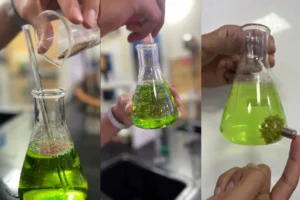
To address this problem, the students developed a biodegradable powder made from discarded tamarind seeds. When added to contaminated water, the powder attracts and binds with microplastic particles, causing them to clump together. These clusters can then be removed easily, resulting in cleaner water.
According to the students, the process acts like a magnet for invisible plastic particles without introducing harmful chemicals into the environment.
Inspiration Came from Rural India
The idea for Plas-Stick emerged during a visit to a rural community where the students observed residents storing drinking water in shared plastic containers. Witnessing a child drink unfiltered water from one of these containers prompted them to think about the hidden dangers posed by microplastic contamination.
The experience inspired the trio to explore ways of making clean drinking water more accessible, particularly in communities with limited access to advanced filtration systems.
Their research eventually led them to tamarind seeds, an agricultural byproduct that is widely available across India but often discarded as waste.
Environmental experts have highlighted the project’s affordability and scalability as key strengths. Since tamarind is abundant in many parts of India, the raw material required for the technology is inexpensive and easily accessible.
Beyond removing microplastics, the innovation also addresses waste management. After the plastic particles are collected, they are converted into useful products such as tiles and coasters, preventing them from re-entering natural ecosystems.
This circular approach reduces pollution while creating potential opportunities for recycling and resource recovery.
Global Recognition for Young Innovators
The students described the award as both an honour and a motivation to further develop their technology.
They noted that becoming the first team from India to win the global title demonstrates how youth-led innovation can contribute to solving pressing environmental problems. The recognition also brings international attention to India’s growing role in developing sustainable solutions for climate and pollution challenges.
The Earth Prize organisers described Plas-Stick as an example of how simple, nature based solutions can help address complex environmental issues. As concerns about microplastic contamination continue to rise worldwide, innovations like Plas Stick offer hope for safer drinking water and healthier ecosystems.
The achievement of these young Indian innovators highlights the power of scientific creativity and shows how locally available resources can be transformed into solutions with global impact.