Monday, May 4News That Matters

Breaking News

India New Waste Management Rules Focus on Digital Tracking and Stronger Compliance

India New Waste Management Rules Focus on Digital Tracking and Stronger Compliance

Breaking News
    India is set to overhaul its waste management system with a new regulatory framework aimed at improving transparency, accountability, and environmental compliance. The updated Solid Waste Management Rules 2026, notified by the Ministry of Environment, Forest and Climate Change, will replace the 2016 rules starting April 1, 2026. The new rules introduce a major shift toward digital governance, with a centralised online portal designed to track waste generation, movement, and processing across the country. This system will require mandatory registration of all key stakeholders, including bulk waste generators, local bodies, processing units, and landfill operators. Entities will also need to submit regular reports, making waste flows traceable at a national level. T...
Microbes in Antarctica Survive Extreme Winter by “Living on Air”

Microbes in Antarctica Survive Extreme Winter by “Living on Air”

Breaking News
    A fascinating new study published in The ISME Journal reveals how microbes in Antarctica manage to survive one of the harshest environments on Earth by literally feeding on air. During Antarctica’s long winter, temperatures drop far below freezing and sunlight disappears for months. This makes Photosynthesis nearly impossible, cutting off the main energy source for most life forms like plants and algae. Yet, microbial life continues to exist and even thrive. Scientists have discovered that these microbes use a process called Aerotrophy, which allows them to extract energy from trace gases in the atmosphere, especially hydrogen and carbon monoxide. Using specialized enzymes, these microbes can “sense” and consume tiny amounts of these gases, converting them into...
India Submits First Report on Nagoya Protocol, Strengthens Global Biodiversity Role

India Submits First Report on Nagoya Protocol, Strengthens Global Biodiversity Role

Breaking News
    India has taken a significant step in global environmental governance by submitting its first national report on the Nagoya Protocol on Access and Benefit Sharing under the Convention on Biological Diversity (CBD). The announcement, made through the Press Information Bureau, highlights India’s commitment to conserving biodiversity while ensuring fair sharing of benefits derived from genetic resources and traditional knowledge. This submission comes alongside India’s Seventh National Report to the CBD, reflecting a comprehensive and coordinated approach to meeting global biodiversity targets. India’s Position as a Biodiversity Powerhouse India is recognised as one of the world’s megadiverse countries, hosting nearly 7–8% of recorded species despite occupying jus...
Rising Demand for Roots Threatens Himalayan Barberry Shrubs

Rising Demand for Roots Threatens Himalayan Barberry Shrubs

Breaking News
    In the forests and hills of Kashmir, barberry shrubs were once a familiar part of childhood summers. Their small, tangy berries known locally as Kawdach or Sumbal were eagerly picked by children and also served as an important food source for birds and small animals. Today, however, these hardy Himalayan shrubs are increasingly being uprooted for their medicinal roots, raising concerns about their long-term survival. Barberry belongs to the genus Berberis in the Berberidaceae family and grows widely across the Himalayan region. Several species occur in Jammu and Kashmir, including Berberis lycium, Berberis kashmirana, Berberis huegeliana, Berberis pachycantha, and Berberis aristata. These thorny shrubs are well adapted to harsh mountain environments and often thrive ...
Climate Change and Human Activity Reshaping Central India’s Forests

Climate Change and Human Activity Reshaping Central India’s Forests

Breaking News
    A new study has revealed that decades of rising temperatures and changing rainfall patterns are significantly transforming forests in central India. Researchers say these climate shifts, combined with human activities such as logging, grazing, and land conversion, are altering forest health and increasing the risk of forest fires. The research focuses on the Pachmarhi Biosphere Reserve in Madhya Pradesh, one of the most important forest ecosystems in central India. Scientists found that the reserve lost nearly 13 percent of its forest cover between 1972 and 2020, which equals about 391 square kilometres of forest area. The study was conducted by researchers from the Central University of Jharkhand and Banaras Hindu University, who analyzed five decades of climate ...
Pesticide Pollution Threatens Growing Trout Farming Industry in Kashmir

Pesticide Pollution Threatens Growing Trout Farming Industry in Kashmir

Breaking News
    The rapid expansion of trout farming in Kashmir is facing a new environmental challenge as pesticide pollution from nearby apple orchards increasingly contaminates water sources used for fish ponds. Farmers say the excessive use of agricultural chemicals is leading to repeated incidents of fish deaths and significant financial losses. In the village of Zawoora in the Shopian district of south Kashmir, trout farmer Shakir Nazir has witnessed hundreds of fish dying in his ponds several times since he started his fish farm in 2012. According to him, mass fish deaths have occurred four to five times over the years, leaving fish floating belly-up in the ponds. Nazir and other fish farmers blame the problem on pesticides used in surrounding apple orchards. Farmers in th...
Scientists Warn Austrian Glaciers Are Disintegrating Rapidly Due to Climate Change

Scientists Warn Austrian Glaciers Are Disintegrating Rapidly Due to Climate Change

Breaking News
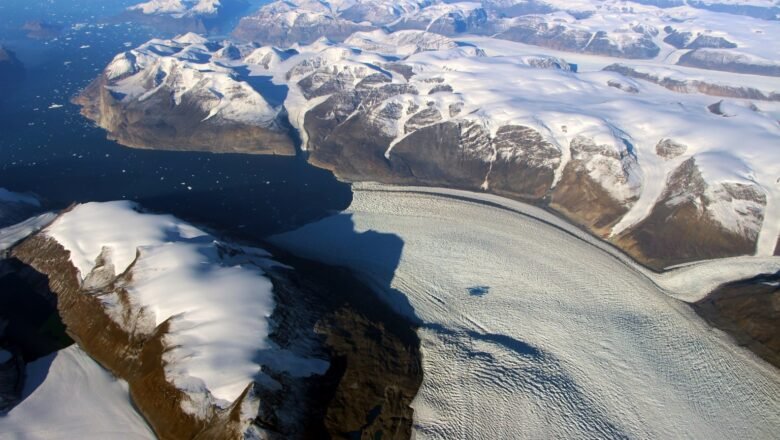
    Scientists monitoring glaciers in the Alps have issued a serious warning that glaciers in Austria are not only shrinking but are now entering a phase of structural disintegration due to accelerating climate change. According to a new report by the Austrian Alpine Club, most glaciers in the country have dramatically reduced in length, area, and volume over the past year. The monitoring project measured 96 glaciers across the Austrian Alps and found that 94 of them had continued to shrink. Researchers say the changes are becoming more severe, with glaciers breaking apart and collapsing in some areas. Andreas Kellerer-Pirklbauer, a scientist from the University of Graz, explained that many glaciers are now showing clear signs of structural collapse. He said expose...
Tea Bags May Release Billions of Plastic Particles During Brewing

Tea Bags May Release Billions of Plastic Particles During Brewing

Breaking News
    Tea is one of the most widely consumed beverages in the world, enjoyed by billions of people every day. However, a recent scientific review suggests that a simple cup of tea might contain more than just brewed leaves. Researchers have found that some tea bags can release massive numbers of tiny plastic particles during the brewing process. The review analyzed findings from 19 different scientific studies and explored how microplastics and nanoplastics may enter tea. These particles, collectively referred to as MNPs, are extremely small. Microplastics measure between one micrometer and five millimeters, while nanoplastics are even smaller than one micrometer, making them invisible to the human eye. Scientists say these particles can reach tea through several pathwa...
Extreme Heat Restricting Daily Activities for Millions in India, Study Finds

Extreme Heat Restricting Daily Activities for Millions in India, Study Finds

Breaking News
    A new global study has revealed that extreme heat is significantly limiting daily outdoor activity for people in India more than anywhere else in the world. Researchers say rising temperatures driven by climate change are reducing the number of hours people can safely spend outdoors, especially affecting the elderly and outdoor workers. The study shows that India records around 100 billion people-hours of activity limitation for younger adults and more than 1 trillion people-hours for older adults every year due to extreme heat conditions. These restrictions occur when temperatures and humidity levels become so intense that even light outdoor activity becomes unsafe. The research highlights that the worst-affected regions include the Indo‑Gangetic Plain and the ea...
Recycled Human Waste Could Help Turn Moon and Mars Dust into Fertile Soil for Crops

Recycled Human Waste Could Help Turn Moon and Mars Dust into Fertile Soil for Crops

Breaking News
    Future human missions to the Moon and Mars will depend not only on advanced spacecraft and life-support systems but also on reliable food production. However, growing crops beyond Earth presents a major challenge because these worlds lack living soil. Their surfaces are covered with mineral-rich dust that contains almost no organic matter or nutrients required for plant growth. A new study by scientists at Texas A&M University suggests that recycled human waste could provide an unexpected solution. Researchers found that treated wastewater derived from human waste can extract essential nutrients from Moon- and Mars-like dust, potentially transforming barren mineral material into a fertilizer source for space farming. In laboratory experiments, scientists combi...