Saturday, September 26News That Matters

Breaking News

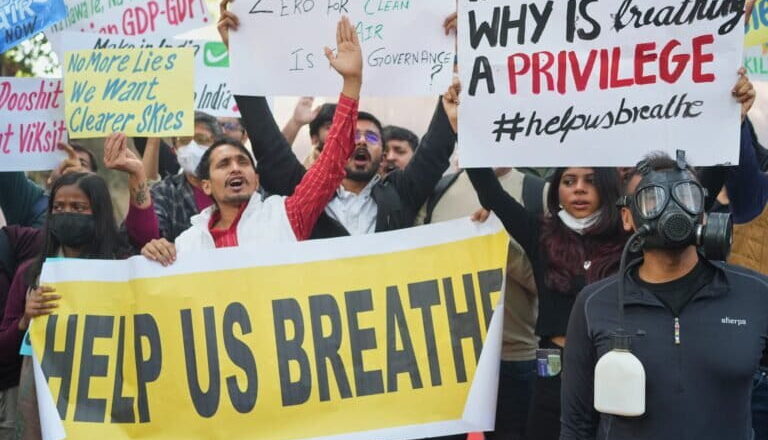
Delhi Wakes Up to Chilly Morning as Air Quality Improves to Poor Category, IGI Airport Issues Advisory

Delhi Wakes Up to Chilly Morning as Air Quality Improves to Poor Category, IGI Airport Issues Advisory

Breaking News
    Delhi experienced another cold morning on Sunday as cold wave conditions continued to affect large parts of north India. The minimum temperature in the national capital dropped to 4.8 degrees Celsius, while moderate fog and a thin layer of smog reduced visibility in several areas, according to the India Meteorological Department. Despite the cold conditions, Delhi’s overall air quality showed improvement and moved into the ‘poor’ category. In view of foggy conditions, the Indira Gandhi International Airport issued an advisory for passengers. The city had recorded its coldest morning of the season a day earlier on Saturday, when the minimum temperature fell to 4.2 degrees Celsius, which was 2.7 degrees Celsius below normal. While temperatures dipped sharply, air quali...
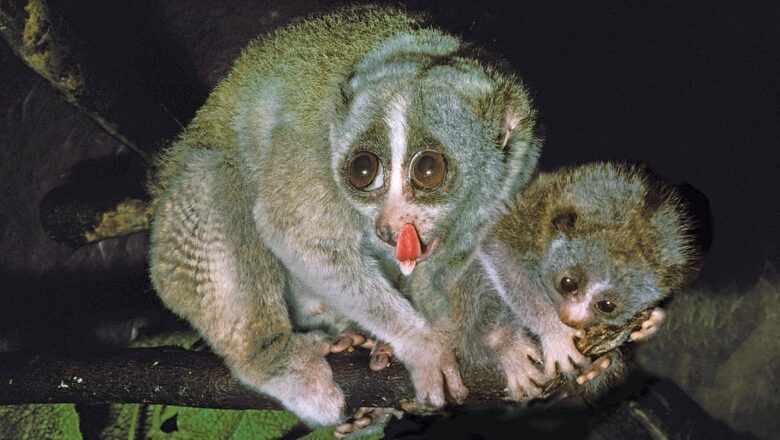
Night Watcher of the Western Ghats: Why Reversing Mythical Beliefs Is Crucial to Saving the Grey Slender Loris

Night Watcher of the Western Ghats: Why Reversing Mythical Beliefs Is Crucial to Saving the Grey Slender Loris

Breaking News
Hidden in the shadows of the Western Ghats forests lives one of India’s most mysterious and misunderstood primates the grey slender loris. Found only in southern India and Sri Lanka, this nocturnal hunter plays a quiet but vital role in forest ecosystems. Yet, despite its ecological importance and unique evolutionary history, the species continues to face serious threats driven largely by harmful myths, habitat loss and human activity. At first mention, the loris is often confused with the wide-eyed lemurs made famous by popular animated films. But unlike those Madagascar natives, the grey slender loris belongs to a different primate lineage altogether. Scientists believe that lemurs and lorises may share a distant common ancestor, a link often cited as evidence supporting the continent...
Hanging by the Cliff: Kashmir Markhor Faces the Risk of Local Extinction in India

Hanging by the Cliff: Kashmir Markhor Faces the Risk of Local Extinction in India

Breaking News
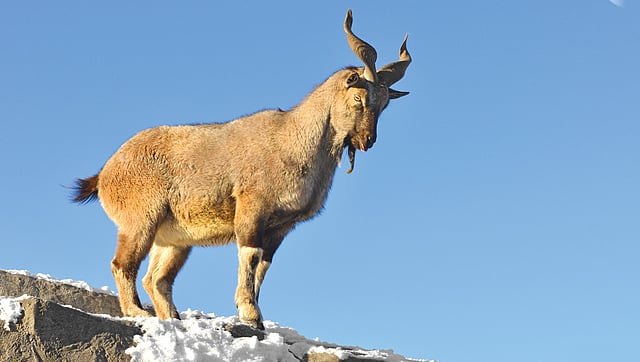
    The Kashmir markhor, one of the world’s largest and most striking wild goats, is facing an alarming risk of local extinction in India as unplanned development, heavy livestock grazing and poaching continue to threaten its fragile habitat in the Himalayas. Once believed to have vanished from the country, the Kashmir markhor was rediscovered during a 2004 statewide survey conducted by the Wildlife Trust of India in collaboration with the Jammu and Kashmir Department of Wildlife Protection and the Nature Conservation Foundation. The survey revealed that only 300 to 350 individuals survived across their historical range, stretching from Banihal Pass in the Pir Panjal to the Shamshabari range north of the Jhelum river. Today, the Kazinag range in Jammu and Kashmir stan...
Climate Change and Human Pressure Are Pushing Parts of the Western Ghats Towards Deciduous Forests

Climate Change and Human Pressure Are Pushing Parts of the Western Ghats Towards Deciduous Forests

Breaking News
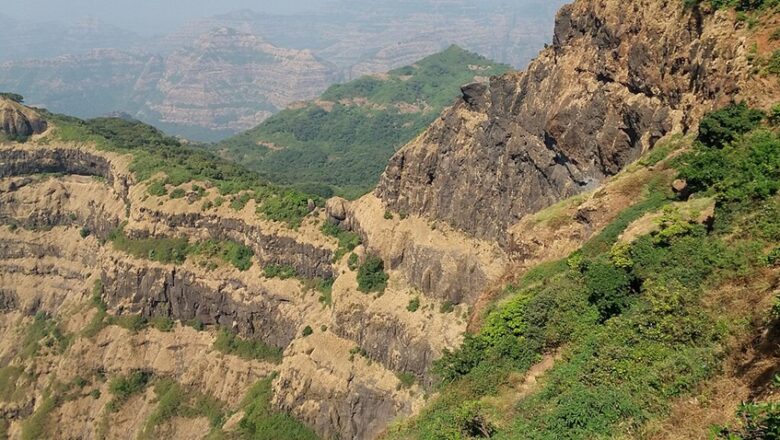
    Climate change combined with sustained human pressure is reshaping forest ecosystems in the northern Western Ghats, with new research showing a clear shift away from evergreen trees towards deciduous species in many low-elevation forests. The study, conducted across parts of Maharashtra, finds that forests facing repeated human disturbance and water stress have lower overall tree diversity, particularly of evergreen species. In contrast, deciduous trees become more dominant in areas where forests are frequently cut or exposed to prolonged dry conditions. Researchers carried out the study as part of a long-term restoration programme aimed at identifying highly threatened yet biodiverse forest patches. Baseline surveys of birds, amphibians and reptiles revealed that...
Can Climate Change and Human Pressure Favour Deciduous Forests in the Western Ghats?

Can Climate Change and Human Pressure Favour Deciduous Forests in the Western Ghats?

Breaking News
    Climate change and sustained human pressure are reshaping forest landscapes across India, and new research from the northern Western Ghats suggests that these forces may be tipping the balance in favour of deciduous forests over evergreen ones, especially at lower elevations. A recent study examining forest composition in the northern Western Ghats finds that areas experiencing high human disturbance and water stress show a marked decline in overall tree diversity, with evergreen species being the most affected. At the same time, deciduous tree species appear to thrive under these altered conditions, increasing in number where disturbance is frequent and prolonged. The research was carried out as part of an on-ground restoration programme in Maharashtra, where sci...
People Inhale Very High Levels of Microplastics Simply by Breathing City Air

People Inhale Very High Levels of Microplastics Simply by Breathing City Air

Breaking News
    People living in cities may be inhaling far higher levels of microplastics than previously understood, simply by breathing the air around them, according to new research from Xi’an, China. Scientists found that airborne microplastic levels in the city tripled over the course of their study, highlighting how everyday pollution and human activity are quietly adding plastic particles to the air people breathe. The study, led by aerosol scientist Fobang Liu of Xi’an Jiaotong University, examined fine air pollution known as PM2.5, tiny particles small enough to penetrate deep into the lungs. By analysing air filters collected in both summer and winter, before and after the COVID-19 pandemic, the researchers were able to track how microplastic concentrations and types chan...
The Mountain Monarch of the Western Ghats Is Returning but Its Future Remains Uncertain

The Mountain Monarch of the Western Ghats Is Returning but Its Future Remains Uncertain

Breaking News
    Few animals are as closely woven into the landscape of the Western Ghats as the Nilgiri tahr. Built for cliffs and grasslands, the sure-footed ungulate has long ruled the high ranges of southern India, shaping both ecosystems and human imagination. Now, after decades of decline, new survey data suggests the species may be slowly emerging from the shadows. Yet conservationists warn that its survival is far from assured. The Nilgiri tahr, found nowhere else in the world, once roamed freely across the shola forests and rolling montane grasslands of the Western Ghats. Its compact, muscular body, curved horns and remarkable balance make it uniquely adapted to steep escarpments and high-altitude meadows. Adult males, known as saddlebacks for the pale patch along their spin...
Microplastics Are Weakening the Ocean Ability to Absorb Carbon, Raising New Climate Concerns

Microplastics Are Weakening the Ocean Ability to Absorb Carbon, Raising New Climate Concerns

Breaking News
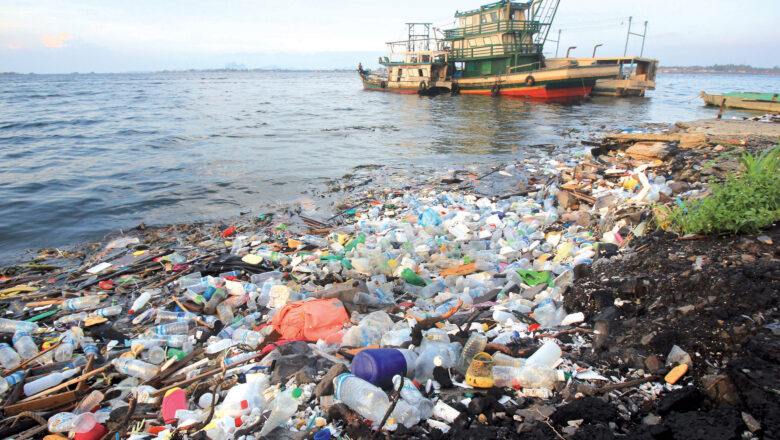
    The world’s oceans have long acted as one of Earth’s most powerful natural defenses against climate change, absorbing nearly a quarter of the carbon dioxide released into the atmosphere each year. But new scientific research suggests this critical role is being quietly undermined by an unexpected pollutant: microplastics. A recent study published in the Journal of Hazardous Materials: Plastics warns that microscopic plastic particles are interfering with the ocean’s natural carbon-absorbing systems, potentially reducing its capacity to regulate global temperatures. While plastic pollution has traditionally been viewed as a threat to marine life and ecosystems, researchers say its influence on the climate system has been largely overlooked. Microplastics plastic fr...
As Toxic Air Tightens Its Grip, People Are Leaving India Cities in Search of Breathable Lives

As Toxic Air Tightens Its Grip, People Are Leaving India Cities in Search of Breathable Lives

Breaking News
    For many urban residents, air pollution no longer appears as a distant statistic on a smartphone screen. It arrives quietly, through laboured breaths, chronic illness and the slow erosion of everyday life. Across India’s most polluted metros, a growing number of people are choosing to leave temporarily, seasonally or permanently not for better jobs or lifestyles, but simply to breathe cleaner air. For Gurugram-based multimedia professional Amitabh Chawla, the cost of pollution became personal long before it became political. His parents, both teetotallers, died in their early sixties, while his grandparents lived well into their nineties. “The difference, I believe, is the air,” says Chawla, now 44. “For a generation that grew up breathing polluted air, our bodies ca...
Beyond the Big Picture: Why Human Behaviour Is the Real Engine Driving Sustainable Climate Action

Beyond the Big Picture: Why Human Behaviour Is the Real Engine Driving Sustainable Climate Action

Breaking News
    The challenges confronting humanity today climate change, environmental degradation, biodiversity loss and ecosystem collapse are vast and deeply interconnected. Their scale often makes solutions feel distant and overwhelming, encouraging the belief that only large institutions, global summits or technological breakthroughs can deliver meaningful change. Yet this way of thinking overlooks a crucial truth: lasting sustainability begins at a human scale. Real environmental transformation does not start with abstract planetary models alone. It begins with people with individual choices, collective behaviour and the social norms that shape how societies function. Systems change fastest when society changes first. Every individual holds both the right and the responsib...